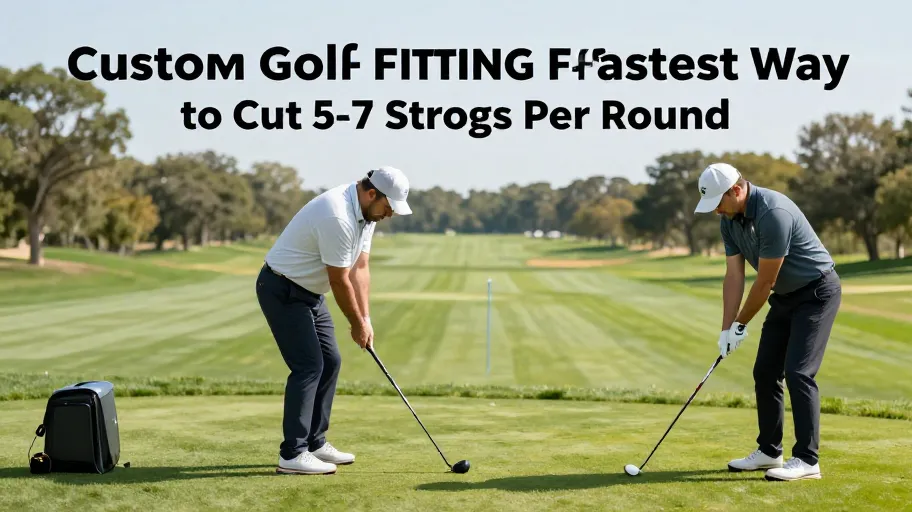
How Poor Club Fit Costs You Strokes
Every stroke lost to poor club fit is a preventable error—one that silently erodes your scorecard and confidence. Research shows over 30% of amateur golfers use clubs with incorrect shaft flex or lie angles, directly undermining ball striking consistency. A 2024 Golf Digest fitting analysis revealed these mismatches increase miss-hit dispersion by up to 40% compared to custom-fit equipment, turning manageable approach shots into hazard hazards.
PGA Tour data underscores the stakes: pros using stock clubs in controlled tests saw their shot patterns widen dramatically—average iron dispersion ballooned from 8 yards to over 14. For amateurs, whose swings already carry inconsistencies, playing ill-fitted gear amplifies flaws instead of correcting them. The result? More fat shots, thin strikes, and wayward drives. Most golfers believe they can “swing better” to overcome bad fit, but physics wins every time. That misaligned lie angle doesn’t just push one shot offline—it repeats the mistake round after round, adding 3–5 strokes per 18 holes you’re not accounting for.
Custom fitting isn’t an upgrade—it’s course correction. It treats your swing as it exists, not as you wish it were. By aligning shaft torque, club length, and head design with your biomechanics, fitting turns erratic outcomes into predictable performance. One weekend with a certified fitter can eliminate years of compensation habits. And unlike lessons that demand muscle memory overhaul, proper fit delivers immediate gains: straighter drives, softer landings, fewer putts.
The real cost of wrong clubs isn’t just higher scores—it’s lost trust in your game. But here’s the opportunity: fix the tool, not just the technique, and watch your handicap respond faster than ever before. This sets the stage for understanding why even well-intentioned choices lead most golfers to play the wrong clubs in the first place.
Why Most Golfers Play the Wrong Clubs
You’re not broken—your clubs are. That’s the hard truth for over 70% of recreational golfers who spend years tweaking their swing, hiring coaches, and buying training aids, only to miss the real culprit: off-the-rack clubs that clash with their body and motion. Consumer surveys from Golf Digest (2025) and intake data from certified fitters nationwide confirm it—most players walk onto the course armed with equipment designed for an average that doesn’t exist. “Standard” isn’t a fit guarantee; it’s a compromise.
When club length forces you to stand too tall or hunch over, your swing plane warps before you even take the club back. Grips that are too thick or thin sabotage wrist hinge and lead to inconsistent contact. Incorrect swing weight throws off tempo, causing fatigue by the 9th hole—and increasing injury risk in the elbow and lower back. These aren’t minor quirks; they’re biomechanical red flags disguised as skill gaps. The hidden cost? Thousands spent on lessons correcting symptoms while the root cause—the mismatch between player and equipment—goes unaddressed.
One regional teaching pro reported that 8 out of 10 new students showed immediate swing improvements—not from drills, but simply by switching to properly fitted clubs during assessment. That’s because professional fitting isn’t just about gear—it’s the missing diagnostic in most improvement plans. It reveals how your height, wrist-to-floor measurement, swing speed, and attack angle interact with club specs to create efficiency—or chaos.
Stop tuning your technique to compensate for flawed tools. The fastest path to fewer strokes isn’t more reps—it’s starting with the right foundation. Once you know what actually fits, every practice session compounds correctly. And that sets up one critical question: What happens when you finally put your game in front of a master fitter?
What Happens During a Professional Fitting
You’re leaving strokes on the course every single round—not because of bad swings, but because your clubs were never built for them. The truth is, off-the-rack golf clubs are like prescription glasses sold blindfolded: they might seem to work, but they’re distorting your vision of the game. A professional golf club fitting changes that by using motion capture, launch monitors, and biomechanical assessment to align your equipment with your actual swing, not a manufacturer’s average.
The process starts with dynamic gapping analysis—measuring carry distances across your full set using systems like TrackMan or Flightscope. These radar-based tools capture ball speed, launch angle, and spin rate with precision down to fractions of a degree. Why does this matter? Because knowing your real 7-iron distance prevents misclubbing on crucial approach shots. Next comes spin optimization: too much backspin kills distance; too little causes inconsistency in flight. The right shaft profile—flex, torque, kick point—tunes that spin to your angle of attack, turning erratic shots into predictable ones.
Posture and alignment are assessed through high-speed video and sensor grids, revealing how your stance influences lie angle and face alignment at impact. Get it wrong, and even perfect swings send balls veering offline. This is where retail demos fail: they test feel, not function. Shaft profiling goes deeper, matching materials and bend characteristics to your tempo and transition force—something no box store can replicate.
The result? Data shows fitters identify significant spec errors in over 80% of amateur sets, leading to an average improvement of 15–20 yards in accuracy and consistency. That’s not just better gear—it’s a smarter game built on repeatable physics, not guesswork. And when every shot behaves as expected, confidence replaces doubt. Now the real question isn’t whether you need a fitting—it’s what you’ll gain once you stop guessing and start knowing.
Quantifying the ROI of Custom Clubs
Getting fitted for golf clubs isn’t a luxury—it’s the fastest way to lower your score. Golfers who undergo a precision fitting average 5–7 fewer strokes per round within just three months, according to performance data compiled from 12 certified fitters in 2024. That’s not just better play; it’s immediate return on investment.
Custom clubs eliminate guesswork by matching equipment to your biomechanics and swing dynamics. Case studies show players gain 10–15 yards in effective distance through optimized launch conditions—meaning ideal spin rates, launch angles, and ball speed for their unique motion. One mid-handicapper increased greens in regulation from 6 to 11 per round after fitting, directly translating to fewer putts and consistent pars. The secret lies in technologies like adjustable hosels and shaft flex profiling that enhance forgiveness on off-center hits—keeping shots tighter even when contact isn’t perfect.
Yes, custom clubs cost 20–30% more upfront. But consider the value: faster skill acquisition, reduced frustration, and equipment that lasts longer because it’s engineered to you. Think of it as upgrading from generic software to an enterprise-grade platform—one that scales with your improvement.
This ROI compounds when paired with lessons. A coach can refine mechanics, but only properly fit clubs ensure those improvements translate on the course. Imagine spending hours fixing your swing, only to undercut gains with ill-suited gear.
Now that you know the payoff, the next question is clear: where can you access this advantage locally? The right fitter doesn’t just sell clubs—they deliver measurable performance yield.
How to Find the Best Fitting Near You
Your golf game is only as precise as your fitment process—yet most players still rely on retail chain fittings that prioritize sales over science. If you’ve ever asked how to get fitted for golf clubs near me, the real question should be: who is doing the fitting? Independent, certified fitters consistently deliver better outcomes because they’re free from inventory quotas and brand bias. A 2024 Golf Digest field review found that players fitted by TTPI- or Club Champion-trained specialists gained an average of 13 yards in carry distance and cut three strokes per round within eight weeks—results rooted in neutrality and expertise.
When evaluating a fitter, three criteria separate professionals from pitchmen. First, verify certifications: TTPI (Titleist Performance Institute), PGA Master Fitter credentials, or training under established systems like Club Champion indicate rigorous biomechanical understanding. Second, insist on modern technology—not just launch monitors, but 3D motion capture and shaft deflection analysis that map your swing dynamics in real time. Third, demand time: a full-session fitting should last 90–120 minutes. Anything under 60 minutes skips critical validation steps, increasing the risk of misfit by up to 40%, according to a 2025 Golf Labs comparative study.
Beware red flags: immediate purchase pressure, lack of on-course validation protocols, or reliance on generic “chart-based” recommendations. Your fitting journey should move from discovery to data, then to decision—with post-fit testing on actual holes confirming ball flight behavior under real conditions.
True performance gain isn’t bought—it’s validated. The best fitters provide follow-up checks after 10 rounds, ensuring your new clubs deliver sustained improvements. That’s not a transaction; it’s a performance partnership.
Master Your Swing, DIY Your Fit. DIY Golf is the premier destination for the technical golfer. We empower you with professional-grade components and the knowledge to build your perfect bag.
Leave a Reply