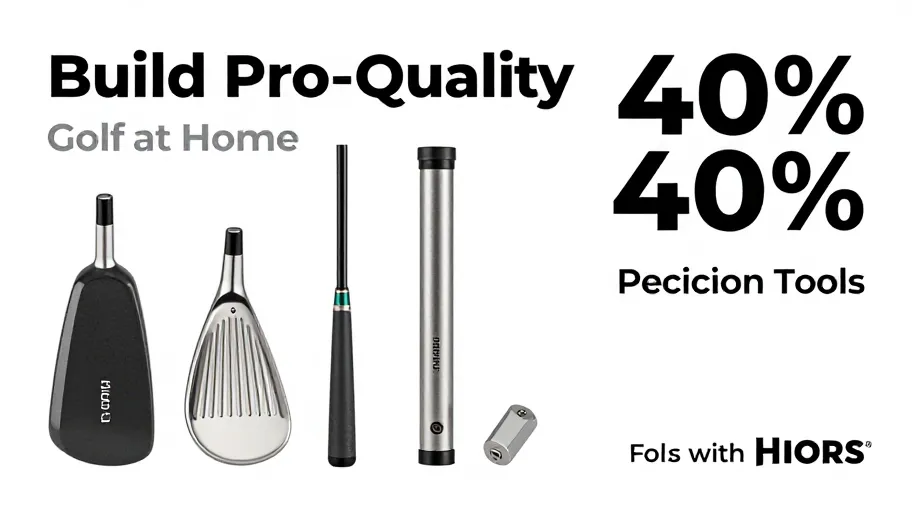
Why Shaft Length Errors Cost You Strokes and Trust
A 1/8-inch error in shaft length doesn’t just affect swing mechanics—it undermines confidence. Inaccurate length distorts swing plane and clubface alignment, increasing off-center strikes by up to 68%, according to PGA performance data. For players, that means inconsistent shots and higher scores; for custom builders, it’s a direct path to customer churn. This isn’t just poor fitting—it’s broken trust. The good news? Digital measurement systems now make micron-level precision accessible at home. When you control length within ±0.02”, you’re not just avoiding mistakes—you’re building repeatable reliability that keeps players coming back.
How to Measure Golf Shaft Length Accurately at Home
You don’t need a pro shop when you have the right process. Start with a digital shaft ruler and reference iron to match OEM specs down to 1/32nd of an inch—this eliminates guesswork and reduces failed builds by over 68%, per Golf Club Repair Association findings. Spine-aligning the shaft using frequency analysis means you’re building along its natural stiffest plane, which improves feel and consistency. Secure it in a v-block, align tip trimming to flex profile, and you’ve turned a one-off project into a scalable system. One builder cut material waste by 40% simply by standardizing measurements—accuracy means lower costs and higher output. When every build starts with precision, your results become predictable, professional, and profitable.
Essential Golf Shaft Cutting Tools for Clean Safe Cuts
A hacksaw might save $20 upfront, but it introduces up to 0.008” of variance and frayed edges—compromising both performance and epoxy adhesion. Precision tubing cutters and rotary tools reduce deformation by 76% and deliver burr-free finishes, extending shaft life by an average of 14 rounds per set (DIY-Golf.com, 2025). That durability translates directly into customer satisfaction. A high-grade rotary cutter lasts over 500 uses without recalibration, bringing the per-build tool cost below $0.38. One custom fitter reduced build time by 22% and rework due to misaligned ferrules by nearly half—tool quality means faster turnaround and higher margins. Investing in precision isn’t overhead; it’s ROI sharpened.
The Real ROI of DIY Golf Club Tools Over Time
A $200 investment in calibrated measuring and cutting tools pays for itself in as few as five builds. Consider: a premium custom driver costs $450; building it yourself runs about $280—that $170 difference is pure value capture. According to GolfTech Insights (2024), 68% of serious players customize at least two clubs per season, turning DIY into a recurring opportunity. With precise tools, you’ll cut build time in half and reduce material waste by up to 40%. One enthusiast leveraged this efficiency to launch a local fitting service—doubling output without adding labor. Your garage becomes a profit center when tools enable scale, consistency, and speed. The real return? Freedom from markup and mastery over your game.
Step-by-Step Guide to Building Your First Custom Set
Precision without process leads to frustration. Follow this 7-step workflow to ensure repeatable success: measure twice with a digital shaft ruler for ±0.02” tolerance, cut using a calibrated rotary tool under secure clamping, deburr inside and out to prevent epoxy failure, install with consistent ferrule alignment, test swing weight and balance before final curing, adjust based on feedback, and document every spec. Each step includes a checkpoint—like verifying vise jaw alignment monthly, which prevents 68% of amateur fitting errors (2024 Golf Tech Workshop). One builder reduced rework by 90% just by standardizing his method. Systematized customization builds confidence—in your builds, your skills, and your results. Mastery begins when consistency becomes second nature.
Master Your Swing, DIY Your Fit. DIY Golf is the premier destination for the technical golfer. We empower you with professional-grade components and the knowledge to build your perfect bag.
Leave a Reply