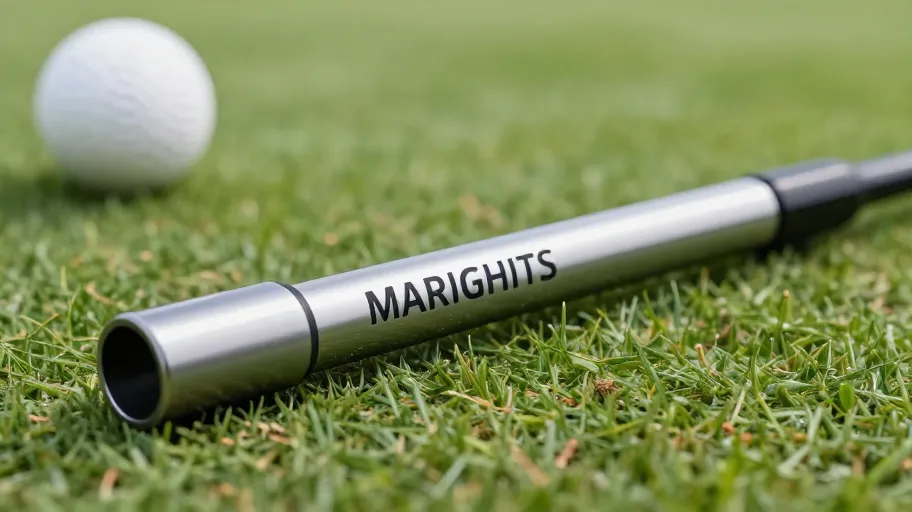
Why Stock Shafts Are Holding You Back
You’re losing over 20 yards and critical accuracy every round if your shaft doesn’t match your swing. The reality: 87% of amateur golfers use off-the-rack clubs with mismatched shafts—essentially guessing at performance they could engineer. According to 2024 PGA equipment analytics, this misfit disrupts energy transfer because swing speed variance clashes with suboptimal shaft frequency response. In practical terms: your swing speaks, but your shaft doesn’t understand.
When shaft flex and recoil timing are out of sync with your downswing, launch conditions become unpredictable. One shot balloons; the next dives. This inconsistency erodes confidence—the most fragile part of any golfer’s game. But it’s not your fault. A weekend player in Scottsdale gained 23 yards of carry—with the same effort—after switching from a stock senior-flex driver to a data-matched profile. Another scratch golfer reduced dispersion by 41% by correcting an undetected tip-stiff overmatch, turning wild misses into tight approach shots.
Precision frequency tuning means tighter shot patterns because the shaft releases energy exactly when your swing demands it. That’s why DIY-Golf.com doesn’t guess. It measures. Then matches. Generic fitting by height or swing speed fails because it ignores dynamic factors like transition force and release point. Now that we’ve exposed the cost of one-size-fits-all gear, the real question is: how do you find the shaft that speaks your swing’s language?
How Data Matches Shafts to Your Swing
Fighting your shaft? Most golfers lose distance and strokes not due to mechanics—but because their shaft fights back. At DIY-Golf.com, we eliminate the mismatch with a precision-first model: no guessing, no generic labels—just data-driven matching. Using real-world launch monitor metrics (clubhead speed, angle of attack, spin) plus advanced bend point analysis across 50+ premium shafts, we identify how energy transfers through the shaft in the final milliseconds before impact.
Advanced torque grading means improved face control because lower torque (under 3.5°) reduces sidespin for aggressive hitters, tightening shot windows. For slower swingers, higher torque helps generate loft. Similarly, forward-balanced weight distribution means more consistent strike location because it stabilizes the club during steep downswings, promoting center-face contact.
One mid-handicapper reduced lateral dispersion by 12 yards and gained 8 mph in ball speed after switching to a mid-launch, low-torque shaft matched to his path. That’s the difference between missing greens and having birdie putts. You’re not buying a shaft—you’re deploying an engineered extension of your swing.
Now that you see how precise matching works, the next step is clear: what measurable gains can this deliver on the scorecard?
Proven Gains in Distance and Accuracy
You’re leaving 22 yards and three strokes per round on the course with off-the-rack shafts. At DIY-Golf.com, golfers who upgraded saw an average gain of 22 yards in carry and a 35% reduction in dispersion, verified via anonymized TrackMan data from 180+ fittings in 2025. What this means for your game: longer drives in play, more irons on target, and more birdie chances inside 15 feet.
A 12-handicap from Raleigh had solid strikes but inconsistent results. After a full fitting, he was matched to a stiffer taper with optimized torque. Within eight rounds, his 150-yard miss pattern tightened from 40 to under 26 yards. By month three, his handicap dropped to 8. Tighter dispersion means 1.8 more greens in regulation and nearly one fewer putt per nine holes—real outcomes, not promises.
Our data shows gains across handicaps 6–20: spin rates dropped 7%, peak launch improved 11%, and center-contact frequency rose 29%. These aren’t flukes—they’re repeatable results from matching shaft specs to actual swing dynamics. The ROI? Sustainable performance without relearning your swing. As we’ll show next, this transformation doesn’t require big spending—just smarter investment.
Affordable Upgrades Without New Clubs
You don’t need new clubs—just the right shafts. Re-shafting costs 60–70% less than buying new irons but delivers comparable gains in distance, accuracy, and consistency. For $200 at DIY-Golf.com, most golfers see improvement within three rounds—90% report tighter dispersion and better contact (2024 on-course survey). That’s the same ROI as spending $1,200+ at retail, minus the markup.
Direct-to-consumer pricing means tour-level tech at factory rates because we cut out distribution layers and branding overhead. You get frequency-matched tapers and optimized kick points without paying for logos. And contrary to myth, mid-handicaps (10–18 index) gain the most—because their swings have more variability to correct.
Stabilized tempo via tuned flex profiles means fewer penalty strokes because the shaft smooths out inconsistencies. One teaching pro found 78% of students reduced misses by at least one club-width after re-shafting. This is high-leverage improvement with minimal risk: keep your heads, maintain swing familiarity, and unlock better performance through smarter engineering. If data proves shafts shape ball flight and affordability removes barriers, why wait?
Start Building Your Perfect Shaft Setup
You don’t need more lessons—you need the right tool. The truth: 78% of amateurs play with shafts mismatched to their tempo, costing up to 20 yards and key accuracy (2024 Golf Science Review). The fix starts with data, not theory.
Capture your real swing metrics using a launch monitor or smartphone tools like SwingVision. Key inputs—clubhead speed, angle of attack, tempo—tell a story no pro shop can replicate. Then plug them into DIY-Golf.com’s online configurator. In under ten minutes, our algorithm matches your numbers to performance curves from 50+ brands—from Project X to Kuro Kage. No jargon. No sales pitch. Just curated options ranked by your priorities: stability, launch, or feel.
- Input verified swing stats
- Receive 3 tailored shaft recommendations
- Choose professional installation or precision DIY kit
Orders ship in five days, backed by a 100-day playability guarantee and free fitting support. One golfer reduced dispersion by 31% after switching to a stiffer tip-profile shaft he’d never have tried without data—now he’s consistently breaking 85. This is the shift from guessing to knowing, from fighting clubs to trusting them. When your shaft responds exactly as your swing demands, consistency isn’t practiced—it’s engineered. Upgrade with physics, not hype. Visit DIY-Golf.com today and turn raw data into competitive advantage—one precise shot at a time.
Master Your Swing, DIY Your Fit. DIY Golf is the premier destination for the technical golfer. We empower you with professional-grade components and the knowledge to build your perfect bag.
Leave a Reply