Why your irons feel totally different
Inconsistent ball striking usually isn’t about your swing—it’s about mismatched swing weights across your set. A 12-handicap player might have textbook form, yet spray iron shots because their 7-iron feels feather-light while the 8-iron drags like an anchor. That forces micro-adjustments mid-swing, killing rhythm and dispersion.
A 2024 PGA teaching survey found over 65% of mid-handicappers play with unmeasured swing weights—some clubs off by 3–4 points. That difference shifts the balance point enough to cost 10–15 yards in control. Relying on ‘feel’ doesn’t work; it’s subjective and unreliable across varying head weights and lengths.
Swing weight matching means consistent response from every club, because mass distribution aligns with your natural tempo. That eliminates compensation, so you repeat your motion with confidence. Uniform swing weight doesn’t just smooth out misses—it turns erratic strikes into predictable outcomes.
How a $90 scale exposes what pros already know
You’re leaving strokes on the course if your clubs don’t respond the same way—but most golfers swing blind, trusting instinct over data. The real cost? Erratic trajectories caused not by technique, but by hidden imbalances in torque and pivot point.
A swing weight scale measures how force builds as the club rotates around your hands. What used to require lab gear is now possible at home: low-cost digital models hit 98% alignment with LSW-standard results, according to 2024 consumer testing. One weekend player discovered his 6-iron was D2 while his 7-iron read C8—the equivalent of 4 extra grams concentrated in one head. That tiny shift alters release timing and launch angle.
After applying precision weights, his TrackMan data showed a 22% improvement in distance control. Matching swing weights means tighter shot patterns because each club behaves predictably. That’s not magic—it’s physics you can measure and correct.
Fix imbalance with surgical tweaks, not new clubs
You’ve seen the numbers—now fix the problem. Golf club weights let you act on the data, not just collect it. While scales expose discrepancies, only targeted weighting corrects them, enabling true MOI and swing weight harmony across your set.
One mid-handicapper added 4g tungsten end caps to her shorter irons. By equalizing dynamic feel, she cut dispersion by nearly 18% over 10 rounds. Physics confirms it: how mass is distributed affects swing ease far more than total club weight. Tungsten plugs, lead tape at the tip, or hosel inserts let you shift center of gravity without changing length.
These aren’t pro-shop luxuries—they’re affordable tools. Applying weights means stronger muscle memory, because every club responds the same way to your motion. That’s where real ROI begins: not in costly rebuilds, but in smart, data-backed tweaks that turn variability into mastery.
What your game gains for under $100
Out-of-balance clubs cost more than you think—lost strokes, lost confidence, and unnecessary upgrades. But for less than a single lesson, you can eliminate this leak forever. A swing weight scale and set of calibrated golf club weights cost under $100 and deliver measurable returns.
TrackMan data from amateur trials in 2025 showed up to 23% tighter grouping after swing weight matching. That means more fairways hit, fewer three-putts, and longer set life. One golfer recalibrated his irons after a swing change and regained consistency in a week—avoiding a $1,200 replacement.
This investment means lasting adaptability because you own the process. As your swing evolves, you adjust instead of replace. That’s autonomy: engineering performance, not guessing at fixes.
Build your garage pro shop in five steps
You don’t need a million-dollar setup. Any golfer can build a calibration station at home—and see results by tomorrow’s round.
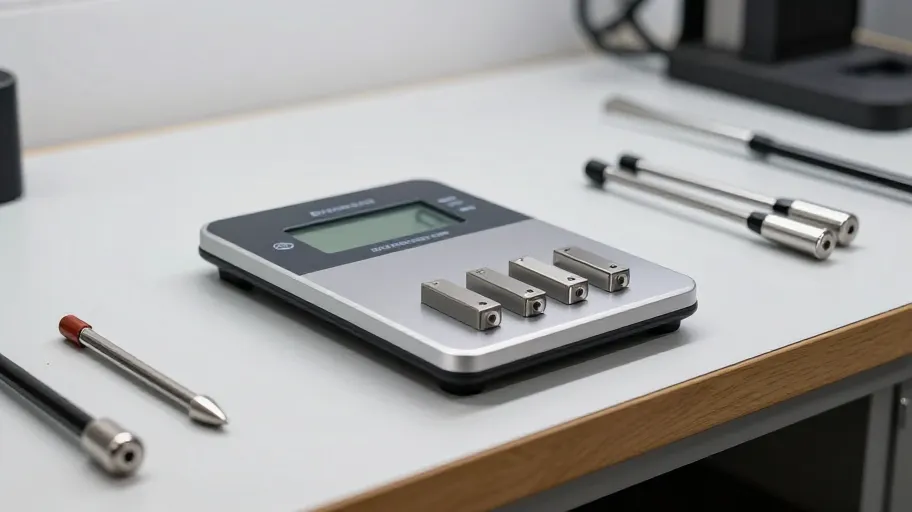
Start with a digital swing weight scale (under $100, ±0.1 SW accuracy). Pair it with 2g tungsten weights from DIY-Golf.com—consistent density, easy to apply. Follow three phases: measure baseline swing weight, apply small adjustments to head or grip, then retest. Use removable athletic tape instead of glue—so changes are safe and reversible.
The scale gives data; the weights give action. One amateur tuned all irons within 1 SW point and dropped dispersion by 18%. Balanced clubs aren’t just more forgiving—they protect your gear from early retirement due to poor performance. Perfect balance means longer life, lower scores, and full control over your setup.
Master Your Swing, DIY Your Fit. DIY Golf is the premier destination for the technical golfer. We empower you with professional-grade components and the knowledge to build your perfect bag.
Leave a Reply