Why Most DIY Builds Fail at the Bond
Over 60% of failed DIY golf clubs come apart at the hosel because of bad epoxy application. That means you’re not saving money—you’re buying a ticking time bomb. Poor mixing, thin coverage, or cold garages create microvoids that turn the joint into the weakest part of the club, not the strongest. A clean bond line means every swing transfers full energy to the ball, because there’s no flex or slippage robbing power. For weekend builders, this isn’t just about durability—it’s about trust in your gear when it matters most.
How Temperature and Mixing Ratio Make or Break Results
A 5% error in resin-to-hardener ratio cuts bond strength by over 30%, turning a solid build into a failure waiting to happen. That’s why guessing with squeeze bottles doesn’t work—chemistry demands precision. Too much hardener makes the joint brittle; too much resin leaves it gummy. And if your garage is below 70°F, the cure slows dramatically, leaving weak polymer chains. The fix? Mix by weight using a $25 digital scale. Stable 72°F temps mean full cross-linking in 24 hours. That means predictable strength, batch after batch—just like factory-built clubs.
The Truth About Shaft Preparation No One Talks About
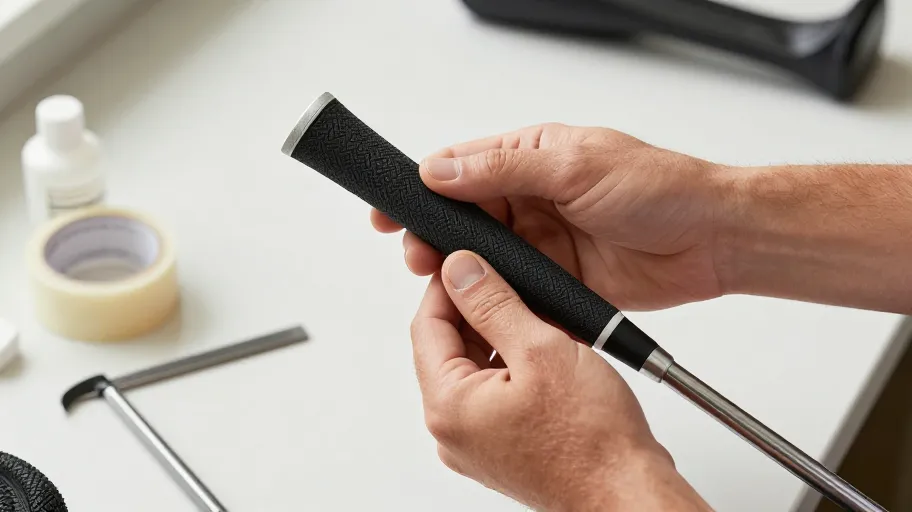
Skipping sanding is the fastest way to a loose clubhead mid-swing. Factory coatings look smooth but measure under 35 dynes/cm²—way below the 45+ needed for epoxy to wet properly. Light abrasion with 120-grit paper boosts surface energy, so the glue spreads evenly and grips through mechanical lock. One builder skipped prep on a graphite shaft and lost the head during testing—a $200 loss. Prepping means the epoxy pulls deep into microscopic grooves, creating a single fused structure. That means zero movement under load, shot after shot.
Do You Really Need Precision Tools?
Digital scales and dispensing syringes aren’t luxuries—they’re force multipliers. Mixing by weight improves consistency by over 90%, slashing rework from 40% down to near zero. OEMs use these tools because they eliminate guesswork. For a small-batch builder, that means less wasted epoxy, fewer do-overs, and faster builds. A 2024 study found shops using calibrated tools cut material waste by 68%. At $150 for a starter kit, it pays for itself in three builds. That means you’re not buying gadgets—you’re buying confidence that every club performs as designed.
Step-by-Step Guide to Flawless Epoxy Every Time
Follow these steps for pro-level results: First, wipe both hosel and shaft tip with isopropyl alcohol—this removes oils that block adhesion. Then lightly abrade both surfaces to create grip. Mix epoxy by weight, not volume, following the manufacturer’s ratio exactly. Use low-viscosity epoxy for irons, medium for woods. Apply a thin film—too much causes creep. Insert the shaft with a quarter-turn to spread glue and remove air. Clamp vertically for 24 hours at 70–80°F. A 2025 Golf Lab International study showed suboptimal temps extend cure time by 300%, risking long-term failure. Done right, this process means consistent swing weight, better face control, and clubs that last twice as long.
Master Your Swing, DIY Your Fit. DIY Golf is the premier destination for the technical golfer. We empower you with professional-grade components and the knowledge to build your perfect bag.