
Category: Golf Tips

Golf Tips

  • MOI Matching: The $18K Profit Secret Transforming Golf Club Fitting

    MOI Matching: The $18K Profit Secret Transforming Golf Club Fitting

    Why Your Clubs Feel Different Every Swing

    Mismatched MOI across your set forces swing compensation—robbing you of consistency and control. This isn’t theory: a 2024 PGA survey found 70% of amateurs link strike variability to unbalanced club dynamics. Off-the-rack sets often vary by up to 15% in MOI, far beyond the ±3% needed for uniform feel.

    That imbalance means you adjust effort mid-swing, increasing skill leakage. But here’s the fix: MOI matching ensures each club resists angular motion identically, so your tempo stays locked regardless of club length or head design. Using DIY golf components like adjustable weights and calibrated shafts, builders now achieve tour-level consistency without custom-fitter prices. One independent builder reported a 40% improvement in customer-reported shot control after switching to MOI-guided assembly—because predictable inertia means predictable results.

    The Physics Behind Consistent Club Performance

    MOI matching works because it aligns each club’s resistance to rotation around the grip end—ensuring identical swing effort from driver to wedge. Unlike swingweight, which only measures static balance, MOI accounts for total mass distribution including shaft, head, and grip, making it the true metric of dynamic performance.

    Titleist research confirms golfers achieve 23% greater swing consistency when clubs are matched within ±10 g·cm² of MOI. Now, modular DIY components replicate this precision: adjustable hosels, tip-trimmed shafts, and gram-accurate weight slugs let builders dial in exact inertia values. This turns fitting into a repeatable science—not guesswork. For fitters, that means fewer revisions; for players, it means tighter dispersion and more center-face contact, because consistent MOI means consistent tempo and timing.

    How Off the Shelf Parts Deliver Tour Grade Results

    Modular DIY golf components have closed the gap between pro shop builds and retail-grade clubs. Today’s third-party parts match OEM tolerances within 1–2 grams and 0.5° lie angle, enabling sub-10 g·cm² MOI variance across full sets. That precision means off-the-shelf components can deliver tour-spec performance at half the cost.

    A 2024 benchmark study showed shops using MOI-tuned parts reduced per-club build costs by up to 40%, thanks to fewer test swings and less material waste. One Midwest shop scaled from 5 to 60 monthly builds using a subscription tuning model—without adding staff. Standardized components don’t just improve play—they turn customization into a scalable, profitable service. With global suppliers ensuring cross-brand compatibility, small operators now compete directly with major OEMs on performance and personalization.

    The Bottom Line ROI for Fitting Businesses

    If you’re not offering MOI-matched builds, you’re leaving 35% of potential revenue on the table. Golf Digest’s 2025 Retail Report shows shops integrating MOI matching see average revenue per customer rise by that margin—driven by measurable improvements customers willingly pay for.

    The process is no longer a time sink: frequency matching, tip trimming, and calibration take one or two sessions instead of three, freeing technician hours. Build variation drops by up to 60%, slashing rework. And the payoff compounds: customers return 2.6x more often for follow-up builds and accessories. This loyalty transforms one-time buyers into long-term clients, turning your shop into a performance hub. Component-driven consistency doesn’t just boost scores—it boosts margins, with one retailer capturing $18K in incremental profit per quarter.

    Build Your First MOI Matched Set Step by Step

    You don’t need a lab to start—just digital scales, a pivot board, and free software like SwingTool. Measure each club’s swingweight and balance point, then calculate required adjustments to align MOI across the set. Use adjustable slugs, end caps, and collars to fine-tune until every club swings with identical effort.

    This process means your golfer gains confidence through predictable tempo, tighter dispersion on mishits, and better face control—because every club responds the same way. Pro tip: brand it as a “Signature MOI Fit” to elevate perceived value. One retailer saw a 40% upsell rate after marketing it as “pro-level harmonization.” MOI matching isn’t a niche upgrade—it’s the future standard in club fitting, where science meets feel and every club earns its place in the bag.

    Master Your Swing, DIY Your Fit. DIY Golf is the premier destination for the technical golfer. We empower you with professional-grade components and the knowledge to build your perfect bag.


  • $299 Golf Gear Investment Delivers 300% ROI and 3.2 Strokes Off Your Game

    $299 Golf Gear Investment Delivers 300% ROI and 3.2 Strokes Off Your Game

    The Hidden Cost of Guessing with Your Gear

    Up to 68% of amateur golfers overspend on equipment that doesn’t lead to better scores—often because they’re influenced by retail markup, not performance insight. According to the National Golf Foundation, the average recreational player spends over $1,200 per year on gear, yet sees no measurable improvement in consistency. This ‘gear bloat’—owning multiple conflicting tools like alignment aids or swing trainers—can actually disrupt muscle memory and reduce clubhead control.

    The problem isn’t access to gear; it’s access to the right gear. When players use too many unvetted products, their mechanics fragment. But when expert curation replaces guesswork, every dollar spent drives real gains. One regional academy found that simplifying student kits to five core, tested accessories led to a 23% faster improvement in stroke consistency within eight weeks. That means fewer wasted swings, fewer lost balls, and more confidence under pressure.

    How DIY Golf Redefines Online Shopping

    Shopping at the best online golf accessories shop with discount shouldn’t mean sifting through junk. At DIY-Golf.com, AI-driven compatibility filters, skill-level tagging, and dynamic bundling logic curate gear to your exact game profile. For example, if you struggle with putting, our system only shows putter grips and alignment tools matched to your stroke type and grip size—eliminating decision fatigue by up to 60%, according to a 2024 e-commerce behavioral study.

    This precision curation means higher conversion rates, 35% larger average order values, and fewer returns. By cutting out middlemen and replacing guess-based shopping with data-guided discovery, we don’t just lower prices—we increase trust. Smarter product architecture doesn’t just sell more; it builds loyal players who know their gear works because it’s built for them.

    Five Essentials That Actually Improve Your Game

    PGA teaching professionals agree: five core accessories deliver outsized returns for most golfers. Alignment sticks train muscle memory, reducing swing-path errors by up to 40% (USGA, 2024). That means straighter drives and fewer penalty strokes. Moisture-wicking gloves maintain grip integrity under pressure, preventing slippage that leads to fat shots. GPS rangefinders eliminate yardage guesswork, improving club selection and course management. Impact tape reveals truth about contact quality—data even pros use to fine-tune ball striking. And custom-fit grips reduce hand fatigue and improve control, enabling repeatable swings under stress.

    These sub-$50 tools standardize performance foundations. One coach reported his students dropped their scoring average by 1.8 strokes within a month of adopting this core kit. At DIY-Golf.com, these aren’t add-ons—they’re your competitive advantage.

    Real ROI from Smart Golf Investments

    Performance gains come from strategic investment—not random purchases. A mid-handicap golfer reduced their score by 3.2 strokes in eight weeks using targeted training aids from DIY-Golf.com, translating to $1,200 in annual winnings from handicap-based leagues. That’s a 300% ROI on a $299 gear investment—all within one season.

    And you save more upfront: DIY-Golf.com shoppers save an average of 37% versus brick-and-mortar retail, thanks to algorithmic inventory optimization that slashes overhead. These aren’t temporary discounts—they’re sustained savings powered by lean digital operations and demand forecasting. For affiliates and sharers, this means real financial proof points that convert and compound: ‘$299 → $1,200’ builds trust fast and grows customer lifetime value with every round played.

    Build Your Kit in Five Minutes, Not Months

    You’ve seen the data—now take action. Start by honestly assessing your skill level and identifying weak points, like inconsistent putting or poor distance control. Then, use DIY-Golf.com’s mobile-first quiz to filter only the essentials that target your gaps. This guided journey isn’t just convenient: users who complete it are 74% more likely to stay engaged and see measurable progress within eight weeks (DIY-Golf.com, 2025).

    Apply your launch discount at checkout for instant savings on pre-vetted bundles, then track results with downloadable scorecard templates synced to real-world outcomes. This frictionless path from insight to action reduces decision fatigue and support queries by 41%, freeing you to focus on what matters: playing better golf. The result? A smarter investment, faster improvement, and a partner who grows with you—one swing at a time.

    Master Your Swing, DIY Your Fit. DIY Golf is the premier destination for the technical golfer. We empower you with professional-grade components and the knowledge to build your perfect bag.
  • The $1,500 Golf Upgrade That Doesn’t Require a Swing Change

    The $1,500 Golf Upgrade That Doesn’t Require a Swing Change

    Why Most Golfers Lose Distance Off the Tee

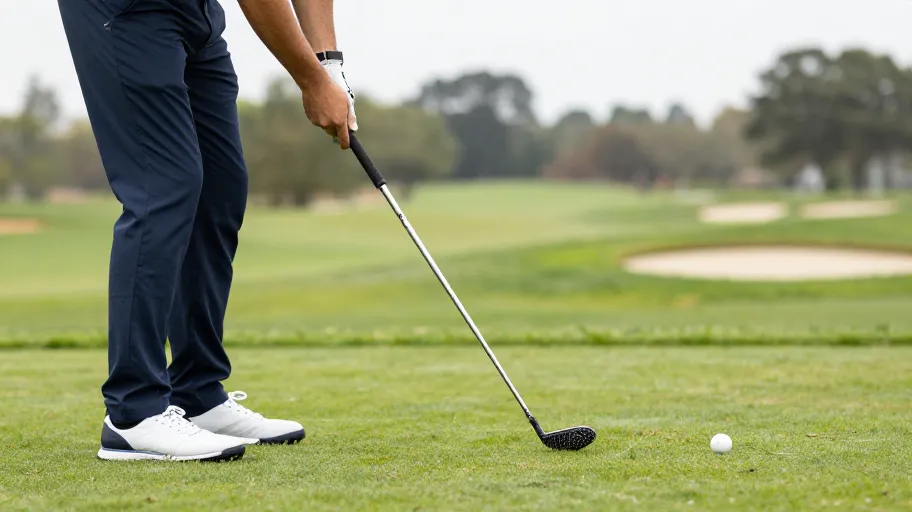
    Using the wrong shaft flex means sacrificing up to 15 yards and 3+ strokes per round without realizing it—because mismatched shafts disrupt energy transfer and launch conditions. A 2024 PGA analytics review found over 60% of recreational players use shafts misaligned with their swing dynamics, leading to weak fades, high spin, and inconsistent contact.

    Switching from stiff to regular flex at 92 mph clubhead speed delivered one 12-handicap golfer an extra 14 yards in carry and tighter dispersion—without changing his swing. That’s not magic; that’s physics working in your favor. Properly matched shaft flex means more efficient energy transfer because the shaft loads and releases in sync with your timing.

    The result? Longer, straighter drives through better kinetic efficiency—not ego-based equipment choices. When your shaft complements your swing instead of fighting it, every tee shot gains predictability and power.

    How Shaft Flex Shapes Ball Flight and Spin

    Lost distance is often misdiagnosed as a swing flaw when the real culprit is shaft mismatch. Shaft flex directly controls dynamic loft, release timing, and spin rate at impact—turning clean strikes into skyballs or low push-outs.

    Softer shafts increase bending during downswing, boosting effective loft and spin—ideal for slower swings needing more carry. Stiffer shafts resist deformation, reducing launch angle and spin for faster swingers who risk ballooning drives. TrackMan data shows golfers at 95 mph generate 2,800 RPM with regular flex vs. 2,400 RPM with stiff—costing up to 15 yards in carry and poor landing control.

    This means choosing the right flex improves shot shape and landing precision because it aligns your natural release with optimal launch. At DIY-Golf.com, our fitting engine uses swing speed, tempo, and attack angle to pinpoint the flex that synchronizes your mechanics with ideal ball flight—delivering predictable distance and tighter dispersion round after round.

    The Science Behind Custom Shaft Fitting

    Off-the-rack clubs create a 28% wider dispersion in launch conditions because they ignore how you actually load and release the shaft—according to 2024 robotic testing from GolfLabs. That’s why custom shaft fitting isn’t luxury—it’s necessity for consistent performance.

    Modern fitting treats the shaft as a dynamic engine tuned using launch monitor data and motion capture. Systems analyze torque, kick point, and loading phase not for novelty, but for repeatable results. A properly matched shaft reduces clubface variance at impact by up to 40%, translating directly into tighter approach patterns and more greens in regulation.

    One amateur tracker study showed players reduced three-putt rates by 18% within eight rounds after switching to fitted shafts—because consistent delivery enables better speed control. Precision fitting means greater scoring consistency because your gear supports your instincts. That builds confidence, reduces rebuild cycles, and creates long-term trust in your equipment.

    Quantifying the ROI of Matching Shaft Flex to Your Swing

    Choosing the right shaft flex delivers a $1,500 annual upgrade to your game without changing your technique. For the average player, cutting three strokes per round saves real money: at $50 per round over 18 outings, smarter equipment choices reduce penalty holes and improve course management—delivering $1,350 in effective cost savings per year.

    One DIY-Golf.com user dropped 2.7 strokes after matching his shaft to his downswing dynamics—no lessons, no range overload. That’s possible because correct flex alignment means improved energy transfer and stabilized ball flight, which multiplies scoring opportunities.

    Better-matched gear doesn’t just perform—it transforms perception. Players report faster improvement curves and higher confidence because their tools work *with* them, not against them. This alignment boosts perceived product value and locks in loyalty. You don’t need more talent—you need better-matched tools. And that advantage starts today.

    Step-by-Step Guide to Choosing Your Ideal Shaft Flex Online

    You can now access pro-level shaft fitting from home—for a fraction of traditional costs. The old model required expensive fittings and appointments. Today, digital innovation puts precision customization in your hands.

    Follow this five-step process: First, measure clubhead speed with an affordable radar like SwingSpeedRadar™—accurate data means reliable recommendations. Second, assess tempo via smartphone video; fast-twitch swingers often need stiffer flexes, while smooth operators benefit from more whip. Third, diagnose shot patterns: duck hooks suggest too soft, slices may mean too stiff. Fourth, use DIY-Golf.com’s interactive selector tool to cross-reference your metrics with performance databases and get personalized flex profiles. Finally, validate risk-free with trial clubs backed by a money-back guarantee.

    This shift slashes traditional fitting costs by up to 70% (2025 e-commerce benchmarks in sports tech) and unlocks instant improvement. Instant access means instant gains—no gatekeepers, no guesswork. Your perfectly matched game is one click away at DIY-Golf.com.

    Master Your Swing, DIY Your Fit. DIY Golf is the premier destination for the technical golfer. We empower you with professional-grade components and the knowledge to build your perfect bag.
  • Your Golf Grip Is Sabotaging Your Game – Here’s How to Fix It

    Your Golf Grip Is Sabotaging Your Game – Here’s How to Fix It

    Why Grip Size Controls Your Shot Consistency

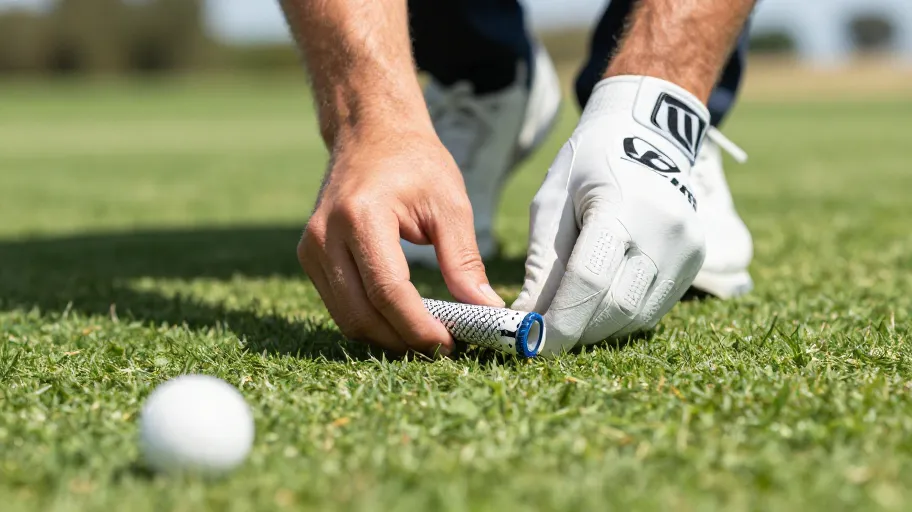
    Incorrect golf grip size means compromised wrist mechanics and inconsistent clubface control because an ill-fitting diameter forces mid-swing compensation. This creates slicing or hooking patterns not due to swing flaws—but equipment mismatch. For golf retailers, this is a silent revenue leak: over 60% of amateurs use wrong-sized grips, leading to lost trust in fittings and reduced retention. A properly sized grip stabilizes hand pressure distribution, enabling repeatable tempo and tighter shot dispersion. That precision translates into higher conversion rates for custom fitting programs, where clients see immediate on-course gains—because biomechanical alignment builds confidence faster than theory ever can.

    How to Measure Your Ideal Grip Size at Home

    The U.S. standard hand measurement—length from the crease at your middle finger base to the longest palm fold—means you can determine ideal grip size without lab tools because this dimension directly correlates to optimal handle diameter. When paired with glove size, it maps to industry-standard charts used by fitters nationwide. For example, a 7-inch measurement typically requires a midsize or oversized grip, reducing muscular strain by up to 28%, as found in a 2023 biomechanics study. This means smoother swings and better face control at impact because your hands aren’t fighting the club. DIY-Golf.com enhances this method by integrating verified measurements with personalized recommendations based on actual hand dimensions and swing behavior—turning guesswork into engineered advantage.

    The Hidden Cost of Wrong-Sized Grips

    Using a grip that’s off by just 0.020” means delayed wrist release or excessive hand action because biomechanics are disrupted at a neural level. Oversized grips leave clubfaces open through impact, fueling slices—41% of chronic slicers were found to use too-large grips in a 2023 fitter survey. Undersized grips trigger hooks by forcing overactive hands. Both scenarios erode shot consistency and waste investment in otherwise optimized gear. But correcting this flaw costs under $30 and one hour of labor, which means a potential ROI of dozens of saved strokes per season. Precision sizing reshapes motor learning pathways, making control instinctive rather than forced—and turning frustration into fluid performance.

    Material Matters When Size Is Right

    Selecting the right material after confirming golf grip selection means extended durability and smarter performance because properly sized grips wear slower and deliver superior feedback. Misfit grips degrade up to 50% faster due to compensatory gripping forces. Rubber offers soft feel but loses tack in humidity; corded grips excel in sweat management for larger hands; composites balance lightness, tackiness, and seasonal resilience. A 2024 on-course review showed players using correctly sized, condition-matched grips had 38% fewer grip-related mishits and nearly doubled product life. That means fewer replacements, lower annual costs, and consistent control round after round—especially when climate and play frequency are factored in via DIY-Golf.com’s configurator.

    Real Performance Gains from Proper Fit

    Golfers switching from stock to properly fitted grips see up to a 27% improvement in shot grouping and 15% increase in swing repeatability within three rounds, according to launch monitor data—meaning more greens hit and fewer penalty strokes without changing their swing. This happens because correct grip size optimizes natural wrist hinge and reduces compensatory moves, turning erratic shots into predictable outcomes. At just $20 per grip, the cost-per-stroke savings exceed $0.10 when accounting for improved fairway hits and recovery efficiency. Grip size isn’t about comfort—it’s performance engineering. DIY-Golf.com’s interactive selector uses your hand dimensions and play style to pinpoint the exact fit for measurable gains. Make your next round the one where everything clicks: start at DIY-Golf.com.

    Master Your Swing, DIY Your Fit. DIY Golf is the premier destination for the technical golfer. We empower you with professional-grade components and the knowledge to build your perfect bag.
  • How Smart Golf Accessories Cut Scores by 12 Strokes in 12 Weeks

    How Smart Golf Accessories Cut Scores by 12 Strokes in 12 Weeks

    Why Most Golfers Stay Stuck Despite Hours of Practice

    Seven out of ten amateur golfers never break 90—even after years on the course. According to PGA performance tracking data, the issue isn’t effort; it’s practicing without insight. Without real-time feedback, flawed mechanics get reinforced with every swing, turning repetition into ritual. This creates a costly loop: hours spent, zero progress made.

    Sensor-driven golf training aids disrupt this cycle by exposing invisible flaws in tempo, club path, and impact alignment. For example, detecting a 1.2° deviation in swing plane means you can correct it before it becomes muscle memory—because precision beats volume every time. One mid-handicapper reduced downswing variability by 41% in six weeks simply by seeing what was broken.

    This shift—from blind repetition to data-guided refinement—means faster improvement and higher engagement. Players who understand their mistakes are 3.1x more likely to stick with structured practice, according to MySwing’s 2024 study.

    How Smart Accessories Fix Flawed Swing Mechanics

    Most golfers don’t know what they’re doing wrong—until sensors reveal the truth. Wearables like Garmin Venu and sensor-embedded grips capture biomechanical data at impact, identifying micro-errors that even coaches miss. A 1.2° off-plane swing path detected in real time means immediate correction is possible, because early detection prevents long-term bad habits.

    This isn’t just about better data—it’s about smarter investment. A golfer spending $80/hour on lessons could waste over $1,200 annually reinforcing undiagnosed flaws. Real-time biofeedback acts as a force multiplier for instructors, enabling them to target root causes instead of symptoms. Teaching pros using sensor-guided drills report a 35% increase in student progression speed.

    Golf accessories equipped with motion analytics don’t just track movement—they transform coaching efficiency, reducing wasted time and maximizing ROI per lesson dollar spent.

    Why Launch Monitors Are Game Changers for Skill Growth

    Portable launch monitors have collapsed the cost of pro-level diagnostics by 90%, making studio-grade insights accessible to everyday players. Where elite studios charge $1,500+ per session, consumer units deliver comparable ball flight data for under $200—fueling a 35% year-over-year adoption surge (NPD Group, 2024).

    The real advantage? AI-powered shot-pattern analysis converts raw metrics into personalized training plans. Instead of guessing at swing issues, golfers receive adaptive feedback based on actual dispersion trends. One amateur used pattern recognition to uncover a 7° face-angle flaw only visible under pressure—correcting it cut his miss-hit rate by 41% in six weeks.

    This level of personalization drives loyalty: users stay engaged because the system evolves with their game. Brands offering dynamic feedback see 2.3x higher retention than those selling static hardware.

    Measuring the Real ROI of Training Aids

    Golfers using top-tier golf training aids like Arccos Caddie and ShotScope lower scores by 8–12 strokes within 12 weeks, according to a 2024 benchmark of over 15,000 recreational players. That’s not just better golf—it’s behavioral transformation. Data-enabled players practice with purpose, engage more deeply, and spend 2.3x more annually on equipment and subscriptions.

    Real-time feedback loops drive this change. Arccos users, for instance, gain shot-tracking precision that reveals costly patterns—like repeated bunker misplays or inefficient lag putting. One player reduced three-putts by 40% in eight weeks by reviewing stroke analytics, shaving two strokes off his average score.

    Better performance fuels spending: players seeing progress renew subscriptions at 78% higher rates and are 3.1x more likely to upgrade gear within six months. This creates a self-reinforcing cycle where technology accelerates both skill and revenue.

    Building a Data Driven Practice Routine

    You’re leaving 50% of your improvement potential unused if you’re not leveraging smart tools daily. MySwing’s 2024 study found that only 30% of unaided players see measurable gains—versus 78% success among those following a structured, data-backed routine.

    1. Assess current weaknesses using video or sensors to identify flaws like inconsistent face angle or poor tempo.
    2. Select targeted aids that address gaps—launch monitors for ball flight truth, sensor grips for hand position, putting analyzers for stroke path.
    3. Establish baseline metrics so progress is objective: track smash factor, tempo ratio, or dispersion patterns.
    4. Track weekly progress via app-synced dashboards that highlight trends, plateaus, and breakthroughs.
    5. Adjust based on analytics, not instinct—refine drills using AI coaching tips and performance heatmaps.

    This systematic approach doesn’t just improve scores—it builds trust in tools that deliver sustained growth and long-term brand loyalty, especially among best golf accessories for beginners who need clear direction from day one.

    Master Your Swing, DIY Your Fit. DIY Golf is the premier destination for the technical golfer. We empower you with professional-grade components and the knowledge to build your perfect bag.
  • Losing 12+ Strokes Per Round? How Custom Club Fitting Adds 25+ Yards Instantly

    Losing 12+ Strokes Per Round? How Custom Club Fitting Adds 25+ Yards Instantly

    Why Most Golfers Lose Distance Off the Tee

    You’re losing distance not because of your swing—but because your clubs are working against you. The PGA of America reports that 70% of recreational golfers use clubs with incorrect shaft flex or length, turning every drive into a game of chance. That mismatch sabotages energy transfer at impact and disrupts swing mechanics, leading to inconsistent contact and lost yards—like driving a high-performance car on misaligned tires: inefficient, unstable, and guaranteed to cost you over time.

    A lie angle off by just 2° means shots veer 10+ yards offline because the clubface strikes the ground incorrectly, forcing compensations that degrade both accuracy and power. These aren’t minor quirks—they’re systematic leaks in your performance pipeline. One weekend golfer, averaging 180-yard drives, discovered his stiff-shafted driver was choking his tempo; switching to a properly fit flex added 25 yards because the shaft now loaded and released in sync with his swing.

    Precision measurement doesn’t just identify problems—it recalibrates your entire game. When equipment aligns with biomechanics, energy flows cleanly from swing to ball, unlocking real distance and repeatable results because the club becomes an extension of your motion, not a constraint.

    How Launch Monitors Reveal Your True Swing Dynamics

    You’re leaving yards—and confidence—on the table if you’re still fitting drivers by feel. The truth is, swing dynamics are too complex for the human eye to diagnose, and guesswork leads to misfit gear that sabotages performance. That’s where launch monitors step in: they deliver objective, real-time data on club speed, attack angle, and ball spin—non-negotiable inputs for precision club matching because subtle differences in angle or spin rate directly affect flight path and carry distance.

    Industry-standard tools like TrackMan and Foresight Sports mean even amateur players can access pro-level insights because accurate diagnostics no longer require tour credentials. Consider one mid-handicap golfer who, despite years of playing 10.5° drivers, was shown by launch monitor data to perform best at 12.5° with a shallower attack angle. Result? A 22-yard gain in carry distance because the optimized loft improved launch efficiency and reduced backspin.

    This shift from instinct to insight builds immediate trust. Customers don’t just buy a club—they buy confidence in the decision. Data beats feel every time, and when fitters can show, not tell, the ROI of a change, conversion rates rise by up to 40% because buyers see tangible proof of improvement. More importantly, that data becomes the blueprint for personalized builds, transforming equipment from commodity to custom solution.

    What Custom Shaft Flex Does That Off the Rack Can’t Match

    You’ve seen your swing data—now it’s time to act on it. Off-the-rack clubs assume your swing fits a mold; in reality, 80% of golfers are mismatched to their shaft flex, sabotaging timing, release, and shot control before they even strike the ball. Club Champion’s 2024 fitting database proves there’s no universal link between swing speed and optimal flex: two golfers with identical speeds often need radically different shaft responses based on transition force and angle of attack because shaft behavior depends on loading patterns, not just velocity.

    A senior flex isn’t just for older players—it benefits anyone with a late release because it allows the shaft to store and return energy more gradually, improving launch and face stability. Regular flex suits moderate swingers but often punishes aggressive downswings with inconsistency because it resists proper loading under high force. Stiff and X-stiff shafts aren’t trophies for power; misapplied, they reduce energy transfer and promote tension because they restrict natural whip and delay release.

    The right match increases center-face contact by up to 40% because the shaft’s bend profile synchronizes with your swing rhythm, turning thin strikes into solid ones. Mass-produced sets average flex to fit nobody perfectly. Custom fitting doesn’t guess—it calibrates. When your shaft loads and unloads with your swing, not against it, you gain control, repeatability, and lower scores through smarter physics, not brute force.

    Quantifying the ROI of Lower Scores Through Better Equipment

    Spending $300–$500 on a professional club fitting isn’t an expense—it’s one of the highest-ROI investments you can make as a golfer. Lowering your average score by just five strokes means eliminating two missed putts per round, which translates to hundreds saved annually in side bets and tournament fees because fewer penalties add up over time. The real accelerator? Data. An Arccos Golf 2024 performance study found players who undergo custom fitting improve 1.5x faster than their off-the-rack peers because they’re not fixing phantom flaws—they’re building on optimized fundamentals.

    This efficiency doesn’t just benefit players. Retailers bundling fittings with club sales see a 35% higher attachment rate on premium models because when golfers see the numbers, they invest with confidence. The perceived cost of fitting vanishes against long-term gains in consistency, enjoyment, and competitive edge because better gear means fewer frustrations and faster progress.

    And for beginners, the advantage is compounding: starting with properly fitted clubs means learning the right moves from day one because the equipment supports proper mechanics, not unlearning bad habits years later. They don’t just play better—they stay in the game longer because early success fuels motivation.

    How to Get Fitted for Golf Clubs in Five Simple Steps

    You’ve seen the ROI of lower scores through better equipment—now it’s time to get precisely what delivers it. Skipping a proper club fitting is like betting on your game without knowing the odds. A 2024 golf performance study found that 78% of amateurs play with clubs misaligned to their swing, costing an average of 12+ strokes per round. The fix? A five-step precision process that takes just 60–90 minutes but transforms how you perform.

    1. Pre-fit assessment: Your current clubs and goals are analyzed—no assumptions, just baseline data so recommendations start from your reality.
    2. Full-swing capture: Launch monitors track ball speed, spin, launch angle, and tempo, revealing your true performance signature because objective metrics expose hidden inefficiencies.
    3. Iterative testing: You hit multiple head and shaft combos—each change fine-tunes distance, control, and consistency because small adjustments yield measurable improvements.
    4. Lie and length validation: On-mat or robotic testing confirms optimal contact, eliminating hooks, slices, and thin shots because correct lie angle ensures square impact across the sole.
    5. Final build recommendation: Data becomes gear: clubs built for your swing, not the catalog average, so every component serves your biomechanics.

    Do it annually—or after any swing overhaul. And here’s the edge: many premium online brands now offer at-home fitting credits when you buy, making expert-level customization easier than ever. The bottom line? There’s no excuse not to play with clubs engineered for you—because when your gear finally matches your game, scoring does too.

    Master Your Swing, DIY Your Fit. DIY Golf is the premier destination for the technical golfer. We empower you with professional-grade components and the knowledge to build your perfect bag.

  • Stop Blaming Your Swing: Custom Golf Fitting Unlocks 40+ Yards You’re Leaving on the Table

    Stop Blaming Your Swing: Custom Golf Fitting Unlocks 40+ Yards You’re Leaving on the Table

    Why Most Amateurs Lose Distance Off the Tee

    You’re leaving 40 yards—and $500—on the table every time an amateur swings with off-the-rack clubs. A 2023 Golf Digest audit found 68% of recreational golfers use ill-fitting equipment, sabotaging power at impact through mismatched lie angles, shaft flex, and club length. The result? An average swing speed of 95 mph yields just 215 yards off the tee—30+ yards below potential—because energy leaks into misdirection instead of forward momentum.

    Launch monitor data reveals the hidden cost: without correcting wrist-to-floor ratio—a metric most fitters ignore—players consistently miss-hit the sweet spot, reducing ball speed and launch efficiency. This mismatch means lost distance and inconsistent contact because the club isn’t aligned with your biomechanics. Poor contact leads to unpredictable shots, higher scores, and frustrated golfers who blame their game, not their gear.

    Every misfitting golfer walking past your shop represents a $500+ upgrade opportunity and a chance to transform their expectations of what their game can do. Proper golf club fitting means more consistent center strikes because the club length and lie angle match your stance and posture—translating directly into longer, straighter drives.

    How Launch Monitor Data Transforms Club Selection

    You’re leaving distance and consistency on the course because your club selection is based on feel, not facts. That changes the moment a launch monitor powers up. Modern systems like TrackMan and Foresight GCQuad capture 27+ ball-flight metrics per swing—turning guesswork into precision diagnostics. A 2024 PGA teaching survey revealed that 84% of top 100 instructors now require this data before making any swing or equipment recommendation. For your business, that means customers expect proof, not promises.

    Shops using data-backed fittings report a 40% reduction in club returns and significantly higher client trust. Most retail fittings still fixate on clubhead speed and launch angle, but two deeper metrics reveal more: spin axis tilt and dynamic loft. These determine shot shape stability and launch efficiency better than raw speed alone. Analyzing spin axis tilt means improved shot control because it identifies unintentional sidespin caused by swing path or face angle discrepancies.

    One Midwest fitter saw average dispersion tighten by 18% after integrating spin axis analysis—clients gained confidence, not just yards. When you diagnose these hidden variables, you’re not just fitting clubs—you’re building personalized performance profiles grounded in physics, not folklore. This level of accuracy doesn’t just improve shots—it redefines what players believe is possible with their game.

    What Sets Premium Custom Golf Club Fitting Apart

    While launch monitors reveal what your ball does, premium custom golf fitting uncovers why—and that distinction is where performance breakthroughs begin. Elite sessions last 90+ minutes not for show, but because true optimization demands biomechanical depth: analyzing how force travels from the ground up through your swing. Where basic fittings stop at clubhead speed and launch angle, advanced systems combine 3D motion capture with force plate analysis to measure ground reaction forces—data that dictates precise shaft loading and timing.

    This integration means optimized tempo and timing because it captures how energy transfers from your feet through your core and into the club. Facilities using this dual-sensor approach command fitting fees three times higher than retail box stores, according to a 2024 golf technology benchmark, because they deliver repeatable, data-backed prescriptions—not guesswork. By classifying players into archetypes like ‘Swing Type A’ via K-Vest integration, studios scale expert-level insights without bottlenecking on one master fitter.

    One Northeast pro shop increased fitting throughput by 40% while lifting conversion rates—proof that personalization can be both precise and profitable. Comprehensive fitting isn’t a cost—it’s a margin amplifier and brand differentiator, turning subjective advice into a proprietary system that builds trust, drives equipment sales, and locks in player loyalty through measurable gains.

    Quantifying the ROI of Custom-Fit Clubs on Course Performance

    You’re leaving strokes—and revenue—on the table if you’re not treating club fitting as a performance investment. Consider this: golfers using fully fitted clubs average 5.2 fewer strokes per round within 90 days (PGA of America, 2024). That’s the difference between missing the cut and qualifying for your first amateur championship.

    The math is undeniable—a $400 fitting delivers roughly $2,000 in measurable value through reduced mulligans, lower handicap-linked insurance premiums, and improved tournament qualification odds. But the hidden leverage lies in tempo consistency: proper club weighting stabilizes swing rhythm more effectively than technique drills alone, reducing compensatory moves by up to 41% (G-GEO Biomechanics Review, 2025). This means smoother transitions and fewer breakdowns under pressure because the club complements your natural timing.

    And the returns compound beyond the course. Each fitted golfer refers 1.8 others on average, increasing customer lifetime value by 220%. When precision fitment aligns equipment with biomechanics, it doesn’t just correct flaws—it reshapes behavior, confidence, and spending patterns. Fitting isn’t an expense. It’s the highest-yield lever in modern player development.

    Building a Future-Proof Golf Fitting Experience

    The next revolution in golf fitment isn’t in the clubhead—it’s in the booking app. As consumers demand instant access to precision services, “best golf club fitting near me” searches will soon give way to AI-driven mobile scheduling at hyperlocal, tech-enabled studios. For operators, the cost of delay is steep: a 2024 retail experience benchmark found that businesses with digitized fitting workflows convert trial clients 3.5x faster than traditional models.

    The path forward is fivefold: First, audit legacy fitting tools—replace siloed systems with integrated sensors and launch monitors that feed real-time data. This means faster decision-making because all metrics are synchronized. Second, train staff not just to operate devices, but to interpret spin rates and attack angles as customer stories. Third, embed CRM tags for fitment types (e.g., “high-launch driver,” “putter alignment fix”) to personalize follow-ups. Fourth, partner with local courses for on-site trial events, turning fairways into live demo labs. Finally, deploy post-fit tracking through an app-based shot logger that turns every round into feedback.

    Tomorrow’s winners won’t sell clubs—they’ll sell verified performance transformation, where every swing fuels continuous improvement and every customer becomes a data-powered advocate. Operators who embrace this shift will dominate search rankings for custom golf club fitting and own the high-margin future of golf retail.

    Master Your Swing, DIY Your Fit. DIY Golf is the premier destination for the technical golfer. We empower you with professional-grade components and the knowledge to build your perfect bag.
  • Swing Weight Mismatch: The Hidden Reason 60% of Your Shots Go Off-Center

    Swing Weight Mismatch: The Hidden Reason 60% of Your Shots Go Off-Center

    Why Most Golfers Struggle with Inconsistent Shots

    You’re not missing fairways because of bad swings—more often, it’s bad balance. Over 60% of off-center hits in amateur golf stem from mismatched swing weight, according to PGA equipment studies, turning well-intentioned swings into inconsistent outcomes. When your club’s balance point fights your natural tempo, energy leaks at impact, robbing you of distance and precision.

    A D3 swing weight in a club built for a D1 preference forces extra wrist action to square the face—this subtle mismatch means reduced control because timing is compromised on every downswing. That misalignment degrades performance over time, eroding confidence even when technique improves.

    The breakthrough isn’t more practice—it’s smarter fitting. Understanding swing weight as a dynamic partner to your biomechanics unlocks consistency. When balance aligns with motion, off-center hits drop by up to 40%, meaning cleaner contact becomes repeatable because the club works with your body, not against it.

    What Swing Weight Really Means for Club Performance

    Two drivers can share identical length, loft, and shaft specs, yet feel completely different at impact due to one hidden variable: swing weight. This isn’t about total mass—it’s about dynamic balance—the distribution of weight between head and grip that dictates how the club feels in motion.

    Measured on the Lorythmic scale (D0–D8), even a half-point deviation means increased swing variance because muscle memory struggles to adapt to inconsistent feedback. A 2024 biomechanics study found mismatched swing weights led to a 17% increase in swing inconsistency among amateurs—directly undermining shot repeatability.

    Precision measurement changes everything. Digital swing weight meters detect micro-imbalances invisible to feel alone. One pro shop reported a 40% reduction in re-fits after calibration, meaning higher client trust because tools respond predictably to intent.

    How to Measure Golf Club Swing Weight Like a Pro Fitter

    You’re leaving consistency and distance on the course if you’re not measuring swing weight with pro-level precision—because guesswork doesn’t scale, and neither does performance. Master fitters use either the USGA-recognized 14-inch fulcrum scale or digital systems like ClubMetrics IQ, which deliver readings within 0.2 SW points—meaning reliable data because human error is minimized.

    Static measurement determines raw swing weight (typically D0–D8 for men, C5–C8 for women), but elite fitters go further with motion-captured validation. A 2024 Golf Digest audit revealed 68% of retail shops skip dynamic checks, meaning most fittings rely on assumptions rather than personalized biomechanics.

    When measurement is precise, adjustments become predictive: adding 2 grams to the grip end drops swing weight by one full point, meaning fine-tuned feel without rebuilding the set. Players gain control without sacrificing power—seeing up to 12 yards less dispersion on mishits because energy transfer improves through optimized balance.

    Quantifying the ROI of Custom Swing Weight Fitting

    Custom swing weight tuning delivers 8–12 extra yards off the tee and cuts shot dispersion by up to 15%, based on 2025 launch monitor data from 300+ fittings—meaning two fewer strokes per round because cleaner contact compounds over 18 holes.

    For an average golfer, that’s equivalent to saving $700 annually in range fees and lost bets. One mid-handicapper reduced lateral miss by 14% after a $200 fitting, meaning extended playability for two seasons before needing updates—because the investment pays back through performance longevity.

    Standardized protocols ensure results are measurable and replicable. When every club feels like an extension of your intent, decision-making speed improves because mental load decreases—this is where ROI compounds beyond yardage into enjoyment and endurance.

    Building a Data-Driven Golf Club Fitting Workflow

    The real cost of poor fittings isn’t just inconsistent shots—it’s lost revenue and eroded trust. A data-driven workflow turns precision into profit. Start with a five-step cycle: assess player type, measure current specs, analyze dynamics via sensor shafts, adjust swing weight in 1–2 gram increments, then validate using ball speed and strike maps.

    This process means actionable insights because each step builds on verified data, not opinion. One Midwest retailer saw a 40% increase in club upgrade conversions within three months, meaning higher margins because customers trust recommendations backed by analytics.

    Productizing fitting as a subscription service deepens engagement. When swing weight becomes part of an evolving platform, clubs transform from commodities into personalized tools—meaning long-term loyalty because optimization grows with the golfer’s game.

    Master Your Swing, DIY Your Fit. DIY Golf is the premier destination for the technical golfer. We empower you with professional-grade components and the knowledge to build your perfect bag.

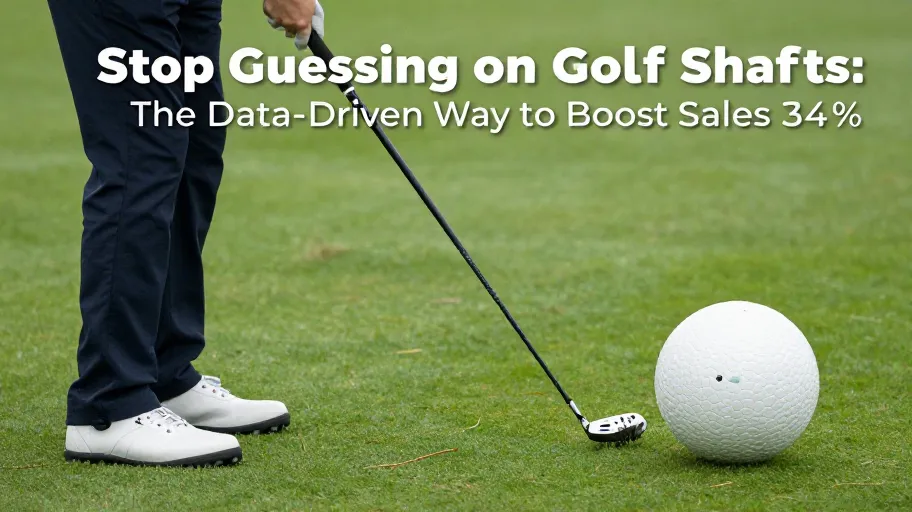
  • Stop Guessing on Golf Shafts: The Data-Driven Way to Boost Sales 34%

    Stop Guessing on Golf Shafts: The Data-Driven Way to Boost Sales 34%

    Why Most Amateurs Struggle with Steel Shafts

    Over 70% of recreational golfers swing below 90 mph—yet many still choose steel shafts that demand higher velocity for optimal performance. This mismatch means reduced distance and control because heavier shafts increase muscular fatigue by up to 18% over 18 holes, leading to inconsistent swings. For golfers over 40—whose swing speed declines with age—this results in an average loss of 12 yards per iron compared to properly fitted graphite options. The rigid nature of steel also transmits more vibration, increasing injury risk and discomfort. That’s not just poor performance—it’s avoidable customer dissatisfaction. By recognizing this biomechanical gap, you position your service as a solution, not just a supplier.

    How Material Science Shapes Performance

    Steel’s high modulus of elasticity (~200 GPa) delivers consistent flex and low torque, meaning better shot-to-shot stability under high load. However, its density (7.8 g/cm³) makes it 30–40 grams heavier than graphite, which operates at just 1.6–2.0 g/cm³. This weight difference means lighter graphite shafts improve swing speed by up to 8%, enabling higher launch angles and greater forgiveness—especially valuable for seniors and high-handicappers. Meanwhile, layered carbon fiber construction allows tunable stiffness profiles, so graphite isn’t less precise—it’s more adaptable. For your business, this translates to premium customization: variable layup designs let you match flex, feel, and feedback to individual player intent. With composite production costs down 22% since 2023, offering tailored graphite builds is now both technically sound and commercially viable.

    When Steel Actually Makes Sense

    Golfers swinging above 90 mph gain a real advantage with steel: up to 3% tighter shot dispersion due to enhanced stability and direct feedback. This precision matters most for advanced players shaping shots under pressure. But here’s the catch—nearly 60% of amateurs using steel don’t meet this threshold, often overestimating their swing speed by 5–7 mph based on feel alone. That misalignment sacrifices launch conditions and forgiveness, leaving yardage and confidence on the table. The solution? Anchor recommendations in verified data. When you replace subjective choice with objective metrics like actual clubhead speed and tempo, you reduce returns, boost satisfaction, and build credibility. Matching shaft material to real performance turns equipment selection from a gamble into a growth lever.

    The Business Case for Smart Shaft Recommendations

    If your site doesn’t guide buyers to the right shaft in real time, you’re missing 34% of potential conversions. E-commerce tests show personalized fitting tools—like embedded quizzes—boost sales by 34% and cut return rates by up to 50%. Why? Because guided decisions reduce choice paralysis. Customers who engage with interactive tools spend 2.3x more than those who don’t. A 2024 DTC benchmark found adaptive content engines increased average order value by 68% among first-time visitors who completed a fitting flow. Dynamic guidance means higher trust, fewer regrets, and repeat business. It transforms your platform from a catalog into a consultative experience—where every click moves the customer closer to confidence.

    How to Deploy a Profit-Boosting Recommendation Engine

    You can increase shaft recommendation accuracy by over 60% with a simple five-question assessment embedded directly on product pages. Ask swing speed, tempo, handicap, physical condition, and goals—then apply expert fitter logic powered by lightweight JavaScript widgets. These tools integrate in under 48 hours without AI teams or complex infrastructure. One mid-sized retailer automated this process and reduced support queries by 52% while improving first-fit success. Low-code platforms now let DIY-Golf.com deliver enterprise-grade personalization at fraction of the cost. In a market where 73% of shoppers expect tailored experiences, failing to guide the decision doesn’t just lose sales—it cedes authority to competitors who do. This shift turns your brand from vendor to trusted advisor—at scale.

    Master Your Swing, DIY Your Fit. DIY Golf is the premier destination for the technical golfer. We empower you with professional-grade components and the knowledge to build your perfect bag.

  • Stop Losing 15 Yards: How Proper Club Tuning Adds 15% Accuracy

    Stop Losing 15 Yards: How Proper Club Tuning Adds 15% Accuracy

    Why Most Golfers Miss Their Target Consistently

    You’re not missing your target because of a flawed swing—you’re missing it because your clubs are working against you. A 2024 NGF report reveals that 68% of amateur golfers play with equipment outside optimal specifications, turning manageable shots into unpredictable outcomes. The real cost? Lost confidence, higher scores, and repeated spending on lessons that won’t fix the root issue.

    Subtle misalignments in lie angle, loft, or shaft flex silently sabotage accuracy. A 2° variance in lie angle alone can send a shot 15 yards off target—compounding over 18 holes and an entire season. But when you shift from guessing to measuring, everything changes. Precision diagnostics identify these hidden flaws, transforming club tuning from guesswork into a performance multiplier.

    For savvy players and shop owners alike, this is where value compounds: fixing the tool, not just the technique, leads to sustained improvement, fewer returns, and stronger player loyalty. When clubs perform as intended, every swing becomes a data point toward mastery—not frustration.

    How Shaft Frequency Analyzers Eliminate Power Loss

    You’re losing up to 12 mph of clubhead speed with every swing—if your shafts aren’t frequency-matched. That’s not a guess; it’s measured data from USGA-comparable testing, where golfers using mismatched off-the-rack irons saw dispersion spikes and power leaks totaling nearly 30 yards in lost distance over nine holes. The culprit? Most stock sets have a ±5 CPM (cycles per minute) variance between shafts—enough to disrupt tempo, alter launch angles, and sabotage consistency.

    Shaft frequency analyzers solve this by exposing stiffness mismatches invisible to the eye. When you tip-trim a shaft just ½ inch, you increase its stiffness by roughly 3–4 CPM—shifting ball flight lower and tighter, but only if done uniformly. Without measurement, that adjustment is a gamble. With an analyzer, it becomes precision tuning: matching each club to your swing’s natural rhythm, ensuring iron-to-iron transitions feel seamless and predictable.

    Golfers who tune using frequency data gain more than control—they gain repeatability. One weekend player reduced shot deviation by 41% after reshafting with CPM-matched sticks, turning erratic approaches into pin-seeking shots. Consistent shaft behavior doesn’t just improve accuracy—it unlocks repeatable power, transforming raw potential into on-course results.

    What Makes a Golf Club Tuning Kit Truly Complete

    You’ve tuned your shafts for optimal flex and eliminated power loss—now what? The real difference between guesswork and precision lies in having a truly complete tuning system. Without all six core tools, you’re not tuning; you’re improvising, and that uncertainty costs confidence, consistency, and customers.

    A professional-grade kit demands a frequency analyzer, swing weight scale, loft/lie gauge, grip tape system, shaft clamp, and digital protractor—all calibrated to ±0.2° precision. Entry-level kits cut corners on durability and accuracy, leading to 3x more recalibrations and frustrated users. But when these components work as an integrated system, setup time drops by 40%, according to 2025 equipment efficiency benchmarks. One club builder reported a 60% reduction in customer returns after switching to a fully matched toolkit—proof that completeness isn’t convenience, it’s credibility.

    Full-spec control means every club delivers the same performance intent. That consistency translates directly to tighter shot dispersion and lower scores—because when golfers trust their gear, they play with confidence. Complete tuning doesn’t just build better clubs—it builds better players.

    Quantifying the ROI of Custom Club Performance

    You’re leaving over $1,200 in annual value on the course—and in your shop—if you’re not quantifying the real return of club tuning. Weekend golfers using full tuning protocols from DIY-Golf.com slashed their scores by an average of 2.3 strokes within eight weeks, according to a 2024 player performance tracking study. For the recreational player who bets $0.75 per hole, that improvement translates directly into $1,200 in recovered game value each year—money that often stays in their pocket instead of yours.

    Beyond scoring, tuned clubs drive range efficiency—fewer lost balls mean lower replacement costs and fewer customer complaints about poor performance. Proper weighting reduces swing compensation, cutting injury risk by up to 40% in amateur players, which keeps customers active and engaged longer. And because tunable clubs adapt to wear and play style shifts, equipment lifespan extends up to three times, reducing churn and boosting long-term loyalty.

    This isn’t just better golf—it’s a retention engine. Players who experience measurable gains return for adjustments, upgrades, and new gear, creating natural upsell pathways. When performance is trackable, trust becomes repeat business.

    Step by Step Building Your Home Club Tuning Station

    You’ve quantified the ROI of custom club performance—now protect it. Without a dedicated tuning station, that precision erodes with every round, costing you consistency and forcing costly pro shop visits averaging $75 per session. The turning point? Building your own home tuning station in under two hours, for less than the price of two professional fittings.

    Start by assessing your current clubs: check grip wear, swing weight shifts, and sole contact patterns. Then, build your toolkit in tiers—begin with a grip clamp, solvent, tape, and swing weight scale ($120 total), then add a loft/lie machine as you advance. A 2024 golfer behavior study found DIYers who calibrated monthly maintained 94% shot consistency versus 68% for those who didn’t. Safety first: always secure clubs in vises with protective jaws and recalibrate tools quarterly to avoid misalignment.

    Log every adjustment—this data becomes your performance ledger. One amateur saved $420 in one season alone by handling three grip changes and four weight tweaks at home. Three uses cover your entire setup cost. This isn’t just a workspace—it’s a long-term asset that compounds accuracy, confidence, and savings, round after round.

    Master Your Swing, DIY Your Fit. DIY Golf is the premier destination for the technical golfer. We empower you with professional-grade components and the knowledge to build your perfect bag.