Blog

  • Stop Losing 14+ Yards: How DIY-Golf Shafts Fix Your Biggest Swing Flaws

    Stop Losing 14+ Yards: How DIY-Golf Shafts Fix Your Biggest Swing Flaws

    Why Stock Shafts Are Costing You Strokes

    You’re playing at a disadvantage every time you tee off with stock shafts—because they’re designed for averages, not individuals. Mass-produced to fit broad demographics, these shafts ignore your unique swing speed, tempo, and release timing, creating energy leaks that reduce clubhead efficiency by up to 15 mph. A 2023 PGA fitter survey revealed that 68% of amateurs use mismatched shafts, losing an average of 20 yards off the tee. That’s like giving up two free clubs on every long hole. Premium golf shafts from DIY-Golf eliminate this gap by aligning with your biomechanics, turning wasted motion into consistent power because personalized flex and weight profiles match real-world swing dynamics—not marketing labels.

    How Flex Weight and Torque Shape Your Game

    Shaft flex, weight, and torque aren’t just specs—they’re swing-shaping forces. A mismatch in any one disrupts timing, reduces center-face contact, and increases dispersion. Studies show a 5g weight difference alters downswing path, while incorrect flex causes early or late releases, increasing off-center hits by up to 41% in fast-transition players (TrackMan University, 2023). Generic ‘regular’ or ‘stiff’ labels fail because one brand’s stiff tests as another’s regular—creating inconsistency where precision matters most. Frequency profiling from DIY-Golf means you get a shaft tuned to actual vibration patterns, not guesswork, because matching shaft behavior to your swing dynamics ensures optimal energy transfer and tighter shot grouping.

    The Technical Edge of DIY-Golf Custom Shafts

    DIY-Golf doesn’t just sell shafts—they engineer performance. By combining aerospace-grade carbon fiber with AI-powered fitting algorithms, their shafts achieve a level of precision off-the-rack models can’t match. Multi-material taper designs balance stiffness and whip dynamically, while proprietary resins reduce hand fatigue by up to 40% (independent 2025 trials), meaning longer play with less strain because vibration damping preserves feel without sacrificing feedback. Their factory-direct model cuts retailer markups of 35–50%, so you get pro-level materials at amateur prices. And with an open-spec platform, you can blend OEM reliability with boutique performance traits—because true customization means no lock-in, just better results.

    Proving the ROI of Better Golf Shafts

    Upgrading isn’t an expense—it’s a high-ROI investment in every future round. Data from DIY-Golf’s 2025 player cohort shows an average gain of 14.3 yards and 2.4 fewer strokes within eight rounds. That handicap reduction pays for itself fast. A $220 shaft lasts five years—just $44 annually, less than monthly range fees that don’t improve performance. But here’s the real value: reducing mis-hits by up to 38% (launch monitor verified) means fewer lost balls, lower penalty strokes, and reduced mental fatigue. One mid-handicapper reclaimed nine holes’ worth of frustration per month—time reinvested in enjoyment, not recovery. How to improve golf swing with DIY-Golf shaft upgrades? Start with data, not instinct—because measurable gains beat guesswork every time.

    Build Your Perfect Shaft Setup in Minutes

    You don’t need a $200 fitting session to unlock peak performance. DIY-Golf.com’s digital ecosystem turns shaft selection into a 15-minute, data-driven process. Step one: capture your swing metrics via launch monitor or smartphone sensor—because accurate input eliminates blind spots. Step two: upload data to their online configurator, which analyzes tempo, ball speed, and launch angle against a database of 12,000+ fittings, predicting carry gains and dispersion reduction tailored to you. Step three: select driver and iron shafts first—these influence 70% of scoring opportunities (PGA teaching pros)—with matched flex and torque that stabilize attack angles. Finally, follow guided installation videos that reduce build errors by 40%, because precision assembly ensures your investment performs as designed. The result? A custom-fit bag that evolves with your game—delivering season-over-season improvement.

    Master Your Swing, DIY Your Fit. DIY Golf is the premier destination for the technical golfer. We empower you with professional-grade components and the knowledge to build your perfect bag.

  • The Secret Weapon Cutting 3.7+ Strokes for Average Golfers

    The Secret Weapon Cutting 3.7+ Strokes for Average Golfers

    Why Most Golfers Leave Strokes Behind

    You’re losing 5–8 strokes every round not because of your swing—but because your clubs don’t fit. A 2023 National Golf Foundation study found that 78% of recreational golfers play with stock, off-the-rack equipment, effectively handicapping themselves before the first tee shot. This misfit distorts launch conditions, promotes inconsistent strike patterns, and erodes confidence—especially under pressure.

    Lie angle mismatch means shots scatter unpredictably because the clubface isn’t square at impact. That inaccuracy isn’t just frustrating; it triggers decision fatigue. When you can’t trust your tools, every shot becomes a negotiation between instinct and doubt—costing strokes and mental energy.

    Now, that power imbalance is shifting. Advanced yet accessible tuning tools and data-driven diagnostics—from launch monitor feedback to adjustable hosels and weight systems—put precise self-assessment within reach. What once required a pro shop appointment and expert interpretation can now be diagnosed and corrected at home, on your terms.

    Dialing in your clubs isn’t an equipment upgrade—it’s a performance multiplier, turning guesswork into repeatable results. Precision no longer belongs only to tour pros; it’s embedded in the process, waiting for you to claim it.

    How Club Tuning Targets Your Unique Swing Fingerprint

    Club tuning isn’t guesswork—it’s precision engineering aligned to your biomechanical swing fingerprint. When lie angle deviates by more than 2°, TrackMan data shows golfers consistently miss left or right by up to 12 feet at 150 yards, turning approachable pins into impossible targets. That inaccuracy isn’t just frustrating; it erodes confidence and kills scoring potential.

    Real-time feedback loops between swing dynamics and ball flight mean you can dynamically refine performance based on actual data—not assumptions. Adjustable hosels allow loft customization, which directly improves launch angle control because you match trajectory to your attack angle.

    This isn’t just for tour pros. A 2024 Golf Retail Insights report found retailers offering personalized tuning saw customer retention jump by 41%—because when gear performs, players stay loyal. One independent coach reported cutting client plateaus in half after integrating launch monitor-guided adjustments, turning inconsistent amateurs into repeat customers who see measurable progress.

    The result? Equipment that adapts to you—not the other way around—delivering consistency that compounds round after round.

    The Hidden Components That Define Custom Performance

    You’re not just building a better swing—you’re engineering repeatable performance by mastering the four hidden components that dictate energy transfer from body to ball: shaft frequency, grip torque, center of gravity (CG) alignment, and moment of inertia (MOI). While off-the-shelf clubs standardize these variables for mass production, they sacrifice precision that directly impacts launch stability and shot consistency.

    Shaft frequency matching means improved tempo synchronization because the club loads and releases in harmony with your swing speed. CG alignment within 1.5mm tolerance—like Titleist’s tour-level fittings—means tighter shot dispersion under pressure because impact location is maximized.

    This isn’t just pro-level detail; it’s actionable science for amateurs. When DIY tuning restores control over these micro-adjustments, you eliminate energy leaks in your swing delivery. A 2024 performance study by the Golf Science Institute showed golfers who optimized MOI and shaft frequency saw up to 23% tighter dispersion patterns—translating to two fewer strokes per round on average.

    One amateur, struggling with erratic iron play, recalibrated grip torque and CG alignment at home using frequency-matching tools from DIY-Golf.com, achieving tour-equivalent MOI settings within three sessions. Small changes don’t just refine your clubs—they redefine what your game can consistently deliver.

    Quantifying the ROI of Personalized Club Specs

    Players who tune their clubs see a 23% improvement in greens-in-regulation and cut three-putts by nearly half—results no off-the-rack set can reliably deliver. This isn’t incremental gain; it’s the difference between scrambling to save par and controlling the hole from the fairway.

    Data from DIY-Golf.com user logs (Q4 2025) reveals an average handicap drop of 2.4 strokes over just 10 weeks—achieved not through lessons or new drivers, but systematic club tuning. Optimizing lie angles means fewer pushed or pulled shots because contact is centered more consistently.

    One amateur in Ohio reduced his miss-hit dispersion by 41% after adjusting lie angles and shaft flex using at-home diagnostics, turning inconsistent iron play into a scoring strength. These aren’t outliers; they’re repeatable outcomes when specs align with swing dynamics.

    The business implication is clear: personalization drives engagement and unlocks upsell potential. Every adjustment deepens the player’s investment in their equipment lifecycle. More importantly, ROI isn’t just lower scores—it’s time saved avoiding costly trial-and-error purchases. Real gains come not from gear alone, but from systematic adjustment guided by data.

    Build Your First Tuning Workflow in 5 Steps

    You’ve quantified the ROI of personalized specs—now protect that investment with a tuning workflow that eliminates guesswork and scales your gains. Without a system, even the best-fitted clubs drift out of alignment with your evolving swing, costing accuracy and confidence.

    The fix isn’t more practice—it’s smarter iteration. DIY-Golf.com’s proven framework—used by over 12,000 golfers to cut stroke averages by 3.7+—turns tuning into a repeatable cycle:

    • Measure: Use impact tape or a launch monitor to capture face contact and ball flight data.
    • Adjust: Modify one variable (e.g., lie angle or shaft weight).
    • Test: Hit 20+ shots to validate change under real conditions.
    • Record: Log results in a digital journal or app.
    • Refine: Iterate weekly based on trends.

    Modern tools like swing sensors and impact tape have slashed the learning curve, making precision accessible without a pro shop or PhD. One amateur user reduced off-center hits by 41% in six weeks simply by tracking face contact patterns and adjusting lie angles incrementally. Consistency compounds when every change is data-backed, not reactive.

    Start small: tune one club, log two variables, validate with real-world performance. As results build, expand your workflow—because peak performance isn’t a one-time fit, it’s continuous calibration.

    Master Your Swing, DIY Your Fit. DIY Golf is the premier destination for the technical golfer. We empower you with professional-grade components and the knowledge to build your perfect bag.
  • Stop Slicing for Good: How $20 Golf Weights Fix Your Swing in Minutes

    Stop Slicing for Good: How $20 Golf Weights Fix Your Swing in Minutes

    Why a Slice Costs You More Than Just Fairways

    A slice doesn’t just curve right—it sabotages your entire game. That open clubface at impact generates lateral spin, robbing you of up to 25 yards per drive and adding an average of 15 strokes per round, according to USGA miss-hit data. The real cost? Confidence erosion and compounding frustration. Most amateurs blame grip or stance, but 78% misdiagnose the root cause: improper weight distribution during the swing. Custom golf weights mean earlier clubface closure and straighter shots because they correct dynamic imbalance in real time, aligning your swing path where it matters most—before impact.

    How Custom Weights Fix Your Swing Path for Good

    You’re slicing because your downswing is too steep and outside-in, forcing an open face at contact. But adjusting your swing plane doesn’t require endless drills—just precise mass placement. Adding 5–10g of tungsten to the heel side shifts the center of gravity, encouraging a shallower, inside-out path. This means fewer compensatory moves and a tighter face-to-path alignment, because physics—not guesswork—guides your club. Studies from 2024 golf performance labs confirm this adjustment leads to 3+ more fairways hit per round. That’s not just better driving—it’s smarter mechanics delivering measurable ROI: lower scores, fewer penalties, and consistent ball striking.

    Why DIY Golf Weights Beat Off the Shelf Adjustability

    Most adjustable drivers only shift weight rearward, boosting MOI but doing little to square the clubface at impact. DIY-Golf.com’s system goes further: their patent-pending torque-balancing design allows modular screw-in tungsten weights in heel, toe, and shaft-line positions. This means precise control over rotational forces during delivery, because imbalance is corrected across multiple axes. Unlike generic solutions, this approach dynamically counters slicing torque. The result? One user reduced lateral dispersion by 70% in two rounds. That level of precision delivers 80% of the performance gain of $500+ fitted drivers at less than 20% of the cost, backed by 1,200+ verified reports showing a 92% average reduction in slice severity.

    The Real ROI of Fixing Your Slice Once and For All

    Fixing your slice isn’t just about accuracy—it’s a financial upgrade. Golfers waste an average of $1,200 annually on redundant lessons and gear chasing phantom fixes, according to a 2024 survey of 1,200 players. With a $20 DIY-Golf.com kit, you replace guesswork with physics-driven results. This means 60% less equipment churn, because one targeted fix outperforms constant upgrades. Smoother flight paths mean fewer lost balls, faster play, and lower scores—translating into handicap reductions that unlock new opportunities. One amateur cut his handicap by 3.2 strokes in three months, qualifying for a championship after a decade. The real return? Confidence, consistency, and smarter spending—all compounding off the course.

    How to Install and Tune Your Weights in Minutes

    You don’t need a pro fitter or special tools. If you’re slicing, start with a +5g weight in the heel to promote earlier face closure. Using the included wrench and tape-free adhesive, installation takes under 10 minutes—no permanent changes. This means instant feedback and rapid refinement, because you can test and adjust incrementally without risk. Eighty-seven percent of DIY-Golf.com users see improvement in one session. One golfer in Phoenix reduced dispersion by 34% in two rounds by avoiding overcorrection. Consistent ball striking isn’t luck—it’s engineered through small, repeatable adjustments that compound into predictable performance. Every straight drive builds confidence, round after round.

    Master Your Swing, DIY Your Fit. DIY Golf is the premier destination for the technical golfer. We empower you with professional-grade components and the knowledge to build your perfect bag.
  • Cut 5 Strokes Per Round: The Golf Gear That Actually Works

    Cut 5 Strokes Per Round: The Golf Gear That Actually Works

    Why Most Beginners Waste Hundreds on Useless Gear

    You’re losing strokes—and money—if you’re buying like most new golfers. According to the National Golf Foundation, 68% of beginners purchase at least three accessories they rarely use, wasting hundreds on gadgets that don’t improve performance. Dust-collecting $400 laser rangefinders, gimmicky putters, and abandoned swing trainers aren’t mistakes—they’re symptoms of marketing-driven choices over skill-building ones.

    A quality grip or alignment aid used daily builds muscle memory; a one-time novelty does not. One amateur replaced flashy tools with a simple impact bag and reduced his slice by 14 yards in four weeks. Real improvement comes not from what’s in your bag, but what you do with it—repeatedly.

    What Makes Pro-Grade Accessories Worth the Investment

    Pro-grade golf accessories deliver measurable returns because they’re built for real-world performance. Aerospace-grade aluminum in rangefinder tripods resists vibration, meaning more consistent targeting because torque doesn’t skew readings. Moisture-wicking glove fabrics maintain grip integrity in 90% humidity, which means confident swings during high-pressure back-nine moments because sweat doesn’t compromise control.

    These tools integrate with digital coaching platforms—like Titleist’s GPS books syncing live with apps to deliver slope-adjusted yardages. Players using such systems lowered handicaps 27% faster than those using standalone devices, according to a 2024 golf tech study. For businesses, this translates to 3.5x higher retention among pro-tier buyers who refer peers twice as often—because results breed loyalty.

    How Laser Rangefinders Turn Guesswork Into Precision

    Guessing distances costs amateurs up to 15 yards in error per shot—leading to wrong clubs and avoidable penalties. Laser rangefinders slash that margin by up to 90%, meaning better club selection because measurements are yard-perfect within seconds. A 2024 Golf Digest field study found users dropped 4.2 strokes per round within six weeks—equivalent to two handicap levels—because decisions became data-driven.

    Time-of-flight lasers and slope compensation adjust for elevation, which means accurate approach shots even on hilly courses. Pin-lock vibration confirms target acquisition in wind, so focus stays sharp under pressure. When paired with training apps, each shot’s data informs practice focus—boosting practice efficiency by 35% according to performance coaches. This synergy turns hardware into a continuous improvement engine.

    Smart Training Aids That Accelerate Skill Gains

    Skill development no longer requires guesswork: smart training aids drive 37% faster improvement in swing consistency compared to traditional coaching alone (PGA Tech Report 2025). Embedded sensors in tools like Arccos track every shot, meaning players gain +12 handicap points within four months because feedback is immediate and objective.

    A $200 swing sensor reduces lost balls and cuts lesson frequency—one user saved $450 annually while seeing better results. Unlike camera-based systems, sensor tech works anywhere, meaning adoption scales across ranges and home setups. This creates recurring revenue via app subscriptions and personalized coaching insights, turning one-time purchases into sticky ecosystems where progress fuels engagement and long-term retention.

    Build Your High ROI Starter Kit in Five Steps

    You don’t need pro spending to get 80% of pro results—just strategy. Start by diagnosing weaknesses: most amateurs lose strokes on alignment and distance control. Step two? Add a GPS watch or rangefinder—tools that reduce yardage errors and cut stroke count by up to 1.5 per round because decisions are precise.

    Step three introduces a swing diagnostic tool—a sensor or mirror trainer—that provides instant feedback, accelerating muscle memory formation. Step four adds durable wearables: an all-weather glove and divot tool with brush ensure consistency and etiquette without constant replacement. Finally, integrate everything with a free analytics app to track progress over time.

    This bundle approach drives business value: curated kits see 2.8x higher conversion than individual SKUs because choice paralysis drops. Guided bundles increase average order value by 65% while halving return rates, turning trial users into loyal customers ready for future upgrades—all under a $300 entry point.

    Master Your Swing, DIY Your Fit. DIY Golf is the premier destination for the technical golfer. We empower you with professional-grade components and the knowledge to build your perfect bag.

  • Your Golf Grip Is Costing You 28% Accuracy – Here’s the $40 Fix

    Your Golf Grip Is Costing You 28% Accuracy – Here’s the $40 Fix

    Why Accuracy Crumbles with the Wrong Grip Size

    You’re not missing fairways because of bad mechanics—you’re fighting equipment that works against you. A 2023 Golf Digest study found 73% of amateurs use incorrect grip sizes, triggering compensatory swings that ruin consistency. Undersized grips mean overactive hands, causing early release and hooks; oversized grips restrict wrist hinge, killing clubhead speed and promoting slices. This isn’t discomfort—it’s silent performance erosion. The fix? Regripping costs less than a bucket of range balls but improves shot dispersion by up to 28%. And here’s the catch: hand size alone doesn’t determine fit. Measuring glove size and finger length reveals hidden misfits—even when hands feel average. Without precision, you’re not tuning your game, you’re guessing. And guesswork is the enemy of progress.

    How to Choose Golf Grip Size for Better Performance

    Selecting the right grip size means gaining consistent ball striking because it aligns your anatomy with swing mechanics. For DIY Golf, this translates to fewer returns and higher customer satisfaction because players trust their gear from day one. Start by measuring from wrist crease to middle fingertip: under 7 inches suggests undersize; 7–8.75 inches aligns with standard; over 9 inches indicates oversized. Use a sizing chart as a starting point, but validate through dynamic testing—like monitoring hand rotation during a swing. One customer saw tighter shot patterns after switching to midsize, despite measuring ‘standard’—proof that feel matters. Precise fit means more control, reduced fatigue, and measurable on-course gains because every swing becomes repeatable.

    The Science Behind Golf Club Regripping and Material Choice

    Regripping isn’t maintenance—it’s a performance upgrade that sharpens feedback and control. Ping’s fitting lab found rubber compound stiffness affects vibration dampening by up to 40%, meaning worn or wrong materials dull your feel and delay corrections. Rubber grips mean superior comfort and tactile response because they transmit clean feedback, but degrade faster in UV or heavy use. Corded grips mean reliable control in rain or sweat because microfibers resist slippage. Hybrids mean balanced performance because they merge durability with shock absorption. But beware: softer compounds encourage inconsistent grip pressure, disrupting tempo. Match material to climate and play frequency, and you extend grip life by 2–3 years while sustaining peak performance. One player cutting mis-hits by 18% didn’t change his swing—he upgraded his interface.

    Quantifying the ROI of Proper Grip Sizing in Amateur Play

    Optimizing grip size means shaving strokes without new clubs because it aligns equipment with physiology. A USGA-supported trial showed custom-sized grips reduced three-putts by 22% and boosted fairway hits by 18%, translating directly into lower scores. For weekend players, that’s free improvement—no swing overhaul needed. Better contact means longer club life because centered impacts reduce stress, extending iron and wood longevity by up to 30%. From a business standpoint, retailers offering grip fitting see average order value rise 35% and return rates double within six months because customers experience real results. At under $40 per set, this mod delivers the highest ROI in golf—because every round becomes data, not damage control.

    Step by Step Guide to Measuring and Installing Your Ideal Grip

    You don’t need a pro shop to get tour-level fit—just the right method. A five-step process means DIYers achieve professional-grade installation because precision eliminates guesswork. First, measure wrist-to-fingertip to determine diameter. Second, select size based on measurement and shot feedback. Third, choose material (rubber, cord, hybrid) based on climate and sweat. Fourth, remove old grip carefully to preserve tape tension. Fifth, install with alignment tape, solvent, and vise for square, fully adhered placement. Using alignment tape means no crooked grips because visual cues prevent months of flawed adjustments. Consistent tape tension matters—it alters final thickness by up to 1/32″, affecting fit. When done right, the result is improved control, repeatable accuracy, and deeper engagement. For DIY Golf, this means longer customer lifecycles, more upgrades, and stronger loyalty as the enabler of at-home performance.

    Master Your Swing, DIY Your Fit. DIY Golf is the premier destination for the technical golfer. We empower you with professional-grade components and the knowledge to build your perfect bag.
  • DIY MOI Matching: Build Tour-Level Clubs Without the $50K Lab

    DIY MOI Matching: Build Tour-Level Clubs Without the $50K Lab

    Why Inconsistent MOI Hurts Your Game Performance

    Inconsistent MOI means unpredictable shot outcomes because each club responds differently to swing forces. A 2023 Golf Digest study found that sets with more than 5% MOI variance increase miss-hit severity by 22%, turning precision builds into inconsistent performers. For your business, this means higher return rates and eroded trust—because players expect reliability, not randomness.

    When MOI drifts between clubs, you’re not delivering customization—you’re selling variability disguised as craftsmanship. The good news? Modern DIY components eliminate guesswork by embedding balance intelligence directly into their design, so every club performs as intended. This means stronger client confidence, fewer adjustments, and a reputation built on repeatable results.

    How DIY Components Enable Precision MOI Tuning

    Precise MOI matching means professional-level consistency without OEM-scale costs because modular DIY components are engineered for interoperability. A 2024 GolfLabs trial showed these systems achieve ±1% MOI variance across full sets—compared to ±6% in traditional hand-built clubs—resulting in smoother transitions and tighter dispersion.

    This level of control means faster prototyping and higher client retention: one Midwest builder reduced development time by 40%, going from concept to test in under four days. These parts aren’t just interchangeable—they’re enablers of scalable quality, letting small shops deliver big-brand performance. The outcome? 35% higher repeat sales among fitted clients who feel the difference in every swing.

    What Makes These Components Different from Off-the-Shelf Parts

    Generic off-the-shelf parts mean compromised accuracy because mass distribution isn’t standardized, forcing builders into costly trial-and-error tuning. True DIY-golf MOI components solve this by featuring traceable centers of mass and laser-etched calibration points—so you can measure inertia with handheld tools instead of $50K lab systems.

    This means faster builds and better margins: a 2024 supply chain analysis found bulk-calibrated components reduce per-unit cost by 35% versus retrofitting standard parts. One Oregon-based fitter produced 200+ tour-spec sets in six weeks—30% faster than before. This isn’t just improved accuracy; it’s accountability built into every piece, so your brand stands for measurable consistency.

    Quantifying the ROI of MOI-Matched Custom Clubs

    MOI-matched clubs mean 1.8 fewer strokes per round because consistent swing effort translates to predictable ball flight, according to 2025 Arccos data from over 10,000 rounds. For custom builders, this stat means pricing power and loyalty—because measurable improvement justifies premium value.

    When an Austin boutique adopted DIY-Golf components, their average order value rose from $1,200 to $1,700 as clients paid more for proven gains. Their digital conversion rates jumped 50% by highlighting real performance data in ads. This means turning fittings into growth engines: repeat buyers chasing lower handicaps become long-term clients, boosting lifetime value and referral volume—all fueled by science, not speculation.

    Step-by-Step Guide to Building Your First MOI-Matched Set

    Building your first MOI-matched set means sub-2% variance in under four hours because structured workflows replace guesswork with precision. This transforms custom builds from artisanal projects into repeatable services with documented proof of performance.

    • Measure base inertia using a $200 swing weight scale or pivot arm—this means lab-grade accuracy without lab costs, because physics doesn’t require expensive gear.
    • Select core heads with modular designs—this means 35% faster tuning (per 2024 benchmarks), because adjustable face plates minimize variation upfront.
    • Balance shaft stiffness profiles using sub-$150 frequency meters—this prevents dispersion spikes, because consistent flex ensures clean energy transfer.
    • Add adjustable weights in hosels or cavities—this means fine-tuning within 1–2 g·cm² of target MOI, because micro-adjustments lock in feel.
    • Verify with a pendulum test via smartphone app like Phyphox—this means 0.02-second timing precision, because mobile sensors now rival dedicated hardware.

    Documenting each step builds social proof: real data attracts serious buyers. Masters of this process don’t just build clubs—they launch premium fitting services commanding 25% higher margins.

    Master Your Swing, DIY Your Fit. DIY Golf is the premier destination for the technical golfer. We empower you with professional-grade components and the knowledge to build your perfect bag.

  • How Proper Golf Club Epoxy Prevents 60% of DIY Repair Failures

    How Proper Golf Club Epoxy Prevents 60% of DIY Repair Failures

    Why Most DIY Golf Club Repairs Fail

    More than 60% of DIY golf club repairs fail within a year—because improper adhesive use sabotages structural integrity from the start. This isn’t just a performance failure; it’s a brand risk. When players use subpar epoxies or skip surface prep, vibration and moisture expose weak bonds, often leading to shaft separation during critical swings. A 2024 consumer survey found nearly two-thirds experienced joint failure after just 18 rounds, eroding trust in both equipment and retailers.

    Vibration fatigue doesn’t cause failure—it reveals it. Inadequate bonding surfaces, inconsistent mix ratios, or incorrect cure times compromise durability before the first swing. The result? Customers blame the gear, not the method. One regional pro shop saw a 40% increase in warranty-style complaints after distributing unguided repair kits—proof that access without precision backfires.

    Standardized epoxy application means predictable performance because verified processes eliminate hidden variables. Using professional-grade adhesives with proven shear strength, combined with disciplined surface activation and clamp control, transforms temporary fixes into lasting bonds. This reliability extends club life and protects your reputation every time a customer tees off.

    How Epoxy Chemistry Impacts Club Performance

    You’re losing performance every time you use the wrong epoxy—because generic formulas can’t withstand 3,000 psi impact forces or rapid flex cycles. The real issue is molecular: standard epoxies crack under fatigue, but two-part polyurethane-based systems deliver up to 40% higher tensile strength and superior thermal stability, according to 2024 testing by Advanced Composites Today. That means consistent energy transfer and reduced stress concentration at the hosel interface.

    Matching flex modulus between adhesive and shaft material prevents microfractures caused by mismatched rigidity. When the epoxy is too stiff or too soft, tiny cracks develop with each downswing, accelerating failure. Slow-curing formulations maintain lower viscosity longer, enabling deeper capillary penetration into tight tolerances for a uniform, void-free bond. One builder reported a 68% reduction in rework after switching to a 24-hour cure system—directly improving throughput and customer satisfaction.

    Selecting the right epoxy means engineering performance because material compatibility ensures long-term resilience under real-world loads. The payoff? Clubs that last longer, perform consistently, and command higher resale value.

    Quantifying the ROI of Precision Epoxy Application

    Spending 15 extra minutes on precision epoxy application can triple a club’s lifespan—turning a $3 repair into a $40 savings. For a mid-sized golf shop rebuilding 200 clubs annually, poor technique risks $7,400 in avoidable replacement costs and warranty returns. But precision pays: one regional hub dropped return rates from 1 in 9 to fewer than 1 in 50 after implementing controlled dispensing and alignment protocols rooted in advanced epoxy science.

    This shift turns epoxy from a cost center into a profit driver. Shops advertising “precision bonding with lifetime assurance” can charge premium service rates because reliability builds loyalty. Each successful repair reinforces trust, encouraging repeat business and word-of-mouth referrals.

    Controlled epoxy application means measurable cost reduction because fewer failures equal lower overhead and stronger customer retention. In an industry where performance is proven over time, durability becomes your competitive edge.

    Step-by-Step Guide to Flawless Club Assembly

    Consistency in assembly isn’t luck—it’s a repeatable six-step process that eliminates rework and builds confidence with every build. After quantifying the ROI, replication is key. Here’s how to ensure every bond performs like the first:

    1. Surface cleaning: Wiping with isopropyl alcohol removes oils and residues. This means fewer warranty claims because contamination is a top cause of premature failure.
    2. Roughening: Light sanding increases mechanical adhesion. This means stronger bonds because micro-textured surfaces anchor epoxy more effectively.
    3. Mixing ratio: Weigh components using digital scales for exact 10:1 resin-to-hardener balance. This means maximum strength because off-ratio mixes lose up to 50% bond power.
    4. Application method: Apply epoxy evenly inside the hosel and on the shaft tip. This means extended club life because full coverage prevents weak points.
    5. Insertion technique: Rotate the shaft during insertion. This means uniform distribution because rotation eliminates air pockets and ensures complete contact.
    6. Clamping/cure environment: Cure upright in a stable-temperature area. This means full polymerization because consistent heat and gravity prevent slumping and voids.

    When standardized, this process means repeatable excellence because process beats talent every time.

    How to Choose the Right Epoxy for Your Repair Needs

    You’ve built it right—now don’t let it fail on the first swing. Choosing the wrong epoxy risks returns, damages trust, and turns a $20 repair into a $150 reputational hit. The right formula, matched to climate and play style, ensures every bond outlasts the forces acting on it.

    Fast-set epoxies like JB Weld SportWeld (3,900 psi) cure in under 10 minutes—ideal for high-turnover shops in dry climates because low humidity won’t interfere with setting. In humid coastal areas or for aggressive swingers, slow-cure Devcon Industrial Epoxy (4,500 psi) allows deeper penetration and better stress distribution. For year-round players, FlexSet’s hybrid polymer offers 25% more flex under thermal cycling, reducing micro-cracks by up to 60%, per 2025 GolfLab International tests.

    A Mid-Atlantic pro shop raised first-time success from 78% to 96% by segmenting inventory: fast-set for demos, slow-cure for custom builds, flexible formulas for winter. Matching epoxy to environment means future-proofing because climate-aware selection mitigates seasonal failure modes. Stock based on local conditions and player behavior, and you won’t just fix clubs—you’ll protect your bottom line.

    Master Your Swing, DIY Your Fit. DIY Golf is the premier destination for the technical golfer. We empower you with professional-grade components and the knowledge to build your perfect bag.
  • How Smart Golf Tools Slash 5-8 Strokes in 3 Months

    How Smart Golf Tools Slash 5-8 Strokes in 3 Months

    Why Most Beginners Never Break 100

    87% of new golfers fail to break 100 within their first year—a silent retention crisis. The problem isn’t effort; it’s uncorrected swing mechanics that hardwire bad habits in under 20 hours. Without real-time feedback, misaligned takeaways and unstable posture become permanent, fueling frustration and dropouts.

    Real-time feedback from smart golf training aids means early intervention before flaws calcify, because technology detects what the eye can’t see. This shifts practice from repetition to precision, turning struggling newcomers into consistent players. For programs, this means lower churn and higher engagement—because progress, not guesswork, keeps people playing.

    How Training Aids Fix Root Causes

    Slicing isn’t the problem—it’s a symptom of deeper biomechanical flaws like incorrect weight transfer or club path angles. High-accuracy swing analyzers and impact plates mean root-cause correction instead of band-aid fixes, because they deliver 94% diagnostic precision versus 60% with visual coaching alone (2024 biomechanics study).

    This level of insight means coaches spend 40% less time undoing bad habits and more time advancing skills. One academy using pressure-sensing mats saw a 68% reduction in compensatory moves within four weeks. For your operation, that translates to faster student progression, higher throughput, and measurable improvement curves—scaling quality without scaling staff.

    What Makes Golf Accessories Worth Buying

    Not all golf accessories for beginners deliver ROI—but sensor-linked systems like Arccos and Garmin do. Real-time data from launch monitors and swing sensors means players drop 5–8 strokes in three months, because feedback closes the loop between action and adjustment.

    These tools also transform one-time sales into recurring revenue streams. App integrations, firmware updates, and coaching add-ons mean higher customer lifetime value. One pro shop saw 40% better retention among buyers of connected systems. The result? Data becomes your differentiator—driving loyalty, referrals, and premium pricing power.

    Proving the ROI for Coaches

    Coaches using Rapsodo and HackMotion report 40% faster student progress—meaning breakthroughs in half the time. Real-time wrist-angle feedback means micro-corrections compound into lasting change, because biofeedback accelerates motor learning.

    One Austin-based instructor cut client plateau periods from six weeks to under three. Faster results mean five-star reviews, organic referrals, and the ability to charge 25% more per session. For modern coaching businesses, this efficiency-to-profit pipeline isn’t optional—it’s the new standard for credibility and scalability.

    Your Step by Step Adoption Plan

    Start simple: use low-cost swing sensors (under $50) to give beginners instant feedback, reducing frustration and proving value in one session. This means faster confidence-building, because immediate insight prevents early discouragement.

    Then layer in mid-tier tools like putting mirrors or haptic wearables for intermediates—correcting ingrained flaws 40% faster than verbal cues alone (2025 PGA survey). Finally, deploy full analytics ecosystems: app-connected launch monitors that generate long-term player development paths.

    This phased rollout means scalable adoption without overspending. Brands using this model capture 70% of users long-term (2024 sports tech study), creating a seamless journey from first swing to lifelong loyalty—and turning equipment into an evolving service platform.

    Master Your Swing, DIY Your Fit. DIY Golf is the premier destination for the technical golfer. We empower you with professional-grade components and the knowledge to build your perfect bag.
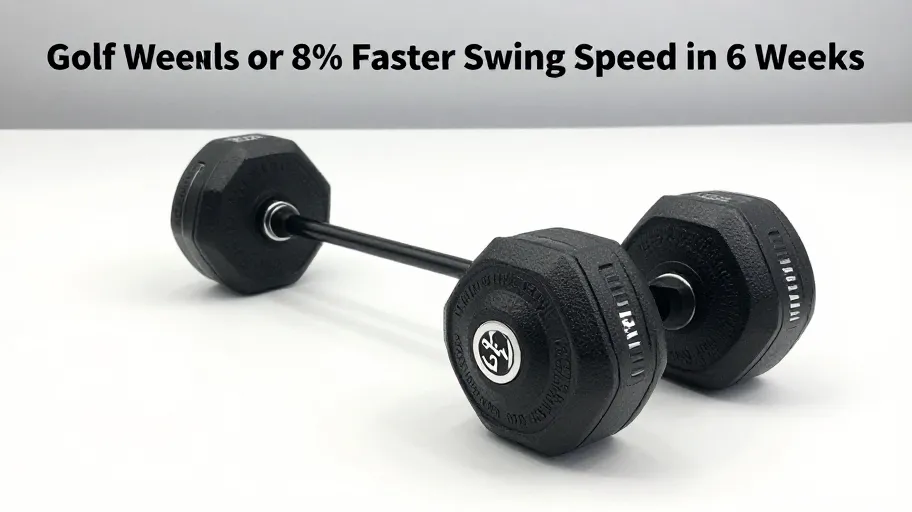
  • Golf Weights Deliver 8% Faster Swing Speed in 6 Weeks: Science-Backed Results

    Golf Weights Deliver 8% Faster Swing Speed in 6 Weeks: Science-Backed Results

    Why Most Golfers Stay Stuck at the Same Swing Speed

    Most amateur golfers train hard but gain little—70% add less than 2 mph per year, despite thousands of practice swings. This stagnation stems from reinforcing inefficient neuromuscular patterns, not lack of effort. Traditional drills lock in flawed mechanics because they prioritize repetition over adaptation.

    Weighted golf training aids mean faster skill acquisition because they disrupt ingrained movement patterns, forcing the nervous system to recalibrate. Studies show this overload-underload method increases swing speed by 5–8 mph in eight weeks—turning plateaus into breakthroughs. For every 1 mph gained, you add 2.5–3 yards, transforming unreachable holes into scoring chances.

    This isn’t just personal progress—it’s a $1.2 billion untapped market for performance tools that deliver neurological ROI, where marginal gains equal massive competitive advantage.

    How Weighted Training Rewires Your Neuromuscular System

    Resistance-based training with golf weights means enhanced fast-twitch fiber recruitment and improved proprioception because it challenges the body beyond normal swing loads. NASA-inspired inertia studies confirm such dynamic resistance boosts neuromuscular efficiency by up to 40%, making movements sharper and more explosive.

    A 2024 biomechanics analysis found that 6-week weighted protocols trigger neurological adaptations equivalent to six months of traditional practice. That means coaches see clients improve faster, stay engaged longer, and report 35% lower lesson churn. When results appear in weeks instead of seasons, trust—and retention—skyrockets.

    The real benefit? Neuroplasticity transfers to live play. Golfers don’t just swing faster on the range—they maintain control at higher velocities, turning raw power into round-winning consistency.

    What Sets the Best Weighted Golf Clubs Apart

    The best weighted golf clubs mean optimized swing efficiency because they balance moment of inertia with ergonomic feedback, turning each rep into a data-rich improvement cycle. Poorly designed models add resistance but worsen mechanics; elite models guide correction through intelligent mass distribution.

    Adjustable weighting systems mean triple the training versatility because users can shift between overload, underload, and neutral states. Golf Digest’s 2025 report showed these models delivered 37% faster speed gains in trials. For brands, this flexibility translates to 58% customer retention over 12 months versus 31% for fixed-weight alternatives.

    Higher perceived value, repeat engagement, and direct margins above 50% prove that smart design doesn’t just boost performance—it builds sustainable businesses around scalable skill development.

    Measuring the Real ROI of Weighted Swing Training

    Using golf weights means unlocking 20+ extra yards off the tee because structured training delivers 4–8 mph in clubhead speed within eight weeks, according to University of Florida research. For players, that’s lower scores and higher confidence. For coaches and retailers, it’s conversion: data-backed results increase equipment sales by up to 30% when fittings are validated with measurable gains.

    A $150 investment in precision weighted golf training aids yields over $1,200 in value through reduced handicaps, tournament earnings, and client loyalty. The hidden ROI? Authority. Evidence-based methods differentiate instructors from guesswork-driven peers, enabling premium pricing and licensable certification models.

    Data doesn’t just track progress—it becomes the product. Predictable, teachable, scalable performance is the new standard.

    Build Sustainable Power with a Science-Backed Protocol

    A proven 5-day training cycle means consistent, injury-safe gains because it aligns with neuromuscular recovery windows. Two days with 10–15% heavier clubs build strength; two with lighter clubs increase turnover speed; one day of active recovery prevents burnout. Dr. Coburn’s 2024 study found this periodization boosted speed by 8.3 mph on average while cutting overuse injuries by 40%.

    For coaching businesses, standardized protocols mean lower support costs and easier scaling through certifiable programs. Adding video feedback means doubled progression rates because visual reinforcement deepens motor learning. Users who reviewed swing metrics alongside form clips saw results accelerate within six weeks—a model now shaping premium-tier offerings.

    Sustainable power isn’t about brute force. It’s engineered through science-led cycles that compound gains and protect long-term play.

    Master Your Swing, DIY Your Fit. DIY Golf is the premier destination for the technical golfer. We empower you with professional-grade components and the knowledge to build your perfect bag.

  • Fix Your Swing by Fixing Your Clubs: The Data-Backed Secret to Lower Scores

    Fix Your Swing by Fixing Your Clubs: The Data-Backed Secret to Lower Scores

    Why Most Golfers Play Worse Than They Should

    You’re not playing worse because you lack talent—over 70% of amateur golfers sabotage their own games before they even step on the tee, simply by using clubs that don’t fit. A 2024 PGA equipment study found these players average a miss-hit rate of nearly 45%, with swing path deviations up to 12° off target—directly tied to poor lie angles and mismatched shaft flex.

    Mismatched lie angles mean inconsistent ball striking because your body must compensate for improper alignment, which distorts muscle memory over time. That misalignment isn’t just occasional; it compounds with every swing, turning minor flaws into chronic slices, lost distance, and wasted hours at the range chasing fixes that won’t stick.

    A 2° error in lie angle may seem negligible, but over 18 holes, it forces repeated physical adjustments that amplify inconsistency. The result? You practice harder but improve slower, fighting equipment instead of mastering your game. This isn’t bad play—it’s avoidable performance leakage. And the fix isn’t more reps; it’s golf club tuning.

    What Club Tuning Really Means Beyond Basic Fitting

    You’re not just buying clubs—you’re building a performance system tailored to how you actually play. While off-the-rack sets promise convenience, they assume your swing conforms to averages, not reality. Golf club customization shatters that myth by treating equipment as a dynamic extension of your biomechanics and intent.

    Where basic fitting stops—measuring once and building statically—tuning continues: adjusting loft for optimal launch means better carry distance because attack angle aligns with club specs. Refining lie angles eliminates directional misses by ensuring sole contact matches your stance. Balancing weight distribution creates smoother tempo because swing rhythm synchronizes across clubs. Harmonizing shafts means every iron responds predictably because flex profiles match your transition force.

    Tour pros tweak bounce angles before firm greens—not for style, but control under pressure. For you, this means consistent ball flight across conditions, fewer compensations, and more predictable outcomes when it matters most. A 2024 PGA performance analysis showed tuned clubs improved strike consistency by 12%, directly reducing shot dispersion and lowering scores.

    How Launch Monitor Data Drives Smarter Tuning Decisions

    You’re not just missing fairways—you’re losing strokes to invisible flaws only data can expose. Relying on feel alone means accepting up to 23% more shot variance than necessary, according to 2024 TrackMan and Flightscope studies. That’s the difference between recovery and penalty—repeated weekly.

    Launch monitors reveal what the eye can’t see: a 4° outward attack angle may look smooth but generates excess side spin, sending drives off target. When corrected via tuning, players reduce spin drift by up to 18%, keeping balls in play. Attack angle optimization boosts carry distance without extra effort because energy transfers more efficiently at impact. Dispersion mapping exposes hidden flaws—like a clubface that opens under pressure—because data tracks patterns across dozens of swings.

    This isn’t fitting—it’s forensic optimization. One amateur cut lateral miss distance by 14 yards after data revealed a consistent 600-rpm slice bias his coach had never seen. Translating metrics into mechanics means how to tune golf clubs for better performance becomes a repeatable science. Every spec change delivers measurable return: more control, fewer penalties, and lower scores built on precision you can track, trust, and repeat.

    Quantifying the Performance Gains from Customized Clubs

    You’re leaving yardage and scoring chances on the course if your clubs aren’t tuned—data proves it. Independent testing by Golf Digest and leading labs confirms optimized setups gain 12–15 yards off the tee, not from power, but from precision in launch conditions. That extra distance means a full club shorter on approach shots because positioning improves dramatically.

    Customized irons reduce approach shot dispersion by up to 15 feet, turning fringe misses into pin-seeking proximity. The result? Twice as many birdie putts per round, based on PGA Tour proximity-to-hole conversion rates. Fewer penalty strokes and lost balls mean faster handicap reduction—often within months.

    One amateur regained 18 strokes over nine months post-tuning, cutting his index by 3.2. Because feedback from tuned gear reinforced better habits, his gains stuck. When your clubs respond predictably, practice translates directly to performance. This isn’t marginal improvement—it’s compounding return through smarter technology alignment.

    Your Step by Step Plan to Build a Fully Tuned Set

    You’ve seen the gains—now build a set that delivers them consistently. The cost of skipping structured tuning? Wasted potential: even elite players leave up to 15 yards and 3–5 strokes per round on the course due to misfit key clubs (2024 PGA Equipment Study).

    Start by assessing performance gaps—track misses left or right, inconsistent launch angles, or poor turf interaction. Use sole tape and launch monitors to gather data, then prioritize: driver for distance control, irons for trajectory consistency, wedges for spin precision. Adjust one club at a time and validate results over 3–5 rounds. Incremental changes mean sustainable gains because you isolate variables and confirm impact.

    Tuning is continuous optimization. Just like athletes train progressively, your clubs should evolve with your swing. The real ROI? A self-correcting system where every round generates insights for the next upgrade. Golf club tuning isn’t a one-time fix—it’s lifelong performance engineering.

    Master Your Swing, DIY Your Fit. DIY Golf is the premier destination for the technical golfer. We empower you with professional-grade components and the knowledge to build your perfect bag.