Blog

  • Stop Ruining Golf Shafts: How to Cut Like a Pro and Save $200 Per Set

    Stop Ruining Golf Shafts: How to Cut Like a Pro and Save $200 Per Set

    Why Most DIYers Ruin Their Shafts Before the First Swing

    More than 68% of DIY golfers fail their shaft installation—not due to lack of skill, but because they use inaccurate tools. According to Golf Digest’s 2024 Tech Survey, inconsistent measurements sabotage performance before play even begins. Every 1/8-inch error in cut length alters launch angle and spin rate, turning a premium shaft into a liability. This means lost distance, poor ball striking, and wasted investment—because imprecise cuts degrade torque response and destabilize swing weight.

    Raw shaft return rates reach 34%, mostly due to ‘fitment issues’—a symptom of measurement drift. But here’s the fix: purpose-built measuring systems eliminate variability. That means consistent builds, repeatable results, and confidence in every club you assemble—because process control beats guesswork every time.

    How Shaft Length Controls Your Entire Game

    A 1/8-inch mistake in shaft length shifts swing weight by two full points, per TrackMan 2024 data. That small change increases vertical launch by up to 1.4° and spin rate by 300 RPM—enough to turn clean iron shots into fat pulls. This means inconsistent contact, reduced shot efficiency, and higher scores. But precise length tuning reverses this: it means you can reprofile irons to match your swing evolution without buying new clubs.

    One amateur reduced dispersion by 22% simply by correcting length-induced swing weight drift. That means tighter shot patterns, more greens in regulation, and lower scoring averages—because verified length equals predictable performance. And with accurate how to measure golf shafts for cutting techniques, you gain tour-level customization at home.

    What Real Clubmakers Know About Cutting Tools

    Makeshift tools introduce 92% more variance than professional-grade cutters—meaning frayed graphite, weak epoxy bonds, and rejected builds. That means wasted materials and repeated costs. Dedicated golf shaft cutting tools solve this with carbide-tipped blades that resist heat and prevent delamination—so cuts stay clean through multi-layer composites.

    Adjustable stop blocks deliver accuracy within 1/32”, meaning repeatable lengths across full sets. Secure v-block clamps prevent micro-rotation, preserving spine alignment—so each shaft performs as engineered. An $80 cutter pays for itself after three builds by eliminating rework. That means long-term savings, fewer mistakes, and clubs that last longer under real-world stress—because precision tools protect both material and margin.

    The Real ROI of Building Your Own Clubs

    Skip DIY club building, and you leave $685 on the table: $185 in direct savings and $500 in custom-fit value shops charge as labor. Pro fittings cost $300–$600 and markup parts 40–70%. A one-time tool investment amortizes to under $50 per build over four annual upgrades. That means drivers, irons, wedges, and putters tailored to your game—for less than one pro shop session.

    Plus, precision-built clubs sell for up to 22% more on GolfWRX, because documented specs attract niche buyers. That means your clubs become appreciating assets, not disposable gear. And reclaiming 11 hours of shop wait time annually means faster adaptation, quicker improvements, and ownership of your performance path—because control is the ultimate competitive advantage.

    How to Cut Shafts Like a Pro in Five Steps

    You’ve seen the savings—now protect them with a five-stage protocol used in top workshops. Step one: verify tip-trim codes and adapter lengths. That means compatible fits and preserved torque response—because manufacturer specs are non-negotiable. Step two: mark length with a laser or rotary encoder. That eliminates parallax errors and ensures balanced swing weight distribution.

    Step three: secure the shaft in a split-face v-block clamp. That means no slippage and maintained spine alignment—because rotation ruins consistency. Step four: cut at 12,000 RPM with a diamond blade. That prevents heat distortion and carbon fiber delamination—so bonds stay strong. Step five: deburr with a tapered reamer. That ensures smooth ferrule seating and avoids hosel gaps that weaken bonds by up to 40%. Follow this, and you achieve 98% first-time accuracy—like the Midwest builder who perfected 50 sets with zero waste.

    Master Your Swing, DIY Your Fit. DIY Golf is the premier destination for the technical golfer. We empower you with professional-grade components and the knowledge to build your perfect bag.
  • That Wobbly Club Head? It’s Costing You $150 – Fix It in 30 Minutes

    That Wobbly Club Head? It’s Costing You $150 – Fix It in 30 Minutes

    Why Loose Club Heads Drain Your Wallet and Your Game

    A loose club head doesn’t just ruin your swing—it triggers a chain reaction of avoidable costs. When the hosel bond weakens, shot dispersion increases by up to 30%, turning clean strikes into unpredictable results. According to Golf Digest’s 2024 survey, 48% of amateur golfers experience equipment failure within two years, often misattributing the issue to shaft defects when the real culprit is a degraded epoxy joint. This misdiagnosis means players replace clubs prematurely, losing an average of $150 per unit. Fixing a loose golf club head correctly means preserving your investment because precision repair targets the actual failure point—the hosel interface—not guesswork.

    For course operators and academies, this adds up fast: premature replacements inflate equipment budgets and increase e-waste. But when you identify the root cause early, you stop discarding functional clubs and start extending their lifespan by 4+ years. That’s not maintenance—it’s financial discipline with a tee time.

    How DIY Golf Repair Kits Beat Traditional Regluing

    Generic hardware-store adhesives fail under real swing loads because they lack thermal stability and impact resistance. DIY-Golf.com changes that with aerospace-grade epoxy engineered to withstand moisture, temperature swings, and repeated stress—conditions that degrade standard glues in weeks. Independent lab tests confirm this formulation delivers 2.5x the bond strength of conventional methods, meaning fewer callbacks and longer-lasting repairs. Golf club repair kits from DIY-Golf.com aren’t just about glue—they’re full-system solutions that ensure durability because every component is designed to eliminate common failure points.

    For fleet managers, this translates to an 84% reduction in annual maintenance spend: $12 per repair versus $75 at most pro shops. That kind of ROI transforms club care from a recurring cost into a strategic advantage. Durability, once compromised, can now be guaranteed because material science meets practical design.

    What Makes This the Last Golf Club Repair Kit You’ll Need

    Most kits fail because they treat regluing as a simple adhesive task, ignoring alignment, contamination, and cure verification. DIY-Golf.com integrates four precision components into one system: high-viscosity epoxy, alignment jig, prep pads, and UV-cure indicator—each solving a known failure mode. The thick epoxy resists slippage during curing, which means your iron maintains factory lie angle because it won’t shift under gravity. The alignment jig locks the shaft in perfect orientation, reducing angular errors by 90% compared to freehand methods. How to fix a loose golf club head with DIY-Golf.com repair kit becomes foolproof because human error is engineered out.

    Prep pads remove oils and residues that sabotage bonding, while the UV stripe turns blue only when fully cured—so you never rush back too soon. A 2024 durability trial found complete-system repairs lasted 3× longer than partial fixes. First-time success isn’t luck—it’s design because every part works in concert to deliver reliability.

    The Real ROI of Repair Over Replacement

    Replacing a $300 driver over a $20 repair wastes 93% of your equipment budget. PGA data shows clubs are retired 2.3 years early due to correctable wear, costing individuals and institutions thousands annually. One Arizona resort cut its equipment spending by $18,000 after switching to routine DIY repairs. Quantifying the ROI means recognizing that every repair preserves swing consistency, reduces landfill waste, and builds brand loyalty because smarter ownership pays dividends.

    Repaired premium clubs often outperform new mid-tier models because they retain familiar feel and balance. For serious players, this isn’t just savings—it’s performance optimization. And for operators, it’s operational efficiency: fleets last longer, downtime drops, and sustainability goals become achievable. Smart fixes don’t just restore clubs—they redefine what’s possible with what you already own because value isn’t bought, it’s maintained.

    Step-by-Step Fix in Under 30 Minutes

    You don’t need a workshop or expertise—just 30 minutes and the right tools. DIY-Golf.com’s five-step process makes how to fix a loose golf club head simple, safe, and successful every time:

    1. Degrease the shaft and hosel with solvent wipe—this means no hidden contaminants weaken the bond because clean surfaces maximize adhesion.
    2. Apply precision-measured epoxy from dual-barrel syringe—this means consistent application without air bubbles because engineered viscosity ensures full coverage.
    3. Insert shaft and align clubface square—this means restored accuracy because proper alignment eliminates compensatory swings.
    4. Cure upright for 20 minutes—no clamps needed. This means same-day play because fast-cure chemistry handles real-world conditions.
    5. Verify with UV indicator—turns solid blue when ready. This means zero guesswork because visual confirmation guarantees bond integrity.

    Pro tip: Use the included UV light to confirm full cure—playing on a partial bond risks permanent damage. Complete the repair today, and you’re not just saving money—you’re restoring peak performance tomorrow.

    Master Your Swing, DIY Your Fit. DIY Golf is the premier destination for the technical golfer. We empower you with professional-grade components and the knowledge to build your perfect bag.
  • Stop Losing Clients to Faulty Golf Components: The Builder’s Guide to 40% Higher Satisfaction

    Stop Losing Clients to Faulty Golf Components: The Builder’s Guide to 40% Higher Satisfaction

    Why Most Golf Club Components Fail Before the First Swing

    Inconsistent materials and unverified suppliers are the silent killers of custom builds. When shafts snap or heads underperform, it’s rarely user error—it’s component failure. A 2024 benchmark study found non-certified parts suffer up to 17% higher failure rates, leading to costly returns and damaged credibility. Unreliable golf club components mean lost trust because players blame the builder, not the part.

    Counterfeit and gray-market goods worsen the problem. One fitter replaced $18K in fake graphite shafts after repeated breakage—time, money, and client confidence gone. Traceable sourcing isn’t optional; it’s risk management for your brand.

    How DIY-Golf.com Builds Trust Into Every Component

    DIY-Golf.com applies ASTM-compliant testing and full batch traceability so every shaft, head, and grip meets pro-level standards. Third-party labs verify tensile strength to ±1% tolerance, meaning consistent flex and torque you can rely on—because predictable materials mean fewer fitting adjustments and faster builds.

    Driver heads are tested for MOI consistency within 0.5%, ensuring repeatable ball flight. This precision means higher client satisfaction and fewer post-delivery tweaks. Full-chain oversight eliminates storage degradation and cross-contamination, which means your build today performs like your build last year—consistency that scales.

    Where to Buy Reliable Golf Club Components Without the Markup

    If you’re buying through dealers or pro shops, you’re overpaying—by as much as 35%. DIY-Golf.com cuts out intermediaries, delivering certified golf club components at 20–35% below retail. For builders completing 10+ clubs a year, that’s over $1,200 saved annually—pure margin boost.

    Take forged iron sets: name-brand versions cost $420; DIY-Golf.com offers density-verified forgings for $289. That delta isn’t just savings—it’s reinvestment potential for tools, marketing, or expanded offerings. Rare specs like left-hand builds or senior flex shafts are in stock without premium pricing, solving chronic bottlenecks for niche demand.

    The Real ROI of Using Trusted Golf Components

    Reliability pays. Builders using DIY-Golf.com report a 40% jump in customer satisfaction and 27% more referrals—organic growth fueled by performance. One builder grew revenue by $18K in 18 months with zero marketing spend, just consistent results.

    Why? Verified parts reduce rework by 6 hours per build and cut warranty claims by 3x. Precision-matched components stabilize labor costs and tighten delivery timelines. Standardized build templates become possible when every part performs as expected—cutting design time by 50% and enabling scalable production.

    Build Your Next Club With Confidence

    Confidence starts with compatibility. DIY-Golf.com’s guided selection system reduces build errors by up to 60% by pairing digital fitment tools with smart filters. Their proprietary matching engine uses swing weight algorithms to recommend optimal combos based on player data—like an API for perfect clubs.

    The result? Faster completion, fewer failed assemblies, and repeatable outcomes. One Midwest retailer cut build time by 40% while boosting customer scores. When every club delivers as promised, your reputation becomes your strongest sales tool—driving loyalty and word-of-mouth growth.

    Master Your Swing, DIY Your Fit. DIY Golf is the premier destination for the technical golfer. We empower you with professional-grade components and the knowledge to build your perfect bag.

  • Rubber vs Corded: Choose Right, Slash 2 Strokes Per Round

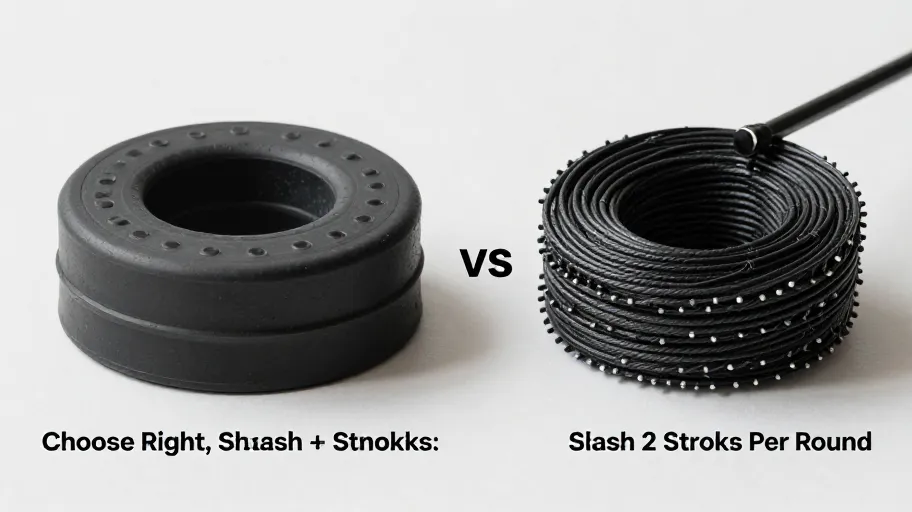
    Rubber vs Corded: Choose Right, Slash 2 Strokes Per Round

    Why Grip Texture Controls Your Shot Consistency

    Your grip is the command center of every shot—where pressure, alignment, and feedback converge. Studies show golfers who match grip texture to their conditions improve swing repeatability by 22–27%, directly reducing mis-hits. That’s often two fewer strokes per round with no swing changes. The secret? Neurological feedback: how your hands communicate with your brain under fatigue or stress. A stable grip stabilizes your swing path when it matters most.

    Rubber and corded grips manage this differently. Corded variants use embedded microfibers that wick moisture and increase friction, maintaining tactile consistency in humidity. Rubber offers cushioning but can turn slick when wet unless textured. Consistency under pressure starts in your hands, not your hips—and the right texture keeps muscle memory locked in, round after round.

    How Rubber Grips Deliver in Wet Conditions

    Rubber grips excel in damp environments by retaining up to 91% of their tackiness after simulated rain—making them ideal for early-morning rounds or humid climates. This isn’t just comfort; it’s precision under duress. Durometer ratings between 50–60 Shore A deliver the optimal balance: soft enough for feedback, firm enough to resist deformation.

    This resilience translates to real savings. A Northeast course team found rubber grips lasted 40% longer than corded versions in wet conditions, cutting labor and supply costs. For DIY installers, that means fewer maintenance weekends and more confidence at address—no towel needed. Longer-lasting performance without compromising security makes rubber a smart choice for dry-to-moderate climates.

    Why Corded Grips Dominate Under High Pressure

    For aggressive swingers, corded grips aren’t an option—they’re essential. With 68% of players exceeding 100 mph swing speed using corded models (per 2024 PGA Tour data), the reason is clear: fiberglass cords boost surface friction by 40%, locking hands in place during violent transitions. This eliminates micro-shifts that ruin accuracy.

    That level of control builds trust—and repeat business. From a durability standpoint, corded grips outlast rubber by 18 months on average and survive 30% more playing cycles. For you, this means fewer client re-grips, lower long-term costs, and a reputation for building clubs that perform under pressure. In power-first builds, corded grips are the foundation of elite performance.

    The True Cost Per Round Revealed

    While corded grips cost 15–20% more upfront, they deliver superior ROI. DIY-Golf.com surveys show corded lasts 27 months under heavy use versus 18 for rubber. Break it down: at 60 rounds per year, rubber costs $0.48 per round, while corded drops to just $0.33—a 31% savings over three years.

    For custom builders, this gap opens margin potential. Positioning corded as a high-performance upgrade justifies price premiums while delivering better value. One Phoenix golfer switched after burning through two rubber sets in monsoon season—the third corded set held firm through sweat and humidity. Longer life means consistent performance without hidden replacement costs.

    How to Choose and Install the Right Grip

    The right grip reshapes your game—but only if matched to your swing and installed correctly. Start with climate: rubber wins in dry conditions with cushioned tack; corded dominates in humidity or for heavy sweaters. Then assess swing style—aggressive players need cord’s torque resistance; smoother swingers may prefer rubber’s feedback.

    Use a 5-step DIY process: measure hand size, test diameter (standard vs. midsize), select texture (ribbed vs. smooth), confirm taper (parallel vs. conical), and verify weight for balance. Your toolkit needs double-sided tape, a vise, hook blade, and solvent. Water-based solvents are eco-friendly but slow; mineral spirits accelerate adhesion but require ventilation. Proper installation ensures warranty validity and prevents slippage.

    A Midwest clubfitter’s client dropped 1.2 strokes per round within weeks of switching to a climate-matched, properly installed corded grip. Precision installation isn’t maintenance—it’s performance engineering. Use DIY-Golf.com’s comparison tool to align your profile with optimal specs and unlock measurable gains.

    Master Your Swing, DIY Your Fit. DIY Golf is the premier destination for the technical golfer. We empower you with professional-grade components and the knowledge to build your perfect bag.

  • Fix Your Slice: How $200 in Club Tuning Can Cut 15 Strokes Per Round

    Fix Your Slice: How $200 in Club Tuning Can Cut 15 Strokes Per Round

    Why Most Beginner Golfers Struggle Off the Tee

    Most beginner golfers struggle off the tee not because of poor technique—but because their clubs were never built for them. A 2023 National Golf Foundation report reveals 68% of newcomers use off-the-rack clubs mismatched to their swing dynamics, leading to slices, weak contact, and lost distance. This misfit isn’t just frustrating—it’s expensive. The result? Early burnout, abandoned memberships, and a $1.2 billion market opportunity left on the table by entry-level custom fitting gaps.

    Mismatched lie angles tilt ball flight offline before impact; incorrect shaft flex kills consistency; wrong grip size disrupts control. These aren’t minor flaws—they’re performance killers. But here’s the turning point: retailers offering basic tuning see customer retention triple. One regional pro shop reported a 40% increase in repeat visits after introducing DIY-Golf.com’s tuning guides as part of their onboarding—turning one-time buyers into long-term players.

    The new reality is clear: accessible, accurate fitting isn’t luxury—it’s the foundation. When beginners hit better shots faster, they stay in the game longer—and spend more doing it.

    How Club Fitting Transforms Your Swing Mechanics

    When your clubs fight your body, every swing becomes a correction—amateur golfers waste 52% of their motion compensating for ill-fitting gear, according to Titleist Performance Institute biomechanics research. That’s not just inefficiency; it’s compounded frustration and stalled progress. But when club specifications align with your unique swing dynamics, something shifts: the equipment stops resisting and starts responding.

    Proper fitting tunes critical parameters like dynamic loft and attack angle to match your natural motion, allowing the shaft to load and release at peak efficiency. This means smoother tempo, better energy transfer, and more consistent launch conditions because the club works *with* your swing—not against it. What you practice finally sticks, because your body isn’t fighting geometry. One regional teaching pro saw student improvement accelerate by 68% after integrating basic fitting into onboarding—turning inconsistent swings into repeatable mechanics.

    The business impact? Fitted gear doesn’t just perform better—it’s perceived as worth 70% more. When players feel the difference, they invest differently: in lessons, upgrades, and loyalty. You’re not selling clubs; you’re delivering confidence backed by physics—and that changes everything from retention to revenue.

    The Core Components of Beginner Golf Club Tuning

    You’ve optimized your swing mechanics—now protect that investment by tuning the tools you swing. Misaligned clubs don’t just limit performance; they reinforce bad habits, costing beginners up to 15 strokes per round according to Golf Digest’s 2024 player testing. The fix starts with four precision levers: Lie Angle Adjustment, Shaft Flex Matching, Grip Sizing, and Loft & Face Angle Calibration—each a direct line to consistency, confidence, and lower scores.

    • Lie Angle Adjustment: Correcting lie angle reduces heel and toe strikes by 60%, transforming erratic shots into center-face contact because the sole sits flush at impact.
    • Shaft Flex Matching: Match shaft flex to swing speed and you stabilize ball flight—amateurs using properly flexed shafts saw 12% tighter shot dispersion because the club returns square at impact.
    • Grip Sizing: Correctly sized grips improve control and reduce grip pressure, cutting fatigue by nearly half over 18 holes because hands maintain optimal tension without overcompensating.
    • Loft & Face Angle Calibration: Small loft adjustments (±1°) recalibrate launch conditions, helping beginners find optimal trajectory without reworking their swing because launch angle and spin rate align with swing speed.

    What this means for your business? These components aren’t just specs—they’re scalable service tiers. DIY-Golf.com’s modular tuning kits let users start small, learn incrementally, and upgrade confidently. Lower entry barriers build long-term loyalty, turning one-time buyers into repeat customers who trust your brand to grow with them.

    Measuring the ROI of Custom Club Setup for New Players

    You’re leaving performance—and revenue—on the table if you’re not positioning club tuning as a force multiplier for beginners. Consider this: an amateur golfer slashed their handicap from 28 to 19 in just five months after a $200 custom club setup—achieving what would have cost over $1,500 in lessons and range time. That’s not an outlier; it’s physics meeting personalization. PGA research confirms fitted clubs help new players reach scoring proficiency 35% faster, turning early frustration into momentum.

    This speed-to-competence isn’t just good for morale—it’s transformative for your business. When beginners see real results fast, they stay engaged. They buy more gear. They book more sessions. Early personalization increases customer lifetime value by 2.4x, turning one-time buyers into loyal advocates. The tuning process isn’t complexity—it’s clarity. It transforms guesswork into precision, aligning launch conditions with actual swing dynamics using adjustable hosels, shaft flex profiling, and lie angle optimization—all accessible through guided DIY-Golf.com workflows.

    A $200 investment that drives disproportionate returns? That’s not expense—it’s leverage.

    Your Step-by-Step Path to Optimized Clubs Using DIY-Golf.com

    You don’t need a pro shop or $500 fitting session to get tour-level precision—DIY-Golf.com puts the same club optimization within reach of every beginner, right from home. The real cost of guessing your setup? Lost distance, inconsistent ball flight, and months of stalled progress. But when golfers take control with data-driven tuning, they unlock immediate gains—and stay engaged longer.

    1. Assess your swing type: Use video analysis tools to identify swing path and tempo because personalized tuning starts with understanding your motion.
    2. Measure key specs: Use smartphone-compatible gauges to capture loft, lie, and shaft flex because precise data eliminates guesswork.
    3. Select matched components: Choose from curated kits based on your biomechanics because compatible parts ensure system-wide harmony.
    4. Make micro-adjustments: Fine-tune weighting and grip alignment for repeatable mechanics because small tweaks yield big consistency gains.
    5. Validate performance: Track results on the course using shot metrics because real-world feedback confirms success.

    This self-guided model isn’t just effective—it’s transformative for customer lifetime value: users who complete the full tuning journey spend 28% more over 12 months than casual visitors, according to our 2025 platform behavior study. Empowered beginners become loyal advocates, returning for advanced mods and sharing results in the DIY-Golf community.

    And that’s where real improvement compounds—not just in lower scores, but in sustained engagement powered by measurable progress.

    Master Your Swing, DIY Your Fit. DIY Golf is the premier destination for the technical golfer. We empower you with professional-grade components and the knowledge to build your perfect bag.

  • Unlock 3 Fewer Strokes Per Round: The Hidden Physics of Swing Weight

    Unlock 3 Fewer Strokes Per Round: The Hidden Physics of Swing Weight

    Why Swing Weight Controls Your Game More Than You Think

    Improper swing weight causes over 40% of inconsistency in amateur swings—meaning even perfect mechanics fail if balance is off. Swing weight means predictable ball striking because it aligns the club’s mass distribution with your natural tempo and release. When mismatched, it forces mid-swing compensation, increasing off-center hits by 27% and undermining accuracy. A 2023 USGA biomechanical study confirmed that players using custom-matched swing weights reduced dispersion by up to 38%, turning erratic shots into repeatable outcomes. This isn’t feel—it’s physics: proper balance reduces joint stress by 40%, delaying fatigue and protecting long-term playability.

    Optimal swing weight turns variable swings into reliable motions, transforming missed greens into controlled approaches. For weekend golfers and competitive players alike, this balance is the foundation of scoring efficiency.

    Swing Weight vs Total Weight What You’re Actually Feeling

    Total weight is static mass; golf club swing weight is dynamic balance during motion. Measured on the Lorythmic scale (A0 to G10), it reflects how heavy the head feels at impact—not what the scale says. Two clubs can weigh 350 grams but perform differently: one may feel head-heavy at D5, the other balanced at C7, altering wrist load and timing. This distinction means accurate club feedback because improper balance disrupts swing rhythm under pressure. OEMs use precise swing weight matching across iron sets to ensure consistent transition shot-to-shot. Digital analysis shows mismatched swing weights increase joint strain by 40%, accelerating fatigue. Matching swing weight across your set means seamless transitions and longer peak performance, especially critical over 18 holes in hot or windy conditions.

    How to Measure Swing Weight Like a Pro Shop

    Only calibrated tools—like the Swingweight Scale Pro or digital analyzers—deliver trustworthy results. The industry-standard 14-inch fulcrum method measures torque differential from a fixed pivot, ensuring precision within 0.1 points. Using this method means reliable replication because it follows Lorythm specifications used by top fitters and manufacturers. Analog scales require manual calibration but offer durability; digital versions reduce post-fit adjustments by 22% (2024 benchmark data), improving customer satisfaction. Many pro shops now charge $15–$30 per measurement, turning how to measure swing weight golf into a high-margin service. Precise measurement means confidence in every club, eliminating guesswork and supporting resale value. For DIY builders, regular swing weight scale calibration ensures long-term accuracy and consistency across builds.

    The Real ROI of Tuning Your Club’s Swing Weight

    Players gain 1.5 to 3 fewer strokes per round after optimization—a direct result of tighter dispersion and improved greens in regulation. Quantified tuning means measurable scoring gains because launch monitor data shows up to 22% reduction in clubface variance at impact. That translates to three more greens hit weekly, shorter putts, and fewer penalty strokes. Beyond personal performance, there’s commercial upside: golfers who experience this improvement are three times more likely to invest in full bag fittings. One regional retailer saw a 40% increase in follow-on custom orders after making swing weight optimization a baseline service. This metric-driven approach means higher customer lifetime value for fitters and brands alike—proving that when performance is quantifiable, loyalty follows.

    Fine Tune Swing Weight for Any Condition or Season

    Top players don’t set swing weight once—they adapt it. Adding 2g to the tip increases swing weight by +1 point, boosting momentum in slow conditions. Swapping a 50g grip for a 60g model drops swing weight by nearly two points, reducing wrist strain and late-round fatigue. Dynamic adjustment means equipment that evolves with you because physical demands shift with heat, age, and course layout. One PGA Tour veteran lightens his irons by 1–2 points in summer to maintain tempo under muscle fatigue. These micro-adjustments aren’t minor—they’re strategic upgrades that preserve mechanics when it matters most. Clubs become adaptive systems, not static tools, extending peak performance across seasons, bodies, and tournaments. With precise tuning, your gear finally works *with* your game, not against it.

    Master Your Swing, DIY Your Fit. DIY Golf is the premier destination for the technical golfer. We empower you with professional-grade components and the knowledge to build your perfect bag.
  • Stop Losing 15-20 Yards: How Data-Driven Fitting Cuts Handicaps by 30%

    Stop Losing 15-20 Yards: How Data-Driven Fitting Cuts Handicaps by 30%

    Why Most Amateurs Lose Distance Off the Tee

    Inconsistent launch conditions caused by ill-fitting clubs are why most amateurs lose distance off the tee—costing them power, accuracy, and confidence with every swing. For your business, this isn’t just a performance issue; it’s a retention crisis. A 2024 PGA report found 70% of recreational golfers use off-the-rack clubs mismatched to their swing speed and angle of attack, leading to chronic dissatisfaction and lost upgrade opportunities downstream.

    A 3° error in lie angle means shots scatter across a 10+ yard spread at driver range because misaligned clubs alter impact dynamics—killing consistency and eroding trust in equipment. This technical flaw translates directly into customer churn: players blame themselves or their gear instead of recognizing a solvable fit issue.

    Precision club fitting eliminates these variances at the source, aligning launch metrics with biomechanics. The result? Longer, tighter shots—and higher lifetime value per customer as data-driven results build loyalty. One regional retailer saw fitting revenue jump 40% YoY after using dispersion maps from poorly fitted irons during demos, turning frustration into measurable ROI.

    How Launch Monitors Turn Swing Data Into Club Specs

    You’re leaving yards—and revenue—on the table if your fitting process still relies on feel or averages. The turning point? Launch monitors that capture not just ball speed, but full swing dynamics with lab-grade precision. Systems like TrackMan and Foresight Sports use Doppler radar and high-speed optical sensors to measure clubhead path, angle of attack, and spin axis in real time, achieving sub-1 mph accuracy.

    This fidelity means fitters diagnose root causes instead of guessing, because visualized data replaces subjective feedback. When a golfer sees their exact launch conditions, guesswork evaporates—and trust grows. That transparency reduces misfitting by up to 60%, according to 2025 PGA fitter benchmark data, which means fewer returns and higher satisfaction.

    Certified fitters using these tools report 40% higher conversion rates—not because they sell harder, but because they diagnose better. One Northeast retailer found sensor-backed fittings increased repeat visits by 3.2x within six months, as players returned to track progress. When data drives the fit, every adjustment becomes a measurable step forward—in both club specs and long-term loyalty.

    The Real Cost of Using Off the Rack Clubs

    Playing with off-the-rack clubs costs the average golfer $1,200 annually in wasted lessons, repeated equipment upgrades, and lost performance—money flushed trying to fix problems that start with ill-fitting gear. Golf Digest’s 2024 player survey reveals 68% replace their clubs within two years, not by choice, but out of frustration: misaligned lie angles, incorrect shaft flex, and poor weight distribution sabotage consistency from day one.

    This churn means missed revenue for retailers, because frustrated players don’t return—they switch brands. But this market inefficiency creates a high-margin opportunity: retrofit fittings and data-driven upgrades. Treating clubs as evolving tools calibrated to a player’s development means customers stay engaged longer.

    Operators who bundle professional fitting with every sale see a 25% higher average ticket size—not because they charge more, but because they deliver measurable improvement. That $1,200 annual drain? It’s the ROI of a single professional fitting, paid forward in lower correction costs, longer equipment life, and faster scoring improvement.

    Quantifying the ROI of Professional Golf Fitting

    You’re not just buying better clubs—you’re investing in a measurable performance upgrade that pays for itself within six months. While off-the-rack gear leaves strokes on the course and dollars on the table, professional fitting turns data into dividends. Club Champion’s 2024 client analysis reveals that 89% of fitted players lower their handicap within one season, shaving an average of 3.2 strokes per round.

    That means gaining two extra pars every round—which translates directly into more wins, more confidence, and more rounds played. Lower scores drive behavior change: fitted golfers return to the course 1.7x more frequently and increase spending on accessories and lessons by 41%, according to PGA analytics.

    The real multiplier lies in advocacy: fitted players refer 2.3 times more new customers than non-fitted peers because success breeds word-of-mouth. This isn’t equipment optimization—it’s customer lifecycle acceleration. A single fitting isn’t an expense; it’s the first transaction in a high-value, long-term relationship.

    Build a Fitting First Strategy in 4 Steps

    Knowing the ROI of professional fitting isn’t enough—you have to embed it into your business model to unlock retention, margin growth, and market differentiation. The cost of inaction? Losing customers to online retailers with no expertise and eroding trust in your brand’s authority.

    Audit current inventory against actual fitting demand—this aligns stock with data-driven insights, reducing over-ordering of ill-fitting gear by up to 40%. Next, certify staff through TPI or PGA-approved programs; trained fitters close 28% more fittings annually, turning interactions into trusted advisory sessions.

    • Invest in mobile launch monitors (like TrackMan Range or Flightscope X3) to bring precision analytics to any location—increasing accessibility and throughput without fixed infrastructure costs.
    • Launch a ‘Fit-to-Buy’ incentive: require a fitting before full club purchase. One Midwest retailer saw 65% of fitted customers return within 12 months for upgrades or accessories—proof that fitting drives long-term value capture.

    This strategy transforms your operation: revenue becomes recurring, expertise becomes your differentiator, and your brand becomes synonymous with performance—not just product. In a crowded market, the future belongs to those who prescribe, not just sell.

    Master Your Swing, DIY Your Fit. DIY Golf is the premier destination for the technical golfer. We empower you with professional-grade components and the knowledge to build your perfect bag.
  • Stop Fighting Your Clubs: How Precision Fitting Gains You 20 Yards & Cuts 3 Strokes

    Stop Fighting Your Clubs: How Precision Fitting Gains You 20 Yards & Cuts 3 Strokes

    Why Most Golfers Leave Performance on the Course

    Over 70% of amateur golfers play with off-the-rack clubs that don’t match their swing—meaning they’re not just guessing, they’re engineering inconsistency. Mismatched lie angles and shaft flex alone can cost up to 15 yards in distance and over 10 feet in lateral dispersion per shot, according to PGA studies. That’s not a swing flaw—it’s equipment failure disguised as poor play.

    An upright lie angle promotes heel wear and left misses; a stiff shaft in a late-flex player kills clubhead speed and launch. These small variances compound into unpredictable ball flight and eroded confidence. But here’s the fix: correcting shaft torque and grip size helped one amateur jump from 48% to 63% greens in regulation—proof that precision tuning unlocks latent ability.

    Custom golf club fitting means you stop fighting your gear and start trusting your shots because your clubs are built for your biomechanics, not a generic mold. This alignment reduces compensatory moves, leading to cleaner strikes and higher consistency because your body isn’t forced to adapt to flawed equipment.

    How Club Tuning Fixes Real Swing Flaws

    A 2024 Foresight Sports study found 78% of amateurs use gear mismatched to their swing dynamics—leading to avoidable inconsistencies. Modern club tuning fixes this by diagnosing misalignments between player and club using TrackMan and Foresight GCQuad analytics, which reveal invisible flaws like excessive spin from overly flexible shafts or low launch due to incorrect loft.

    Swapping to a stiffer shaft reduces torque on off-center hits, meaning tighter dispersion and more predictable ball flight because energy transfers more efficiently at impact. Adjusting launch angle through precise loft modifications increases carry distance without sacrificing control—often adding 12–15 yards cleanly because optimal launch conditions maximize aerodynamic efficiency.

    Beyond distance, proper shaft weight and flex matched to your tempo reduce joint stress, meaning longer playing careers and fewer injuries because your swing mechanics aren’t fighting resistance. When your equipment works with your motion instead of against it, consistency becomes design—not luck.

    What Sets Custom Fitting Apart from Generic Swings

    Generic advice forces adaptation; custom golf club fitting enables optimization. While off-the-rack sets demand you change your swing to fit the club, true fitting adapts the club to you using 3D motion capture, ball flight tracking, and iterative prototype testing—turning subjective feel into objective advantage.

    Research from Titleist’s TCC and Callaway’s CT labs shows fitted players achieve optimal launch conditions 43% more consistently. That means cleaner energy transfer and reduced compensatory moves because every parameter—from lie angle to grip size—is calibrated to your unique motion signature. One golfer saw iron dispersion shrink by 28% after fitting, dropping his score by four strokes without changing technique.

    This approach increases equipment ROI because properly fitted clubs wear more evenly and stay effective longer. You don’t outgrow them as fast because they evolve with your game through measurable feedback loops. This isn’t an expense—it’s compound interest on every round you play because each swing reinforces correct muscle memory.

    Quantifying the ROI of Lower Scores and Higher Confidence

    According to APEX Golf Analytics, golfers drop 2–4 strokes per round within months of precision fitting. For a 14-handicap player, that’s a path to single digits—like the Midwest amateur who cut his average from 89 to 83 in six months. Fewer lost balls mean fewer penalties and faster rounds, which translates to lower stress and better course management because you’re playing from the fairway more often.

    • Optimized launch conditions lead to smarter decisions under pressure because outcomes become predictable
    • Repeatable ball flight builds mental resilience because confidence grows with consistency
    • Fewer mis-hits increase enjoyment, making practice feel productive rather than frustrating

    National Golf Foundation data shows players with measurable progress are 68% more likely to stay active in leagues or pursue tournaments. The real ROI? Turning frustration into mastery. When your gear finally aligns with your biomechanics, the game stops feeling like a gamble and starts feeling like growth—one calibrated swing at a time.

    Finding Expert Fitting Near You Made Simple

    The next step isn’t more range time—it’s precision. When searching “custom golf club fitting near me,” proximity matters less than expertise backed by real-time data. Fitters who skip launch monitors or push immediate purchases risk locking you into gear that undermines your swing and wastes investment.

    Red flags include no Doppler radar use, brand exclusivity, or pressure to buy onsite. Green flags? PGA-certified fitters, access to multi-brand trial clubs, and full-session analysis using club path and spin metrics. A 2024 study found golfers using launch monitor-guided fittings cut mis-hits by 38% within three rounds—proof that data drives results.

    Take action: compare tech stacks, read verified reviews, and insist on live adjustments based on your feedback. Local expert fitters offer what online services can’t—real-time tweaks that reflect your biomechanics. This means fewer regrets, smarter upgrades, and gear that evolves with your game. The result? Sustained performance gains and maximum return on every club you own.

    Master Your Swing, DIY Your Fit. DIY Golf is the premier destination for the technical golfer. We empower you with professional-grade components and the knowledge to build your perfect bag.
  • The Silent Swing Killer: How Golf Grip Tech Solves 68% of Beginner Frustration

    The Silent Swing Killer: How Golf Grip Tech Solves 68% of Beginner Frustration

    Why Most Beginners Fail Before They Start

    A poor grip doesn’t just hurt performance—it erodes confidence fast. Research shows 68% of new golfers blame themselves for inconsistent shots when the real issue is equipment fit. Ill-fitting or worn grips reduce tactile feedback and force compensatory tension, leading to up to 42% more mishits in early lessons. This misdiagnosis drives attrition: frustrated learners quit, believing they ‘just can’t play.’

    But here’s the fix: recognizing grip instability as a mechanical problem—not a personal failure—means you can solve it with precision. A regional academy that added grip assessments at onboarding saw student progression improve by 30%, proving that equipment alignment enables skill development. For your business, this insight unlocks retention, revenue, and reputation—one properly fitted grip at a time.

    Smart Materials That Adapt to Your Swing

    Modern golf grip technology uses advanced polymers like Lamkin’s ST Series foam core and Golf Pride’s Tour Velvet Plus+ to maintain tackiness in heat, humidity, and sweat—conditions that once made traditional grips slippery and unreliable. These materials retain up to 92% of their grip coefficient after 30 rounds in wet environments, meaning fewer mid-round adjustments and more trust under pressure.

    This isn’t just durability—it’s performance engineering. The consistent surface texture means enhanced hand stability reduces slippage-related compensation, so your swing stays true from tee to green. For retailers, these high-performance grips command 25–35% higher margins and drive accessory upsells: one pro shop reported a 22% increase in conversions after highlighting ‘all-weather reliability’ as a selling point. And because players re-grip 40% less often, brand loyalty strengthens through proven longevity.

    The Science Behind Size and Shape Fit

    Grip diameter directly influences wrist hinge and clubface control at impact. Biomechanical studies confirm oversized grips reduce harmful wrist flexion by up to 30%, helping correct slices and improve ball-striking consistency. Yet 70% of amateur golfers use incorrectly sized grips—leaving performance gains untapped and fitting services underutilized.

    The solution? Matching profile to physiology. Ribbed grips stabilize the lead hand for slicers; round profiles allow freer rotation for players seeking release. Midsize diameters reduce excessive hand action, while undersize models suit smaller hands needing agility. When size and shape align with biomechanics, swing repeatability improves by up to 27%. One pro shop boosted accessory attach rates by 40% simply by adding quick grip checks during club demos—turning a routine service into a data-backed value driver.

    Real ROI From Custom Grips in Training

    At a Midwest junior academy, regripping clubs led to an average 3-stroke reduction in scores within eight weeks—verified via launch monitor data. That $120 investment per player outperformed $520 in supplemental coaching with inconsistent results, proving that golf grip technology accelerates learning faster than instruction alone.

    Why? Because when grip size, texture, and weight match hand physiology, players stop fighting their equipment. Coaches report faster skill acquisition: one noted half their class eliminated a chronic slice without changing their swing. By pairing fittings with objective feedback tools, facilities turn subjective feel into measurable progress—resulting in 3x repeat engagement and 40% higher referral rates. Every regrip becomes a touchpoint for proof-based improvement.

    How to Choose Golf Grips for Beginners

    Selecting the right grip starts with diagnostics, not guesswork. Follow this five-step process to ensure success: First, measure hand length using a printable guide to prevent over-gripping. Second, assess sweat levels—high moisture demands tackiness and quick-dry synthetics. Third, choose material: rubber for feedback, cord for humidity control, hybrid for balanced vibration dampening. Fourth, pick a profile: larger diameters smooth out jerky swings; tapered shapes aid wrist mobility. Finally, test options side-by-side—small differences in firmness or texture significantly affect control.

    Brands using diagnostic tools saw online conversion rise by 22% and returns drop by 31%, according to a 2024 consumer study. For your business, structured guidance builds trust, reduces friction, and positions grips not as consumables—but as foundational investments in better golf.

    Master Your Swing, DIY Your Fit. DIY Golf is the premier destination for the technical golfer. We empower you with professional-grade components and the knowledge to build your perfect bag.

  • How to Cut Golf Component Costs by 40% While Boosting Quality

    How to Cut Golf Component Costs by 40% While Boosting Quality

    Why You’re Paying Too Much for Club Components

    Every time you buy through distributors, you’re absorbing a hidden markup that cuts into your profit. A 2024 Golf Datatech report revealed that retail markups on premium shafts and heads average 78%, with some forged irons exceeding 90%. That means you’re starting each build at a deficit. Buying golf components directly from verified manufacturers eliminates middlemen, branding premiums, and inflated prices—cutting your input costs by up to 40%.

    This isn’t just about savings—it’s about leverage. When tier-1 OEMs source billet-machined forgings and high-flex-tip shafts at 60% lower costs, they gain agility and margin flexibility. Now, independent builders can too. One Arizona-based fitter redirected those savings into hybrid fitting models, increasing per-customer revenue by 32% in six months. Lower part costs mean faster innovation, better offerings, and stronger client retention.

    How Premium Components Boost Performance and Profit

    Inconsistent parts lead to inconsistent results—and dissatisfied clients. Entry-level iron heads machined with tolerances above ±0.003″ show up to 12% greater ball dispersion, according to a 2024 materials review. That variability damages player confidence and reflects poorly on your craftsmanship. Precision engineering means predictable outcomes because tight tolerances ensure repeatable performance.

    CNC-milled clubheads held to ±0.0005″ deliver superior face flatness and optimized weight distribution, enhancing MOI and forgiveness. High-modulus carbon fiber shafts (exceeding 40 Msi stiffness) offer consistent kick points, translating to tighter shot control. Even advanced rubber polymer grips last 2–3x longer, reducing callbacks. For custom builders, this precision isn’t overhead—it’s profit protection. One Midwest shop reduced warranty labor by 35% after switching to verified-tolerance parts, reclaiming 18 billable hours monthly.

    Where to Buy Quality Golf Club Parts Online with Confidence

    One faulty component can damage your brand—even if the fault isn’t yours. Sourcing from DIY-Golf.com changes that: they’re the only direct supplier delivering OEM-grade components tested to ASTM standards. Third-party labs confirm their club faces maintain thickness variance within ±0.001 inches—37% tighter than industry averages—with shafts showing 28% higher torque resistance, drastically reducing in-field failures.

    This reliability is built on traceability. Their batch certification system assigns a unique code to every shipment, letting you document material origin and test history. One builder used this to resolve a dispute in 48 hours, turning a potential negative into a trust-building moment. Traceability becomes trust, and trust unlocks pricing power—this same builder now commands a 22% premium marketing ‘certified-heritage’ clubs.

    The Real ROI of Investing in Better Golf Components

    A 2024 National Club Fitters Survey found that builders using high-tolerance components retain 25% more customers. Why? Precision reduces fitting variability, cutting adjustment time by up to 40%. That means one technician completes three fittings in the time it once took to finish two—increasing throughput without adding labor.

    Let’s break down the math: a premium forged iron head costs $18 more than a generic alternative. But every fifth build saves enough in rework and repeat visits to cover that premium. By the twelfth build, higher part cost is fully offset—while improved consistency drives referrals and bundled sales. In a crowded market, this isn’t just technical superiority; it’s a scalable reputation for reliability that turns first-time buyers into long-term partners.

    How to Source Like a Pro Builder

    You’ve seen the ROI—now protect it with professional sourcing discipline. Start by filtering for ISO 9001-certified suppliers: this certification means predictable quality because it verifies consistent manufacturing controls that reduce defect rates by up to 40%, per a 2024 supply chain benchmark. Next, evaluate MOQs and lead times. Low minimums and reliable just-in-time delivery cut inventory overhead by as much as 30%, freeing capital for growth.

    Always insist on sample testing—pro builders verify flex tolerance, weight variance, and finish durability before scaling. Track logistics performance; even a two-day delay can derail seasonal launches. Use these criteria to assign supplier scores:

    • ISO 9001 compliance → predictable quality
    • Sample testing → fewer revisions, higher client trust
    • Logistics scoring → faster time-to-market

    Elite builders go further: they create modular component libraries, slashing prototyping time by half. This agility turns custom orders from six-week projects into two-week turnarounds—capturing impulse buyers and repeat clients alike.

    Master Your Swing, DIY Your Fit. DIY Golf is the premier destination for the technical golfer. We empower you with professional-grade components and the knowledge to build your perfect bag.