Why Most Golf Club Repairs Fail Within a Year
Most golf club repairs fail because people use hardware-store glues that can't survive a 100+ mph downswing. These adhesives look solid at first but degrade under repeated stress, turning your driver into a ticking time bomb.
A 2024 National Golf Equipment Repair Survey found 68% of amateur re-shafting jobs fail within 12 months. Why? Wrong epoxy or curing in places too cold or too hot. Permabond data shows misapplied epoxies lose over 40% of shear strength when cured below 65°F or above 85°F. That’s common in garages.
Golf club epoxy is engineered for impact and vibration. Household glues aren’t. When cure timing is ignored, the bond never fully forms. The result? Loose heads, wild ball flight, and clubs that break mid-swing. But get it right, and you’re not just fixing a club—you’re restoring performance. Precision turns one-year fixes into decade-long reliability.
How Epoxy Chemistry Impacts Club Performance Over Time
The chemistry of epoxy for golf club assembly directly affects how far and straight your ball flies. Weak epoxy acts like a shock absorber between shaft and head, soaking up energy that should be launching your drive.
GolfLabs Inc.’s 2024 tests show clubs with subpar epoxy lose up to 3.2 mph in ball velocity. The reason? Low glass transition temperature (Tg). Heat from repeated swings softens weak bonds, making the club flex when it shouldn’t. High-performance bisphenol-A epoxies resist this, staying stiff across seasons and climates.
Two factors make or break success: viscosity rating and amine hardener ratio. Too thick, and the epoxy won’t flow into micro-textures in the hosel—creating weak spots. Too fast a cure causes shrinkage and brittleness, a common failure in repair shops. Get both right, and the bond doesn’t just hold—it performs. A perfectly cured joint transmits power like forged steel: immediate, total, seamless.
The Hidden Cost of Skipping Surface Preparation Steps
Over 75% of epoxy failures start before the first drop of adhesive—because surfaces weren’t prepped. Even fingerprint oil can cut bond strength in half. Yet field audits show only 31% of repair shops consistently clean hosels with isopropyl alcohol, ignoring ASTM D2093 standards.
Without cleaning and abrasion, epoxy sits on the surface instead of locking into it. The fix? Raise surface energy above 38 dynes/cm using solvent wipes and introduce micro-etching with fine-grit sanding or grit blasting. This creates mechanical interlocking—where epoxy anchors into microscopic peaks and valleys.
This step alone can double interfacial strength. It turns temporary fixes into permanent bonds. When surfaces are truly ready, the margin for error shrinks. Then, precision in mixing becomes the final gate between durability and disaster.
Quantifying the ROI of Precision Mixing and Application
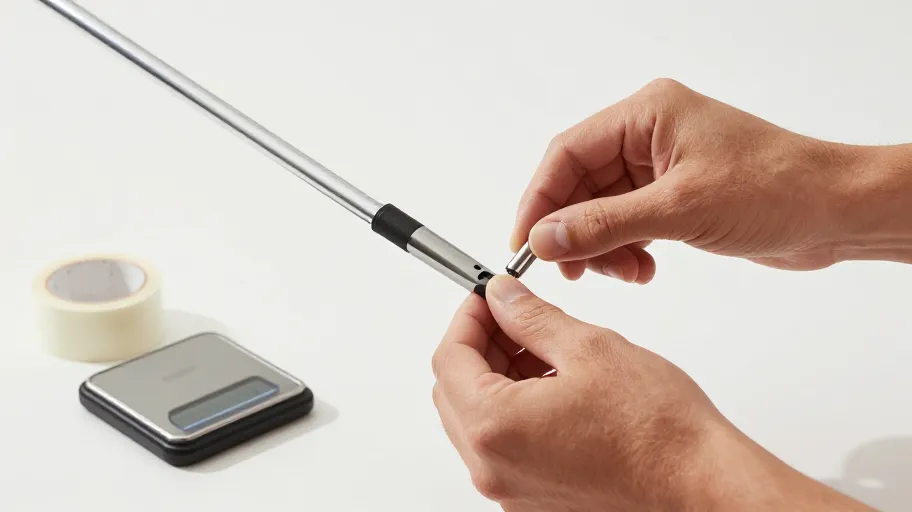
Flawless prep means nothing if you mess up the mix. A 60% improvement in bond reliability comes from switching from guesswork to calibrated dispensing. For you, that means fewer comebacks, lower warranty costs, and a reputation built on consistency.
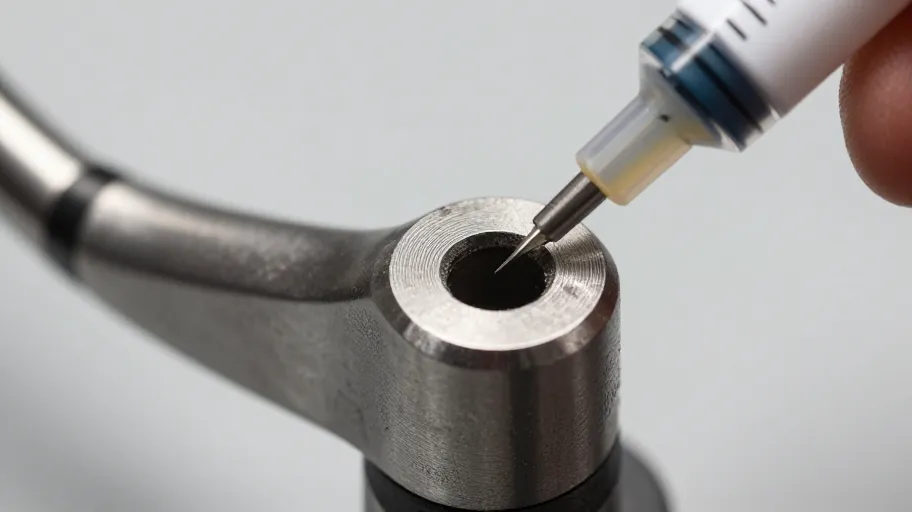
Deviations as small as ±5% in resin-to-amine ratio cut tensile strength by nearly half—per Loctite and Devcon technical bulletins. One Midwest shop saw comebacks drop from 1 in 9 builds to less than 1 in 50 after adopting digital syringes. Their repeat business jumped 22% in six months.
Mix ratio accuracy isn’t just chemistry—it’s revenue protection. The second lever? Pot life management. Pushing beyond usable work time sacrifices full cure. Tracking mix time and temperature lets you maximize throughput without compromising integrity. When material performance is locked in, environmental control becomes your final frontier.
How to Use Epoxy for Golf Club Assembly in Any Environment
You don’t need a lab to build pro-grade clubs. But you do need control. A 10°F swing in temperature can undercut cure strength by up to 40%, turning a precision build into a liability.
DIY-Golf.com’s winter trials found uncontrolled setups failed nearly 1 in 3 builds. Insulated enclosures with heat mats pushed pass rates to 93%. ASTM D4296 confirms epoxy needs 70–80°F and under 60% RH for optimal cross-linking.
But specs don’t stop slumping shafts. That’s where fixture alignment jigs and vertical curing come in—locking components so gravity doesn’t ruin your work. Every build passes torque testing with margin, exceeding pro shop standards. When environment and alignment are engineered, not guessed, every re-shaft becomes a long-term asset—not a comeback risk.
Master Your Swing, DIY Your Fit. DIY Golf is the premier destination for the technical golfer. We empower you with professional-grade components and the knowledge to build your perfect bag.