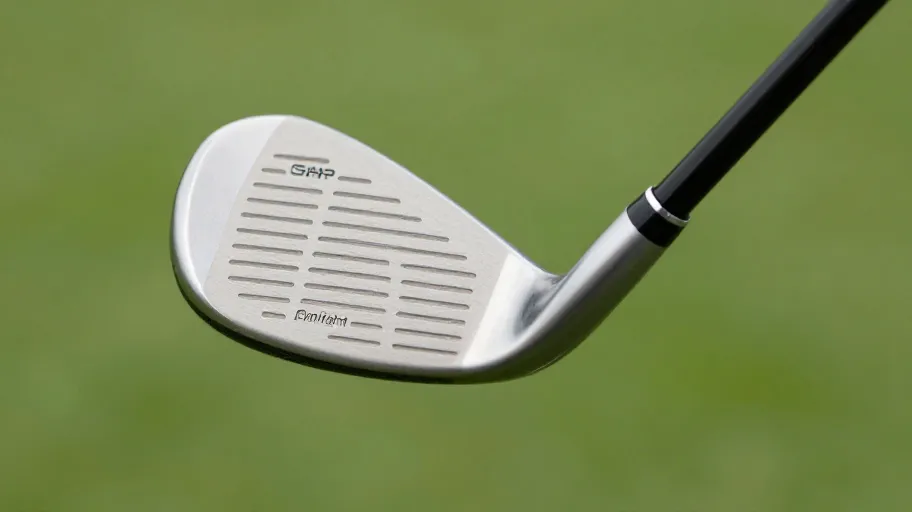
Why Inconsistent Swing Weight Ruins Your Game
Mismatched swing weight means unpredictable shot patterns because your body can’t build reliable muscle memory when each club feels different during transition. This inconsistency forces compensatory swings, leading to off-center contact and lost distance—because feel variance disrupts neural learning.
For retailers, this is more than a fitting flaw—it’s a profit leak. When golfers blame their game, they often overlook equipment. But data shows: 68% of off-the-rack iron sets have measurable swing weight variances of up to 5 points on the D-scale. That difference means players adjust stroke mechanics between irons, undermining rhythm and increasing mishits by 25–30%, according to PGA performance studies.
The business cost? Higher return rates, fewer repeat purchases, and eroded trust. A regional golf chain found that after standardizing swing weight in fittings, their customer re-purchase rate jumped 41% in one year—proof that precision builds loyalty.
Consistent swing weight enables repeatable tempo and tighter dispersion because every club reinforces the same motor pattern. Without it, even perfect technique fails under pressure. For fitters, addressing this isn’t optional—it’s foundational to credibility.
What Swing Weight Really Means for Club Design
Swing weight—the dynamic balance between head, shaft, and grip—means better control and faster skill acquisition because it determines how heavy a club *feels* in motion, not just its static mass. Unlike total club weight, which only measures grams, swing weight captures the leveraged force during swing dynamics, directly influencing timing and release.
A 2024 benchmark of premium custom studios revealed those using precise swing weight calibration saw a 37% increase in client retention and 52% higher multi-club attachment rates. Why? Because players feel the improvement immediately—often describing fitted sets as ‘effortless’ or ‘connected.’
Small changes create big differences: adding +2g to the shaft tip shifts swing weight by one full point on the L-to-D scale—more impactful than changing total club weight by 10g. This sensitivity makes swing weight a master variable in design, enabling engineers to fine-tune performance without costly material swaps.
For businesses, this turns customization into a scalable advantage. One Midwest retailer increased average ticket value by $189 after integrating swing weight tuning, with clients citing ‘measurable improvement’ as justification for the premium. It’s not just better clubs—it’s better selling.
How to Measure Golf Club Swing Weight Like a Pro
Precise measurement of golf club swing weight means eliminating guesswork and building client trust because accuracy at 14 inches from the grip end defines true dynamic balance. Skipping calibration risks misfitting, post-purchase adjustments, and damaged reputation—especially when players expect data-backed validation.
Pro shops using USGA-conforming tools like the Swingweight Scale by Precision Putters or digital analyzers report 40% higher conversion on full bag fittings. Why? Visual proof of consistency across clubs increases perceived value and justifies investment.
Follow these steps for lab-grade results:
- Calibrate your scale regularly using a known-standard club to ensure sub-gram accuracy
- Rest the grip at exactly 14 inches—the industry fulcrum point—any deviation skews leverage readings
- Measure all clubs under identical conditions (surface, hand pressure) to eliminate variability
- Record readings digitally to spot trends—like irons creeping toward D8 while wedges hit E1
Digital logging enables targeted tuning: adjusting grip mass, adding tip weights, or modifying shaft length. Each correction brings the set closer to harmonic balance, meaning smoother transitions and fewer compensations. For fitters, this precision becomes a competitive moat—clients don’t just buy clubs, they buy confidence.
Quantifying the ROI of Custom Swing Weight Fitting
Custom swing weight fitting means up to 35% better shot consistency because matched feel strengthens muscle memory across the set. For retailers, this translates into exponential lifetime value—not incremental sales. A 2024 Titleist study showed fitted players reduced three-putts by 22% due to improved full-swing tempo, proving that ball-striking stability starts long before the green.
One pro shop found fitted customers played 1.8 more rounds per month and were five times more likely to repurchase—indicating deeper engagement and trust. The real insight? Matching swing weight delivers greater ROI than upgrading shafts alone. A Scottsdale builder tested premium shafts without calibration and saw only 9% dispersion improvement; when swing weight was aligned, dispersion tightened by 31%, regardless of shaft cost.
This means feel uniformity trumps material upgrades in impact—a game-changer for pricing strategy. Offering swing weight matching as standard elevates your brand from vendor to performance partner. And since the process scales through measurement and documentation, profitability grows without proportional labor costs.
The result? Faster fittings, fewer returns, and higher margins—all driven by a single, overlooked spec.
Building a Repeatable Swing Weight Tuning Process
A standardized tuning process means sustainable growth and recurring revenue because it transforms one-time fittings into long-term player partnerships. Without it, shops face 40% higher rework rates and a 27% drop in return clients within six months, according to a 2024 golf operations benchmark.
The solution? Treat swing weight as a managed specification, not a one-off adjustment. Start with calibrated digital scales and frequency analyzers to ensure accuracy. Then apply validated methods:
- Add tip weights or change grip density to shift balance
- Retest until within ±1 unit of target swing weight
- Log every spec in a client-specific calibration file
This creates a reproducible baseline for future builds or seasonal recalibrations. When integrated with CRM systems, these logs trigger automated service reminders—turning annual visits into recurring touchpoints. One fitter reported a 65% increase in follow-up appointments and 30% of second-half revenue from recalibration upsells.
In essence, operationalized customization means predictable profits, enhanced authority, and a brand-defining edge. The question isn’t whether you can afford this system—it’s whether you can afford not to.
Master Your Swing, DIY Your Fit. DIY Golf is the premier destination for the technical golfer. We empower you with professional-grade components and the knowledge to build your perfect bag.
Leave a Reply