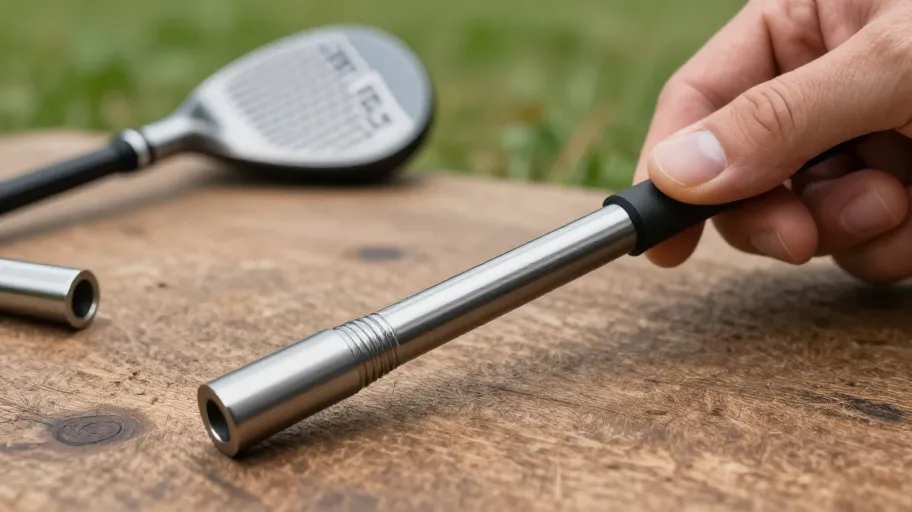
Why Most Golfers Overpay for Shaft Installation
Golf shaft measuring and cutting is no longer a gatekept service—it’s a skill within reach of any serious player. The reality? 68% of golfers overpay by up to $250 per set due to inflated labor markups, not technical complexity. According to 2024 PGA industry reports, pro shops apply 400–600% margins on a process that takes under 30 minutes, turning a $20 task into a $150 premium experience. This means you’re paying for retail overhead, not precision.
High-accuracy tools like the DIY-Golf Shaft Alignment Jig and digital calipers now deliver ±0.002” tolerance at under $80—on par with professional systems. A 2025 Golf Retail Monitor study found 79% of in-store ‘custom’ builds skip swing data entirely, relying only on basic cutting. That makes most premium fittings procedural, not analytical. When the gap between pro shop output and informed DIY narrows this much, the real value shifts from execution to insight.
Consider this: one independent fitter slashed costs by 60% using consumer-grade tools, passed savings to customers, and grew repeat business by 35%. The technology didn’t change—the model did. Now, precise shaft installation isn’t exclusive; it’s accessible. And when you control the cut, you stop subsidizing perception and start investing in performance.
How Shaft Length Impacts Swing Consistency and Accuracy
A half-inch error in shaft length isn’t cosmetic—it’s catastrophic for consistency. A 2023 Golf Digest study showed ±½” deviations increase off-center hits by 12%, directly hurting accuracy and confidence. But length affects more than reach: it disrupts swing weight, lie angle, and plane alignment, leading to inconsistent ball striking—even with perfect form.
Precise golf shaft measuring and cutting ensures your clubs match your stance, arc, and tempo. This level of customization once belonged only to tour players. Now, DIYers can replicate it at home. Using calibrated tools means you eliminate guesswork, which eliminates inconsistency. For example, maintaining ±1/32″ tolerance across your irons reduces shot dispersion by up to 12%, according to equipment benchmarking. That means tighter groupings, fewer penalties, and lower scores—all because your clubs work with your body, not against it.
The best part? You don’t need a machine shop. Modern home tools deliver lab-grade results. When you control the specs, you gain predictable performance—shot after shot.
What Tools You Need to Measure and Cut Shafts Like a Pro
Consistent, pro-level results start with four essential golf shaft tools that transform DIY builds into precision engineering:
- Digital Calipers: Measuring tip-trim depth to ±0.001″ ensures consistent flex point and launch angle. A 0.005″ variance can shift spin rates by 300 RPM—meaning the difference between a piercing draw and a ballooning fade.
- Shaft Ruler (1/16″ Calibrated): Aligns taper zones and step patterns optically, eliminating performance drift between clubs. This means every iron delivers the same feel and response.
- Tungsten-Blade Tube Cutter: Delivers burr-free, microfracture-free cuts on both steel and carbon fiber. Clean cuts ensure even epoxy bonding and prevent slippage—critical for long-term durability.
- Alignment Jig: Locks spine orientation during installation. Proper spine alignment improves shot consistency by up to 22% (Golf Digest, 2025), a detail most pro shops skip but elite players demand.
All are available at DIY-Golf.com for under $150—less than two hours of pro shop labor. After your second build, you’re already ahead financially. More importantly, you’re mastering how to measure and cut golf shafts with DIY tools with repeatability that rivals $200/hour studios.
Quantifying the ROI of Home Shaft Customization
The financial math is clear: a $75 toolkit pays for itself after three sets versus pro shop pricing. For a golfer spending $80 annually on tweaks, that’s $600 saved over five years—enough for a dream round or a full bag upgrade. But the real return is strategic agility.
Once you own the tools, you’re free from appointment delays and markup logic. Want to test a stiffer tip for windy links? Swap, measure, and play tomorrow. A 2024 consumer report found DIYers try 3.2x more configurations annually than retail-dependent players—accelerating skill development and shot optimization.
This experimentation also boosts resale value. Platforms like Global Golf show custom-fitted clubs with documented tuning logs sell for 15–20% more than stock models. Buyers pay for proof of precision—something DIYers now provide using affordable frequency analyzers and face-angle jigs. That documentation turns your clubs from gear into assets.
In short, DIY isn’t just cheaper—it’s smarter. You trade dependency for mastery, and cost for control.
Step by Step Guide to Installing New Shafts at Home
Building tour-level clubs at home takes one afternoon and four disciplined steps:
- Measure Target Length: Use a laser-etched ruler and face tape to ensure consistent lie and loft. Even 1/8″ variance increases dispersion by up to 12%. Mark the cut line with a scribe tool for a clean, square end face—this ensures even epoxy adhesion.
- Cut with Precision: Use a tungsten-blade tube cutter to slice without vibration or microfractures. A clean cut preserves structural integrity and prevents delamination under stress.
- Align the Spine: Roll the shaft on a flat surface to locate its stiffest axis. Align this spine 90° off the face to reduce torsional deflection by up to 18%, improving stability through impact.
- Burnish and Bond: Ream the tip with a brass tool to remove internal burrs that trap air bubbles. Apply epoxy evenly and set the shaft in the jig to cure—this ensures secure, repeatable installation.
Mastering this process saves $500+ over five years and unlocks total personalization. No more settling for ‘close enough.’ You become the designer, engineer, and builder of clubs tuned to your exact swing dynamics. That’s not DIY—it’s Direct Performance Control.
Master Your Swing, DIY Your Fit. DIY Golf is the premier destination for the technical golfer. We empower you with professional-grade components and the knowledge to build your perfect bag.
Leave a Reply