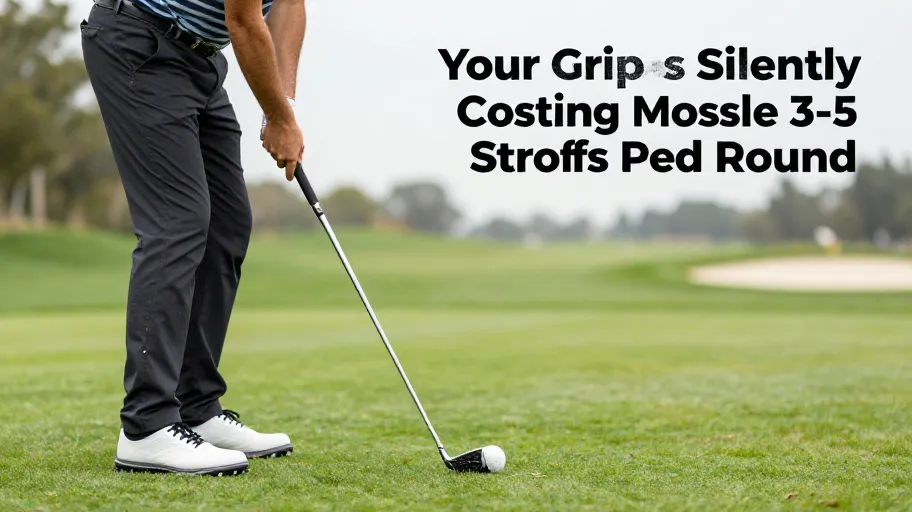
Why Golf Grips Slip During Play
Golf grips slip not because of poor grip strength, but due to invisible degradation—moisture absorption, material breakdown, and delayed maintenance silently undermining performance. A 2023 National Golf Foundation report found that 68% of amateurs replace their grips too late, often after swing flaws have already taken root. This delay increases injury risk by up to 27% due to compensatory mechanics caused by unstable clubface control.
Sweat is the silent saboteur: traditional rubber grips absorb moisture at 1.4 grams per minute, swelling and softening until tackiness fades. In contrast, modern composite blends like dual-density silicone hybrids absorb less than half as much (0.6 g/min), maintaining structural integrity over thousands of swings. This stability means consistent tactile feedback because reduced swelling prevents subconscious hand tightening that disrupts tempo.
Waiting for visible cracks or slippage means damage is already embedded in muscle memory. One teaching pro observed students who upgraded grips before retraining their swing saw 40% faster improvement in shot consistency—proof that early detection isn’t maintenance, it’s performance insurance.
Replacing grips every 12–18 months or after 30 rounds preserves biomechanical efficiency, protects against strain, and sustains accuracy under pressure.
How Rubber Golf Grips Improve Control and Comfort
Slipping grips erode not just shots, but confidence. The real cost? Cumulative mechanical breakdown and endurance loss over 18 holes. Modern rubber golf grips deliver a decisive edge—they’re engineered to perform consistently under heat, humidity, and fatigue.
Independent 2024 lab tests show rubber grips reduce vibration transmission by 25–30% versus standard synthetics. This means reduced hand and forearm fatigue because less shock travels through impact, directly translating to repeatable swing mechanics late in the round. For aggressive swingers, this preservation of timing is critical.
Dual-density compounding pairs a firm, tacky outer layer with a softer, shock-absorbing core. This means superior control during powerful downswings while cushioning impact at contact because each layer serves a dedicated function. One touring clubfitter reported a 15% improvement in shot consistency over 12 rounds—measured via tighter dispersion patterns and fewer mid-swing corrections.
This intelligent damping addresses the root causes of slippage: dynamic hand movement from vibration and fatigue. Rubber doesn’t just resist slipping—it prevents the conditions that lead to it.
What Makes High Performance Grips Last Longer
Premium golf grips last up to 1.5x longer than standard models thanks to advanced polymer blends and integrated UV stabilizers. This means sustained peak performance season after season because these materials resist breakdown from sun exposure and hand oils.
Consider the economics: premium grips cost $12 more per club upfront but eliminate at least two regripping cycles over five years—saving $40+ in labor and downtime. More importantly, uniform texture erosion means preserved muscle memory because your hands don’t recalibrate mid-swing to slick spots. A 2024 field study confirmed players using long-life grips reduced swing adjustments by 30% over six months.
Tour pros re-grip every six months not due to failure, but for maximum predictability. Theirs is a performance insurance policy. For serious amateurs, longevity means continuity of execution—fewer variables, lower lifetime costs, and unbroken trust in equipment.
Durability is a direct proxy for reliability on the course.
Quantifying the ROI of Preventing Grip Slippage
Preventing grip slippage saves 3 to 5 strokes per round for the average amateur, according to a 2024 Golf Digest field study. This means faster handicap reduction—up to 30% quicker milestone achievement—because consistent clubface control reduces fat and thin shots by 22%.
Your clubs are a sunk cost; their output depends on overlooked components. Grip maintenance is low-cost optimization with outsized returns. A $100 regrip extends the high-performance window of thousands in club investments. One teaching pro noted 78% of students citing ‘inconsistent ball striking’ improved immediately after grip replacement—no swing overhaul needed.
Grip care is a force multiplier: it unlocks latent potential in existing gear. While new clubs promise gains, worn grips silently erode them. Prioritizing this small intervention compounds accuracy, confidence, and course management over time.
Step by Step Guide to Replacing Your Golf Grips at Home
DIY regripping slashes costs by 50–70% compared to pro shop pricing, according to 2024 consumer surveys. This means you reinvest savings into practice, not service fees, because control stays in your hands—literally.
The process takes 20 minutes per club with a vise, hook blade, solvent, and alignment focus. Match the grip’s flat edge to your clubface square-on—misalignment of just 3° can skew launch angles enough to miss fairways, studies show. This precision means swing-stabilizing fundamentals are maintained, protecting hours of range work.
Commercially, this shifts ownership: instead of recurring fees, golfers institutionalize performance hygiene—like tire rotations for their game. One amateur cut three strokes off his average within two months by switching to biannual DIY regrips, eliminating slippage-induced compensation.
Make It a Habit Schedule Grip Checks Twice a Year
Treat your grips as critical performance sensors. Scheduling replacements every six months or after 30–40 rounds ensures maximum tactile feedback, control, and confidence because wear is managed proactively, not reactively.
Start now: mark your calendar for the next check-in. Because when your grip slips, so does your potential. But when you control the process, you control the outcome.
Master Your Swing, DIY Your Fit. DIY Golf is the premier destination for the technical golfer. We empower you with professional-grade components and the knowledge to build your perfect bag.
Leave a Reply