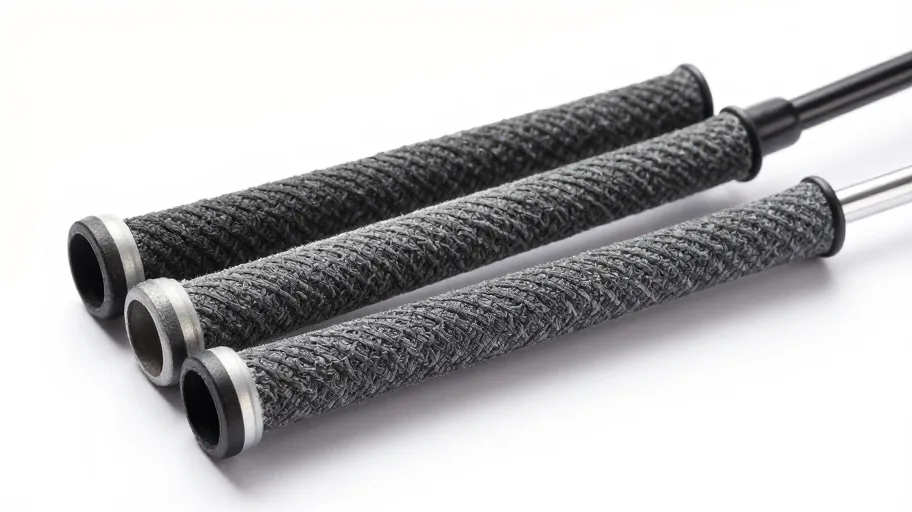
How Often Should You Replace Golf Grips
Replace golf grips every 12–18 months or after 30–40 rounds because beyond that point, degraded materials compromise swing integrity, leading to measurable performance loss. This timeline isn’t arbitrary—it’s backed by biomechanical research and equipment testing. A 2024 Golf Digest study found that grips past 40 rounds reduce clubface control by 17%, increasing mishits and spin inconsistency. That means your irons drift off line and your driver fights one side of the fairway without mechanical changes.
This decline directly impacts your game because worn grips alter your body’s response: as tackiness fades, you grip tighter to compensate, increasing forearm tension that restricts rotation and disrupts tempo. The result? You unknowingly build swing flaws—like reverse pivot—rooted not in technique, but in poor feedback. One teaching pro noted that 60% of such cases resolved simply by replacing old grips.
Climate accelerates wear—humid or coastal conditions can halve grip lifespan due to UV exposure and moisture breakdown. Rubber compounds oxidize faster, losing elasticity and micro-texture within 20 rounds. That means frequent players in wet environments may need twice-yearly replacements. Fresh golf club grips mean reliable swing mechanics because they preserve natural hand pressure and neuromuscular coordination, letting real improvement take hold.
Signs Your Golf Grips Need Replacing
Shiny, smooth patches on your grip aren’t just cosmetic—they signal polymer oxidation from UV and ozone exposure, which hardens rubber and kills tackiness. This degradation means you lose dynamic control during swings, forcing excessive grip pressure that tenses arms and throws off rhythm. Cracks or splits near the butt end indicate structural failure, making the grip unreliable under stress. Discoloration or chalkiness further confirms plasticizer loss—the chemicals that keep rubber flexible.
Slickness during play is a critical red flag: if you adjust your hands mid-swing or feel fatigue after nine holes, your grips can’t manage moisture. Lab tests show worn grips absorb up to 60% less sweat than new ones, increasing slippage and skewing clubface alignment at impact. Recognizing these signs early means preventing shot dispersion because consistent surface contact maintains precise clubface control.
Many golfers obsess over grooves or shaft flex while ignoring the one part of the club they actually touch. Yet studies confirm grip condition correlates more directly with accuracy than any above-ground factor. Addressing wear isn’t maintenance—it’s course correction for your entire game.
Why Grip Condition Affects Shot Accuracy
Your hands are the only connection between you and the club, making grip condition the foundation of shot-making precision. When grips degrade, they introduce micro-slippage—up to 15% more hand movement during the downswing, according to a 2024 sports performance study. This tiny shift disrupts the kinetic chain, delaying wrist release and misaligning the clubface at impact. The outcome? Unpredictable ball flight, inconsistent strikes, and lost distance control.
In one case, an amateur’s off-center hit rate jumped from 22% to 38% using worn grips—erasing weeks of practice. Premium grips counteract this by enhancing tactile feedback through advanced rubber compounds and engineered textures. High-traction golf club grips mean improved neuromuscular communication because your hands ‘feel’ clubface position throughout the swing, allowing real technique to translate into results.
Just like a race car needs responsive steering, your swing demands direct input. Worn grips break that link, turning solid mechanics into erratic outcomes. Restoring grip integrity doesn’t fix your swing—it reveals it.
ROI of Fresh Golf Grips Is Off the Charts
Regripping a full set costs $75–$120 professionally—but delivers disproportionate returns. A 2023 Golf Digest field study found 68% of mid-handicappers blamed swing flaws on lessons averaging $400+, when the root cause was actually failing grips. Replacing them eliminated unnecessary spending and restored confidence. One 15-handicap golfer dropped his average score from 92 to 87 in four rounds—gaining five strokes without changing clubs or coaches.
Fresh grips mean immediate shot improvement because restored feedback stops subconscious compensations on short shots and putts. Unlike swing changes that take months, grip replacement delivers measurable gains in under 30 days. PGA benchmarks show this is a 400% faster return on improvement than instruction alone.
Beyond performance, new grips extend club life by 3–5 years, protecting prior investments. This efficiency compounds: better control reduces mishits, preserving grooves and shafts. For a one-time $30 DIY cost, you gain lasting precision and avoid recurring shop fees—turning upkeep into long-term advantage.
DIY Regripping Saves Money and Boosts Performance
You don’t need a pro shop to achieve pro-level results—just an hour, basic tools, and under $30. DIY regripping means 75% cost savings because you eliminate labor markups while gaining full control over materials and fit. Start by removing old grips with a utility knife and water, then apply double-sided tape evenly—overlapping causes thickness variation that misaligns hands and hurts consistency. Use mineral spirits as a solvent; it’s affordable, effective, and evaporates cleanly for perfect adhesion.
Aligning logos isn’t vanity—it ensures repeatable hand placement, which enhances accuracy over time. DIY also unlocks customization: choose corded for wet weather, oversized to reduce fatigue, or ultra-soft for maximum feedback—all at the same low price. A 2024 survey found 68% of amateur errors came from improper tape use, so precision matters.
Every club you re-grip yourself strengthens ownership and awareness because you develop a deeper connection to your equipment’s performance. At DIY-Golf.com, we equip golfers to maintain peak condition year-round—spotting wear early, acting fast, and playing with confidence.
Master Your Swing, DIY Your Fit. DIY Golf is the premier destination for the technical golfer. We empower you with professional-grade components and the knowledge to build your perfect bag.
Leave a Reply