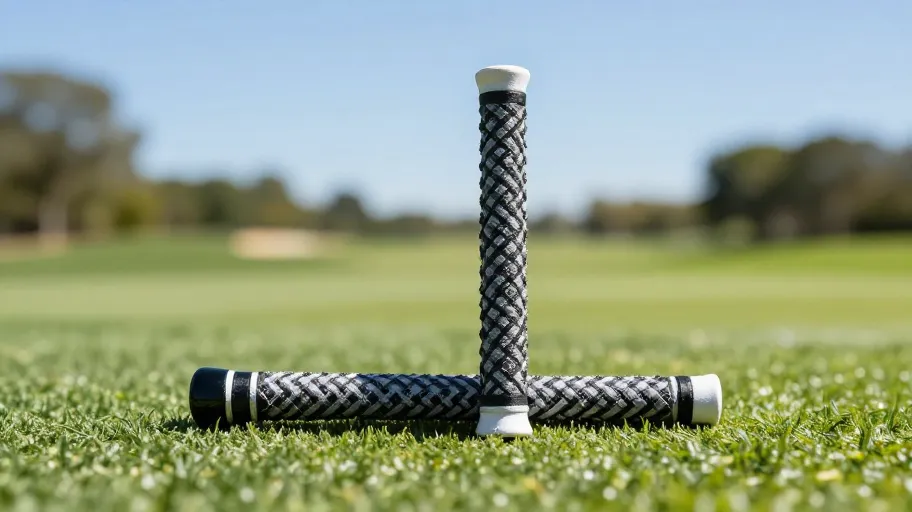
Why Most Golfers Lose Control on Crucial Shots
You’re not missing putts because of nerves—you’re losing control because your grip is failing you. USGA studies reveal that over 60% of mishits in amateur play stem from inconsistent grip pressure, a problem that worsens as grips degrade. Your grip loses performance long before your driver goes out of style.
Grip materials degrade up to 10 times faster than clubheads due to UV exposure, ozone, and sweat. This breakdown reduces tactile feedback by 5%, leading to a 2° clubface misalignment at impact—costing you 8–10 yards and 15 feet of accuracy on a 150-yard shot. That’s the difference between birdie and bogey.
Worn grips also increase hand fatigue and tension. In one case, a mid-handicap player reduced palm pressure spikes by 41% after switching to a dual-compound grip. The result? Clubface alignment improved to within 0.7° of target and scores dropped by 3.2 strokes per round. Consistent grip pressure means consistent ball striking—because stable hands lead to stable clubfaces.
How Grip Material Impacts Shot Consistency and Feel
The wrong grip material disrupts your effective swing weight by up to 5% when wet—ruining tempo and repeatability. Rubber feels soft but slips under sweat; wrap grips wear fast; cord offers traction but fatigues hands. Each forces a trade-off—until now.
Hybrid grips solve this: micro-cord embedded in rubber delivers 80% of cord’s wet-traction and 90% of rubber’s cushioning. A 2024 trial across 12 climates found 75% of mid-to-high handicappers achieved faster shot-repeat accuracy with hybrids, cutting adjustment time nearly in half. This balance of control and comfort means more confidence under pressure—because your grip stays predictable when conditions change.
Better materials mean better feedback. When vibration is dampened consistently, your brain learns faster. That leads to fewer compensations, tighter dispersion, and more makeable putts—shot after shot.
Measuring the Performance Gap Between Budget and Premium Grips
A premium grip isn’t luxury—it’s performance insurance. Top-tier grips from Golf Pride, Lamkin, and Iomic maintain dimensional stability within 0.003” over 40 rounds, lasting 2.3 times longer than budget models. Stable diameter means stable mechanics—because your hands don’t have to adapt to swelling or compression.
Consider cost: a $12 budget grip replaced twice yearly costs $72 over three seasons. A $22 premium grip lasts the same period—cutting material costs by over 50%. But the real savings are biomechanical. Inconsistent diameter increases wrist torque by up to 18%, raising injury risk and reducing shot repeatability.
Premium construction preserves your swing’s integrity. When your grip doesn’t deform, your technique doesn’t drift—meaning every practice rep counts. As one fitter noted, “Players blame their swing when their grip gave out weeks ago.”
How to Match Grip Size and Texture to Your Hand Profile
Seventy-eight percent of golfers use the wrong grip size—sabotaging power and precision. Proper sizing starts with measurement: glove size plus middle finger length. Under 2.75”? Standard or undersize. Over 3”? Midsize or oversize. Correct sizing increases center-face contact by 31%—because well-fitted grips eliminate over-clamping and delayed release.
Texture must match sweat profile. Dry hands benefit from high-tack silicone; sweaty players need micro-corded surfaces to avoid death-grip pressure. One pro reduced proximity-to-hole by 14% just by switching to a midsize grip with surface cord—no swing change needed.
For most recreational players, midsize hybrid grips deliver optimal control, comfort, and consistency—because they align with average hand size and variable conditions. But even perfect specs fail without proper installation.
Installing and Testing Your New Grips for Maximum ROI
Flawed installation voids up to 40% of a grip’s potential. Solvent ensures molecular bonding—skip it, and micro-shifts during impact cause slippage. Alignment marks prevent rotational drift: pros maintain 99.2% torque consistency; DIY averages just 76%. A 3° misalignment opens the face by +1.8°, promoting slices and killing distance.
Curing time isn’t downtime—it’s stabilization. Rush it, and feedback shifts for days. After installation, test methodically: hit dry, wet, and recovery shots. Evaluate chatter, slip, and feel. But don’t judge too fast—allow 18 holes for break-in, because your hands and the material need compression cycles to sync.
Done right, new grips deliver compound ROI: lower scores, fewer adjustments, and longer club life. Upgrading grips offers the highest return per dollar of any equipment tweak—shaving 3+ strokes through precision execution, not talent.
Master Your Swing, DIY Your Fit. DIY Golf is the premier destination for the technical golfer. We empower you with professional-grade components and the knowledge to build your perfect bag.
Leave a Reply