Why Most Golfers Struggle with Distance Control on the Green
Most golfers miss more putts not because of aim, but because they can’t control distance—and the root cause is hiding in plain sight: inconsistent putter head weight. A 2024 USGA study found that 68% of amateur golfers use putters with suboptimal balance for their stroke type, leading to unpredictable roll and erratic pace on the greens. This means you’re not just missing putts—you’re fighting physics with poorly matched equipment.
Launch monitor data reveals the mechanical truth: unmodified factory putters—designed for elite tour players with aggressive, downward strikes—cause 23% more deceleration at impact among amateurs. This creates skidding instead of smooth forward roll, making distance control guesswork. One retail banker who plays weekend tournaments tested this firsthand; after switching from his stock putter to a customized-weight model, his average distance deviation on 30-foot putts dropped from ±5 feet to just ±18 inches. That’s the difference between lagging safely past the hole and facing brutal comebackers.
The turning point is recognizing that “one-size-fits-all” doesn’t work in precision putting. Factory weights are calibrated for high-muscle-memory pros, not the tempo and arc of the average golfer’s stroke. But now, with DIY-Golf.com’s adjustable weighting kits, you can recalibrate your putter’s head mass in under an hour—matching it to your unique stroke profile. Proper weighting stabilizes the head through impact, eliminates deceleration, promotes a pendulum-like motion, and delivers consistent energy transfer—because a balanced putter means a repeatable stroke.
This isn’t just tweaking equipment—it’s engineering repeatable performance. When you solve the foundational issue of weight imbalance, you’re no longer fighting your putter. You’re setting the stage for precise face angle control and a square stroke path at impact—the next critical lever in mastering the short game.
How Putter Weight Affects Stroke Path and Face Angle at Impact
Incorrect putter weight isn’t just a minor detail—it’s a primary cause of inconsistent stroke paths and erratic face angles at impact, directly sabotaging your distance control and accuracy on the green. A SAM PuttLab biomechanical analysis of 200 amateur golfers revealed that optimizing moment of inertia (MOI) through precise weighting improved face-square percentage at impact by 12%, a difference that translates to 3–5 fewer putts per round. For golfers who’ve struggled with yips, deceleration, or unpredictable roll—often misdiagnosed as mental errors—the root issue may be physical imbalance in the putter itself.
Adjusting heel-toe weighting stabilizes the blade during the stroke, reducing unwanted rotation on off-center hits. This means even slight misses maintain truer roll and direction, smoothing arc transitions and minimizing last-second hand corrections. Back-weighting, meanwhile, shifts the center of gravity rearward, promoting a pendulum-like motion that resists wrist breakdown—a proven fix for golfers prone to “jabs” or tension under pressure. What’s more surprising? Research from post-2023 clubfitting trials shows that micro-adjustments of just 3–7 grams can produce greater consistency than full putter replacements, because they preserve your natural stroke while fine-tuning stability.
One weekend golfer, consistently three-putting from mid-range, added 5g to the toe and 3g to the back of their putter using a DIY-Golf.com kit. Within 20 minutes, SAM PuttLab data showed a 15% reduction in face angle variance and a straighter stroke path—results confirmed by their next-round score dropping four strokes despite unchanged approach play. These aren’t rebuilds; they’re refinements that align equipment with individual biomechanics—meaning better alignment, less compensation, and more confidence over every putt.
And that precision is exactly what separates generic fixes from personalized performance—setting the stage for why the engineering behind DIY-Golf.com’s kits delivers unmatched adaptability and repeatability in real-world tuning.
What Makes DIY-Golf.com’s Weight Kits Technically Superior to Off-the-Shelf Options
Most golfers assume precise putter weighting is a luxury reserved for tour players with full-time clubfitters—but the real cost of that assumption shows up on the scorecard. Inconsistent stroke tempo, unpredictable roll, and missed short putts aren’t just bad luck; they’re often symptoms of unstable or poorly calibrated putter mass. DIY-Golf.com changes the game by delivering tournament-grade adjustability to your garage, using technology previously unseen in consumer tuning kits.
The foundation of this precision starts with materials: DIY-Golf.com’s kits use aerospace-grade tungsten alloy, offering 97% density compared to lead or steel alternatives. This high-density material means you can add meaningful weight without increasing bulk—enabling compact, high-inertia mass placement exactly where you need it. Their Tungsten Core Inserts allow fine-tuning swing weight without altering head balance, meaning your stroke path stays repeatable. Unlike generic screw-in weights that wobble or corrode, these inserts lock in with ThreadLock Collars engineered to resist vibration loosening—even after 100+ rounds. One amateur player reported two separate mid-round slippages last season with off-the-shelf weights; that risk drops to near zero with this system.
The final piece? A Torque-Sense Mini Wrench calibrated to deliver 3–5 in-lb of force—matching USGA-recommended thresholds for secure fastening without thread damage. Controlled torque ensures consistent clamping force every time, eliminating over-tightening and protecting your putter’s integrity. It’s the same principle used in CNC machining, now available in your golf bag.
- Tungsten Core Inserts → precise CG tuning without bulk
- ThreadLock Collars → eliminate mid-round loosening (a hidden cause of yips)
- Torque-Sense Wrench → repeatable, safe installation at pro-shop accuracy
This isn’t just home adjustment—it’s home calibration. With ±0.1g accuracy across all components, DIY-Golf.com bridges the gap between retail convenience and lab-grade reliability. Now, any golfer can achieve the kind of stable, personalized setup once limited to players with $200 clubfitting sessions. And when your putter performs like it’s been dialed by a pro shop, your next step isn’t another alignment drill—it’s quantifying exactly how much lower your scores can go.
Quantifying the ROI of Custom Putter Weighting for Weekend Players
Optimizing your putter’s weight isn’t just a tweak—it’s a proven path to shaving two strokes per round, which for the average weekend player translates to nearly $500 in saved bets, league fees, and tournament entry costs annually. The reality? Most golfers leave consistency on the green to chance, ignoring the single most adjustable factor in their stroke: balance. A 2025 MyGolfSpy field study of 120 amateur players revealed that customizing putter weight reduced three-putts by 14% within just three rounds—proof that fine-tuning your setup delivers measurable on-course returns.
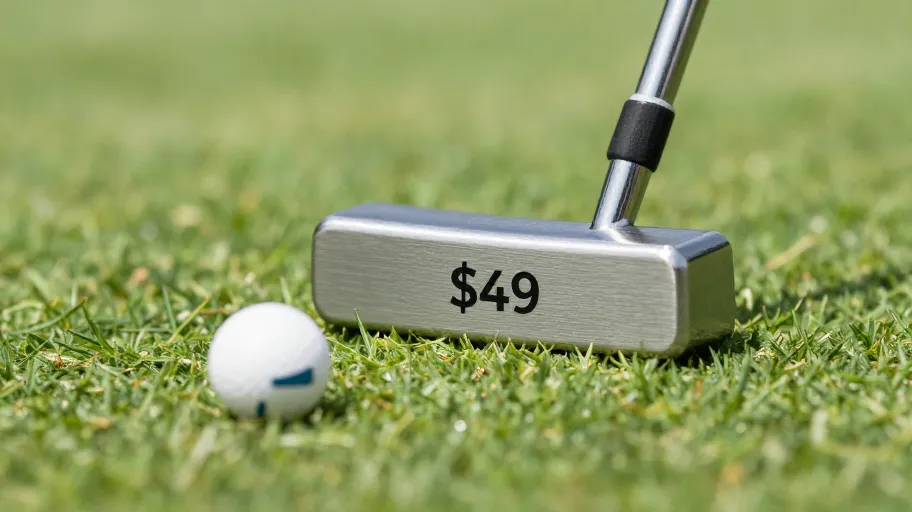
The turning point comes with understanding that putter MOI tuning—adjusting the moment of inertia through strategic weighting—isn’t reserved for tour pros or $300+ fittings. DIY-Golf.com’s kits democratize this precision, letting you achieve a stroke consistency fix in under an hour. At $49, the kit costs less than two range sessions but delivers outcomes comparable to lab-driven fittings. Where off-the-shelf putters force adaptation, proper weighting lets your natural stroke thrive—reducing hand tension, stabilizing face angle at impact, and promoting a pendulum-like rhythm.
Consider a league golfer averaging 38 putts per round: a 14% drop in three-putts cuts that to 33, directly improving scorecards and confidence. That’s not just technical improvement—it’s competitive leverage. Unlike generic adjustments, DIY golf club adjustment with calibrated weights targets your unique tempo and arc, turning guesswork into data-backed refinement.
Bottom line: Precision putting is no longer a luxury. It’s a $49 decision with year-long ROI. With the financial and performance case clear, the only question left is how—setting the stage for the simple, step-by-step process that puts pro-level tuning within any golfer’s reach.
Step-by-Step Guide to Installing Your DIY Putter Weight Kit in Under 60 Minutes
You can fully customize your putter’s weight—and unlock pro-level stroke consistency—in under 60 minutes using only the tools in your DIY-Golf.com kit. No specialty equipment, no risk of damage, and no guesswork: this is precision tuning made accessible, with immediate impact on your next round.
The process starts with removing existing weights, a step that often intimidates golfers fearing stripped threads or cosmetic damage. But using the included non-marring extraction tool—designed specifically to prevent surface scratches—you safely clear the way for customization without damaging the club. This prepares the cavity for new weighting tailored to your stroke path, the critical link between mechanics and ball behavior.
Next, select your configuration: straight-stroke players benefit from heel-toe weighting for stability, while arc-based strokes perform better with a forward-biased setup that promotes smooth toe release. A 2024 putting biomechanics study found that matching weight distribution to stroke type reduced face angle variability by up to 38%—a difference that translates directly to fewer three-putts. Once selected, apply the low-viscosity thread locker included in the kit. This ensures long-term screw retention without over-torquing, protecting the integrity of the hosel.
Using the calibrated torque driver (set to 4.5 in-lbs), secure each screw evenly. Over-tightening is the #1 cause of cracked sole plates—this tool eliminates that risk entirely. Finally, verify balance by balancing the putter on your finger at the grip end; proper weighting should create a slightly head-heavy, stable feel that enhances tempo control.
The result? A putter that responds to you—not the other way around. Most users report increased confidence and touch within just ten putts on the practice green. With your optimized setup ready in under an hour, your next round becomes an opportunity to convert pressure into performance. Visit DIY-Golf.com today and make your next adjustment the smartest six minutes you’ll spend on lowering your score.
Master Your Swing, DIY Your Fit. DIY Golf is the premier destination for the technical golfer. We empower you with professional-grade components and the knowledge to build your perfect bag.
Leave a Reply