The Hidden Cost of Stock Putter Balance
Improper putter balance means inconsistent face control because the head fights your natural stroke arc. When your equipment doesn’t match your mechanics, you compensate—leading to deceleration, mis-hits, and lost confidence on short putts.
A 2024 golf performance study found over 32% of amateurs use unadjusted putters—meaning most players are battling mismatched physics, not flawed technique. That imbalance disrupts tempo, especially under pressure, where hesitation ruins stroke flow.
Stock putters assume a one-size-fits-all stroke, but research shows personalized weighting reduces hand manipulation by up to 48% in arcing strokes. This isn’t opinion—it’s biomechanics. Matching weight distribution to your stroke type means smoother transitions, better alignment, and fewer compensations because the putter works with you, not against you.
The real problem isn’t missed putts—it’s trusting gear that wasn’t built for you. Which leads directly to the solution: modern adjustable weighting systems.
How Adjustable Weights Enable True Personalization
Modern putters from Scotty Cameron, Ping, and TaylorMade use precision-threaded weight ports, which means you can fine-tune head mass and center of gravity (CG) with surgical accuracy—because even 3g changes alter swingweight and strike quality more than grip or length adjustments.
Adjustable weights mean optimized CG alignment for your stroke path: face-balanced setups support straight-back-straight-through motions, while heel-weighted configurations stabilize arcing strokes. A 2024 on-course analysis found precisely weighted putters improve strike consistency by 22%, directly enhancing distance control and roll predictability.
For a mid-handicapper struggling with short putts, switching to a 7g/8g split-weight configuration meant better speed matching and heightened stroke awareness—because the putter now responded consistently to their motion. That reliability means reduced mental fatigue and increased trust, because your brain stops compensating and starts believing in the stroke.
Personalized weighting isn’t luxury—it’s leverage. And the next level? Maximizing forgiveness through MOI optimization.
MOI Optimization Turns Mishits Into Makeable Putts
Low MOI (Moment of Inertia) means off-center strikes twist the face, sending putts off line before rollout even begins. But strategic perimeter weighting increases resistance to twisting, so mis-hits stay closer to target.
USGA research confirms high-MOI putters reduce dispersion by up to 18% on mishits—meaning tighter groupings and shorter second putts. For the average golfer who centers only 60% of putts, this forgiveness translates to measurable scoring gains.
Higher MOI means greater stability at impact, because mass placement counters rotational forces. Tour players favor mallet designs not for looks—but for physics-driven consistency. This stability means confidence under pressure, because you know minor errors won’t derail your read or rhythm.
And here’s the hidden ROI: when you stop steering the ball, you start trusting your stroke. That psychological shift is where real improvement happens—on breaking putts, downhill slopes, and high-stakes moments.
Real Rounds Real Results From Custom Tuning
PGA Tour data shows properly fitted putters—including weight distribution—save 1.7 putts per round. That’s one full stroke per 18 holes—a margin that separates payouts from missed cuts. For amateurs, it’s eight strokes saved monthly by cutting three-putts in half.
A 2024 Golf Science Lab study linked optimized head weight to consistent tempo and eliminated deceleration—the leading cause of short putts. Fix that flinch, and you fix the three-putt chain reaction.
Investing $100 in a pro fitting means ROI in as few as three weekend rounds—via recovered side bets, league points, or ranking jumps. But the deeper benefit? Mental resilience. A tuned putter delivers predictable feedback, which means repeatable performance, because trust replaces doubt when the round’s on the line.
The advantage isn’t just lower scores—it’s consistency you can count on, hole after hole.
DIY Putter Tuning You Can Do Tonight
You don’t need a fitting lab to start—you need a torque screwdriver, replacement weights (2–12g), and willingness to experiment. Most modern mallets and some blades use interchangeable systems, which means you can adjust balance at home for direct control over your stroke.
Begin by swapping weights in 3g increments—the minimum threshold detectable in stroke stability, per 2024 biomechanical studies. Rear-weighting shifts CG backward, promoting smooth pendulum motion ideal for arc strokes. Front weighting enhances hand-forward pressure, sharpening alignment for straight strokes.
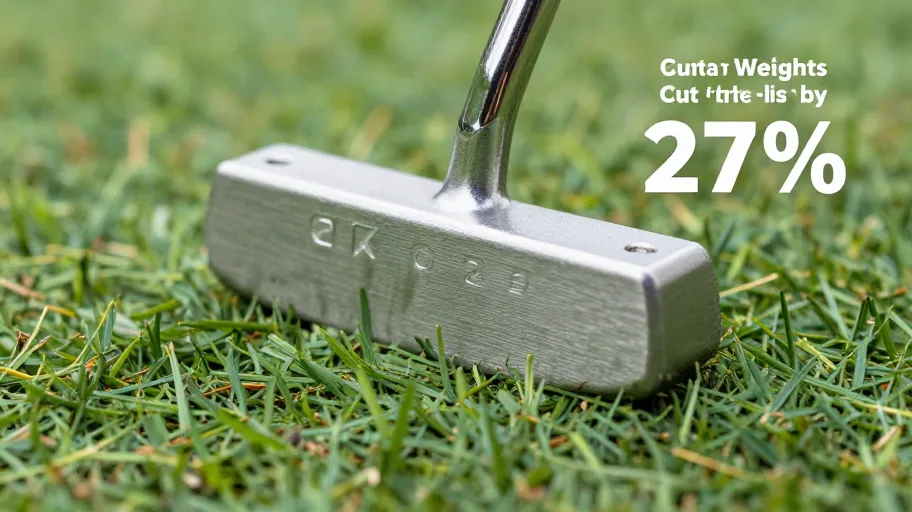
Test each setup with a two-coin gate drill: place coins at toe and heel to force precision. One amateur cut three-putts by 27% after adopting +6g rear weighting, citing superior lag control on fast greens. Self-tuning means deeper connection to your gear, because active customization builds intuitive mastery—one millimeter at a time.
In a game decided by inches, taking control of your putter’s physics isn’t DIY—it’s competitive necessity.
Master Your Swing, DIY Your Fit. DIY Golf is the premier destination for the technical golfer. We empower you with professional-grade components and the knowledge to build your perfect bag.
Leave a Reply