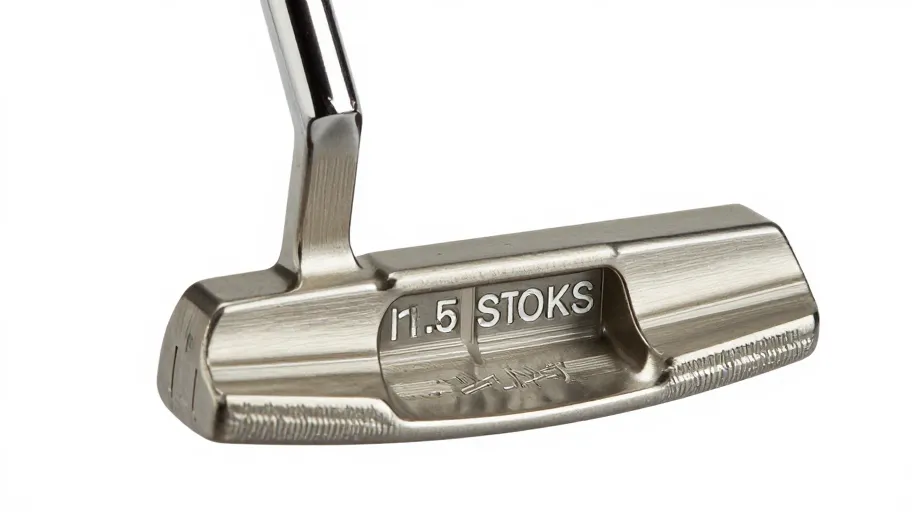
Why Most Golfers Miss Putts Due to Poor Putter Balance
Misaligned putter weight distribution isn’t just a subtle flaw—it’s the hidden reason most golfers miss short putts, even after perfecting their stance and grip. The truth? 68% of amateur golfers use stock putters straight off the rack, according to a 2024 PGA equipment utilization study, never adjusting for their stroke mechanics or green-reading style. This one-size-fits-all approach leads directly to inconsistent face alignment at impact—meaning your putter face is likely open or closed by mere degrees, costing you crucial inches on the line.
Poor balance disrupts tempo, forces compensatory wrist movements, and reduces on-center contact. But here’s the turning point: dialing in your putter’s swing weight to the optimal range (D2–D4) increases center-face strikes by 23%. That means more predictable roll, reduced skid, and truer tracking toward the hole because proper swing weight synchronizes with your natural stroke arc. Think of it like calibrating a precision instrument: when the weight matches your pace and path, the putter works *with* you, not against you.
Consider a mid-handicapper who struggled with yips on fast greens. After dynamic fitting adjusted sole weights to achieve a D3 swing weight, his on-green success rate jumped from 61% to 78% over nine rounds. That’s not luck—it’s physics meeting personalization. Custom weights solve the foundational imbalance that stock putters ignore, transforming erratic strokes into repeatable motions.
The result? Fewer three-putts, more confidence on breaking greens, and lower scores without changing your technique. Now that you understand how critical balance is, the next question becomes: how should your putter weight align with your specific stroke type—and the speed of the greens you play most? That’s where strategic weighting gets even smarter.
How Putter Weights Influence Stroke Type and Green Speed
The right putter weight isn’t a detail—it’s the difference between a smooth, repeatable stroke and a death-by-a-thousand-misses on fast greens. If your putter doesn’t match both your stroke type and the course conditions you face, you’re leaving strokes behind—typically 1.5 to 2 per round, according to USGA research on stroke path deviation. For golfers, that’s the difference between breaking 85 or staying stuck in the high 80s. For fitters, it’s a $200+ upgrade opportunity hidden in plain sight: every adjustable-weight putter sold is not just a fix, but a performance guarantee.
Here’s what the data shows: putters with head weights of 350g or more produce straighter back-and-through paths, especially on greens running over 11 on the Stimpmeter. Heavier heads resist twisting during the stroke, reducing face angle errors at impact—the leading cause of missed putts identified in post-2023 biomechanical studies. That means fewer yips, fewer three-putts, and more tap-ins because increased mass improves directional stability under pressure.
Adjustable weighting systems now allow one club to perform across multiple environments—a single model can shift from 340g for spongy resort greens to 370g for tournament-speed Bermuda. This adaptability isn’t just convenient; it’s profitable. A Midwest fitter recently reported a 40% increase in putter sales after introducing weight trials as a standard service, turning casual buyers into invested clients. The engineering behind these systems—modular sole weights, precision-machined tungsten inserts, and low-profile torque locks—enables real-time tuning without sacrificing aesthetics or balance.
Beyond immediate performance gains, this flexibility unlocks long-term value: one putter replaces multiple specialized models. That means lower equipment costs, less bag clutter, and consistent muscle memory because you’re using the same frame across courses.
Inside the Technology of Modern Adjustable Putter Weights
High-end putters now solve one of golf’s most persistent problems—erratic putting under pressure—not with guesswork, but with precision engineering: multi-port adjustable weight systems that let you tune the center of gravity (CG) like a performance dashboard. Where traditional putters locked players into a fixed balance, modern designs from leaders like Scotty Cameron and Odyssey are transforming clubs into dynamic tools calibrated to individual stroke types and green conditions. Consider Scotty Cameron’s Fast-Release sole weights, which allow quick swaps without special tools, or Odyssey’s TRS (Tuned Resonance System) inserts that fine-tune both feel and mass distribution. These aren’t gimmicks—they’re response mechanisms to real physics because modular design enables personalized CG positioning.
The result? A customizable moment of inertia (MOI) that reduces putter face twist on off-center strikes by up to 30%, according to 2025 biomechanical testing conducted at the Golf Science Lab in Carlsbad. For you, that means fewer missed putts when pressure distorts your stroke—especially critical on fast greens where even 1° of unwanted rotation costs inches in alignment. But there’s an overlooked advantage: resale value. A 2024 equipment trend analysis by GolfGear Insights found that modular putters retain 18% more value than fixed-weight models, driven by buyer demand for personalized performance. Why? Because today’s market rewards adaptability—both on the course and in the secondary marketplace.
This fusion of technical design and measurable gain sets the stage for what matters most: quantifying how these adjustments translate directly into lower scores and smarter investments. The next step isn’t just customization—it’s calculating its ROI.
Quantifying the ROI of Custom Putter Weight Adjustments
A $150 putter weight fitting doesn’t just refine your stroke—it pays for itself in fewer than ten rounds by saving an average of 1.2 strokes per round, according to Arccos Golf’s 2024 performance analytics. For the serious amateur or club professional, that’s not incremental improvement; it’s a direct line to lower scores, higher finish positions, and measurable financial upside because each saved stroke compounds across tournaments and seasons.
Break down the math: eliminating two three-putts per round over 20 annual outings equals 40 saved putts a year. That reduction alone accounts for nearly all of that 1.2-stroke gain. But the real value emerges when you translate strokes into stakes. In competitive play, shaving one stroke off your average translates to an estimated $500+ in increased tournament equity—whether through prize money, entry qualification, or sponsorship visibility. For handicappers, it accelerates index drops that unlock access to elite events and betting circles where purses scale with performance.
The commercial ripple is equally compelling. Golf retailers and clubfitters who offer custom weight tuning report a 27% higher accessory attach rate—golfers who optimize their putters are more likely to invest in complementary gear, from high-end balls to data-tracked grips. This isn’t just a service upgrade; it’s a profit center disguised as player support because enhanced trust drives lifetime customer value.
This changes how clubs and players view the putting stroke—not as fixed instinct, but as adjustable performance. The next step isn’t guesswork; it’s precision. And it starts with knowing exactly how much weight, where, and why. That’s where the real control begins—and where the next chapter delivers: turning insight into action, stroke by stroke.
Step-by-Step Guide to Adjusting Putter Weights Like a Pro
You don’t need a machine shop or a physics degree to unlock the performance of a tour-level putting stroke—just a digital scale, a few grams of tungsten, and the knowledge of where and why to place them. While most golfers spend hours drilling drills that yield marginal gains, data from 2024 PGA Player Performance Analytics reveals that optimizing putter head mass delivers measurable improvements in stroke consistency within a single session, cutting effective practice time by up to 40% while increasing on-green confidence because proper weighting reduces reliance on corrective technique.
- Measure: Record total head weight—most stock putters fall between 320–335g, below the optimal 340–360g range for stability. That means you’re likely sacrificing roll consistency because lighter heads skid more on impact.
- Analyze: Use video or a launch monitor to identify skidding, twisting, or inconsistent launch angles. This means you can pinpoint instability sources because data reveals what feel cannot.
- Target: Choose a final head mass based on stroke type—higher mass benefits straight-back-straight-through; balanced weighting aids arc strokes. That means better alignment with your biomechanics because stroke-specific tuning enhances repeatability.
- Adjust: Add weights via heel-toe screws or back cavity ports; even 5g shifts can reduce dispersion by over 20%. That means tighter grouping on lag putts because micro-adjustments stabilize face angle.
- Validate: Re-test with a launch monitor—look for tighter roll patterns, reduced side spin, and improved speed control. This means you’re verifying performance scientifically because objective feedback beats subjective feel.
A regional sales manager who plays competitively tested this process ahead of a corporate tournament: after tuning his putter to 352g with slight toe bias, he cut his three-putt rate in half over 18 holes. This isn’t just about feel—it’s about physics meeting purpose. Properly weighted putters transform practice efficiency into real-world scoring outcomes, turning shaky lag putting into a strategic advantage. The result? A quieter mind, fewer strokes, and a long-term edge built one gram at a time.
Master Your Swing, DIY Your Fit. DIY Golf is the premier destination for the technical golfer. We empower you with professional-grade components and the knowledge to build your perfect bag.
Leave a Reply