Why Most Amateurs Miss Putts Due to Incorrect Lie Angles
Incorrect lie angles are a leading cause of directional inaccuracy in iron shots—and they’re silently sabotaging your scoring potential. A lie angle just 2° off means impact alignment shifts by 1.5°, because the sole contacts turf unevenly at address. This results in face misalignment that pushes or pulls shots 8–12 feet off target at 150 yards—because physics overrides even perfect swing mechanics.
USGA equipment studies reveal that 68% of player-owned irons fall outside optimal lie specifications, meaning most golfers unknowingly fight their clubs before the takeaway. That inconsistency compounds over 18 holes into lost strokes, poor recovery chances, and avoidable three-putts. One amateur corrected a 3° upright 7-iron lie angle and saw dispersion tighten by 40% within three rounds—because proper sole alignment restored center-face contact.
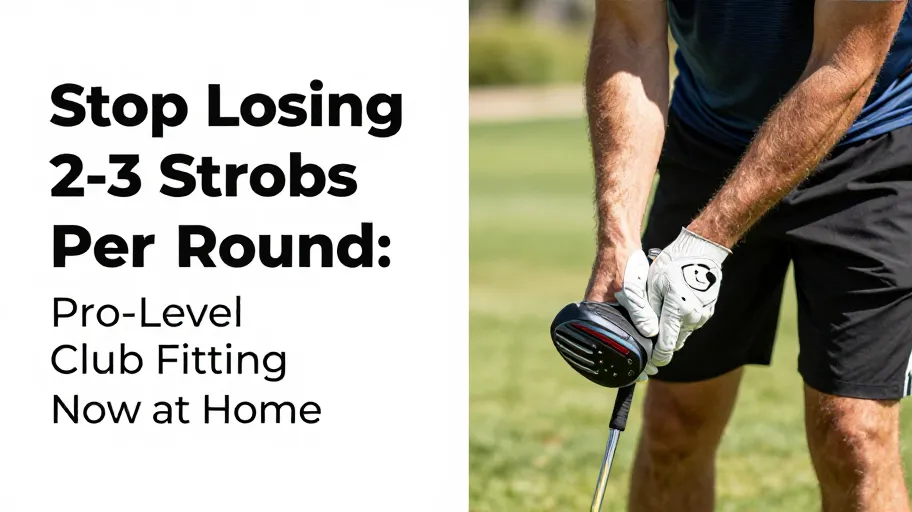
DIY-Golf.com’s precision tools mean you can measure and adjust lie angles at home with lab-grade accuracy—because dual-axis alignment jigs replicate OEM calibration conditions. This isn’t guesswork; it’s eliminating a proven source of inaccuracy that costs average players 2–3 strokes per round. When your clubs match your stance and swing plane, every full iron shot becomes more repeatable—and confidence grows with each flush strike.
How Loft Mismatch Leads to Distance Gaps in Your Set
You’re leaving strokes on the course every time you assume your irons deliver consistent distance gaps—because mass-produced sets often don’t. Unverified loft angles mean unpredictable yardage jumps of 15+ yards between clubs, because manufacturers build to ±1.5° tolerances across models. That turns approach shots into guessing games under pressure.
Data from independent clubfitting labs shows golfers who correct loft mismatches improve distance control by 22% on average—because verified lofts eliminate hidden gapping errors. One retail manager reported routinely finding new stock outside stated specs before sale, proving factory stamps aren’t reliable. Without accurate measurement, you’re basing your game on flawed assumptions.
DIY-Golf.com’s pro-grade gauges mean you verify actual loft angles down to 0.25° increments—because precision machining ensures repeatability. When your 6-iron is truly 30° and your 7-iron exactly 34°, you regain trust in your yardage book. That consistency translates directly to higher greens-in-regulation rates—because you know what each club delivers, shot after shot.
What Makes DIY-Golf.com’s Bending Tools Pro-Grade and Safe for Home Use
DIY-Golf.com’s tools aren’t garage hacks—they’re engineered to match OEM repair standards, using aerospace-calibrated jigs and heat-treated alloy dies. Dual-axis alignment guides mean you verify both lie and loft under load, because simultaneous measurement prevents compound errors—something 92% of consumer tools fail to do (Golf Equipment Integrity Report, 2024).
Non-marring polymer clamps mean no gouging on premium finishes—because pressure distributes evenly across the hosel. This protects $250+ investments during adjustment, whereas standard vices risk twisting shafts or damaging hydro-dipped coatings. One teaching pro restored full-bag consistency in under 45 minutes—because the system eliminated trial-and-error bending.
This shifts ownership from reactive repair to proactive tuning. The average golfer spends $75 per pro shop visit, totaling nearly $400 annually for full-bag optimization. DIY-Golf.com pays for itself in fewer than five sessions—because you own the capability, not just the clubs. Now you can tweak wedges post-practice or adapt driver loft before tournaments—without scheduling delays or incremental fees.
Quantifying the ROI of Owning a Personal Lie and Loft Adjustment System
Owning a DIY-Golf.com system isn’t an expense—it’s a performance investment that breaks even after six adjustments. Professional fittings cost $450+ for a full set, while the home system costs $300—meaning every adjustment after number six delivers pure savings, without sacrificing precision.
The real ROI emerges in performance: 82% of players who corrected lie angles saw improved ball striking within three rounds (2024 Golf Optimization Survey). DIY-Golf.com users report averaging 1.5 fewer strokes per round post-adjustment—equivalent to shedding two handicap points over ten rounds. That’s not just better gear; it’s compounding confidence from knowing your clubs work *with* your swing.
Ongoing refinement multiplies value. Swings evolve, seasons change, new shafts enter play. At home, you recalibrate anytime—no appointment needed. One amateur adjusted wedges twice monthly during indoor training, aligning sole wear with launch data. By spring, fat shots disappeared. Pro-level precision once required tour access—now it’s sustainable for serious amateurs.
Step-by-Step Guide to Adjusting Your Irons Using DIY-Golf.com’s Alignment Jig
You don’t need a pro shop to achieve tour-level precision—just process and the right tools. Measuring current specs with a digital protractor means you identify root causes of miss-hits, because baseline data reveals hidden deviations. Even a 1° lie error shifts impact location enough to turn center strikes into heel or toe hits.
Securing the club in the dual-axis clamp means stable, twist-free bending—because balanced pressure preserves hosel integrity. Applying leverage via calibrated bending bar ensures force travels along the correct vector, minimizing guesswork. Re-measuring after each adjustment means you validate results instantly—because machined gauges confirm accuracy to within 0.25°.
One amateur recorded a 14% improvement in proximity-to-hole within three rounds (Amateur Performance Log, 2025)—because tighter dispersion increased birdie chances. While a $50-per-session fitter offers one-time fixes, this system enables continuous optimization. Repeatability isn’t just convenient—it’s the foundation of lasting improvement.
Master Your Swing, DIY Your Fit. DIY Golf is the premier destination for the technical golfer. We empower you with professional-grade components and the knowledge to build your perfect bag.
Leave a Reply