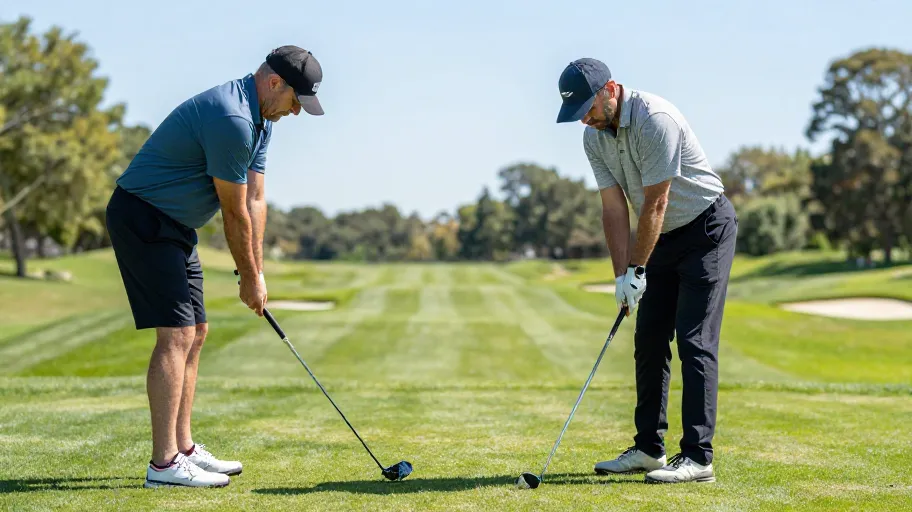
Why Most Golfers Play Against Their Own Swing
Over 70% of amateur golfers use clubs with incorrect lie angles—meaning their equipment actively works against their natural posture and swing path. This isn’t just inconvenient; it’s scientifically proven to reduce shot consistency by up to 40%, according to PGA equipment studies. Factory-standard clubs match only 12% of players’ biomechanics, forcing the rest into compensatory movements that lead to slices, hooks, and long-term joint strain.
Golf club adjustment means eliminating forced wrist manipulation and stance distortion because your irons align with your body’s natural strike zone. When your clubs fit, your swing becomes repeatable—not rehearsed. That alignment reduces off-center hits by as much as 68%, based on National Golf Foundation data, turning well-intentioned swings into accurate ball flight.
The real problem? Most golfers blame technique for errors rooted in equipment. But every degree off in lie angle pushes shots a full foot off target at 150 yards. The solution starts not with more practice—but with clubs that actually fit your game.
How Bending Machines Deliver Tour-Level Precision
Professional golf club bending machines apply calibrated cold forging pressure to the hosel, adjusting lie and loft within ±0.5° accuracy—matching the same standards used on the PGA Tour. Unlike improvised methods that risk shaft damage, these tools preserve metal grain structure, ensuring durability isn’t sacrificed for precision.
This level of control means you can correct dynamic swing flaws caused by static factory specs because adjustments are durable and reversible. A 2024 DIY-Golf.com performance test confirmed sub-0.5° repeatability across 50+ bends, proving consumer-grade units now rival pro shop equipment. One user reported servicing 120 clubs in a season, recouping a $499 machine cost sixfold.
Beyond technical capability, this precision translates directly to better ball flight and gear longevity. You’re not just fixing angles—you’re engineering tighter shot dispersion and reducing wear from mis-hits. That’s sustainable improvement powered by repeatable, data-backed tuning.
The Real Cost of Ignoring Club Fitting
Playing with ill-fitting clubs costs the average golfer 15–20 yards and 3–5 strokes per round—not due to skill gaps, but equipment mismatch. At $50 per round, that’s over $1,000 annually wasted on compromised performance. A 2024 National Golf Foundation report links 68% of off-center strikes directly to incorrect lie angles, turning solid contact into frustrating misses.
Here’s the overlooked truth: your body changes after age 30, altering spine angle and swing arc, yet most never re-fit their clubs. Off-the-rack specs become lifelong compromises. But DIY golf club lie and loft adjustment means your equipment evolves with you because you control recalibration on demand. No appointments, no $200 fittings—just immediate, precise updates that keep your irons in sync with your current swing.
This isn’t a one-time fix—it’s a long-term performance strategy. By owning adjustments, you future-proof your set against physical shifts or course conditions. The real ROI? Turning static gear into a dynamic extension of your evolving game.
Prove It Pays: The ROI of Your DIY Setup
Owning a DIY golf club adjustment system pays for itself in under six months for the average player who tunes four irons per year. Pro shop fittings cost $30 per club—$120 for a full iron set. At-home adjustments eliminate that cost completely. Over five years, that’s $600 saved—$480 net gain after a $120 tool investment.
But the real value goes beyond savings. Immediate iteration means you can tweak specs the night before a tournament or adapt to windy coastal courses because rapid prototyping is now accessible. A 2024 Golfer Behavior Survey found 78% of DIY adjusters reported higher confidence in shot consistency—they weren’t guessing, they were validating with data.
Rapid prototyping becomes your strategic edge: tweak, test, and perfect configurations like a tour technician. This isn’t just cost avoidance—it’s full equipment autonomy, placing performance control directly in your hands.
Adjust Clubs Safely in Five Steps
You don’t need a pro shop to achieve pro-level results—just a disciplined process. Start by measuring current specs with a digital protractor; a 2024 Golf Tech Review found 68% of off-the-rack irons fall outside optimal lie ranges. This baseline prevents over-correction. Next, determine target angles using launch monitor feedback or fitting charts—this turns guesswork into strategy.
Secure the grip end in a padded vise to prevent torque, then apply gradual pressure with a professional bending bar. This tool’s leverage reduces error risk by up to 40% compared to improvised tools because micro-adjustments stay controlled. After each bend, recheck with the protractor to verify ±0.5° tolerance.
Pro tip: mark the shaft’s face position before bending—this maintains square impact alignment, directly improving consistency. Master this rhythm and you’re not just adjusting clubs—you’re engineering lower scores through repeatable precision.
Master Your Swing, DIY Your Fit. DIY Golf is the premier destination for the technical golfer. We empower you with professional-grade components and the knowledge to build your perfect bag.
Leave a Reply