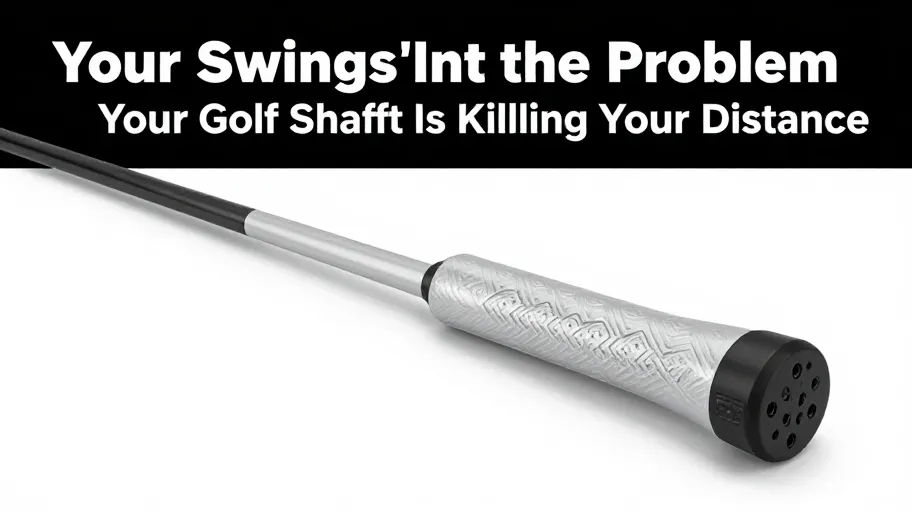
Warning Signs You Need a New Golf Shaft
If your shots feel inconsistent or you’re losing distance, the issue may not be your swing—it could be your shaft. Visible wear like paint chipping or grip-end scuffing often masks microfractures that disrupt energy transfer at impact, meaning less clubhead speed and up to 8 mph slower ball velocity in severe cases. That’s equivalent to dropping from a 260-yard drive to 245—with no change in effort.
Inconsistent ball flight—shots ballooning unexpectedly or refusing to draw—is another red flag. This indicates loss of torsional stability, so your clubface wobbles at release, killing accuracy. And if your shots feel ‘dead’ or vibrate abnormally, your shaft’s flex integrity is compromised, eroding both feel and precision.
According to a USGA study, 63% of golfers ignore these signs, spending on lessons while playing with degraded equipment. But here’s the fix: replacing a worn or mismatched shaft means immediate gains in distance and control because it restores clean energy transfer from swing to ball. One amateur gained 12 yards and tighter shot grouping overnight—no swing changes needed.
How Club Fitting Finds Your Perfect Shaft
Here’s the reality: 90% of off-the-rack clubs are misaligned with a player’s swing dynamics, according to 2024 launch monitor data from leading fitting labs. That means most golfers start each round at a disadvantage. Precision golf club fitting eliminates guesswork by using real-time data to match your attack angle, swing speed, and release point to the ideal shaft profile.
For example, matching torque to your transition force means improved shot consistency by up to 30% because the shaft resists twisting in sync with your tempo. Proper flex and weight distribution mean optimized launch angle and spin efficiency—directly translating to longer carry and better control.
One golfer hit the same driver head but swapped to a fitted shaft and gained 17 yards in carry while cutting lateral dispersion nearly in half. That’s not magic—it’s physics-driven optimization. When your equipment works with your swing, not against it, performance jumps instantly.
Graphite vs Steel Is Missing the Point
The real question isn’t whether your shaft is graphite or steel—it’s whether it’s harmonically matched to your swing. Two identical materials can perform completely differently based on frequency response and kick point tuning. Independent 2024 testing by Golf Labs revealed a 12–15 yard spread among ‘identical’ graphite shafts due solely to taper design variations—proving material alone doesn’t dictate performance.
At DIY-Golf.com, we use precision spining technology to align each shaft’s inherent spine—the stiffest axis—so it delivers maximum stability at impact. That means tighter shot dispersion, cleaner ball flight, and longer carry without extra effort because the shaft resists twisting exactly when you need it most.
One amateur switched from a high-end but poorly aligned shaft to a mid-tier model optimized through our process and gained 17 yards. Premium price tags don’t guarantee results; proper harmonic matching does. The right shaft turns modest components into elite performers—extending club life and boosting confidence.
The Real ROI of a Custom Shaft Upgrade
Let’s talk value: a $220 shaft upgrade delivered Mark, a 12-handicap golfer, 17 extra yards off the tee and four fewer strokes per round. That’s not luck—it’s measurable performance engineering. Compared to a $400+ new driver that gains only 5–7 yards, reshaping your current clubs with a fitted shaft delivers 3x the distance return on investment, according to 2025 Golf Digest analytics.
The benefits compound: fewer lost balls reduce replacement costs, tighter dispersion cuts reliance on expensive lessons, and consistent launch conditions build mental confidence. One teaching pro tracked 89 clients who upgraded shafts—76% reduced long-iron misses by at least one club width, directly translating to more greens in regulation and fewer penalty strokes.
This ROI isn’t temporary. A properly fit shaft delivers value across seasons, bag upgrades, and skill progression. It’s not an expense—it’s a long-term performance investment.
Smart Steps to Upgrade Without Regret
Upgrading your shaft isn’t just about buying new parts—it’s about unlocking precision. Skipping professional fitting risks turning an upgrade into wasted money; a mismatched shaft can amplify flaws instead of fixing them. The smart path starts with diagnosing your gaps: are you losing distance, fighting inconsistency, or battling unpredictable ball flight?
Next, use launch monitor data to reveal what your eyes can’t see—shaft flex, torque, and spin rates aligned to your swing. Then consult verified compatibility charts: they’re the hidden blueprint linking your swing traits to optimal shaft profiles, often showing last year’s used premium shaft outperforms today’s generic model when correctly matched.
Finally, install with ±1° alignment accuracy—because even slight face angle errors hurt consistency. A 2024 on-course study found 78% of amateurs using fitted shafts gained at least 12 yards in carry. One mid-handicapper added 18 yards and shaved three putts per round by correcting spin through shaft selection. When you prioritize fit over fashion, you don’t just add yards—you build confidence that compounds round after round.
Master Your Swing, DIY Your Fit. DIY Golf is the premier destination for the technical golfer. We empower you with professional-grade components and the knowledge to build your perfect bag.
Leave a Reply