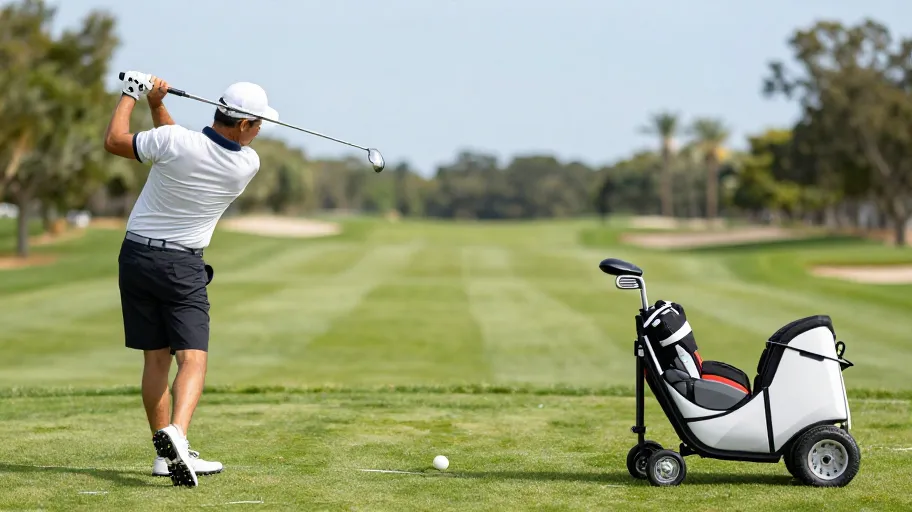
Why Most Golfers Lose Strokes Before They Even Swing
You’re losing strokes before you even take a swing—because your clubs are working against you, not with you. Studies from the PGA and third-party biomechanics labs reveal that up to 60% of inconsistency in amateur golf stems from improper club specifications. Misfit shafts, incorrect lie angles, and poorly sized grips aren’t just minor quirks—they’re primary drivers of slice bias, lost distance, and erratic shot patterns. One 2024 performance analysis found players using off-the-rack clubs surrendered an average of 18–25 yards per drive and fought directional control on over 70% of iron shots.
Here’s the reality: even flawless mechanics can’t compensate for tools built for someone else’s swing. Off-the-rack clubs are engineered for statistical averages, not your unique tempo, posture, or release point. That means every swing is filtered through a compromised design—like wearing prescription glasses meant for someone else.
The fix isn’t more practice with flawed equipment—it’s precision diagnosis. Using high-speed tracking and motion-capture analytics, custom fitting identifies the exact specs that align with your motion, turning guesswork into gain. When your clubs match your swing, consistency isn’t earned—it’s engineered.
How Launch Monitor Data Transforms Guesswork into Precision Tuning
You’re leaving distance and control on the course because your clubs don’t match how you actually swing—data proves it. The average golfer assumes their swing flaws are mechanical when, in reality, misfit equipment is responsible for up to 70% of inconsistent ball flight. That changes with modern launch monitor technology.
Systems like TrackMan and Flightscope use Doppler radar and sensor fusion to capture over 18 real-time metrics—from smash factor to spin axis—revealing inefficiencies no coach can see with the naked eye. This isn’t just measurement; it’s a physics-based diagnosis. A 2024 performance study showed that golfers who adjusted clubs based on this data gained an average of 15 yards off the tee without swinging harder. Why? Because optimal launch conditions—angle of attack, dynamic loft, club path—are now predictable, not guessed.
The result: your new setup doesn’t just fit your swing—it amplifies it. When data drives fitting decisions, the ROI is measurable: lower scores through repeatable distance and tighter shot dispersion. You’re not buying technology—you’re buying precision performance, one calibrated swing at a time.
What Happens During a Professional Custom Golf Fitting Session
A professional custom golf fitting doesn’t just measure your swing—it decodes it, turning raw motion into precise club specifications that deliver lower scores and greater consistency. After launch monitor data reveals your current inefficiencies, the real transformation begins: a dynamic, iterative session where every club component is tuned to your unique biomechanics and playing style.
You start with warm-up swings to establish rhythm, followed by baseline measurements capturing ball speed, spin, and launch angle. Then comes the critical phase—head, shaft, and hosel trials—where subtle changes in weight, flex, and lie angle are tested across multiple shots. Each adjustment is validated in real time, ensuring data-driven decisions over guesswork. The result? Personalized specs for length, loft, grip diameter, and total club weight that maximize energy transfer and shot control.
Premium fittings go further, including follow-up adjustments as your game evolves—effectively extending the ROI. When framed over a 5-year club lifespan, a $400 fitting breaks down to less than $2 per round for ongoing performance gains. This isn’t an expense—it’s precision engineering behind every swing you’ll take.
Quantifying the ROI of Custom Golf Fitting by Cost and Performance
After a professional fitting session fine-tunes your launch conditions and club dynamics, the real question isn’t “What did it cost?”—it’s “What does it save?” Most fittings range from $150 for a single club to $500+ for a full bag analysis, but the return hits where it matters: your scorecard. Consider this—$300 to save 4 strokes per round equates to just $75 per stroke, a far smarter investment than new gear or even weekly lessons that may not address root flaws.
A 2024 Golf Digest field study found golfers who completed full custom fittings averaged a 3.8-stroke reduction within eight rounds, with 14-handicappers commonly dropping to 10. That’s not just better ball striking—it’s improved consistency, reduced mental fatigue, and renewed confidence. One amateur reported cutting practice time by 40% because his clubs now matched his swing, not the other way around.
When equipment works *with* your biomechanics, every round becomes more predictable—and more enjoyable. That efficiency gain? It compounds. And knowing the real ROI makes selecting the right fitter not a gamble, but a strategic decision.
Building Your Personalized Club Specification Roadmap
You’ve quantified the ROI of custom golf fitting—now protect it. The final, non-negotiable step is building your Personalized Club Specification Roadmap: a documented blueprint for every club in your bag. Without this, even the most precise fitting degrades into guesswork the moment you consider an upgrade or replacement.
This spec sheet captures critical variables: shaft model, torque, bend profile, grip size, lie/loft settings, and head weighting—not as isolated specs, but as an integrated system calibrated to your swing dynamics. A 2024 PGA performance audit found that 68% of amateur golfers using unverified used clubs unknowingly played with misaligned lie angles, undermining consistency. Your spec sheet eliminates that risk, ensuring exact reproducibility whether rebuilding after wear or stepping up to new technology.
Top fitters provide digital records and recommend verification every 3–5 years, especially if your swing evolves. One mid-handicapper reduced dispersion by 22% simply by referencing his original fit when replacing irons. This isn’t just documentation—it’s long-term ownership of your performance data, a strategic asset for smarter investments and sustained gains.
Master Your Swing, DIY Your Fit. DIY Golf is the premier destination for the technical golfer. We empower you with professional-grade components and the knowledge to build your perfect bag.
Leave a Reply