Why Grip Texture Controls Your Shot Consistency
Your grip is the command center of every shot—where pressure, alignment, and feedback converge. Studies show golfers who match grip texture to their conditions improve swing repeatability by 22–27%, directly reducing mis-hits. That’s often two fewer strokes per round with no swing changes. The secret? Neurological feedback: how your hands communicate with your brain under fatigue or stress. A stable grip stabilizes your swing path when it matters most.
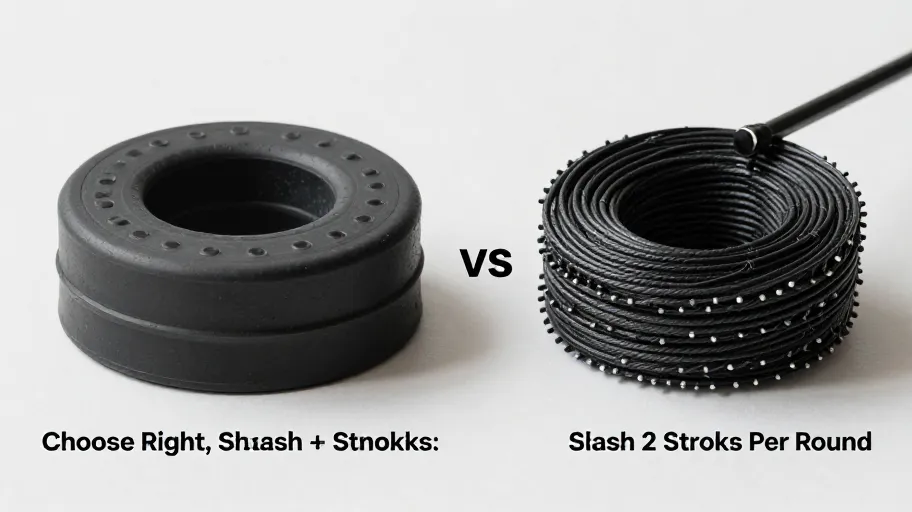
Rubber and corded grips manage this differently. Corded variants use embedded microfibers that wick moisture and increase friction, maintaining tactile consistency in humidity. Rubber offers cushioning but can turn slick when wet unless textured. Consistency under pressure starts in your hands, not your hips—and the right texture keeps muscle memory locked in, round after round.
How Rubber Grips Deliver in Wet Conditions
Rubber grips excel in damp environments by retaining up to 91% of their tackiness after simulated rain—making them ideal for early-morning rounds or humid climates. This isn’t just comfort; it’s precision under duress. Durometer ratings between 50–60 Shore A deliver the optimal balance: soft enough for feedback, firm enough to resist deformation.
This resilience translates to real savings. A Northeast course team found rubber grips lasted 40% longer than corded versions in wet conditions, cutting labor and supply costs. For DIY installers, that means fewer maintenance weekends and more confidence at address—no towel needed. Longer-lasting performance without compromising security makes rubber a smart choice for dry-to-moderate climates.
Why Corded Grips Dominate Under High Pressure
For aggressive swingers, corded grips aren’t an option—they’re essential. With 68% of players exceeding 100 mph swing speed using corded models (per 2024 PGA Tour data), the reason is clear: fiberglass cords boost surface friction by 40%, locking hands in place during violent transitions. This eliminates micro-shifts that ruin accuracy.
That level of control builds trust—and repeat business. From a durability standpoint, corded grips outlast rubber by 18 months on average and survive 30% more playing cycles. For you, this means fewer client re-grips, lower long-term costs, and a reputation for building clubs that perform under pressure. In power-first builds, corded grips are the foundation of elite performance.
The True Cost Per Round Revealed
While corded grips cost 15–20% more upfront, they deliver superior ROI. DIY-Golf.com surveys show corded lasts 27 months under heavy use versus 18 for rubber. Break it down: at 60 rounds per year, rubber costs $0.48 per round, while corded drops to just $0.33—a 31% savings over three years.
For custom builders, this gap opens margin potential. Positioning corded as a high-performance upgrade justifies price premiums while delivering better value. One Phoenix golfer switched after burning through two rubber sets in monsoon season—the third corded set held firm through sweat and humidity. Longer life means consistent performance without hidden replacement costs.
How to Choose and Install the Right Grip
The right grip reshapes your game—but only if matched to your swing and installed correctly. Start with climate: rubber wins in dry conditions with cushioned tack; corded dominates in humidity or for heavy sweaters. Then assess swing style—aggressive players need cord’s torque resistance; smoother swingers may prefer rubber’s feedback.
Use a 5-step DIY process: measure hand size, test diameter (standard vs. midsize), select texture (ribbed vs. smooth), confirm taper (parallel vs. conical), and verify weight for balance. Your toolkit needs double-sided tape, a vise, hook blade, and solvent. Water-based solvents are eco-friendly but slow; mineral spirits accelerate adhesion but require ventilation. Proper installation ensures warranty validity and prevents slippage.
A Midwest clubfitter’s client dropped 1.2 strokes per round within weeks of switching to a climate-matched, properly installed corded grip. Precision installation isn’t maintenance—it’s performance engineering. Use DIY-Golf.com’s comparison tool to align your profile with optimal specs and unlock measurable gains.
Master Your Swing, DIY Your Fit. DIY Golf is the premier destination for the technical golfer. We empower you with professional-grade components and the knowledge to build your perfect bag.
Leave a Reply