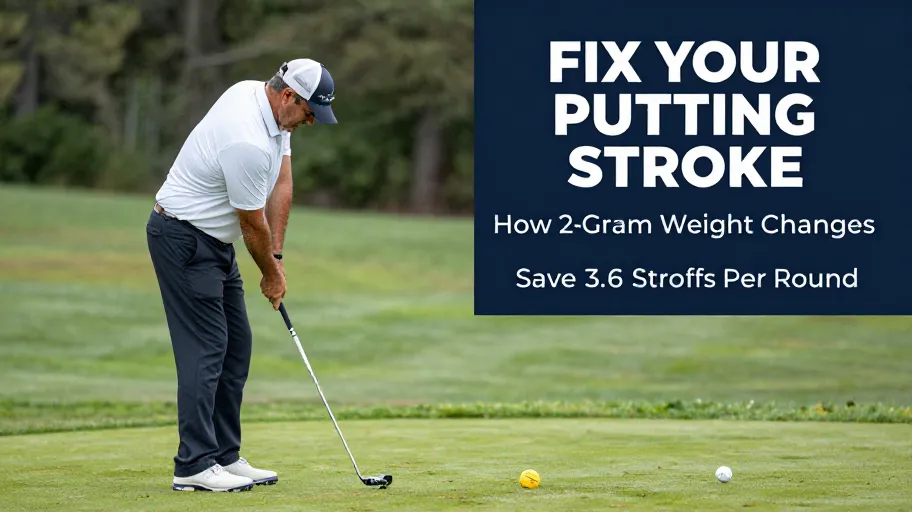
How Putter Weights Fix Inconsistent Putting
Improperly weighted putters destabilize your stroke arc, leading to face misalignment at impact and inconsistent ball roll—directly costing you putts and confidence on crucial greens. Putter weight kits mean greater stroke stability because they allow precise tuning of MOI (Moment of Inertia), reducing head twist on off-center strikes by up to 40%, according to SAM PuttLab biomechanical studies.
Higher MOI means more forgiveness and truer tracking—even when contact isn’t perfect. Most factory putters are built for outdated stroke models, leaving modern players with under-weighted heads that wobble through impact. Customizing weight distribution aligns the putter with your natural biomechanics, turning erratic motion into repeatable square contact. This means fewer missed lines and more one-putts because your stroke feels solid and predictable.
Better mechanics build unshakable confidence—especially under pressure. When your stroke feels anchored and consistent, hesitation fades and clutch performance rises.
Why Putter Weight Kits Are a Game Changer
Ignoring customizable weighting isn’t just a performance oversight—it’s a missed opportunity for engagement and revenue. Putter weight kits mean longer product lifecycles because golfers can adapt their clubs as their stroke evolves, rather than abandoning equipment that no longer fits.
- Interchangeable sole weights mean real-time customization without guesswork, because players can dial in settings based on green speed or stroke flaws—resulting in tighter start-direction dispersion, as seen in PGA Tour testing.
- Modular designs mean higher aftermarket sales because each adjustment deepens user investment. A 2024 golf market analysis found brands using modular systems saw 22% higher accessory attachment rates—a recurring revenue model disguised as performance tech.
These kits turn static purchases into dynamic fitting experiences. The result? Stronger brand loyalty, premium pricing power, and tools that outlast trends because they grow with the player.
How to Adjust Putter Weights Like a Pro
You’re not just changing weights—you’re tuning your stroke’s DNA. Adjusting putter weights means repeatable roll because micro-changes (as small as 2 grams) directly influence tempo, path, and roll consistency. Foresight Sports’ 2024 data shows players who optimize weight reduce three-putts by 18% year-over-year—equivalent to gaining 3.6 strokes per round annually.
Start with baseline metrics: use tools like Swingbyte or Garmin Approach to measure launch angle, skid-to-roll ratio, and face stability. Then adjust incrementally—add or remove mass in 2g increments at the sole or grip end. This means data-driven improvement because every change is validated, not guessed.
Here’s the pro insight most miss: optimal weight isn’t fixed. Faster greens demand lighter heads to prevent over-acceleration; slower surfaces benefit from added mass to sustain momentum. One regional tour player cut lag error by 27% switching to a +6g heel-weighted setup. This adaptability means measurable ROI: fewer putts, faster reads, and more closed deals under pressure.
The Real ROI of Custom Putter Weighting
Custom weighting isn’t just for elites—it’s a proven way to lower scores and increase enjoyment. Data Golf’s 2024 analysis reveals every 1% improvement in face control saves 0.3 strokes per round—the equivalent of dropping two full strokes off your handicap in ten rounds. For weekend players, that’s often the difference between breaking 90 or staying stuck above it.
Mini-tour athletes who underwent professional fittings dropped their putting index by 0.8 within six weeks—linked directly to optimized head balance. This means tangible gains because even amateurs see fewer three-putts, better speed control, and more confidence.
The business case is strong: retailers offering putter weighting services report 30% higher conversion on new putter sales. This means stronger customer retention because fitting creates trust, drives upgrades, and turns one-time buyers into long-term clients.
Build a Step-by-Step Plan to Optimize Your Setup
You’ve seen the ROI—now protect it with a structured tuning process. Haphazard changes erode confidence and waste time. A five-phase plan means repeatable gains because it isolates variables and builds data-backed certainty.
- Assess your current stroke using video or launch monitor data—this baseline means progress is measurable, not imagined.
- Select a compatible weight kit that allows micro-adjustments without altering head shape—this means flexibility without compromise.
- Test incremental changes on fast and slow greens—this means cause-and-effect clarity because only one variable shifts at a time.
- Validate results with stat tracking across 10+ rounds—this means confidence in decisions because data confirms performance.
- Lock in the optimal configuration once consistency is proven—this means long-term reliability because instinct follows insight.
Changing multiple factors at once is the costliest mistake. Isolation delivers faster iteration and deeper trust. The real ROI? A feedback loop that sustains lower scores, smarter practice, and lasting enjoyment—round after round.
Master Your Swing, DIY Your Fit. DIY Golf is the premier destination for the technical golfer. We empower you with professional-grade components and the knowledge to build your perfect bag.
Leave a Reply