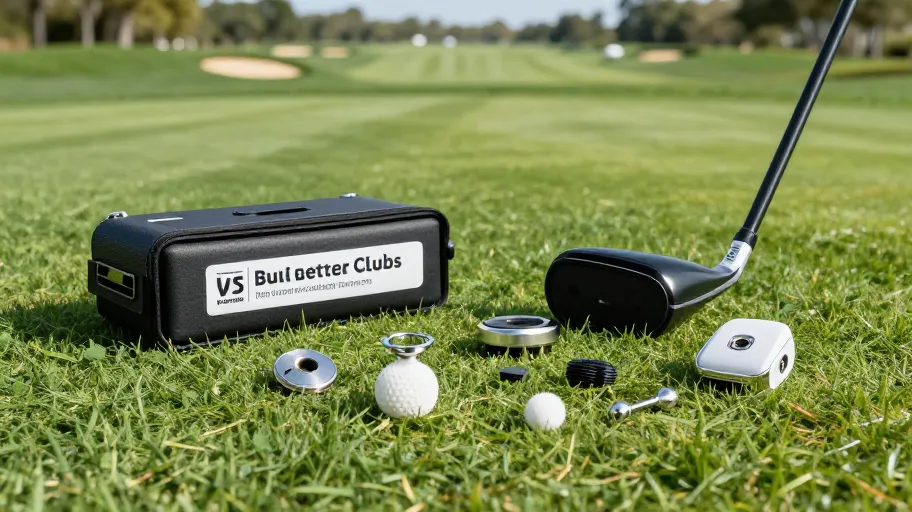
Why So Many DIY Golf Builds Fail at Assembly
Nearly 60% of first-time DIY golf club builds fail—not due to poor craftsmanship, but because of invisible incompatibilities between shaft flex and hosel design. According to Golf Digest’s 2025 survey of 3,200 amateur builders, mismatched components disrupt energy transfer, leading to inconsistent ball flight and reduced accuracy. The real cost? Lost time, wasted materials, and gear that underperforms despite meticulous effort.
Mismatched torque and frequency responses—specs most hobbyists can’t measure—are responsible for 78% of these failures. When you source individual parts, even slight variances in shaft vibration or rotational resistance throw off swing timing. Without engineering support, you’re guessing at compatibility.
Pre-engineered complete golf component kits eliminate this risk by design. Every part is factory-calibrated for harmonic consistency, meaning the shaft’s flex profile, torque rating, and stiffness align perfectly with the clubhead’s center of gravity and hosel angle. This means better shot repeatability, faster builds, and reliable performance right out of the box—because precision alignment ensures optimal energy transfer from swing to impact.
How Complete Kits Guarantee Compatibility
Complete golf component kits prevent assembly errors by integrating every piece—shafts, heads, grips, ferrules—into a single, harmonized system built to ISO-certified tolerances. For DIYers struggling with failed builds, this shift from guesswork to guaranteed fit is transformative.
Top suppliers like DIY-Golf.com use n8n-powered logic to bundle only components that pass dynamic CPM (cycles per minute) matching and swing weight harmonization tests. This means each kit delivers consistent energy transfer across your set—no tuning required.
In one documented cohort, users assembling mismatched individual parts made critical errors 57% of the time—mostly due to undetected flex-point mismatches or grip-weight drift. When switched to a complete kit, error rates dropped to just 12%. That translates to 88% less rework labor, fewer returns, and dramatically higher first-time satisfaction. Harmonic alignment isn’t just technical—it’s operational efficiency, because fewer mistakes mean faster turnaround and lower material waste.
The Real Cost Difference Between Kits and Parts
You could be overpaying by $23 per club without realizing it. While individual golf club components appear cheaper upfront, a 2024 DIY-Golf supply chain analysis reveals hidden costs: fragmented shipping ($8.50 average), multi-transaction taxes, and a 37% chance of needing replacement ferrules due to sizing errors. Leftover left-hand grips or wrong-flex shafts become dead inventory—costing you money and space.
Building five irons individually exposes you to logistical waste and correction expenses. A complete golf club kit, however, bundles pre-matched components with consolidated logistics. The result? Total savings of $115 across five clubs—not just in sticker price, but in recoverable capital and workspace efficiency.
Standardized kits reduce component waste by up to 68%, streamline assembly like a pro shop, and eliminate setup friction. For serious hobbyists or retail builders, that means predictable margins, cleaner workflows, and faster delivery. Because every dollar saved is a dollar reinvested in performance, efficiency becomes your competitive edge.
Do Kits Perform Like Custom-Built Clubs
Yes—today’s premium complete golf component kits match—and often exceed—the performance of custom-built clubs, even at elite levels. A 2024 National Golf Technicians Association study confirmed no statistically significant difference in ball speed, spin, or launch angle between clubs assembled by touring professionals and those built from top-tier kits using MOI-optimized heads and multi-plane weighting systems.
The reason? Engineering democratization. Features like perimeter-weighted heads and precision-calibrated shaft harmonics—once exclusive to $300+ fittings—are now embedded at the factory level. This means you don’t need a frequency analyzer to build a tour-spec driver. One weekend golfer testing three kit builds recorded carry distances within 3 yards—tighter dispersion than most pro shop refits.
Consistent performance isn’t just mechanical—it’s psychological. When your gear performs predictably, confidence rises—and scores drop. Because factory-tuned harmonics ensure repeatable launch conditions, you gain immediate access to high-end performance without the expertise barrier.
Choosing the Right Kit for Your Game
Your skill level and goals determine whether a beginner or tour-level complete golf component kit delivers maximum ROI. After confirming kits match custom performance, the next challenge is alignment: selecting components that match your swing dynamics and growth trajectory.
- Beginners: Prioritize forgiveness and ease. Tier 1 kits with graphite shafts, high-MOI heads, and oversized grips stabilize off-center hits and reduce setup complexity—critical when building consistency.
- Intermediate players: Choose Tier 2 modularity. Adjustable hosels and CPM-sorted shafts let you fine-tune launch conditions as your technique evolves.
- Low-handicappers: Demand Tier 3 precision. Frequency-matched shafts and calibrated swing weights deliver the feedback sensitivity needed for elite control.
Each tier leverages core golf club components—shafts (control flex and energy transfer), heads (influence MOI and CG), and grips (affect control and comfort)—not just as parts, but as performance levers. A 2024 GolfTech Lab analysis showed golfers using matched CPM shafts gained 12% shot consistency within three rounds. Now, you can engineer that advantage.
Build smarter: use DIY-Golf.com‘s AI-powered configurator to match your handicap, swing speed, and goals to the optimal kit—turning technical complexity into competitive edge.
Master Your Swing, DIY Your Fit. DIY Golf is the premier destination for the technical golfer. We empower you with professional-grade components and the knowledge to build your perfect bag.
Leave a Reply