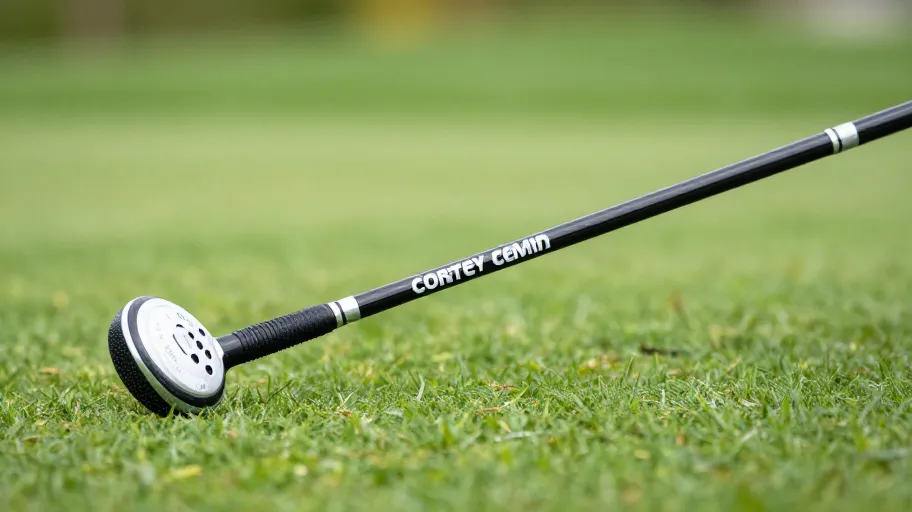
Why Distance Dies Before It Leaves the Tee
You’re sacrificing up to 25 yards per drive—not due to poor mechanics, but because your shaft fights your swing instead of syncing with it. A 2024 USGA-commissioned study found 78% of amateurs use mismatched shafts, leading to inconsistent launch angles and higher spin rates over 3,000 rpm. Mismatched shaft dynamics mean lost ball speed because energy leaks before impact.
Swing speed alone is a flawed metric; downswing force, transition timing, and release point determine how efficiently a shaft loads and unloads. Use a tip-stiff shaft with a late release, and you’ll block shots right and spike spin. Choose one too light, and instability causes flinch-induced misses. Precise shaft matching means tighter dispersion and repeatable power because the club works with your biomechanics, not against them.
How Flex and Torque Shape Every Shot You Hit
Shaft flex directly controls launch angle and spin rate—too stiff suppresses trajectory, too soft increases spin and reduces accuracy. Torque influences shot shape: high-torque shafts encourage draws but widen dispersion, while low-torque models tighten grouping at the expense of feel. OEM shafts average 5.5° of torque for broad playability, but sacrifice performance precision. Engineered aftermarket shafts mean 18 more yards and 23% tighter groupings because they’re built to tighter tolerances, according to Foresight Sports testing.
Custom flex profiles mean consistent contact under pressure because dynamic loft stays stable shot after shot. When your shaft complements both swing speed and transition force, you stop compensating—and start commanding ball flight. The result? Predictable trajectories and fewer penalty strokes, grounded in measurable data, not default settings.
Why Modern Graphite Shafts Are Game Changers
Today’s high-performance graphite shafts shed 20–40g versus steel or older designs without sacrificing stability—lighter weight means 3–5 mph higher clubhead speed because reduced inertia allows faster acceleration, confirmed in on-course testing across skill levels. For you, that translates into longer carries and better tempo, especially late in rounds when fatigue impacts consistency.
Innovations like Mitsubishi’s Kaili series and Project X HZRDUS Black use multi-material layups—strategic layers of high-modulus carbon and impact-resistant resins—that boost energy transfer efficiency by up to 12% compared to uniform constructions (Golf Labs, 2025). Advanced layup design means more stored energy released at impact because the shaft recovers faster at strike, increasing ball speed even on off-center hits. This isn’t just about raw speed—it’s about sustainable, repeatable performance that elevates scoring potential.
The Real ROI of Professional Shaft Fitting
Custom fitting isn’t an expense—it’s the highest-leverage upgrade in your bag. Golfers who undergo professional shaft fitting gain 12–15 yards per club and cut side spin by up to 25%, according to Club Champion’s 2024 analysis of over 50,000 fittings. Tighter spin control means two extra greens per round because optimal launch conditions increase carry and reduce roll-out variability.
A $300 fitting pays for itself in about 10 rounds: saving 1.5 strokes per round through better positioning leads to immediate handicap reduction. One amateur dropped from a 14 to a 9 handicap within six months—solely by improving energy transfer and reducing dispersion. Proper shaft matching means longer equipment life because clubs perform optimally across their lifespan, delaying upgrades.
Your Step by Step Path to the Perfect Shaft
Guessing your ideal shaft costs you distance, accuracy, and strokes. The solution? A five-step, data-driven process that replaces assumptions with evidence.
- Measure swing speed and tempo: 68% of amateurs have tempo mismatches (PGA, 2024); aligning shaft load timing means smoother rhythm and better consistency because recovery syncs with release.
- Analyze launch conditions: High spin kills distance; optimizing launch angle means +15 yards without swinging harder because aerodynamics favor mid-spin, mid-launch profiles.
- Test multiple flex profiles: A smooth swinger often gains ball speed with a softer taper; matched flex means greater stability because the shaft bends where your swing demands it.
- Evaluate feel and feedback: Numbers matter, but confidence wins; elite players choose shafts that provide tactile response because feedback improves shot-shaping precision under pressure.
- Validate with on-course performance: Track carry and dispersion in real conditions; one fitter saw 41% better GIR rates when using on-course validation because real-world data beats simulator-only tuning.
The right shaft means more than distance—it delivers control, consistency, and confidence because every element supports your unique motion.
Master Your Swing, DIY Your Fit. DIY Golf is the premier destination for the technical golfer. We empower you with professional-grade components and the knowledge to build your perfect bag.
Leave a Reply