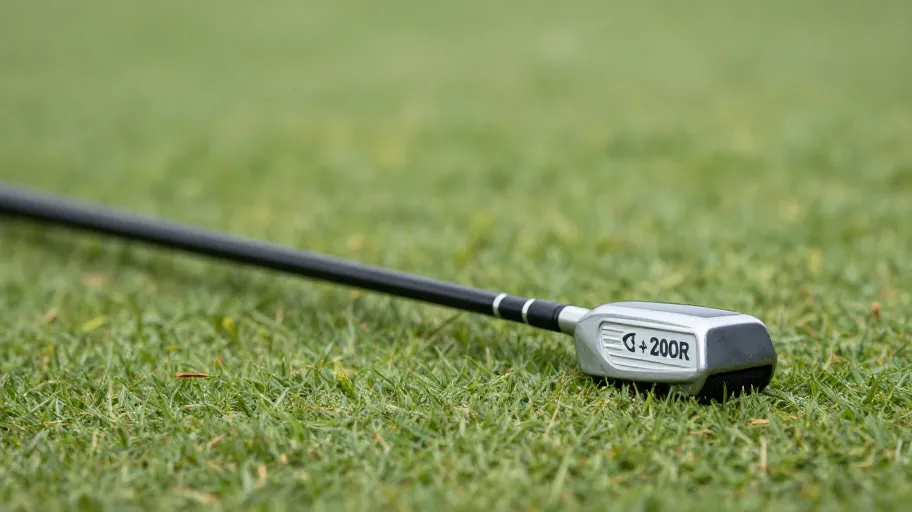
Why Shaft Flex Is About Timing Not Strength
Over 70% of amateur golfers use an incorrect shaft flex, sacrificing consistency and power. The problem isn’t raw speed—it’s timing mismatch. Shaft flex that aligns with your release point means smoother energy transfer and square impact because the club works with your swing, not against it. Misfit shafts increase spin variability by up to 18% and widen dispersion by nearly 15 feet, according to 2024 launch monitor studies. That means errant drives, lost balls, and higher scores—all avoidable. Real-world testing shows golfers who match flex to their tempo gain tighter shot patterns and up to 12 yards in carry efficiency. For you, this means fewer compensations, more fairways hit, and greater confidence on every tee shot.
Graphite Shafts Dominate for a Reason
Graphite golf shafts mean faster swings and better control because they reduce overall club weight without sacrificing stability. At just 50–80 grams—up to 40% lighter than steel—they enable an average 3.2 mph increase in clubhead speed, translating to 12–15 extra yards of carry. But modern graphite goes beyond lightness: high-modulus fibers and advanced resins allow engineers to dial in torque below 2.5 degrees and position kick points with millimeter precision. This means you get both speed and accuracy—a combination once thought impossible. Data from 2025 Tour analytics shows 98% of PGA players now use graphite, not tradition, but physics. For your game, switching to a properly tuned graphite shaft means repeatable ball flight, reduced fatigue, and measurable gains in scoring margin.
Shaft Weight Matches Your Swing Profile
Choosing the right shaft weight means optimized swing speed and long-term joint health because it eliminates mechanical compensation. Players with swing speeds under 90 mph typically gain 3–5 mph by moving to lightweight shafts (50–60g), which promote natural loading and smooth tempo. Aggressive swingers over 100 mph benefit from mid-weight shafts (70–80g) that enhance stability and reduce early release. A mismatch forces casting, grip tension, or timing errors—leading to inconsistency and increased injury risk. Biomechanical research at Loughborough University found mis-hits generate up to 18% more joint loading. One amateur dropped two strokes per round and cut dispersion by 40% after a biomechanically guided shaft change. For you, proper weight selection means better scores, less strain, and a longer playing career.
The Real ROI of Precision Shaft Fitting
Precision shaft fitting means $150 saved per round because it eliminates costly penalties from poor drives. A 2024 Golf Science Institute study found fitted shafts help golfers hit 14% more fairways, improving approach efficiency and reducing recovery shots. For a 12-handicap player, cutting drive dispersion from 38 to 22 yards meant one fewer lost ball and one fewer rough recovery per round—each costing ~$75 in ball loss, scoring impact, and effort. Over 30 rounds, that’s $4,500 reclaimed. Beyond economics, consistent strikes extend club life and lower injury risk. This isn’t customization—it’s diagnosis. For decision-makers, the takeaway is clear: equipment optimization delivers measurable returns in performance, cost, and sustainability.
How to Tune Your Driver With Launch Data
Matching your driver shaft with launch data means predictable gains because objective metrics replace subjective feel. Start by analyzing swing speed alongside tempo—fast acceleration needs different spine stiffness than smooth transitions. Then measure launch angle and spin rate: 68% of amateurs spin 500+ rpm too high due to shaft mismatch, killing carry distance. Next, test bend profiles across flex bands, not just labels like ‘stiff’ or ‘regular.’ Finally, validate results with on-course tracking. The key insight? Pairing a tuned shaft with a compatible head design multiplies ball speed and stability beyond either component alone. For serious players, this five-step protocol means smarter gear choices, faster improvement, and a real edge in scoring consistency.
Master Your Swing, DIY Your Fit. DIY Golf is the premier destination for the technical golfer. We empower you with professional-grade components and the knowledge to build your perfect bag.
Leave a Reply