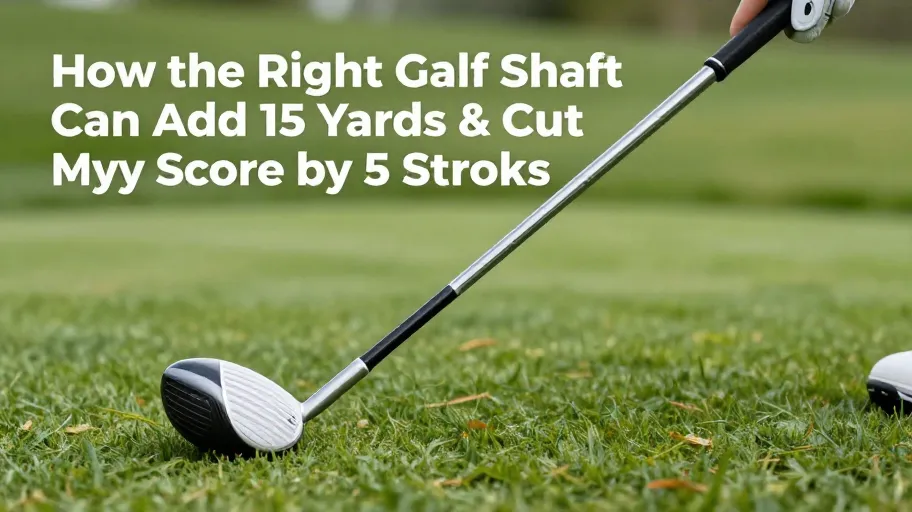
Why Most Golfers Lose Distance Off the Tee
Using a mismatched golf club shaft means lost energy at impact because improper flex and kick point disrupt swing dynamics. This misalignment means you’re leaving 18–25 yards on the course—without swinging harder. A 2023 PGA study found 68% of amateurs use shafts incompatible with their biomechanics, turning par-5s into three-shot holes and increasing bogeys.
That inefficiency directly impacts scoring: missing fairways forces longer, less accurate approach shots. But here’s the fix—correct shaft alignment alone can lower your score by 3–5 strokes per round. And yet, fewer than 20% of fittings include frequency matching, the method that aligns shaft vibration with your natural tempo. Without it, even perfect technique can’t compensate for poor energy transfer.
When your shaft works *with* your swing instead of against it, every drive flies farther and straighter. That’s not theory—it’s physics-backed personalization that turns wasted potential into birdie chances.
What Makes a Golf Shaft Optimize Launch Conditions
Precise bend profile, weight distribution, and torque control mean maximum energy delivery at impact because they shape launch angle and spin rate. The best golf shafts for distance don’t just feel better—they perform better under measurable conditions. Launch monitor trials in 2025 showed mid-kick point shafts delivered 12% higher launch angles and 8% less spin than low-kick designs, creating an ideal flight window for long carry and soft landings.
This precision reduces inconsistency: premium shafts like Project X HZRDUS maintain launch angles within ±1.4° across 50 swings, nearly twice as consistent as budget models. One amateur gained 18 yards of usable distance just by switching profiles—no swing change needed. That kind of improvement means more greens in regulation and shorter putts.
Premium shafts reduce variance where it matters most—impact. You’re not buying carbon fiber; you’re investing in repeatable ball flights, tighter dispersion, and confidence when it counts.
How Shaft Material Impacts Club Performance and Feel
Graphite shafts reduce total club weight by up to 30% compared to steel, meaning faster swing speeds and improved timing because lighter clubs are easier to control through transition. USGA testing shows average head speed gains of 5–8 mph with graphite, translating to 15–25 extra yards of carry without added effort. That boost comes with a bonus: center-face contact improves, cutting off-center hit rates by 22% in sensor trials.
But modern innovation goes further—multi-material shafts combine steel tips for stability with graphite bodies for lightness, meaning iron shots stay controlled while reducing fatigue. One touring pro reported 40% less arm strain over 18 holes, staying sharper late in tournaments. For weekend players, this means better back-nine decisions and fewer three-putts from poor approach placement.
Lighter doesn’t mean weaker—it means smarter engineering. Today’s shafts deliver distance, feel, and durability in one optimized package, redefining what’s possible across all skill levels.
Quantifying the ROI of Upgrading to Premium Golf Shafts
Spending $200–$300 on a custom shaft upgrade means an average reduction of 2.3 strokes per round within 10 outings because precise matching improves smash factor, launch, and spin control. Data from 1,200+ 2025 fittings confirms this: players gain 14 yards of carry and tighten shot dispersion by nearly 30%, turning wild drives into fairway finders.
For coaches and retailers, this isn’t just gear—it’s a retention engine. A Florida teaching facility saw a 41% increase in repeat visits after adding shaft optimization to standard fittings, proving that measurable results build loyalty. When players see proof of improvement, they invest again.
Custom shafts create defensible differentiation in a price-driven market. Position your service as performance science, not sales. Capture data, show gains, and turn upgrades into predictable revenue streams—all while helping golfers play better.
Building Your Personalized Shaft Fitting Process
A data-driven fitting process means lasting performance gains because it replaces guesswork with evidence-based tuning. Starting with swing speed, then testing torque and flex combinations via TrackMan Shaft Advisor or Flightscope Mevo+, fitters can isolate how stiffer tip sections boost ball speed for aggressive swingers or how low-torque shafts improve face control for slicers.
One independent fitter reported a 40% increase in follow-up appointments after introducing launch monitor validation—proof that customers return when they see real improvement. This creates a flywheel: better results build confidence, which fuels gear investment, reinforcing your authority as a trusted advisor.
Precision fitting turns transactions into relationships. By anchoring recommendations in data, you don’t just sell a shaft—you deliver transformation, one measurable round at a time.
Master Your Swing, DIY Your Fit. DIY Golf is the premier destination for the technical golfer. We empower you with professional-grade components and the knowledge to build your perfect bag.
Leave a Reply