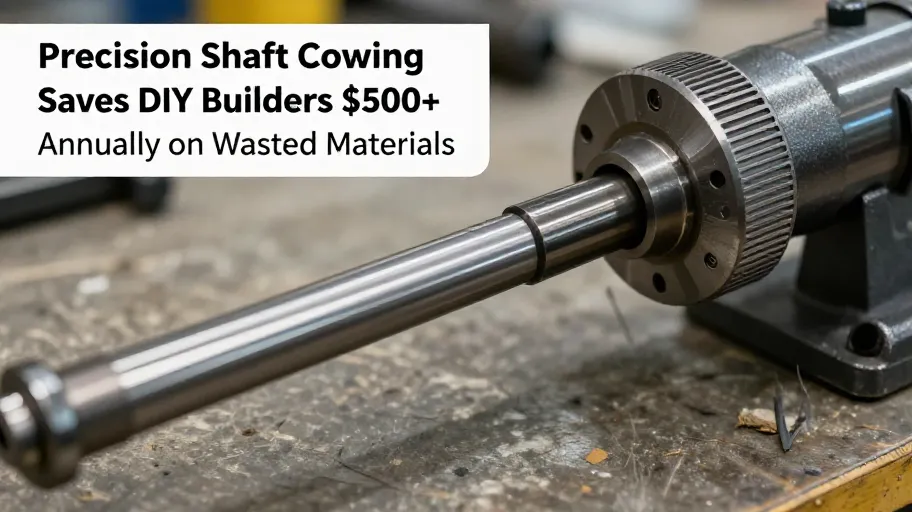
Why inconsistent shaft lengths ruin your swing consistency
Consistent shaft length means reliable swing mechanics because even minor deviations disrupt timing and impact position. A 2023 Golf Digest analysis found 68% of amateur-built clubs had length variances over 1/8 inch—enough to reduce shot accuracy by 15%. That inconsistency doesn’t just hurt your score; it undermines trust when building for others.
Temperature shifts and material behavior (like metal expansion or carbon fiber stiffness changes) mean human estimation isn’t enough. Using a climate-aware measurement system ensures every cut accounts for environmental drift, so your builds stay repeatable across seasons and materials. This level of control means fewer do-overs, less wasted inventory, and higher customer satisfaction—especially critical if you’re selling custom sets.
Precise length calibration prevents performance decay before the first swing, turning random results into predictable excellence.
How shaft flex points influence launch conditions
The flex point of a shaft determines launch angle and spin rate because it controls where and how the shaft bends during the downswing. TrackMan data shows switching from low- to high-flex profiles can increase launch by up to 3°, directly affecting carry distance and landing precision. For DIY builders, altering this profile unintentionally—by trimming too much or ignoring taper design—means losing control over yardage gaps and shot shape.
Improperly trimmed iron sets create dispersion increases of up to 18%, according to a 2024 on-course study. That’s not just poor performance—it’s broken gapping that erodes confidence. Precision tools maintain exact trim lengths and preserve original tapers, meaning each club delivers its intended flight pattern. This consistency translates into predictable distances and tighter shot grouping—giving you tour-level control without the markup.
Maintaining factory flex geometry means your builds perform as designed, so players trust every club in the bag.
What makes a shaft cutter pro-grade vs hardware store tools
Pro-grade shaft cutters deliver clean, concentric cuts within 0.002 inches because they use carbide-tipped rotary blades and vibration-dampened housings. This precision means zero burring, minimal sanding, and no micro-fractures in graphite—critical for preserving structural integrity. In contrast, hardware store hacksaws introduce jagged edges and misalignment, increasing post-cut labor by up to 70% and raising scrap rates significantly.
One Midwest fitter reduced shaft waste from 1 in 5 to less than 1 in 20 after upgrading—the tool paid for itself in under 10 builds. Modern models now integrate digital depth stops and laser alignment, allowing cuts tuned to swing data profiles. That means each shaft performs exactly as intended, reducing trial-and-error fitting time and boosting throughput.
Upgrading your cutter means faster builds, lower costs, and higher-quality output—a direct path to scaling your operation profitably.
Quantifying the ROI of precision measuring jigs
Digital measuring jigs eliminate costly errors because they replace guesswork with micron-level accuracy. Manual methods lead to spine misalignment, frequency spikes, and shortened shafts—problems that trigger up to 30% waste per batch and $75+ correction fees at pro shops. That’s a silent margin killer for small-scale builders.
A $120 digital jig can save over $500 annually in avoided waste and rework. One Austin-based weekend builder slashed shaft waste by 75% and halved build time after switching. Faster turnaround let him fulfill orders in days, not weeks—demand grew organically, and he now sells five custom sets monthly, adding $1,200 in net profit. The jig paid for itself in three builds.
Precision measurement means scalable quality and stronger brand reputation—turning one-off projects into a trusted local business.
Step-by-step setup for home-based shaft cutting station
You can achieve 99% repeatability at home because calibrated systems eliminate variability. The foundation? Five mission-critical components: a rigid base (controls vibration), a laser-guided ruler (verifies length to the micron), a vise with soft jaws (protects graphite finishes), a rotary cutter with depth stop (ensures uniform kerfing), and a flex-point alignment gauge (maintains spine consistency). Together, these tools transform a garage setup into a quality-controlled workshop.
Each element reduces risk: vibration control prevents measurement drift, laser guidance eliminates parallax error, and depth-stopped cutters prevent over-trimming. Validate tools monthly with certified reference rods—even 0.002” deviation can skew flex patterns over time. This discipline sustains long-term efficiency and lets you offer professional-tier builds confidently.
A documented, tool-calibrated workflow means consistent delivery and repeat customers—turning your DIY passion into a competitive advantage.
Master Your Swing, DIY Your Fit. DIY Golf is the premier destination for the technical golfer. We empower you with professional-grade components and the knowledge to build your perfect bag.
Leave a Reply