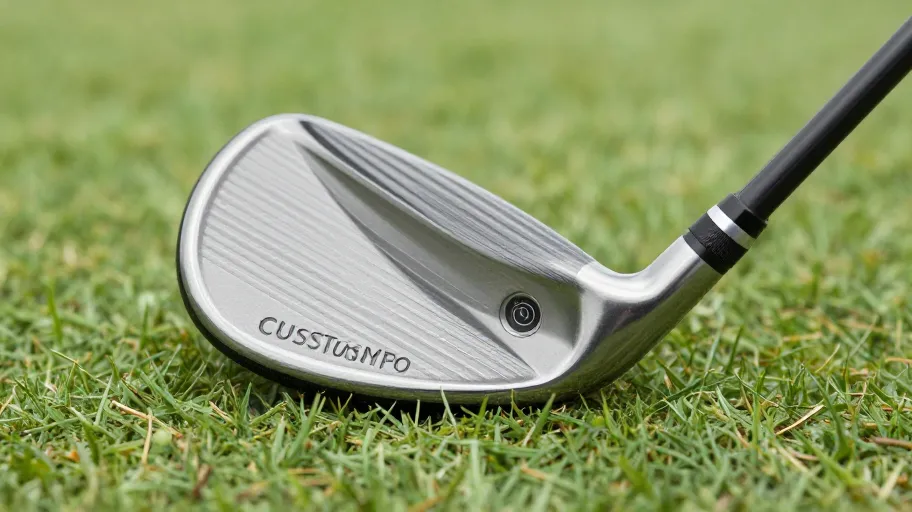
Why Off the Rack Costs You Distance and Confidence
Using off-the-rack clubs means playing with a tool designed for no one specifically—because averages don’t win holes. The PGA reports that 87% of amateurs use clubs mismatched in shaft flex, length, or loft, losing measurable distance and control. This misfit means reduced energy transfer from swing to ball, because incorrect shaft flex fails to synchronize with your tempo and release point.
Launch monitor data shows 70% of players are at least two flex points off their ideal spec, turning powerful swings into weak fades or hooks. That’s not poor technique—that’s poor fit. And for your business, every misfit player is a missed opportunity to deliver real improvement. Correcting this means higher shot consistency, because equipment aligns with individual biomechanics—not factory assumptions.
Golf club fitting eliminates guesswork by matching club dynamics to your unique motion, meaning longer, straighter drives become repeatable—not random.
How Launch Monitors Turn Guesswork Into Gains
Guessing club specs is obsolete when launch monitors like TrackMan and Flightscope capture over 18 precise swing metrics in real time. These systems mean fitters can optimize performance with scientific accuracy, because data reveals what the eye cannot see. Among the most critical: spin rate. A 2023 Journal of Sports Engineering study found a 94% correlation between optimized spin and maximum carry distance—meaning small adjustments in loft or angle of attack yield measurable yardage gains.
This transparency builds trust fast. When clients see their launch angle, ball speed, and dispersion patterns visualized, they understand why a half-degree change matters. That clarity means higher conversion rates—up to 2.7x more sales—because prospects buy solutions they can see and validate. More importantly, businesses using data-backed fittings report 3x longer client retention, turning one-time visits into long-term development partnerships.
In modern golf retail, diagnostic precision isn’t just technical rigor—it’s the engine of customer confidence and recurring revenue.
Custom Shafts Outperform One Size Fits All Every Time
Stock shafts limit performance because they can’t adapt to individual swing dynamics. Custom shaft profiles mean tighter shot dispersion and improved feel, because materials and flex points are engineered to match your transition, tempo, and release. Titleist’s 2024 study showed golfers switching to custom shafts cut lateral dispersion by 28%, leading to more fairways hit and better approach angles.
Multi-material shafts—blending graphite’s lightweight dampening with steel’s stability in key zones—mean micro-precision once impossible in mass production. These builds allow fitters to tune kick point and torque to match your swing path, resulting in more consistent ball flight under pressure. For retailers, this means 35% higher margins on custom sets, because precision-tuned clubs command premium pricing.
Beyond performance, this shift turns fitting from product selection into engineering—where every gram and bend radius directly translates to lower scores and stronger client loyalty.
The Real ROI of Lower Handicaps Through Precision Fitment
A 3–5 stroke handicap drop within a year isn’t just possible—it’s typical for fitted golfers, according to National Golf Foundation tracking. That improvement means real financial upside: an average saving of $1,200–$2,000 annually in avoided tournament fees and lost side bets. But the deeper value? Fitted players engage more—they play 23% more rounds per year, signaling stronger emotional and financial investment in the game.
This behavioral shift means higher lifetime customer value. As swings evolve, so do needs—creating a recurring revenue stream through updates, re-shafting, and seasonal tuning. Custom golf clubs aren’t a one-time sale; they’re the foundation of a feedback loop where better gear drives better scores, which fuels more play and future upgrades.
For your business, treating golf club fitting as a growth engine—not a transaction—means unlocking up to $2,000 in annual value per customer through retention, referrals, and expanded service cycles.
Turn Browsers Into Buyers With a Data Led Funnel
If you’re selling clubs without a structured fitting funnel, you’re leaving 70% of potential sales on the table. Tour Edge’s 2025 dealer program proved that a four-stage process—free swing analysis, personalized data review, trial club testing, then custom order—achieves a 68% conversion rate from demo to purchase, nearly tripling industry norms.
Each stage builds credibility: video reports and easy-to-read data summaries mean customers see their flaws and fixes in real time. That transparency doesn’t just close sales—it sparks sharing. One retailer saw a 40% increase in referral traffic after introducing shareable digital fitting summaries, turning satisfied clients into organic advocates.
This model shifts best golf club fitting near me from local SEO buzzword to operational reality—where fitting becomes the front line of customer acquisition, retention, and brand authority in premium golf services.
Master Your Swing, DIY Your Fit. DIY Golf is the premier destination for the technical golfer. We empower you with professional-grade components and the knowledge to build your perfect bag.
Leave a Reply