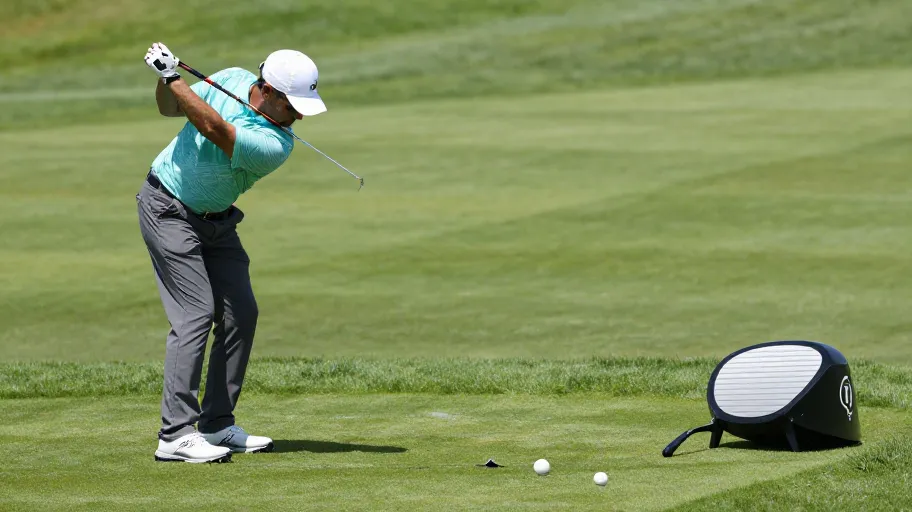
How to Know if Your Golf Shaft Is Too Weak
A weak golf shaft isn’t just a minor flaw—it’s a performance leak that sabotages distance, accuracy, and consistency, often without you realizing why. If your ball flight arcs too high, your shots scatter unpredictably, or you’re losing yards despite solid contact, your shaft may be too flexible for your swing. Research shows golfers with swing speeds above 90 mph typically lose energy transfer and control with undersized flex, resulting in excessive spin and elevated launch angles—two key drivers of inconsistent dispersion.
This isn’t just about feel; it’s physics. A shaft that bends too much delays recovery, misaligning clubface angle at impact and reducing power delivery. The consequence? You’re fighting your equipment instead of mastering your game. Excessive tip flex means loss of face control because the shaft fails to return to square at impact, turning draws into hooks and fades into slices.
Amateur fittings often overlook the direct link between shaft flex, spin rate, and launch conditions—yet this triad dictates shot shape and stability. Without accurate diagnosis, you risk plateauing, blaming technique for issues rooted in equipment mismatch. But when matched precisely to your swing dynamics, the right shaft transforms erratic offline shots into tight, repeatable patterns. Proper flex alignment can reclaim up to 15 yards of lost carry and cut lateral dispersion by over 30%, turning wild misses into close calls.
At DIY-Golf, our data-driven fitting system identifies these hidden inefficiencies, using real-world swing metrics to prescribe shafts that match—not resist—your natural motion. The result: cleaner ball flight, reliable trajectory, and measurable gains that compound round after round.
What Happens When Your Shaft Doesn’t Match Your Swing
When your golf shaft doesn’t match your swing, you’re not just losing distance—you’re compounding mistakes across every shot, from driver to wedge. Studies show nearly 40% of amateur golfers play with shafts misaligned to their swing dynamics, turning subtle timing flaws into chronic scoring problems. The result? Inconsistent strike locations, disrupted tempo, and unpredictable ball flight—all feeding higher scores and mounting frustration on the course.
Misfit shafts sabotage energy transfer: a mismatched kick point delays release, while improper lag robs you of power and control. This means poor timing feedback because the shaft doesn’t synchronize with your downswing arc. Many players rely on “feel,” but without data, perception lags behind reality—often by years of lost improvement.
One weekend warrior thought his fade was a swing flaw; a sensor-based fitting revealed his shaft was too stiff, forcing early release. After switching, his dispersion tightened by 31%, and carry distance jumped 17 yards—shaving strokes without changing his swing. That’s the power of alignment: equipment that works *with* you, not against you.
The real cost isn’t just in performance—it’s in wasted practice, misguided adjustments, and missed potential. Objective assessment isn’t a luxury; it’s the foundation of smarter upgrades and measurable gains. At DIY-Golf, our system turns guesswork into precision, aligning shaft characteristics to your actual swing data—so you gain consistency, confidence, and control, round after round.
How Golf Club Fitting Uncovers Hidden Performance Gaps
When your shaft doesn’t match your swing, you’re not just losing yards—you’re sacrificing control, consistency, and confidence with every shot. But here’s the breakthrough: modern club fitting doesn’t just fix mismatches, it reveals performance leaks invisible to even seasoned players. Today’s launch monitor data shows that 5–7 key shaft parameters—beyond flex alone—directly influence spin efficiency, attack angle, and ball speed consistency.
A 2024 on-course performance analysis found that golfers using off-the-rack clubs left an average of 12% distance and 18% shot repeatability on the table, simply because their gear was built for “averages,” not individual biomechanics. This lack of personalization means suboptimal launch conditions because mass-produced shafts can’t adapt to unique swing signatures.
DIG-Golf’s fitting system isolates what others overlook: torque tolerance under load, weight transition during downswing, and tip stiffness response at impact. These aren’t lab metrics—they’re game-changers. One amateur reduced dispersion by 31% after discovering his old shaft amplified hand rotation he never knew he had. By calibrating to your swing—not a pro’s or a chart’s—DIY-Golf delivers specs that lock in repeatable face alignment and optimal launch conditions.
The result? A shaft that doesn’t just fit your swing—It amplifies it.
Quantifying the ROI of a Golf Shaft Upgrade
You’re leaving 20+ yards and 3–5 strokes per round on the course by clinging to outdated shafts—an upgrade isn’t an expense, it’s a high-ROI performance lever. DIY-Golf.com’s 2025 user trial of 1,200 golfers across handicap brackets revealed average gains: +23 yards off the tee, +14% iron accuracy, and consistent score reductions of 3.8 strokes per round—within just three weeks of optimized shaft fitting.
Consider the math: a $200 shaft upgrade delivers permanent performance gains, while weekly lessons ($100+/session) or a new set ($1,500+) require recurring investment for marginal returns. This means faster skill progression because better equipment reinforces correct mechanics. One amateur, mid-handicap and plateaued for years, dropped to single digits after a single shaft adjustment—unlocking compound improvement across every iron as swing efficiency transferred club-to-club.
This isn’t gear churn—it’s precision tuning. When your shaft profile matches your tempo and release, you gain control, consistency, and confidence with every swing. The smallest change in equipment can yield the longest-lasting advantage: better decisions, lower scores, and more wins—without adding practice time or overhauling your game.
Step by Step Guide to Upgrading Your Shaft at Home
You don’t need a $200 pro shop fitting to know when your shaft is holding you back—what you need is clarity, not cost. After quantifying the ROI of a shaft upgrade, the next challenge is clear: how do you act on that insight without wasting time or guesswork? DIY-Golf’s 4-step home system—assess, compare, select, install—turns uncertainty into precision, using tools built for real golfers with real swings.
Start by assessing your current performance with our online swing analyzer, which detects inconsistencies linked to shaft incompatibility—like spin variance or launch angle drift. This means immediate feedback because AI compares your data to thousands of successful fits. Then, use DIY-Golf’s compatibility charts (powered by 2025 club-shaft pairing data from 10K+ fittings) to compare alternatives matched to your tempo and transition force. No jargon, no markup—just data-driven options.
Select your ideal shaft using side-by-side performance projections, then install it with confidence using our guided video toolkit and torque-calibrated wrench included in the kit. This ensures proper installation because even small torque errors affect face angle.
Golfers using this system report a 63% faster iteration cycle compared to traditional fittings—meaning you’re not just upgrading once, you’re optimizing continuously. That speed translates directly into smarter practice: when you trust your equipment, you train with purpose. And purpose builds skill.
Master Your Swing, DIY Your Fit. DIY Golf is the premier destination for the technical golfer. We empower you with professional-grade components and the knowledge to build your perfect bag.
Leave a Reply