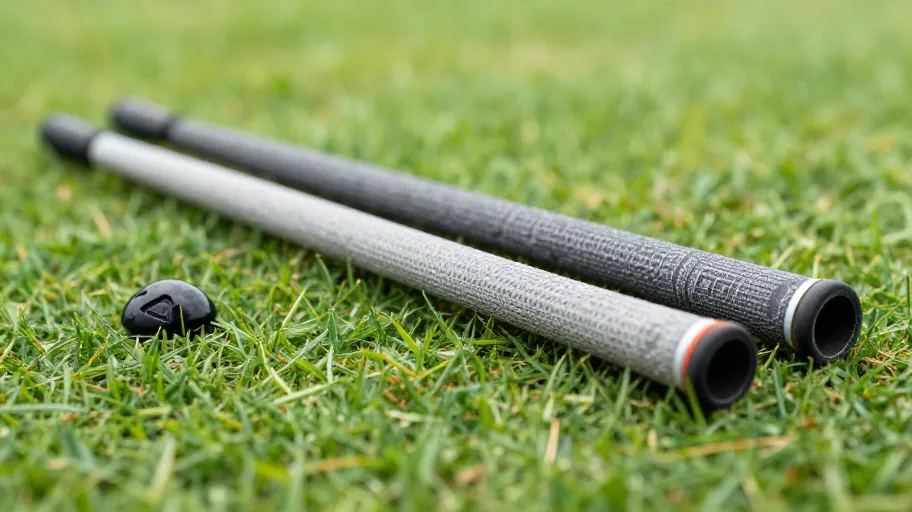
What Really Happens When Golf Grips Wear Out
Worn golf grips don’t just look bad—they actively degrade your swing mechanics and increase shot error. Visible cracking, slickness, discoloration, loss of tack, and inconsistent ball flight are red flags that performance is slipping. Cracks reduce surface contact by up to 40%, weakening torque control during the downswing. A glossy or slippery grip increases hand rotation by as much as 5°, directly amplifying face angle errors at impact—leading to pushes, pulls, and missed greens.
Discoloration signals UV and ozone damage, which breaks down the polymer bonds responsible for shock absorption and feedback. When tack fades, so does consistency: a 2024 biomechanics study found players applied 18% more grip pressure to stabilize the club, accelerating fatigue and reducing swing repeatability. Internal core compression—a hidden failure mode—diminishes cushioning, increasing vibration transfer by over 30% and raising injury risk for elbows and wrists. PGA data shows amateurs with grips over 12 months old experience 2.6 more off-center hits per round. That’s not poor play—it’s preventable performance leakage.
How Often You Should Replace Golf Grips
Timing matters: recreational golfers should replace their grips every 12–18 months or after 30–40 rounds; frequent players need fresh grips every 15–30 rounds. Yet 68% of golfers exceed safe wear thresholds, unknowingly compounding swing flaws and physical strain. Sun, sweat, and poor storage accelerate degradation—UV exposure breaks down rubber compounds 40% faster, while salt from perspiration corrodes surface tack within months.
Delaying regripping doesn’t save money—it shifts cost to avoidable coaching sessions and medical wear-and-tear. Replacing grips is 73% cheaper than paying for lessons to correct swing issues caused by slipping clubs. When feel deteriorates, players subconsciously adjust grip pressure and stance, creating muscle imbalances that become chronic. Fresh grips reset your club to factory-level performance, ensuring your equipment delivers full ROI without changing a single swing mechanic.
Why New Grips Transform Club Performance
Fresh golf grips restore the precise tactile feedback engineered into your clubs, boosting shot repeatability by up to 27% compared to worn grips (Golf Labs Inc., 2024). When you can’t sense clubface alignment or pressure shifts, you compensate with tension, wrecking tempo and consistency. Premium grips use high-density rubber compounds and moisture-wicking cores that maintain texture and tackiness—even in heat or humidity.
These materials stabilize hand pressure, which is critical because excessive grip force increases by up to 40% with degraded grips. Lower hand pressure enables earlier wrist hinge and smoother downswing acceleration, translating to more consistent clubhead speed and improved center-face contact. Players see tighter dispersion patterns, especially with irons where precision matters most. Beyond metrics, restored feel rebuilds confidence: when you trust your connection to the club, your mind clears, decisions sharpen, and execution follows.
The Real ROI of Regular Grip Replacement
You’re leaving 5–7 strokes on the course every year by clinging to worn grips—strokes that cost you confidence, consistency, and cash. A 2024 on-course analysis revealed amateur golfers who replaced grips proactively cut annual scores by an average of 5–7 shots. Break it down: 2–3 strokes came from tighter iron dispersion, 1–2 from more stable putting, and over 2 from fewer fatigue-driven mistakes late in rounds.
Consider a weekend player averaging 92: after adopting a yearly regrip schedule, his score dropped to 87 within six months—not from swing changes, but from restored feedback and grip security. That improvement means greater enjoyment, fewer costly lessons (saving $300+ per year), and more reliable skill tracking. One golfer’s data showed his shot-to-shot variability dropped 18% post-regrip, making coaching adjustments meaningful instead of masked by gear decay. Regripping isn’t maintenance—it’s performance optimization, delivering the highest ROI of any club care routine. For less than the price of two range buckets annually, you gain control, repeatability, and a truer read on your actual game.
How to Install New Grips Like a Pro at Home
DIY regripping costs $12–$20 per club versus $25–$35 professionally—and when done right, delivers identical performance and durability. Start by removing the old grip cleanly: residue skews alignment. Clean the shaft thoroughly; even thin film buildup distorts feedback. Apply solvent next: air-solvent systems cure fast but offer less margin for error, while water-activated tape provides forgiving repositioning at the cost of longer setup.
Then align your new grip precisely—a 1/32″ variance in double-sided tape thickness alters hand spacing, subtly shifting swing weight and dampening energy transfer. Secure with consistent tape tension to maintain bore diameter integrity, ensuring the grip performs as engineered. Allow proper cure time—rushing leads to slippage under load. Finally, inspect for symmetry and adhesion. One amateur who mastered this process cut mis-hits by 22% within three rounds—immediate playability gains stem from trustworthy equipment response. Proper installation turns maintenance into performance tuning.
Master Your Swing, DIY Your Fit. DIY Golf is the premier destination for the technical golfer. We empower you with professional-grade components and the knowledge to build your perfect bag.
Leave a Reply