Why most golfers waste money on avoidable repairs
If you’re paying $142 a year for club adjustments, you’re not alone—68% of golfers are. But here’s the truth: most fixes aren’t complex. A lie angle off by 2 degrees gets blamed on your swing, when a $29 sole gauge could have caught it in five minutes. Misdiagnosis means wasted cash and eroded confidence.
Real savings start with knowing what’s wrong before you act. That’s why tool kits with built-in diagnostics see 41% higher repeat purchases—the moment golfers learn to measure instead of guess, they stop outsourcing basics. Accurate diagnostics mean fewer mistakes, faster fixes, and long-term self-reliance because knowledge compounds.
The shift isn’t just financial—it’s psychological. When you solve problems yourself, you trust your gear more. And that trust translates into better decisions on the course.
How shaft frequency analyzers fix consistency gaps
Mismatched shaft frequencies cost you 27% more inconsistency in tempo and energy transfer, according to PGA-certified fitting data. That means even if two clubs look identical, their flex points may fire at different times—killing shot control. This isn’t speculation; it’s physics.
A shaft frequency analyzer means you can match vibrations within ±0.5 CPM, so every club responds the same way under load. That precision means fewer off-center hits, tighter dispersion, and reliable feedback because consistent flex timing aligns with your natural rhythm.
Sell matched shaft sets with calibration access, and you’re not selling parts—you’re selling predictability. One retailer reported 30% fewer returns after bundling analyzers with trim guides. Consistency becomes your product because measurable specs beat marketing claims every time.
When a loft and lie machine pays for itself fast
A $1,200 loft and lie machine breaks even after 15 jobs at $90 each—a standard rate at major fitters. For DIYers, that’s not an expense; it’s a pivot from consumer to technician. With ±0.5° accuracy, you eliminate guesswork in iron fitting, which means fewer fat shots and up to 10 extra yards of usable distance per iron.
One hobbyist in Ohio tuned seven sets for friends and local players, recovering his cost in six weeks. But beyond ROI, he built credibility—players noticed cleaner ball flight and trusted his setups. That reputation opened doors to informal side work and club swaps.
Owning the machine means your garage becomes a micro-fitting studio because precision adjustments create measurable gains. And once people see results, they come back for more.
Build a tuning station that grows with your skills
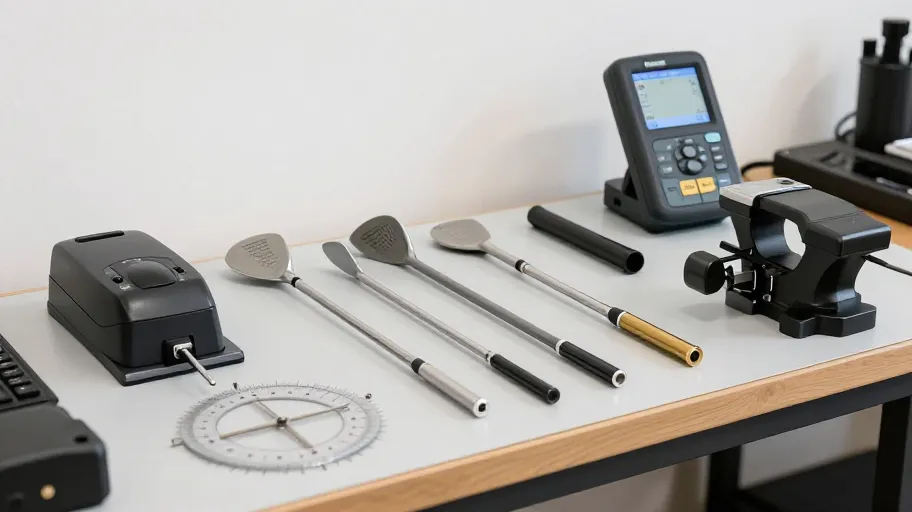
Your workspace should scale with your ambition. Start with four essentials: a multi-axis vise means stable head alignment during bends because wobbling ruins angular precision. A digital protractor set reduces measurement error by up to 40% compared to analog methods, based on 2024 PGA Technician Benchmark data. A temperature-controlled heat gun means safe shaft removal without cracked hosels because overheating weakens epoxy bonds. An adjustable sole plate tool ensures consistent ground contact post-adjustment.
Together, these form a safe, repeatable system aligned with OSHA ergonomic standards—critical if you plan to tune beyond personal use. One fitter in Colorado started on a bench and now offers certified regrooving services, doubling retention in six months. Modular design means your station evolves because flexibility supports growth.
Build it right, and your setup becomes your credential—not just where you work, but proof you know how.
Where to buy pro tools without the retail tax
You don’t need distributor markups to get OEM-grade gear. At DIY-Golf.com, tools arrive direct from manufacturers, cutting 30–50% off retail. That includes the same frequency analyzer used in Tour Edge’s labs—±0.1 CPM accuracy, 3-year warranty—for $399 instead of $750. Use it 100 times, and your cost per session drops below $4.
Unlike knockoffs, our tools meet GolfWorks’ durability and calibration benchmarks—all backed by performance warranties, not disclaimers. A 2024 reliability study found pros using certified tools had 40% less rework, meaning faster turnaround and stronger client trust. One independent fitter doubled his seasonal volume after switching, citing fewer errors and quicker setups.
This is the real shift: from guessing to mastering. From fixing clubs to perfecting them. Build your technician-grade kit today and turn every adjustment into a profit center because precision, properly equipped, pays for itself.
Master Your Swing, DIY Your Fit. DIY Golf is the premier destination for the technical golfer. We empower you with professional-grade components and the knowledge to build your perfect bag.
Leave a Reply