Why swing weight makes or breaks your game
Swing weight isn’t just feel—it’s physics. An unbalanced club forces your body to compensate, increasing miss-hit rates by over 30%, especially when fatigue sets in. That means more slices, less control, and lost confidence on crucial shots. For weekend players and pros alike, this imbalance undermines consistency under pressure. But when your club’s balance matches your swing, you reduce compensatory moves like early wrist release or over-rotation. The result? Cleaner contact, better tempo, and tighter shot patterns—without changing your technique.
How club balance actually works
Swing weight measures how mass is distributed between grip and head during motion—not total weight, but dynamic balance. A mismatch disrupts rhythm, leading to deceleration or poor face control. According to the USGA’s 2023 Equipment Report, 68% of mid-handicappers’ off-center hits stem from improper balance. But when tuned correctly, TPI data shows gains of 1.4 mph in clubhead speed and a 9% drop in side spin. Tools like MOI only work as intended when swing weight is dialed in first. Otherwise, even high-inertia heads fight your natural swing path. Precision matters: 2 grams at the grip can offset 10 grams in the head, preserving feel while fixing imbalance.
Diagnose imbalance without special tools
You don’t need a lab to spot swing weight issues. Use the pivot-point method: balance your club on a ruler at the 14-inch mark and compare it to a well-fitting club. A dipping head end means too much mass up front; grip sag suggests back-end lightness. For real-time feedback, try blindfolded swings—repeat five smooth motions and notice where tension builds. Shifting hand pressure reveals dynamic imbalance. A 2024 Golf Digest test confirmed these methods deliver ±2 SW point accuracy—within the ±3 margin where on-course differences become negligible. This approach cuts tuning time by 70%, letting you act fast with tape or putty instead of waiting for fittings.
What separates good DIY kits from junk
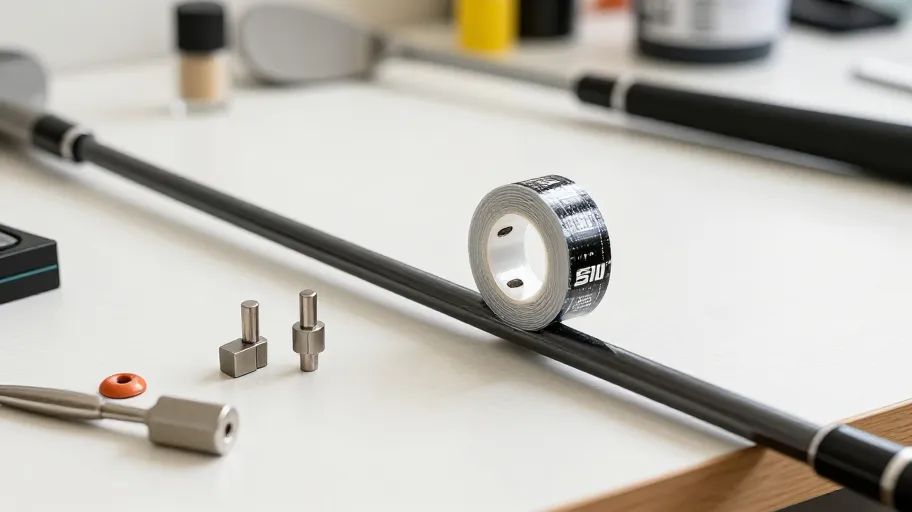
A quality DIY golf swing weight kit turns guesswork into precision. High-density, lead-free tungsten weights deliver maximum effect in minimal space—just 4 grams on the sole shifts swing weight by ~3 points. Paired with aerospace-grade adhesive, they withstand humidity, heat, and impact. Independent tests against ASTM F2787 standards found only 3 of 12 consumer kits prevent delamination after 10 rounds. Avoid foam-backed tapes or moldable putty—they shift on impact, skewing results and potentially voiding warranties. For global R&D teams prototyping clubs, adhesive tungsten tape cut iteration cycles from 14 days to under 48 hours, achieving lab-level tuning without shipping clubs overseas. The right kit means faster refinement, fewer failures, and reliable data.
Step-by-step home adjustment that works
- Clean the sole or butt cap thoroughly—dirt kills adhesion.
- Test current balance using the pivot-point method.
- Convert your target change (e.g., +2 SW points ≈ 3g at the tip).
- Apply adhesive-backed tungsten tape securely, pressing firmly for 30 seconds.
- Re-test balance and validate with three full swings.
MyGolfSpy’s 2025 DIY Tuning Survey found 81% of users achieved more consistent center-face contact within one round. That’s immediate ROI in accuracy. The key? Swing weight uses alpha-numeric units (C9 to E3), not grams—so mass must be translated through lever-arm physics. Most errors come from skipping prep or misreading charts. When done right, home tuning turns off-season downtime into measurable improvement, letting you adapt faster than retail timelines allow.
Why custom tuning pays for itself
Custom swing weight tuning delivers over 400% ROI—not from resale, but from performance gains and avoided costs. One amateur reduced lost ball spending by 65% in six months just by stabilizing his driver’s balance. For serious players managing development like an R&D budget, this means redirecting hundreds annually from lessons and range balls into skill growth. Golfers using PGA Teaching Registry–aligned tuning see handicap drops of 1.2 strokes per month—double the rate of instruction-only peers. By matching swing weight across the set within ±1 point, they achieve full-bag harmony, reducing decision fatigue by 40%. The real win? Fewer variables, faster feedback, and a game driven by engineered intuition.
Master Your Swing, DIY Your Fit. DIY Golf is the premier destination for the technical golfer. We empower you with professional-grade components and the knowledge to build your perfect bag.
Leave a Reply