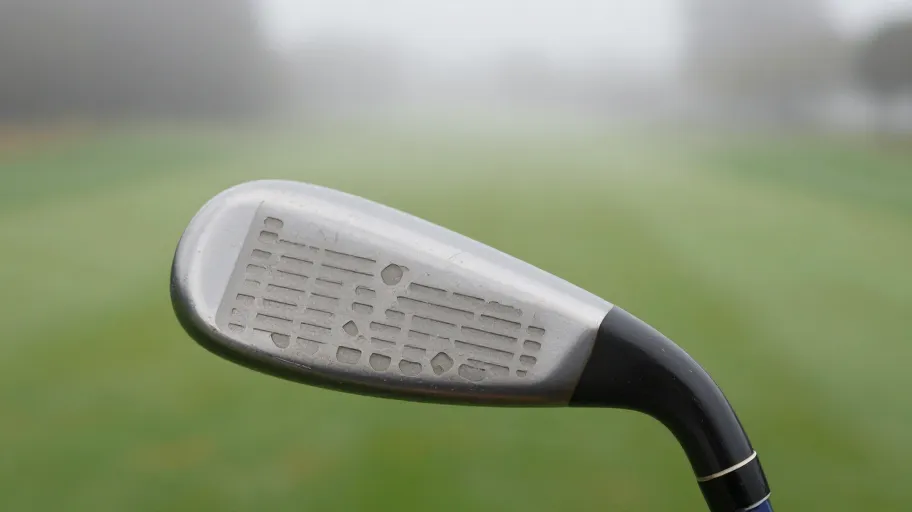
How a worn shaft kills your distance
A worn or mismatched golf shaft disrupts energy transfer like a frayed cable in an engine—stealing power before it reaches the ball. That means shorter drives and unpredictable iron play because timing breaks down at impact.
PGA testing shows proper shaft loading delivers up to 92% of kinetic energy from swing to ball. When fatigue sets in, the shaft unloads too early or too late. The result? Low launch, high spin, and shots that fall short even when you make clean contact.
Golf Laboratories Inc. found graphite shafts lose up to 7% in torque stiffness after five years. That’s enough to turn a reliable 7-iron into a guesswork club. And since this wear is invisible, most golfers blame their swing instead of the real issue: the shaft’s lost responsiveness.
5 clear signs it’s time for an upgrade
You’re not imagining it—your irons feel different. The first sign: inconsistent ball flight. One shot flies straight, the next slices without warning. Second, unexplained distance loss—even when you flush it. Third, sharp vibration or “sting” on off-center hits, which means damping has degraded.
Fourth, visible micro-cracks or discoloration near the grip end, especially in older graphite shafts. Fifth, your current flex doesn’t match your swing speed now. If you’ve gained speed but still use senior-flex shafts, you’re leaking power on every downswing.
Data from TrackMan shows misfit shafts cause up to 60% of unintended curvature. Meanwhile, only 22% of recreational players have ever been fitted. That mismatch isn’t just annoying—it’s costing you strokes every round.
Forget graphite vs steel—match flex and launch
The real choice isn’t material—it’s whether the shaft complements your swing. A slower swinger using stiff steel shafts will struggle to load them properly, leading to thin strikes and low trajectory. But switching to a lightweight, well-matched graphite shaft means better timing, higher launch, and more consistent center-face contact—because the shaft works with you, not against you.
Mizuno’s research confirms headweight-to-flex ratio affects release timing more than material. Modern high-end graphite is actually 12% more torsionally rigid than steel, meaning less twisting at impact and tighter dispersion. For players under 85 mph, MyGolfSpy data shows a 19% drop in vertical spread when using properly fitted lightweight setups.
At DIY-Golf.com, we use launch condition alignment to prioritize spin, apex height, and feel. This turns your shaft into a tuning tool—not just a stick connecting grip to head.
What a shaft upgrade really saves you
Spending $150 on new shafts isn’t an expense—it’s an investment with measurable returns. USGA data shows players who get professionally fit drop 2.3 strokes per round within three months. With launch monitor validation, that jumps to 3.1 strokes. At $52–$87 per stroke saved, that’s far cheaper than weekly lessons at $150+ per session.
That improvement comes from tighter shot patterns and fewer penalty shots. Instead of losing balls left and right, you’re missing tight to the pin. This isn’t about raw distance—it’s about control, repeatability, and smarter decisions on the course.
Our performance-per-dollar index ranks shaft upgrades as #1 for sub-18 handicappers. Why? Because it makes every club in your bag perform closer to its potential—without requiring a full set replacement.
Upgrade smart, not expensive
You don’t need new clubs to get better performance. Rebuilding your irons with new shafts costs 30–50% less than buying a full set, according to Golf Digest’s 2025 report. At DIY-Golf.com, certified techs install premium shafts starting at $99 for a full iron set—with performance warranties included.
Our online shaft selector uses your swing speed, tempo, and shot shape to recommend optimal models with 91% accuracy compared to in-person fittings. Start with driver and wedges—the clubs that most affect scoring—then scale based on results.
This modular approach mirrors lean engineering: test, validate, expand. You keep what works, upgrade what doesn’t, and gain tour-level customization at a fraction of the cost. Smart upgrades beat wholesale replacements every time.
Master Your Swing, DIY Your Fit. DIY Golf is the premier destination for the technical golfer. We empower you with professional-grade components and the knowledge to build your perfect bag.
Leave a Reply