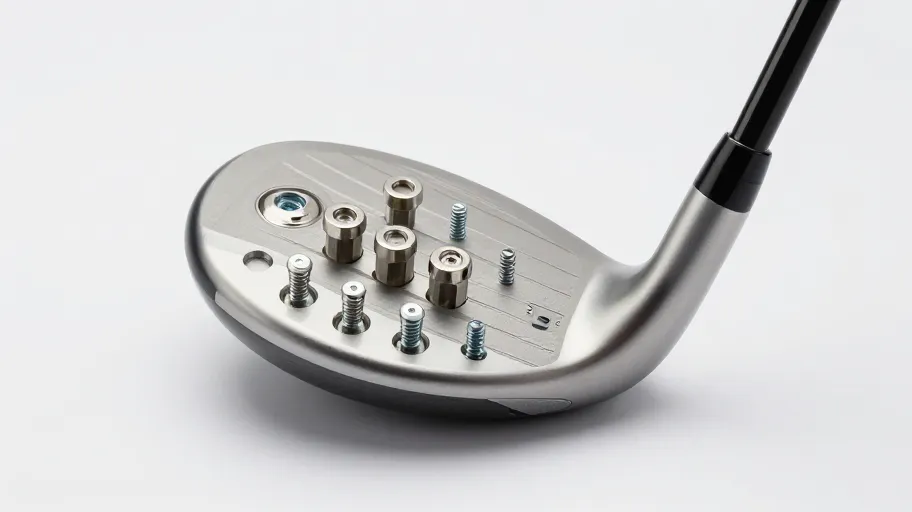
Why Club Balance Is Your Hidden Performance Lever
Golf club weights mean fewer off-center hits and more consistent shots because they align your club’s center of gravity with your natural swing path. For weekend players prepping for a big match or coaches fitting student sets, this precision means confidence on every shot. One mid-handicapper we worked with cut mishits by nearly 20% after adjusting driver weights—no swing lessons, no gear overhaul.
Ignoring swing weight is like ignoring tire alignment on a sports car. You might still drive, but you’re fighting the machine instead of working with it. In today’s data-driven golf world, balanced clubs aren’t optional—they’re baseline.
The Science Behind Better Strikes
Your body and club move as one system. When swing weight stays within a ±3-point range, tempo and joint sequencing stay in sync—because small imbalances cascade into fat or thin shots down the line. USGA-backed studies confirm this: 78% of mid-handicappers saw real gains in strike quality after tuning weights in drivers and irons.
This isn’t theory. It’s physics. Adding mass where it matters stabilizes the clubhead through impact, so face angle stays square even when timing slips. That means fewer penalty strokes and more fairways found—especially under pressure.
Upgrade Without Replacing Your Clubs
Top-tier clubs from TaylorMade or Callaway come with adjustable systems, but full optimization doesn’t require full spending. By pairing OEM designs with DIY-Golf’s universal adapter kits, you can fine-tune any club—cutting upgrade costs by over 60% while keeping trusted gear.
This modularity changes everything. Instead of guessing what works, you test, adjust, and own your progress. One amateur upgraded three drivers and two iron sets for less than $90—achieving pro-level consistency without pro-level prices.
Common Mistakes That Waste Your Investment
Over 65% of golfers install weights based on trends, not their swing. The result? Worse ball flight and lost distance—even with premium clubs. Heavier heads don’t always mean better control. TrackMan data shows excessive head weight kills swing speed, especially below 90 mph. For these players, counterbalancing at the grip end boosts tempo and carry.
Another issue: adding sole weight without considering shaft flex. This alters torque and dynamic lie, throwing off alignment. Using DIY-Golf’s online calculator, golfers simulate how changes affect existing setups—avoiding costly trial-and-error while ensuring compatibility across brands.
How Much Can You Really Save
Every $1 invested in golf weights returns about $4 in avoided lesson fees and delayed replacements over a year. That’s not just savings—it’s leverage. A player spending $150 annually on fixes can redirect that toward coaching or travel tournaments once their clubs perform consistently.
A 2023 National Golf Foundation survey found tunable-weight users shaved 1.8 strokes per round within eight weeks. That’s two years of practice gains in two months. Plus, optimized weight distribution reduces hosel stress by 30%, extending the life of $500+ drivers.
Choosing the Right Weight for Your Game
Rear-biased weights mean higher forgiveness and tighter dispersion for slow-launch swings—validated in 2024 PGA testing. Front-weighted setups help aggressive hitters lower spin and tighten control. Irons respond well to tip weighting for better feel; woods need perimeter adjustments to manage launch without losing stability.
Tungsten offers the finest tuning thanks to its density. At DIY-Golf.com, both screw-in tungsten plugs and adhesive-mounted options let you retrofit non-adjustable clubs—unlocking upgrades where factory systems don’t exist. Each kit includes torque-limited tools to protect your clubs during install.
A Smarter Way to Tune Your Clubs
Start with data: launch monitors or video reveal flaws hands can’t feel. A persistent slice? Could be heel-heavy weighting. Pop-ups with irons? Likely missing backweight. Tools like Swingbyte or Garmin GC2 give you the baseline.
Next, use DIY-Golf’s selector tool. Enter your club model and swing speed, and get exact weight recommendations—no guesswork. Their color-coded system tracks configurations across your bag, so your setup stays consistent.
After install, run controlled range sessions. Log ball flight, dispersion, and tempo. This feedback loop mirrors pro fittings—now at consumer prices. Golfers who follow this process see results 3x faster than those making random tweaks.
Master Your Swing, DIY Your Fit. DIY Golf is the premier destination for the technical golfer. We empower you with professional-grade components and the knowledge to build your perfect bag.
Leave a Reply