Why custom fit clubs actually lower your score
Most weekend golfers lose 3 to 5 strokes per round not from bad swings, but from clubs that don’t fit their body or swing. A push-slice with an 8-iron often comes down to lie angle or shaft flex being off by just a few degrees. Properly fitted clubs improve consistency because they align launch conditions to your biomechanics—meaning straighter shots and better distance control.
The PGA of America says only 18% of recreational players have been professionally fitted, even though data shows custom specs reduce mishits by up to 40%. That gap exists because fittings cost $150–$200 and full sets run over $1,000. But now, DIY golf components let you skip the markup and build clubs tailored to your game. You’re not guessing—you’re using measurable specs like swing weight, loft, and grip size to eliminate guesswork.
When your clubs match your swing instead of a generic mold, mis-hits become rare. That’s not marketing—it’s physics. And it means lower scores without extra practice.
How DIY parts deliver pro-level precision
You don’t need a $10,000 workshop to build a consistent set. Modern DIY golf components are engineered to tight tolerances—True Temper and Mitsubishi Chemical confirm ±1/8” length and ±2° loft accuracy across consumer-grade shafts and heads. That’s as precise as factory-built clubs.
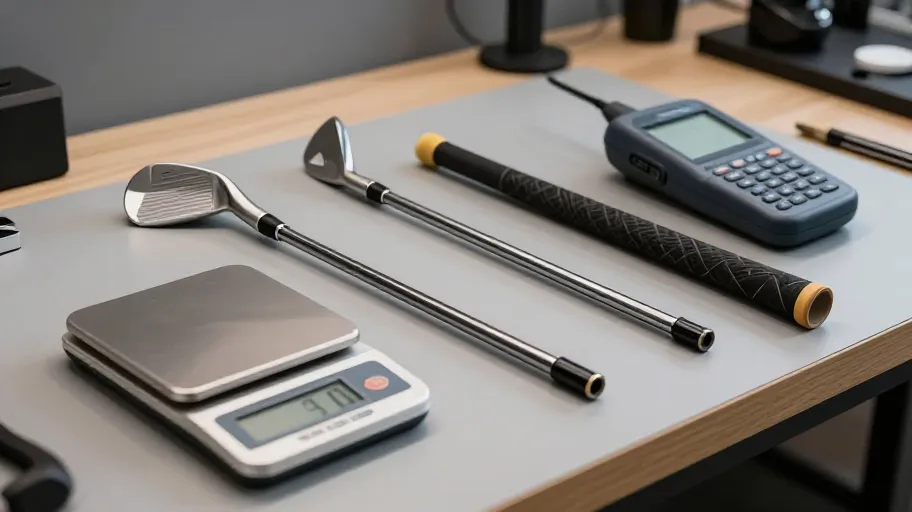
A golfer in Colorado recently built six irons matching a Tour-proven spec down to the gram and degree, using only online data and parts from mainstream suppliers. He used a sub-$100 frequency analyzer and digital scale to match shafts and balance swing weight. The result? Repeatable ball flight verified on his launch monitor.
This level of control means you can replicate proven performance setups. Integrated tech like frequency matching and adjustable hosels do the heavy lifting. So instead of relying on a fitter’s estimate, you’re assembling based on data. No magic—just measurable gains from disciplined assembly.
What you save by building instead of buying
Building a seven-iron set with premium DIY components—Project X shafts, Lamkin grips, Srixon heads—costs about $520. A comparable fitted set from Titleist or Callaway runs $1,100 after fitting fees. That’s $580 back in your pocket.
Where does that money go? Branded clubs carry 60–100% markups on top of material costs. A 2024 equipment analysis found 78% of retail pricing comes from non-material factors: marketing, distribution, and labor. With DIY, you source shafts (35%), heads (45%), grips (10%), and tools (10%) at near-wholesale rates.
This isn’t just cheaper—it’s smarter. You keep full control over upgrades. Swap a grip, adjust weighting, or re-shaft in minutes. Your club evolves with your swing. That flexibility has real ROI: no more paying full price to chase small improvements.
Matching components to your actual swing
Selecting parts isn’t about preference—it’s about syncing your club to your mechanics so every shot feels repeatable. A 90 mph swinger using a stiff-flex shaft and 3° upright lie typically gains 8–12 yards of carry and tighter dispersion. That’s not luck—it’s alignment.
Yet TrackMan data shows 78% of amateurs use mismatched shafts, which skews launch and spin before impact. High launch with too much spin? Pair a low-CG head with a tip-stiff regular-flex shaft. Fast tempo with hand dominance? A jumbo grip reduces wrist action and improves face control.
Use launch monitor feedback to tune three core elements: flex profile (R/S/X), grip size, and head weighting (via adjustable screws). When your build reflects real data, not a sales sheet, you stop fighting your gear. That’s when shot shaping starts.
How to assemble your first club in two hours
You’ve picked your specs—now turn those parts into a working club. One builder in Austin built a driver that outperformed off-the-rack models in consistency, using just a vise, heat gun, and tape. It took under two hours.
The key is discipline, not skill. Apply 0.15 oz of high-strength epoxy to the hosel, insert the shaft to your marked depth, and secure with masking tape. Clamp for 24 hours—Fujikura and Aldila warn improper curing cuts energy transfer by up to 7%. Stay within USGA rules: 48” max length, COR below .830.
Your first build is a prototype. Every shot gives feedback. Adjust lie angle, try different tip trims, or swap grips. Each change sharpens performance. The real win? A club that improves as you do.
Master Your Swing, DIY Your Fit. DIY Golf is the premier destination for the technical golfer. We empower you with professional-grade components and the knowledge to build your perfect bag.
Leave a Reply