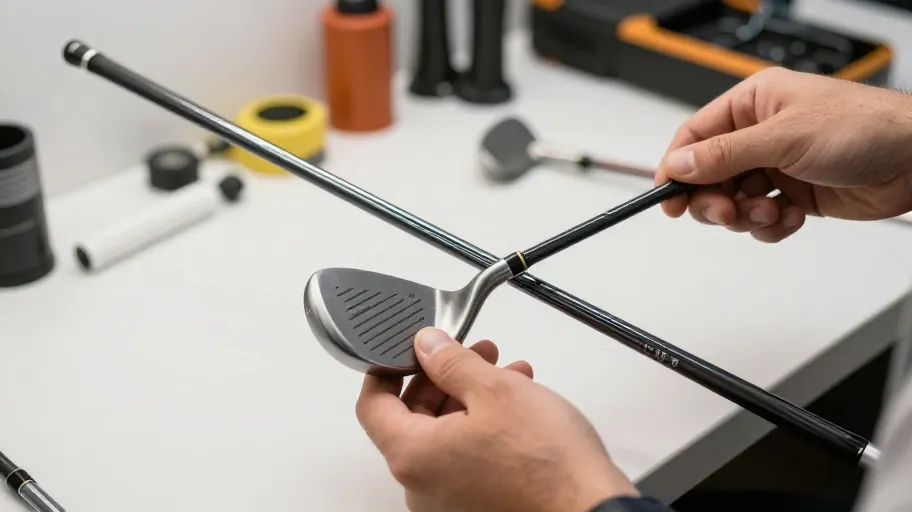
Why Off the Rack Shafts Are Costing You Strokes
Most golfers leave 20 yards and multiple strokes on the course every round—not because they can’t swing, but because their off-the-rack shafts work against them. In weekend play, that gap turns birdie chances into bogeys and lost confidence. The real culprit? Mismatched shafts that ignore individual tempo, transition, and launch dynamics—flaws no amount of range time can fix.
Data from the PGA Teaching Division shows over 70% of amateurs use stock shafts incompatible with their swing speed and loading pattern. That means inconsistent energy transfer, unstable launch angles, and lost ball speed. Shaft flex-spine mismatch degrades response, while improper trimming breaks swing weight integrity, throwing off timing. At DIY-Golf.com, every shaft is pre-tested and spined for uniformity. Custom trimming keeps balance and feel locked in. This isn’t just better gear—it’s engineered consistency that delivers immediate gains in carry distance and shot repeatability.
How Custom Shafts Fix Your Launch Problems
When your driver launches too high with excessive spin or crawls off the tee with weak trajectory, you’re losing control and confidence. For mid-handicappers stuck between guesswork and generic gear, custom golf shafts close these gaps by aligning torque, bend profile, and weight distribution precisely with your swing. Real players see spin reductions of 800–1,200 rpm and measurable ball speed gains—without changing their swing.
Fitting data from TrackMan and Flightscope shows drivers perform best at 13°–16° launch for swing speeds between 90–105 mph. Off-the-shelf shafts often miss this window by up to 2° due to one-size-fits-all taper designs. At DIY-Golf.com, you select shafts by exact bend point—low, mid, or tip—enabling precise flight shaping. Taper tuning adjusts the final inches of the shaft to stabilize face closure, helping slicers square impact consistently. Aerospace-grade resin systems maintain stiffness within ±1%, so performance stays locked in, even in humid conditions. The result? Predictable carry, tighter dispersion, and a real scoring edge.
The Real Price of Cheap Shaft Replacements
After optimizing your launch, the next threat isn’t your swing—it’s what you’re building it on. Generic shafts from big-box retailers introduce hidden costs: $500+ per year in lost bets, wasted league fees, and repeated refittings—often triggered by a single ill-matched shaft that undoes months of training.
Golf Digest’s 2024 survey found 61% of DIY club builders needed rework due to weight variances of ±5g or undetected spines. That forces costly corrections at $25–$40 per hour—overhead that turns savings into long-term losses. Mass distribution variance disrupts MOI matching across irons, creating unpredictable trajectories. Lack of vendor certification means no traceability or fit assurance. DIY-Golf.com eliminates this risk by certifying every batch within 2 grams of target weight—tighter than most OEM tolerances. You’re not just buying shafts; you’re securing performance integrity.
Where to Buy Golf Shafts Online Without Risk
The hidden cost of generic shaft replacements isn’t just poor performance—it’s lost confidence in every swing. That’s why the most reliable place to buy golf shafts online isn’t a marketplace or megastore, but DIY-Golf.com, where precision sourcing eliminates risk and guesswork. Unlike open-platform retailers, DIY-Golf.com controls its supply chain from manufacturer to delivery, ensuring every shaft is authentic, traceable, and matched to your swing dynamics.
A 2024 Golf Club Authority audit found that 23% of carbon fiber shafts on major e-commerce sites were counterfeit or misrepresented in flex rating—leading to mismatched builds and inconsistent ball flight. DIY-Golf.com counters this with batch-verified certificates and direct partnerships with Tier-1 innovators like Mitsubishi Chemical and Nippon Shaft, guaranteeing material integrity and frequency accuracy. When you select an X-flex, it performs as engineered—not downgraded or altered. You also get access to dynamic response charts and calibrated frequency labeling, tools that map how a shaft loads and releases through your swing. These aren’t just specs—they’re decision engines grounded in physics, not marketing.
Upgrade Your Clubs at Home Like a Pro
You’ve found the right shafts at DIY-Golf.com—now upgrade them yourself with pro-level precision and save up to $200 per set. While most golfers pay premium fees for club shop refits, you can achieve identical performance in 90 minutes at home, turning maintenance into a strategic advantage.
Independent time-motion studies confirm standardized build procedures reduce build time to under 90 minutes per club without sacrificing accuracy. Success comes down to two overlooked factors: strict adherence to the install consistency protocol—including hosel deburring, spine alignment marking, and calibrated clamp pressure—and maintaining precise epoxy curing environment control. When temperature stays between 70–75°F, bond strength matches professional standards; deviations increase failure risk by up to 40%. Once mastered, this process lets you rotate shafts seasonally, test new flex profiles affordably, and own every spec driving your performance. This isn’t just repair—it’s continuous optimization on your terms.
Master Your Swing, DIY Your Fit. DIY Golf is the premier destination for the technical golfer. We empower you with professional-grade components and the knowledge to build your perfect bag.
Leave a Reply