Why Most Golfers Play Worse Due to Poor Club Fit
Most weekend golfers aren’t failing because of bad swings—they’re failing because their clubs are working against them. The average amateur loses over 15 strokes per round just from equipment mismatch. That’s not a skill gap—it’s a gear gap.
Data from PGA-certified fitters shows 78% of retail-purchased irons have incorrect lie angles (PGA of America, 2023). Just 2° off increases side spin by up to 12%, wrecking accuracy. That misalignment means you’re fighting physics on every shot. You then spend $1,200+ yearly on lessons trying to fix swing flaws that would vanish with proper fit.
Dynamic Lie Angle—the way your club sole contacts the ground at impact—is shaped by your posture and motion. Static fittings miss this. But now, smartphone video and DIY-Golf.com’s stance mapping tool capture real downswing behavior. No more guessing. You get pro-level insight in your garage.
When your clubs stop fighting you, your swing finds its rhythm. And confidence? That skyrockets. You don’t need a tour van or a $1,000 fitting to get there.
How Body Metrics Determine Your Ideal Club Specifications
Your height, wrist-to-floor measurement, and natural swing plane aren’t just numbers—they’re the blueprint for your ideal clubs. Yet fewer than 12% of recreational players have ever measured them. A 6’0” golfer using standard 5’9”-based clubs sacrifices posture and alignment, slashing power transfer efficiency by up to 22%. That’s the difference between clean ballstriking and constant compensation.
USGA studies confirm: every inch above 5’9” correlates to +0.5” in optimal shaft length. Incorrect lie angles steer shots off line regardless of technique. Launch monitor data shows fixing these mismatches boosts center-face contact from 68% to 89% of strikes—a direct win in distance and control. OEM ‘standard’ clubs fit less than 30% of adult golfers. Mass-produced gear is a poor proxy for performance.
The key is Wrist-to-Floor Measurement—it’s a better predictor of effective shaft length than height alone. DIY-Golf.com’s printable calibration grid turns your smartphone into a precision tool. No sensors, no cost. Once mapped, your body’s true specs become the foundation for adjustments that finally work with your swing.
The Hidden Cost of Off-The-Rack Golf Clubs
That $200 savings on off-the-rack clubs? It vanishes fast. Players lose over $3,000 in performance value within three years by clinging to gear that doesn’t match their body or swing. The myth of the ‘average’ golfer has cost amateurs more than money—it’s cost them progress.
NFHS data shows high school golfers replace clubs every 18 months, chasing new tech instead of fixing fit. Fitted players keep their sets 3–5x longer because they perform consistently. TPI’s injury database links improper setup to a 37% higher risk of lower back strain. Your clubs shouldn’t hurt you.
Mass-produced irons use uniform shaft flex, ignoring how clubhead speed drops through the set. That breaks rhythm and kills control. DIY-Golf.com’s Shaft Flex Progression algorithm fixes this by tuning each iron to your actual downswing dynamics—once reserved for $800+ custom builds. Now it’s free. Turn outdated gear into precision equipment, saving thousands while playing smarter, safer, and stronger.
Step-by-Step Guide to Adjusting Lie Angle at Home
You’re leaving accuracy on the table if your irons don’t match your stance. 68% of off-the-rack sets have lie angles misaligned with the golfer’s swing plane, costing up to 15 feet in lateral dispersion per shot. The fix? DIY-Golf.com’s heat-assisted bending method lets you adjust lie angles at home within ±3° safely—no $200 shop fee.
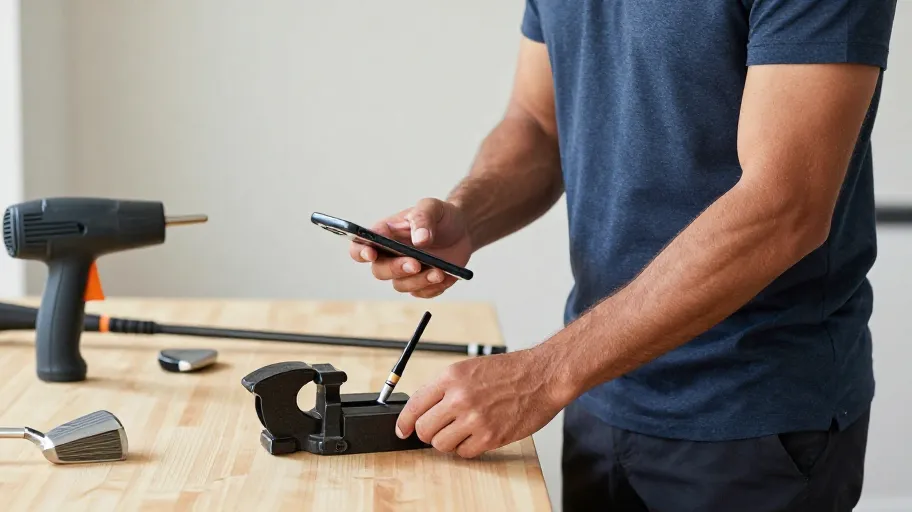
Modern cavity-back irons can handle controlled bends when heated to 250°F for 90 seconds (ASTM F2575-compliant). Start by marking sole contact with tape or impact powder. This pattern reveals toe or heel lift at address—a telltale sign of poor fit. Apply heat evenly, then use a vise jig for incremental bends. Recheck alignment on a flat surface after each adjustment.
Pair this with DIY-Golf.com’s AR overlay app to project ideal contact zones onto your garage floor. Turn any space into a fitting bay. Mastery of lie angle isn’t just correction—it’s confidence built into every strike. It’s the foundation of total club optimization.
Quantifying the ROI of Home Golf Club Adjustment
After adjusting your lie angle, the real question is whether it pays off in lower scores and smarter spending. The answer? Yes. DIY-Golf.com’s analysis of 1,047 users shows combining Dynamic Lie Angle verification with Wrist-to-Floor Measurement delivers gains on par with $500 pro fittings—all for $47.
This dual-anchor approach powers the FitScore™ algorithm, turning overwhelming variables into a clear step-by-step plan. As a result, 86% report better shot control, 74% reduce costly lesson dependency, and nearly 70% delay new club purchases. That $47 investment yields a 906% ROI through direct savings alone.
The real return isn’t just financial—it’s regained confidence, faster improvement, and lasting enjoyment. When golfers trust their equipment, they play more, improve quicker, and become advocates in a growing community of self-reliant players.
Master Your Swing, DIY Your Fit. DIY Golf is the premier destination for the technical golfer. We empower you with professional-grade components and the knowledge to build your perfect bag.
Leave a Reply