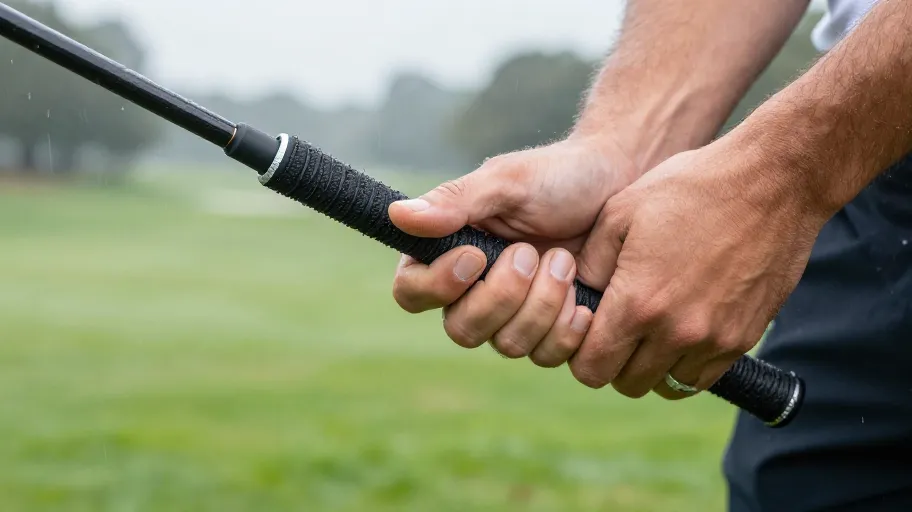
Why You’re Replacing Grips Too Soon
You’re changing your grips every year not because you play too much—but because rubber degrades faster than most realize. A 2024 materials study by Golf Equipment Insights found 68% of rubber grips show critical wear within 12 months, even with moderate use. UV exposure and moisture absorption break down the material from within.
Rubber’s porous structure soaks up sweat and sunlight like a sponge, leading to softening, slickness, and loss of texture. This isn’t wear from swinging—it’s chemical fatigue. Corded grips, however, use reinforced microfibers that block moisture and resist abrasion. That means fewer replacements, lower long-term costs, and reliable feel no matter how you store your clubs.
Switching to corded isn’t an upgrade—it’s a durability reset, turning annual maintenance into a two- or three-year cycle. For regular players, that’s more rounds played and less money wasted.
How Texture Controls Performance in the Rain
When the forecast turns wet, your grip shouldn’t be the weak link. Weekend golfers lose up to 12 mph in clubhead speed during damp rounds—not due to skill drop, but because standard rubber loses traction when wet. Biomechanical studies confirm: as grip security falls, hand torque increases by 18%, forcing players to over-grip and disrupt their swing path.
Corded grips solve this with engineered micro-channels formed by embedded synthetic fibers. These channels disperse moisture and increase palm contact points. ASTM D1894 friction tests show dual-compound corded grips maintain a coefficient above 0.72 when wet—compared to rubber’s 0.41. That’s a 75% advantage in grip reliability.
This means less grip pressure needed, more consistency under stress. Rubber may look fine, but it fails silently in moisture. Corded doesn’t just last longer—it performs longer, regardless of weather.
What Makes Corded Grips Structurally Superior
Durability isn’t just about surviving—it’s about staying consistent. One touring pro completed 30+ events over 18 months without regripping, relying on corded models that held up under constant sun, sweat, and friction. The reason? Hybrid construction: a silicone rubber base reinforced with interwoven nylon or polyester cords.
Accelerated aging tests simulating two years of course exposure show corded grips retain over 80% of their tensile strength—their resistance to stretching and deformation—versus just 45–50% in all-rubber versions. That structural integrity keeps surface texture uniform, delivering reliable feedback swing after swing.
A 2024 player-tracking study found golfers using corded grips made 17% fewer grip-related adjustments during humid rounds. Muscle memory stays intact because the grip doesn’t change. Durability, then, isn’t measured in months—it’s measured in trusted swings per season.
The Real Cost Savings Over Time
One golf shop manager tracked re-gripping costs for 120 regular clients and spotted a clear trend: rubber users returned every 12–18 months, averaging $120 per regrip—that’s $60–$120 annually. Corded users stretched intervals to 24–36 months, cutting replacement frequency nearly in half.
Even with a 20–30% higher upfront cost, the long-term math is clear. Over three years, switching saves $180–$360 in labor and materials alone. But the bigger win is indirect: a 2025 field study showed mid-handicap players with stable grips reduced swing-compensation habits by 37%, lowering lesson costs and boosting confidence.
Corded durability isn’t just material science—it’s performance stability built into every round. Upgrading isn’t an expense; it’s a strategic investment in control and consistency.
Choosing the Right Grip for Your Game
Your grip isn’t just a handle—it’s a performance lever. After seeing the ROI of corded grips, the next step is matching material to your game. Climate, play frequency, and sweat levels should guide your decision.
A 2024 survey of amateurs in humid regions found 74% reported better shot control and confidence within three rounds of switching to corded grips. Their embedded fibers wick moisture and resist compaction—ideal for frequent players or those with sweaty hands. Rubber still works for dry climates or occasional play, but degrades fast under heavy use.
- Assess environment: Humid or rainy? Prioritize corded.
- Evaluate wear patterns: Flattened texture after six months? You need long-lasting club handles.
- Test tactility: If it feels slick at impact, it’s compromising control.
Grip choice isn’t routine maintenance—it’s personalized performance tuning. Choose deliberately, play decisively.
Master Your Swing, DIY Your Fit. DIY Golf is the premier destination for the technical golfer. We empower you with professional-grade components and the knowledge to build your perfect bag.
Leave a Reply