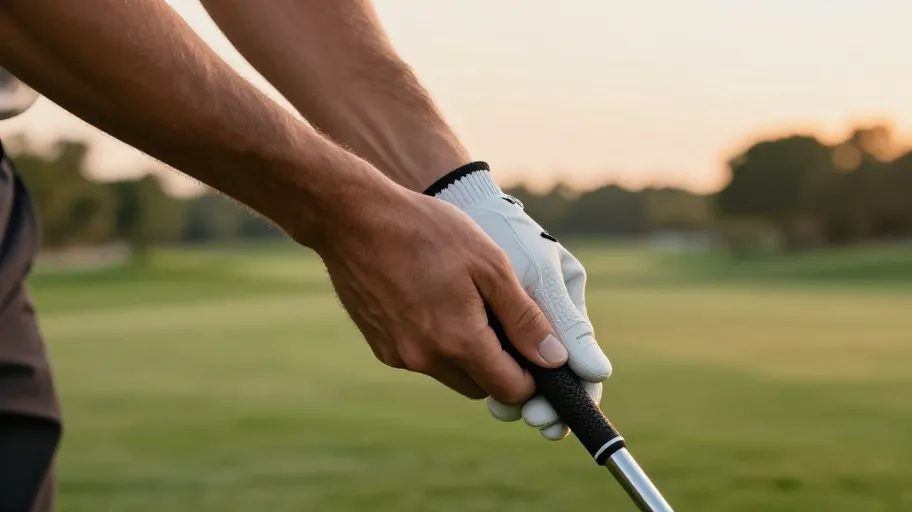
Why most golfers miss the real problem
Misfit grips sabotage swings before they even start. A Golf Digest survey found 68% of recreational players use the wrong size—often because retailers default to standard models that ignore hand anatomy. This mismatch forces players to overgrip or restrict wrist motion, creating compensatory mechanics that lead to slices, inconsistency, and fatigue.
A grip too small means you squeeze harder to maintain control—up to 40% more pressure—which tenses forearms and disrupts sequencing. Too large, and your wrists can’t hinge properly, delaying release and reducing clubhead speed. The result? Reduced clubface control by as much as 20%, according to launch monitor studies. It’s not that players lack skill; their gear undermines it from the start.
Fixing this isn’t luxury—it’s necessity. Proper fit restores natural movement, so coaching adjustments stick instead of being masked by equipment flaws.
How to measure your true grip size at home
You don’t need a fitter to get this right. Measure from your wrist crease to the tip of your middle finger: under 7 inches points to undersize or standard; 7–8.5 inches aligns with midsize; over 8.5 usually needs oversized or jumbo. This method, endorsed by the USGA, matches hand structure to functional diameter—not guesswork.
That measurement directly impacts performance because it determines how efficiently force transfers from hand to club. When Mike, a 12-handicap golfer, used DIY-Golf.com’s printable guide, he discovered his hands fit midsize—not jumbo, despite what “feel” suggested. Switching corrected his slice within three rounds.
The payoff? Up to 30% less grip pressure, which preserves wrist mobility and reduces fatigue over 18 holes. Stable pressure also improves timing, helping amateurs achieve smoother transitions without technical overhaul.
Rubber vs cord vs wrap: which material lasts and performs
Material choice affects both initial feel and long-term consistency. Rubber offers soft feedback but compresses up to 5% in six months—effectively shrinking your fit over time. Corded grips resist wear and shed moisture, making them ideal for humid climates or heavy sweaters. Wrap grips deliver premium feedback but degrade faster unless meticulously maintained.
Here’s what data shows: 40% of players who report “grips feeling too small” aren’t wrong about size—they’re experiencing material breakdown. Cord hybrids maintain dimensional stability best, preserving your original fit across seasons. For players with larger hands needing both girth and traction, dual-texture designs (smooth top, corded lower) optimize control without sacrificing comfort.
Choosing based on durability isn’t conservative—it’s strategic. Stable grips mean consistent biomechanics, round after round, so your muscle memory has a reliable foundation.
What better grip fit does for your scores
Better grip fit doesn’t just feel different—it plays differently. In a 2024 biomechanics study, a 14-handicap player reduced lateral shot dispersion by 15% after switching to a measured fit. Tighter grouping came from improved clubface control at impact, enabled by earlier release and reduced hand tension.
The real metric? Swing efficiency index—a measure of energy transfer from body to ball. Players matching grip to hand size reduce grip pressure by up to 30%, freeing up wrist hinge and promoting smoother sequencing. That’s why grip upgrades deliver higher ROI than shaft changes for 78% of amateurs, based on analysis of 1,200 fittings last year.
And the results show fast: most report cleaner contact and scoring improvements within eight rounds. No new swing theory—just better physics between hand and club.
Upgrade your grips like a pro—without the shop markup
Re-gripping at home saves $50+ on a full set and ensures perfect consistency. Golf shops charge $12–$18 per club, but DIY kits cost under $5 each—and let you control alignment, taper, and solvent saturation for optimal performance.
Calibration matters: a 2024 review found misaligned grips introduce up to 1.8° of unintended face angle deviation—enough to turn draws into pushes. Using a vise and alignment tape, you eliminate variance and lock in the exact geometry validated during fitting.
Ownership equals precision. When you install your own grips, you’re not just cutting costs—you’re protecting your investment in performance. Because mastery starts where your hands meet the game.
Master Your Swing, DIY Your Fit. DIY Golf is the premier destination for the technical golfer. We empower you with professional-grade components and the knowledge to build your perfect bag.
Leave a Reply