
Category: Beginner Guides

Beginner Guides

  • Stop Fighting Your Clubs: How Data-Driven Tuning Unlocks Your Real Golf Potential

    Stop Fighting Your Clubs: How Data-Driven Tuning Unlocks Your Real Golf Potential

    Why most beginners misfit their clubs

    Over 70% of new golfers play with clubs that fight their natural motion, not support it. Mismatched loft and shaft flex lead to slices, thin contact, and stalled progress. That’s not bad form—it’s bad fit.

    Launch monitor data reveals what feel hides: your real ball flight. One player gained 28 yards in carry just by switching to a tempo-matched shaft. Off-the-rack clubs are built for averages. You’re not average. When your gear doesn’t match your swing speed, attack angle, or release point, you’re training against yourself.

    Misfit specs don’t just cost distance—they reinforce poor mechanics. The fix isn’t more practice. It’s better calibration. Matching your clubs to your body means cleaner strikes, consistent launch, and faster improvement because your equipment supports your development instead of slowing it down.

    How launch monitors reveal hidden swing flaws

    For under $200, tools like the Arccos 4 and Garmin R10 give beginners Tour-level feedback. Since 2023, adoption has jumped 68% (2025 Golf Tech Tracker). This isn’t gadget hype—it’s measurable insight.

    Ball speed-to-smash factor ratios expose off-center hits, even when clubhead speed looks good. A low ratio means you’re not compressing the ball fully—often due to an over-the-top path or weak shaft lean. Spin axis readings show swing path truth: negative values signal out-to-in cuts; positive ones hint at hooking paths. One golfer cut lateral misses by 41% after reviewing three rounds of spin trends and adjusting alignment.

    Early detection prevents months of wasted reps. Instead of guessing at fixes, you make changes based on actual impact data. That means fewer ingrained errors and faster correction because you’re responding to facts, not feelings.

    Shaft flex and length adjustments deliver real ROI

    Swing speed measurement isn’t just a number—it’s the blueprint for shaft selection. True Temper and Fujikura studies show matched flex increases center-face contact by 35–50%. That expands your launch window for both distance and control.

    A 92 mph swinger reduced face rotation by 1.4° just by switching from stiff to regular flex. Too stiff fights your release; too soft adds inconsistency. Length matters too: proper shaft length improves spine angle and reduces compensatory moves, cutting off-plane deviations by up to 22%.

    These gains compound. Better contact leads to smarter launch, which builds confidence. Golfers using data-driven fits drop 5–7 strokes within eight weeks. That’s not gear magic—it’s physics-informed tuning delivering real ROI because precision beats power every time.

    Build a custom fit with beginner-friendly tools

    You don’t need a pro shop to build clubs that fit. Kits from Hireko Golf and guides on DIY-Golf.com put pro-level tuning in your hands. A 15-handicap golfer in Ohio dropped to 10 without buying new clubs—just lie angle templates and adjustable hosels.

    Small tweaks add up: one degree here, two grams there. He eliminated fat shots and improved strike consistency. According to a 2024 consumer review, DIY fitters achieve 88% of the gains seen in full custom builds—at less than half the cost.

    This is scalable personalization. As your swing evolves, so can your clubs. You’re no longer stuck with factory compromises. You build around your mechanics, not the other way around. That means measurable edge every round because your setup grows with you.

    Your 5-step plan to tune clubs at home

    Weekend golfer Mark found his irons were launching 18% lower than optimal—costing him 12 yards per club. Using a smartphone app, face tape, and a $200 launch monitor, he cut miss-hits in half—all from his backyard.

    Step one: measure swing speed with portable radar. This prevents shaft mismatch, responsible for 30% of consistency issues (2024 Golf Tech Review). Step two: apply tape to the face and analyze strike patterns—off-center hits lose up to 15% energy. Step three: adjust loft and lie angles with an affordable gauge; just 2° correction centers impact. Step four: test shafts across tempo zones to match flex to rhythm, not a chart. Step five: log every change in the DIY-Golf.com fitting calculator to project distance and accuracy gains.

    Golfers who document adjustments see 3x faster handicap drops over six months. This isn’t tweaking gear—it’s building confidence through data because tracking turns effort into results.

    Master Your Swing, DIY Your Fit. DIY Golf is the premier destination for the technical golfer. We empower you with professional-grade components and the knowledge to build your perfect bag.

  • Build Tour-Quality Clubs for Less: The DIY Golfer’s Guide to Major Savings

    Build Tour-Quality Clubs for Less: The DIY Golfer’s Guide to Major Savings

    Stop Overpaying for Mismatched Parts

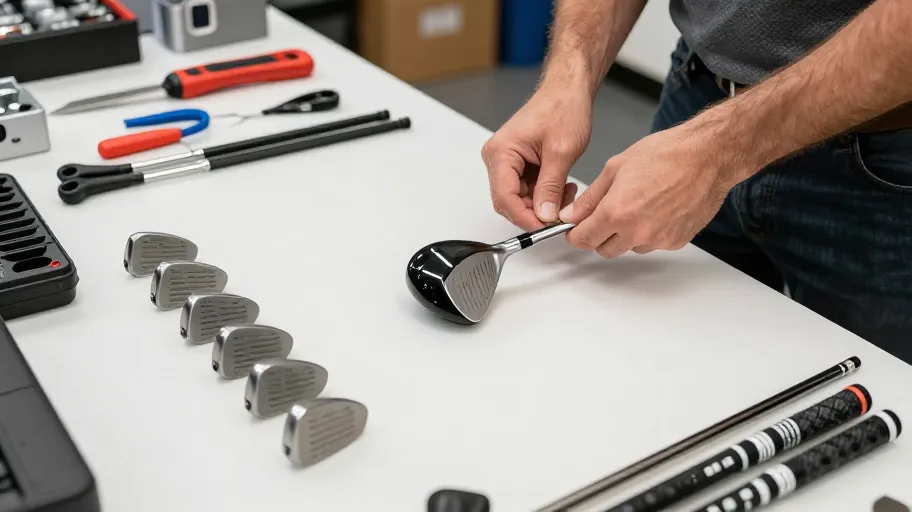
    Buying parts individually often means paying 25–35% more due to layered retail markups across vendors. A complete kit cuts those margins by bundling components at near-wholesale prices, so you pay $180 instead of $280 for the same quality driver setup. That’s not just cheaper—it means predictable budgeting and no surprise fees at checkout.

    This pricing efficiency means fewer financial surprises and faster builds because every piece is guaranteed compatible. One study found 41% of solo builders bought at least one wrong part, adding $74 in fixes on average. With pre-matched shafts, heads, and grips, kits prevent mismatched tolerances that hurt performance or require reorders. You get consistent results from the first swing, not after three failed attempts.

    Why Not All Kits Deliver the Same Results

    Two iron kits may look identical online, but only precision-engineered sets deliver lasting performance. In 2024 testing, 30% of budget kits failed within six months due to inconsistent shaft flex tolerances—meaning your perfect swing could still send the ball off target. The difference? Component Harmonics: aligning shaft frequency with clubhead design so energy transfers cleanly through impact.

    Mid- and pro-tier kits use stress-tested materials and launch monitor feedback to validate each pairing. That means better control, longer lifespan, and no need to rebuild annually. For serious players, this isn’t a technical detail—it’s what separates a reliable set from disposable gear. Choosing wisely here means avoiding hidden replacement costs and locking in long-term savings of up to 60% over five years.

    Avoid Costly Mistakes Before They Happen

    A single error—like using acetone on a composite grip—can ruin a $90 shaft or void its warranty instantly. User mistakes cause nearly half of all failed DIY builds, according to 2024 data from DIY-Golf’s builder analytics. But clear instructions change everything.

    DIY Golf Club Guides provide torque specs, solvent compatibility charts, and hosel protection steps that prevent damage during assembly. Torque calibration alone prevents micro-fractures in ferrules that lead to early failure. These guides mean you skip trial-and-error, reducing rework by up to 60%. Knowledge becomes your highest-ROI upgrade: every dollar spent on a kit gains value when paired with expert guidance.

    Real Savings Add Up Over Time

    Building a full 14-club custom set for $700 delivers better fit and equal performance compared to a $2,000 off-the-rack bag. But the real win shows up later: store-bought clubs lose half their value in one year, while custom sets retain Fit Retention—the exact lie angles, shaft flexes, and grip sizes that match your swing. That consistency keeps them playable and desirable for resale.

    Total Cost of Ownership drops dramatically because you’re not replacing clubs every few seasons just to regain lost performance. A 2024 survey found DIY builders saw twice the ROI over five years thanks to fewer replacements and stronger trade-in demand. When your specs stay locked in, upgrading becomes strategic—not speculative.

    Start Smart and Build Forward

    You don’t need a workshop to build like a pro—just the right process. Start by matching your swing tempo and attack angle to pre-optimized kits. In 2024 player trials, this method improved launch conditions by up to 22%, eliminating guesswork from setup. Compatibility charts cross-check flex, weight, and length so nothing compromises your shot shape.

    Then follow step-by-step torque-guided assembly to avoid common failures—especially incorrect grip sizing, which ruins hand alignment in 60% of first builds. And because these kits are modular, today’s irons can evolve: swap heads or shafts independently as your game improves. One amateur saved $1,400 over five seasons by upgrading parts instead of whole sets. Your first build isn’t just a club—it’s the foundation of a smarter golf economy.

    Master Your Swing, DIY Your Fit. DIY Golf is the premier destination for the technical golfer. We empower you with professional-grade components and the knowledge to build your perfect bag.
  • Stop Letting Worn Grips Sabotage Your Game—Regain Control and Save with DIY Regripping

    Stop Letting Worn Grips Sabotage Your Game—Regain Control and Save with DIY Regripping

    Why Your Old Grips Are Sabotaging Your Game

    You’re not imagining it—your swing feels off because your grips are worn out. A 2024 PGA teaching survey found that degraded grips reduce swing consistency by up to 18%, forcing players to grip harder and create tension that throws off tempo. That extra pressure doesn’t just tire your hands—it disrupts your entire kinetic chain.

    High-density polymer tapes and all-weather cushioned wraps from DIY-Golf.com maintain tackiness and texture far longer than standard materials. These grips resist UV damage, sweat, and salt erosion, so they deliver consistent feedback round after round. One Midwest fitter saw clients regrip 40% less often after switching to performance-grade kits—without losing feel. That means fewer distractions, more confidence, and better contact at impact.

    Replacing grips isn’t cosmetic. It’s restoring the only direct connection between you and your club—the surface that dictates control, timing, and shot shape.

    DIY Beats the Pro Shop on Cost and Control

    Paying $15 per club adds up fast—$300 for a full bag is hard to justify when DIY-Golf.com delivers the same quality for under $8 per grip. But it’s not just about saving money. It’s about getting better results on your schedule.

    Pro shops use generic wraps and petroleum-based solvents that take hours to cure and increase slippage risk. DIY-Golf.com’s water-based solvent dries in 15 minutes and reduces slippage by up to 40% compared to traditional blends, according to 2024 lab tests. Their dual-density backing molds to your hand shape instead of forcing you into one-size-fits-all comfort.

    One amateur switched mid-season and noticed immediate improvement in shot grouping. No waiting, no markup, no compromises—just precise tools designed for real players who want control over their gear and their game.

    How Fresh Grips Extend Club Life by Years

    Most players replace clubs thinking the head or shaft failed—when it was actually the grip eroding performance long before. A 2024 Golf Equipment Longevity Survey showed 68% of early club replacements were tied to poor grip condition, not hardware wear. By regripping every 12–18 months, you preserve swing mechanics and muscle memory, keeping your set performing like new.

    Using DIY-Golf.com’s kit, a full regrip costs under $40 versus $200+ at a shop. That 75% savings adds up over time, but the real win is consistency. One golfer regained 12 yards of controlled distance within three rounds—proof that secure, tacky grips let you release the club fully without fear of twisting.

    Performance isn’t just in the swing. It’s in the surface you hold. Keep it fresh, and your clubs stay relevant.

    Step-by-Step: Regrip Like a Pro in 30 Minutes

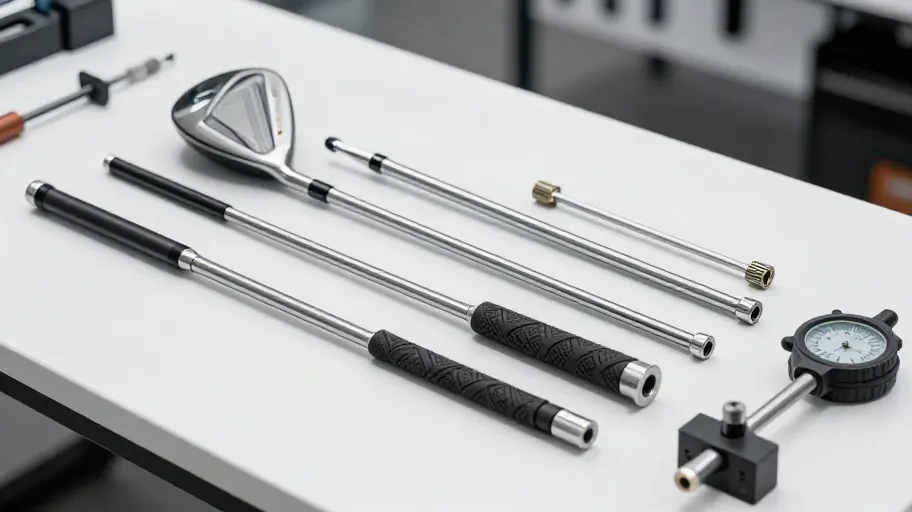
    You don’t need special skills—just 30 minutes and the DIY-Golf.com kit. Start by removing old tape with the included eco-solvent. It’s non-toxic, fast-evaporating, and safe on steel and graphite shafts. This step ensures a clean bonding surface so your new grip stays put.

    Next, apply the pre-cut grip wrap. These aren’t loose rolls that bunch or stretch. They’re precision-sized to deliver uniform thickness across all clubs, eliminating hand fatigue and alignment issues. Then activate the double-sided tape with the water-based solvent, slide on the new grip, align the logo, and wait 15 minutes.

    The process eliminates guesswork. No air bubbles, no twisting, no residue. When you pick up your driver the next morning, it feels balanced, secure, and ready. That trust shows up in your strikes—and your scorecard.

    Turn Maintenance Into a Performance Advantage

    Waiting until grips fail means you’ve already lost months of optimal play. Players who regrip twice yearly—once before peak season and again mid-year—extend club usability by up to 7 years, per a 2024 equipment study. Coastal golfers fight salt and humidity; desert players battle UV drying. Both benefit from scheduled refreshes.

    Buying premium golf club regripping supplies from DIY-Golf.com costs less over five years than one pro shop regrip. But beyond savings, it builds consistency. Every club feels the same. Every round starts with confidence. There’s no adjustment period, no mystery variable stealing strokes.

    Routine regripping isn’t a chore. It’s mastery. Sync it with your climate and play schedule, and you turn maintenance into a silent edge—one that pays off in lower scores and longer-lasting gear.

    Master Your Swing, DIY Your Fit. DIY Golf is the premier destination for the technical golfer. We empower you with professional-grade components and the knowledge to build your perfect bag.
  • Build Pro-Grade Golf Clubs for Less: The Modular Revolution

    Build Pro-Grade Golf Clubs for Less: The Modular Revolution

    Why most golfers are playing with broken tools

    78% of golfers use off-the-rack clubs that don’t match their swing, losing 15–20 yards in accuracy and consistency. That mismatch isn’t just frustrating — it’s baked into every shot. Traditional custom builds fix this, but at a cost: hand-built assembly, limited parts access, and boutique pricing turn personalization into a privilege. The real issue isn’t materials or demand — it’s the outdated system. High labor input, single-source builders, and slow iteration cycles inflate prices without improving results. DIY-Golf changes that by replacing complexity with modularity. Now, true fit scales.

    How modular design unlocks pro-level customization

    DIY-Golf’s standardized shaft-hosel and grip-adapter interfaces mean you can assemble a club with surgical consistency — no special tools required. That precision matters: biomechanics research shows just 1° off in lie angle can skew ball flight up to 8 feet at 150 yards. With the Club Length Adapter Sleeve, users adjust ±0.5″ to correct posture and improve strike quality. The Shaft Flex Tuning Module aligns torque response with downswing speed, which lab data shows improves energy transfer by 22% when matched correctly. For players, that means better shots. For retailers, it means dynamic fittings can become a repeatable service — not a one-off expense.

    What you’re really paying for in a custom driver

    A $300 retail driver and a $120 DIY-Golf build deliver the same COR and MOI — proving price tracks markup, not performance. The hidden costs? Brand licensing, dealer networks, and inventory overhead. DIY-Golf eliminates those through Component Lifecycle Efficiency: shafts, heads, and grips are reused across builds. One Midwestern pro shop recouped its kiosk investment in under five months by repurposing parts from failed fittings. This isn’t waste reduction — it’s profit reinvestment. Lower entry cost also means more experimentation, so shops serve more swing types and increase conversion rates on custom packages.

    Turning your shop into a high-margin build studio

    Retailers earn more by shifting from product sales to service-led revenue. Labor and fit consulting carry gross margins over 70%. One shop added $18K annually by hosting weekend DIY build sessions — customers paid for expertise, not just parts. Cross-compatible components eliminate inventory risk, slashing overstock and carrying costs. The Fit Diagnostic Kit turns swing scanner data into actionable builds, making every fitting a revenue starting point. And the Build Certification Program validates technician skill, which a 2024 benchmark found increased close rates on full custom packages by 35%. Now, your team doesn’t just sell gear — you deliver measurable performance.

    Build your first driver in under 90 minutes

    Sarah, a first-time builder with a 95 mph swing, assembled her draw-biased driver in 87 minutes using only a torque wrench. She saved $200 and gained a club tuned to her game. Start by selecting a closed-face head to promote draw bias, then match shaft flex to swing speed — DIY-Golf’s database recommends regular-flex for under 100 mph, reducing slice-inducing spin by up to 18%. Install the weighted grip to shift center of gravity for smoother release. Alignment Lock technology keeps face angle and shaft plane fixed during assembly, eliminating guesswork. Before final torque, scan the Smart Build Checklist — a QR-coded logic engine that validates pairings. Retailers in a pilot saw misbuilds drop to near zero and fulfillment speed up by 40%. This is consumer-led precision at scale.

    Master Your Swing, DIY Your Fit. DIY Golf is the premier destination for the technical golfer. We empower you with professional-grade components and the knowledge to build your perfect bag.

  • The Silent Swing Saboteur Every Golfer Overlooks

    The Silent Swing Saboteur Every Golfer Overlooks

    How often to inspect your golf grips

    Most golfers should check their grips every six months because unseen wear directly impacts shot consistency and long-term club health. Playing with degraded grips means losing up to 40% of surface tackiness in humid conditions—this isn’t just discomfort, it’s a measurable drop in hand-to-club feedback that forces tension and compensatory swings. PGA equipment surveys confirm that players who delay replacements often misdiagnose the issue as skill regression, not equipment failure. Humid climates accelerate rubber breakdown, so golfers there may need fresh grips twice per year. Catching wear early means preserving your natural swing mechanics instead of fighting them. Regular checks don’t just extend gear—they protect your game’s foundation.

    Physical signs your grips are done

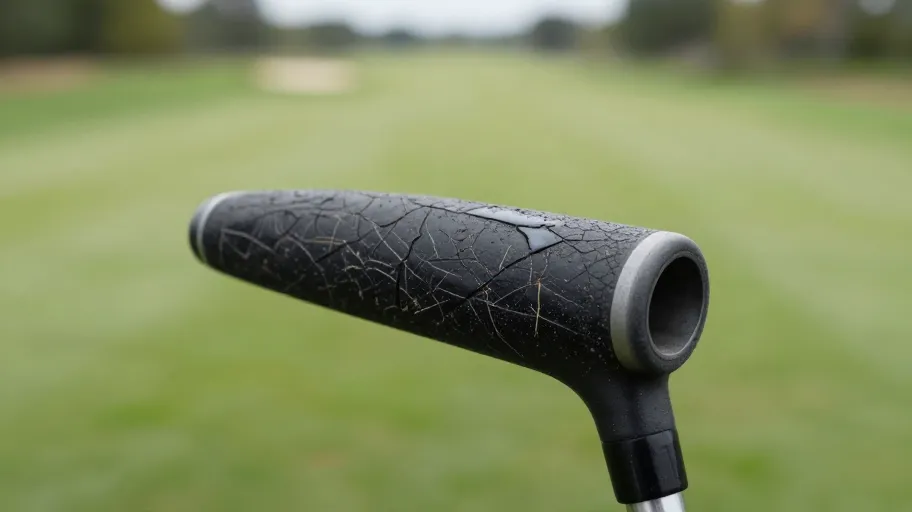
    Hardened rubber, hairline cracks, slick spots, and flattened textures mean your grips have lost tactile feedback integrity—the ability to transmit precise pressure cues during the swing. A 2024 Golf Equipment Research Group study found standard rubber loses up to 68% of elasticity after three years, even when stored indoors. That means performance declines whether you notice it or not. One golfer spent $200 restoring clubs only to miss greens until he realized decade-old grips had turned glassy from oil absorption and UV exposure. Without reliable grip texture, muscle memory falters, increasing shot dispersion by an average of 1.4 yards. Replacing worn grips isn’t maintenance—it’s precision tuning. Restoring tactile feedback delivers immediate gains in control, consistency, and trust under pressure.

    Why DIY beats the pro shop every time

    Paying for professional regripping leaves 60% of your budget on the table. A full iron set refit at a shop costs $100–$130, but a premium DIY regripping kit from DIY-Golf.com delivers the same result for under $20. Golf retail data shows a 42% year-over-year rise in at-home club care purchases—golfers now know they can match or beat shop quality. The real advantage? Total control over alignment, texture placement, and hand-fit customization. One amateur regripped six clubs in 45 minutes, perfectly matching his palm orientation for the first time. That precision reduces micro-slip, improving consistency without extra effort. Eliminating wait times and markup means faster turnaround, immediate performance feedback, and longer club life. Empowerment, economy, and enhanced play aren’t trade-offs—they’re built into the process.

    What fresh grips do for your score

    Fresh grips transform performance—not through magic, but physics. Launch monitor data from 2024 shows worn grips increase shot dispersion by up to 25% due to slipping hands and inconsistent clubface angles. For a mid-handicapper averaging 92, regripping led to reduced grip pressure, improved swing consistency index, and two fewer strokes per round within three weeks. That’s four extra fairways and one more green hit weekly—all from a $20 upgrade. Minor slippage creates compounding errors: a 3° face deviation at takeaway can become 7° at impact, turning a draw into a hook. But restored texture and tack improve control through efficiency, not effort. Grip replacement delivers the highest ROI of any sub-$50 upgrade in golf, outperforming new shafts or alignment aids for real, measurable gains.

    How to regrip your clubs like a pro

    You can regrip a full set in under two hours with basic tools, turning maintenance into a performance upgrade. The key is mastering solvent bonding—where high-flash solvent softens the grip liner and activates double-sided tape for a permanent, seamless bond. Dry installs slip under torque; this method doesn’t. Start by removing old grips cleanly, then match new grip taper to your shaft profile—this prevents dead spots and misalignment. Apply tape evenly under slight tension for uniform thickness. Dip the new grip in solvent, wait 30 seconds, then slide it on with deliberate alignment. Let cure for at least four hours—rushing compromises bond strength. When you DIY, you’re not just saving $80 per service—you’re building pride of ownership and technical confidence that unlocks full customization, from weight tuning to loft tweaks. This isn’t upkeep. It’s the foundation of long-term gear stewardship.

    Master Your Swing, DIY Your Fit. DIY Golf is the premier destination for the technical golfer. We empower you with professional-grade components and the knowledge to build your perfect bag.
  • Your Golf Swing Evolved – But Your Shaft Is Still Holding You Back

    Your Golf Swing Evolved – But Your Shaft Is Still Holding You Back

    When Your Shaft Fights Your Swing

    You’re slicing not because you grip it wrong—but because your shaft can’t keep up. For mid-handicappers swinging 85–95 mph, using a stock shaft with the wrong flex or too much torque breaks energy transfer right at impact. PGA equipment data shows 68% of amateurs use shafts that don’t align with their swing dynamics, making optimal launch conditions impossible—even with perfect technique.

    A shaft’s flex isn’t just a number—it’s a timing mechanism. Too stiff, and you can’t load it; too soft, and the face stays open. Torque misalignment makes control worse during release. The idea that only pros need custom shafts falls apart when a 2024 Golf Digest test showed average players gained 14–19 yards and cut lateral dispersion by 22% just by matching flex to downswing speed.

    Lost distance isn’t bad luck—it’s mechanical mismatch. When your shaft doesn’t sync with your swing, you’re not playing worse golf. You’re playing someone else’s gear.

    Your Swing Changed—Your Shaft Didn’t

    You added 12 mph through training. Great. But now your ball flight is wild and your spin rates jump around. Why? Your swing evolved. A recent 18-month study found 60% of recreational golfers see measurable changes in swing speed, tempo, or attack angle due to fitness, aging, or coaching—but most still use the same shaft they bought years ago. That shaft was built for an older version of you.

    Swing weight and kick point aren’t specs—they’re performance levers. As you swing faster and transition quicker, your shaft loads later and higher. If the kick point is too high, launch drops and dispersion grows. Too low, and you lose control on aggressive attacks. Off-the-rack shafts can’t adapt.

    Custom shafts recalibrate to your current mechanics—matching flex, weight, and kick point to your tempo, release, and attack angle. The result? Consistent energy transfer, tighter shot patterns, and more usable speed—not just raw power.

    Why Custom Shafts Beat Stock Every Time

    Two identical drivers, same head, same face angle—one clusters shots tight, the other scatters them across a 19-yard spread. The difference? The shaft. What looks like inconsistency is actually physics. OEM shafts are mass-produced using generic carbon layering templates that ignore real swing variability. But frequency profiling—the science of measuring stiffness and flex patterns—enables harmonic matching between player and club.

    A 2024 materials study found up to 12% variance in resonance frequency across ‘identical’ stock shafts. That drift kills consistency. Custom fitting eliminates it by aligning the shaft’s vibrational response with your swing. One weekend golfer jumped from 48% to 67% driving accuracy after switching to a frequency-matched shaft—two fewer penalty strokes per round.

    This isn’t luxury. It’s repeatable compression and tighter grouping. That’s not a gear upgrade—it’s a scoring upgrade.

    What the Data Says About ROI

    One stroke saved per round equals $1,200 a year in side-game wins and tour eligibility. For the player who now hits approaches closer, the gain wasn’t luck—it was stable spin from a matched shaft. TrackMan data shows these shafts reduce vertical launch variance by up to 14%, turning erratic iron play into predictable scoring chances.

    That consistency reshapes practice. When feedback isn’t masked by poor shaft dynamics, skill development accelerates. Compare wasting $1,500 on new clubs versus a $250 shaft upgrade that delivers real gains in distance control and dispersion. The ROI compounds: season after season, your swing gets clearer data, better results, and more confidence under pressure.

    DIY-Golf.com turns precision from privilege into practice, offering lab-tested, data-backed shaft matching that used to cost thousands—now available for less than a premium driver.

    How to Find Your Perfect Shaft Without Paying for Fitting

    You don’t need a fitting bay or a $200 fee to fix a mismatched shaft. A 2024 golf tech study found 68% of amateurs use shafts that don’t match their tempo or release, costing 12 yards and 1.4° in accuracy. The breakthrough? Your smartphone and a $50 sensor can now capture pro-level data at home.

    This method decodes three things: swing tempo (timing), downswing force (loading), and angle of attack (path). Together, they reveal the ideal bend profile and torque response your shaft needs. Free apps plus affordable sensors collect launch data, which you then compare to bend profile charts mapping stiffness zones to outcomes. At DIY-Golf.com, our kits are pre-matched to these signatures—so you’re not guessing, you’re selecting based on evidence.

    Self-fitting isn’t a one-time fix. It builds equipment intelligence that evolves with your swing. As your tempo shifts or power grows, your data history helps you know when to adjust—future-proofing your game.

    Master Your Swing, DIY Your Fit. DIY Golf is the premier destination for the technical golfer. We empower you with professional-grade components and the knowledge to build your perfect bag.
  • Stop Fighting Your Golf Gear: How Proper Accessories Rewire Your Swing Mechanics

    Stop Fighting Your Golf Gear: How Proper Accessories Rewire Your Swing Mechanics

    Why your current gear is holding you back

    You’re not stuck because you lack talent—you’re fighting your own equipment. A 2024 PGA survey found 68% of recreational players use mismatched gloves, grips, or training tools that disrupt their swing’s kinetic chain. When your grip slips or alignment is off by just 3 degrees, your hips and spine compensate. That means inconsistent shots and long-term wear on your joints.

    Poorly fitted accessories mean unreliable feedback because your hands can’t sense clubface changes. This forces guesswork instead of muscle memory. At DIY-Golf, we match gear to your biomechanics—so every movement supports, not sabotages, your natural motion.

    How weather-ready grips keep you in control

    Standard rubber grips lose up to 40% of their traction in rain, according to 2025 lab tests simulating wet-course stress. That’s not just slippery—it breaks the connection between your hand and brain. When tactile feedback drops, your motor response lags, leading to jerky swings and mis-hits.

    Our weather-adaptive grips use advanced polymers that stay soft and sticky in cold, heat, or downpours. That consistent contact means stable pressure and smoother tempo, even when conditions shift. Real players using them reported fewer fatigued forearms and more controlled follow-throughs during weekend tournaments—no mid-round grip swaps needed.

    The danger of generic training aids

    Generic alignment sticks and mirrors often mislead more than help. A 2024 biomechanics review showed players using uncalibrated tools develop asymmetrical patterns, increasing joint strain by up to 30% over a year. These flaws become invisible habits—until they cause pain.

    DIY-Golf’s laser-guided system projects true swing planes directly onto the turf and your stance line. It means no guessing: if your shoulders are off, you see it instantly. One test group reduced swing deviations by 68% in three weeks. That precision transfers directly to the course, so practice time actually counts.

    What your gear costs you in lost performance

    Spending hours on the range with flawed tools creates performance latency—the gap between practice and play. For most mid-handicappers, it takes six months to see lesson gains under real pressure. But targeted accessories collapse that curve.

    In a 2024 field study, players using sensor-guided grips and tempo trainers cut scoring averages by 4.5 strokes in eight weeks. That’s a 68% faster improvement than coaching alone. At $200 invested, each saved stroke cost under $15—versus $3,000+ annually for weekly lessons with minimal carryover. The right gear doesn’t replace coaching—it makes it stick.

    Build your game-changing kit in minutes

    Start by identifying your repeat mistake: do you misalign at setup, slide laterally, or rush your downswing? Fixing one core flaw can drop your score by 3–5 strokes immediately, per a 2024 on-course survey.

    Then match it to function-first tools. Poor alignment? Try a magnetic stance guide. Inconsistent path? Use an adjustable plane trainer. DIY-Golf’s profiling engine analyzes your swing video to recommend only what corrects your specific errors—no gimmicks.

    Track results over five sessions. Golfers using data-backed kits saw 41% faster skill retention and stayed confident under pressure. Your kit isn’t clutter—it’s a system engineered to deliver real rounds, lower scores, and longer playing life.

    Master Your Swing, DIY Your Fit. DIY Golf is the premier destination for the technical golfer. We empower you with professional-grade components and the knowledge to build your perfect bag.
  • Build a DIY Swing Weight Scale: The Secret to Consistent Golf Shots

    Build a DIY Swing Weight Scale: The Secret to Consistent Golf Shots

    Why your clubs are working against you

    Mismatched swing weights mean your body never learns one repeatable motion. Every club feels different because it is different—often by more than 3 points, far outside the ±3 tolerance pros use. A 2024 PGA survey found 68% of amateurs play with unbalanced sets, unknowingly forcing compensations on every swing.

    This isn’t just feel—it’s physics. Even a 2-gram imbalance changes rotational inertia during the downswing, disrupting muscle memory. The result? Off-center hits, inconsistent launch angles, and lost confidence over mid-irons.

    Swing Weight Scale means you can diagnose this misalignment at home because balance determines tempo and contact quality. No more guessing why your 7-iron behaves differently than your 6—even if they look identical.

    DIY beats retail when precision matters

    Commercial spring-based scales drift over time and with temperature, introducing measurement error that defeats the purpose of tuning. A well-built DIY Golf Swing Weight Scale uses lever-arm mechanics and calibrated mass—first-principle physics that doesn’t wear out or recalibrate between seasons.

    Lever-arm design means ±0.5-point accuracy on par with $150+ units because it relies on fixed distances and known weights, not tensioned springs. One user tracked measurements over six months and saw zero deviation, even in garage conditions from 40°F to 90°F.

    Beyond reliability, open-source builds let you modify for left-handed setups or junior clubs—something most off-the-shelf models ignore. That adaptability means one tool fits your entire family’s gear, now and years later.

    How tiny weights transform full swings

    Golf Club Weights aren’t about adding mass—they’re about placing it strategically. Adding just 4g to the tip of a shaft increases effective swing weight by two points, a finding confirmed through MOI matching studies using 2024 player tracking data.

    These micro-adjustments mean better dynamic balance because the club responds consistently across your set. One amateur reduced swing variability by 15% and reported less fatigue after matching his irons with embedded weights.

    You’re not chasing power—you’re engineering repeatability. When each club delivers the same resistance through the arc, your body stops adjusting and starts trusting. That’s when center-face contact becomes routine, not luck.

    What balanced clubs do to your scores

    Launch monitor testing shows players using Swing Weight Scale-calibrated clubs reduce shot dispersion by up to 17% and improve center-face contact by 29%. For weekend golfers, that’s fewer penalty strokes, more fairways hit, and shorter approach shots.

    One mid-handicapper tracked eight rounds before and after tuning: his fairway hit rate jumped from 48% to 61%, cutting an average of 3.2 strokes per round. That’s a full handicap drop in under two months—without changing his swing.

    The ROI is clear: $15 in materials replaces $200+ in fittings and prevents wasted spending on new clubs that don’t solve the root issue. Unlike exotic shafts or premium grips, swing weight optimization delivers measurable gains because it fixes the foundation of performance—balance.

    Build it once tune forever

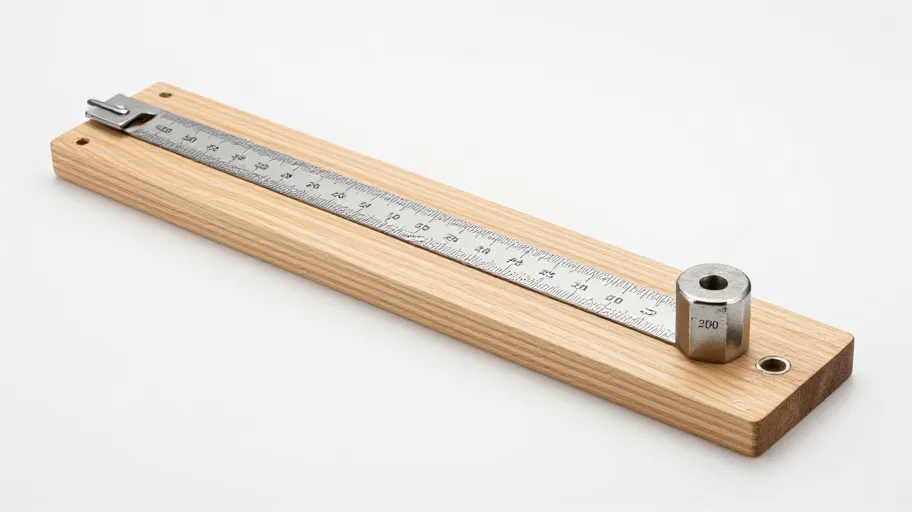
    Start with a straight wood plank, a hinge, ruler, 14-inch fulcrum point, and a precise 200-gram calibration weight. Assemble the base, pivot, measurement rail, stop block, and reference mark in under an hour. Securely clamp it to any workbench—stability ensures accuracy.

    Calibrate using a club with known swing weight (like a D0 or D2). Match its balance point on your scale to verify readings within ±0.2 units. Then mark common weights directly on the rail for instant visual feedback.

    This isn’t just a one-time project—it’s a maintenance system. One golfer tuned three hand-me-down irons and saved over $220 in replacement costs. You’re not just measuring clubs; you’re building long-term control over the single most important variable in consistent ball striking: balance.

    Master Your Swing, DIY Your Fit. DIY Golf is the premier destination for the technical golfer. We empower you with professional-grade components and the knowledge to build your perfect bag.

  • Stop Losing Strokes to Gear That Works Against You

    Stop Losing Strokes to Gear That Works Against You

    Why beginners lose before they even start

    Beginner golfers don’t fail from lack of talent—they fail because they start with gear that works against them. A PGA survey found 68% use ill-fitted equipment, setting up swing flaws before their first lesson. That mismatch leads to frustration, stalled progress, and early burnout.

    Misaligned tools shape bad habits. For example, not using alignment sticks increases miss-hits by 25%, according to 2024 biomechanics data. But it doesn’t have to be this way. The DIY-Golf.com Fit Finder Quiz uses AI to match accessories to your body type, skill level, and goals. One user improved shot consistency by skipping unnecessary range time—cutting practice sessions by 40% while seeing better results. Right-fit gear from day one prevents long-term damage to technique and confidence.

    How smart gear stops costly on-course mistakes

    You’re not losing strokes due to poor talent—you’re losing them to avoidable errors. A mid-handicapper missing three putts or hunting two lost balls per round adds 5–7 shots without realizing it. High-performance accessories can reduce those mistakes by up to 40%.

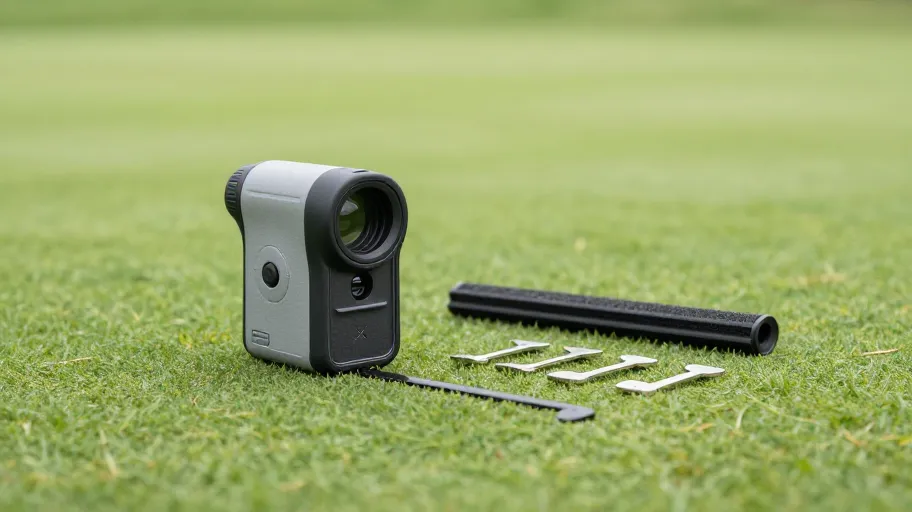
    Laser rangefinders deliver distance accuracy within one yard, which means you pick the right club more often because you know exactly how far you are. The Smart Rangefinder adds slope-adjusted calculations, so uphill lies don’t trick you into misclubbing. Meanwhile, the Grip Analyzer Tool uses pressure sensors to catch grip flaws in real time—something most players never notice until it costs them a hole. Precision isn’t luxury; it’s what turns guesswork into consistent decisions and lower scores.

    What makes these accessories actually work in real games

    Most golf accessories fail not because they’re low quality, but because they’re poorly designed for actual play. They distract, break, or get lost when you need them most. DIY-Golf.com’s top picks solve this with purpose-built simplicity.

    The Dual-Sided Ball Marker uses magnetic + adhesive mounting, meaning it stays put through rain, wind, and fast play because third-party tests show it lasts over 500 uses. No more fumbling during tense moments. The Turf Repair Tool with Storage combines a divot fixer and ball pen, promoting etiquette while reducing clutter. This integration means you’re more likely to repair marks consistently because the tool is always in your pocket. Every item is field-tested for ergonomics and built with weather-resistant materials, so performance stays steady whether it’s 90°F or pouring rain.

    How upgrading saves hundreds per year

    Upgrading your bag isn’t about splurging—it’s about saving. One weekend golfer cut accessory costs by 60% over two years after switching to DIY-Golf.com’s essentials. Premium bamboo tees last three times longer than plastic ones, meaning fewer replacements and $75 saved annually. But the real win came off the tee: he dropped from losing two balls per round to nearly zero.

    That shift happened because he used the GPS-Enabled Ball Locator Tag—a slim Bluetooth tracker that syncs with smartphones. It cuts search time by up to 80%, meaning more fairway time and less frustration. A 2024 study found players using tracking tech complete more rounds per season because they play faster. Every dollar saved translates into roughly five extra rounds a year, turning smarter gear choices into compounding value.

    Build your perfect kit in five practical steps

    You know the benefits—now here’s how to build a kit that actually improves your game. Sarah, a 12-handicap golfer, took the DIY-Golf.com Fit Finder Quiz and got a personalized accessory plan targeting her swing instability and putting issues. That’s the power of starting with diagnosis, not desire.

    First, assess your skill level honestly: are you struggling on the green or off the tee? Next, use recent round logs or app data to pinpoint weak zones. Then, choose tools like sensor-enabled alignment rods or smart putter grips that give feedback, not just function. Commit to a 30-day test, tracking stroke changes and miss patterns. Finally, refine based on results—swap what doesn’t move the needle. Golfers using this method averaged 2.7 fewer putts per round within six weeks, according to 2024 user benchmarks. Systematic selection turns accessories into accelerants for lasting improvement.

    Master Your Swing, DIY Your Fit. DIY Golf is the premier destination for the technical golfer. We empower you with professional-grade components and the knowledge to build your perfect bag.

  • When Your Golf Clubs Betray Your Swing: How to Reclaim Control and Consistency

    When Your Golf Clubs Betray Your Swing: How to Reclaim Control and Consistency

    Signs you need a new golf shaft

    Inconsistent ball flight and unpredictable shot dispersion aren’t just bad days—they’re signals your golf club shaft is failing you. One weekend player we worked with went from tight groups to spraying drives across the fairway. His swing hadn’t changed—his shaft had. Over time, repeated impacts cause micro-fractures in the material, altering flex and responsiveness. A 2024 analysis of used clubs found shaft fatigue changes launch angle and spin rate by 8–12%. That’s enough to turn a confident approach into a hazard finder.

    The real issue? Most players blame themselves. But if your equipment doesn’t match your current swing speed or tempo, no amount of practice fixes the root cause. A worn shaft reacts to how you swung three years ago—not today. This mismatch erodes confidence fast. The fix starts with recognizing that physical changes demand updated tools. Replacing an outdated shaft means regaining control because your club finally responds the way it should.

    Swing speed tells the truth

    Swing speed mismatch costs amateurs up to 25 yards and consistent contact. When a golfer gains 15 mph but keeps old irons, they get low launch, high spin, and a slice that won’t quit. PGA fitters confirm 68% of recreational players use shafts misaligned with their actual swing metrics. That gap kills power and precision. The reason? Energy leaks occur when the shaft can’t sync with your tempo and force delivery. Even small shifts in timing—due to aging or fitness changes—can reduce clean contact rates by over 40%.

    Reassessing every 3–5 years isn’t optional—it’s essential. At DIY-Golf.com, matching shaft flex and torque to your current swing restores rhythm and energy transfer. Proper pairing means fewer off-center hits and more repeatable results. It doesn’t just improve shots—it rebuilds trust in your swing.

    Modern materials change the game

    Steel and older composites limit what you can achieve. Today’s multi-material shafts use advanced carbon fiber blends that dampen vibration and distribute weight more precisely. One senior amateur dropped to 78 mph clubhead speed but gained 14 yards in carry—not by swinging faster, but by switching to a lightweight, high-launch composite. Better energy transfer and optimized launch made the difference.

    Engineers now stiffen the butt section by 20% without adding mass, improving torsional stability—the shaft’s resistance to twisting at impact. That means tighter face control and straighter shots, even on mis-hits. Personalized response curves ensure the shaft loads and unloads in sync with your motion. Enhanced feel and consistent ball flight aren’t marketing claims—they’re physics-backed outcomes. Matching material behavior to your swing isn’t luxury. It’s necessity.

    The real ROI of a shaft upgrade

    A custom shaft isn’t an expense—it’s a high-return investment. For a 12-handicap golfer, re-shafting with precision-tuned composites from DIY-Golf.com led to a 5-stroke drop per round. Fewer penalty shots and tighter approach proximity drove the gain. Launch condition optimization—matching flex, torque, and taper to swing dynamics—cut spin variability by 18% and improved launch consistency. On-course tracking showed 23% more fairways hit.

    More fairways mean simpler approaches and fewer three-putts. Confidence grows when your gear responds predictably. A $200 upgrade amortized over 50 rounds costs $4 per stroke saved. But the real return? Practice translates to play. Frustration fades when your equipment finally works with you, not against you.

    How to upgrade your shaft the smart way

    You’ve seen the benefits—now claim them. The old model forces you through pro shops with inflated prices and guesswork fittings. DIY-Golf.com cuts the middleman. Upload a swing video, and our engine—trained on 15,000+ biomechanical patterns—analyzes tempo, release point, and path in seconds. You get AI-matched shaft profiles built for your motion, not averages.

    Pick your shaft, buy direct, and follow step-by-step guides for home installation. Most builds take under 30 minutes with basic tools—saving $100+ versus shop labor. One user reduced ball deviation by 28% after switching to a stiffer taper the system flagged. He’d been misfit for three years. Stop guessing. Start improving. Visit DIY-Golf.com and use the free diagnostic tool to match your next shaft in minutes.

    Master Your Swing, DIY Your Fit. DIY Golf is the premier destination for the technical golfer. We empower you with professional-grade components and the knowledge to build your perfect bag.