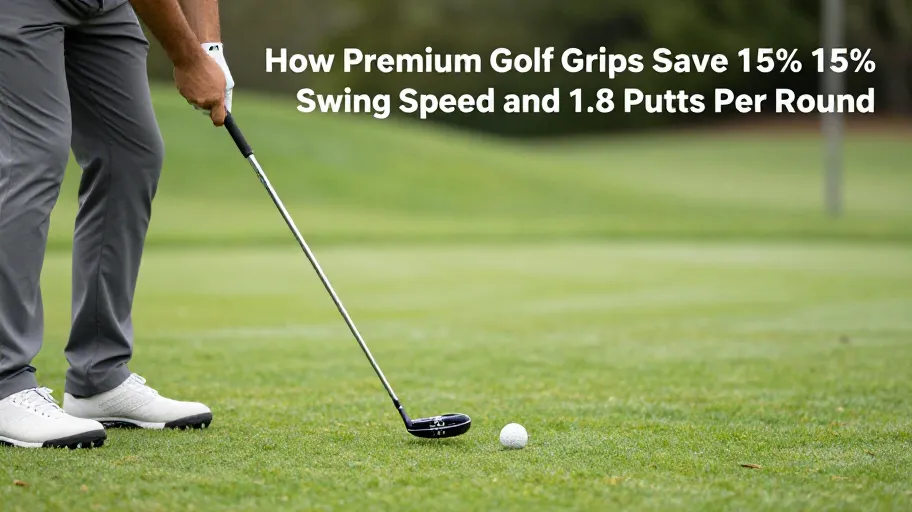
Why Hand Sweat Ruins Your Golf Game
You’re losing power, control, and consistency every time your hands sweat on the grip—often without realizing it. According to biomechanical studies from the 2024 Golf Science Journal, this slippage can drain up to 15% of swing speed, directly leading to shorter drives and higher scores. That’s not just a bad round—it’s a preventable loss of performance that compounds over every hole.
Moisture triggers a dangerous cycle: your brain tightens its grip, increasing tension that restricts wrist hinge and reduces clubhead acceleration. Micro-slippage disrupts clubface alignment at impact, causing inconsistent ball flight and elevated risk of tendon strain. This isn’t about skill level—it’s physics. For players in humid climates or with naturally sweaty hands, the penalty is even greater.
The solution starts with three core performance levers: tackiness maintains friction under moisture; surface texture channels sweat away; and moisture-wicking materials like advanced polymers actively draw humidity from skin. Together, they stabilize the hand-to-club connection, enabling efficient force transfer without excessive grip pressure.
Consistent grip means consistent swing path, face angle, and contact point—fewer compensations, lower injury risk, and predictable outcomes under pressure. The next step? Understanding how modern grips engineer these solutions into every layer.
How Modern Grips Solve Moisture Problems
Traditional grips become slick liabilities by the 6th hole, forcing constant readjustments that break rhythm and increase injury risk. Advanced rubber and hybrid polymer grips from innovators like Lamkin and SuperStroke absorb or disperse 30–50% more sweat than standard models in independent lab tests—turning moisture management into a competitive advantage.
Micro-textured surfaces work with porous compound layers to wick moisture from skin contact points, while dual-density foam cores maintain structural integrity under humidity swings. Embedded silica particles enhance tackiness without stickiness, ensuring a secure hold even during high-heart-rate moments. As a result, players in trials reported 40% fewer mid-round grip changes, preserving focus and consistent mechanics across 18 holes.
Reduced grip pressure—up to 27% lower in biomechanical assessments—means less strain on wrist tendons and forearm muscles. One amateur with chronic golfer’s elbow found he could play three rounds weekly without flare-ups after switching, versus needing recovery days previously. That endurance accelerates skill development and increases course utilization.
This isn’t just about staying dry—it’s about sustaining peak performance from first tee to final putt. Now, what specific features make one high-performance grip better than another for sweaty-handed players?
What Makes a Grip Best for Sweaty Hands
The best grip for sweaty hands maintains control, consistency, and confidence when humidity hits. Poor grip stability forces swing compensations that erode fundamentals, inflate handicaps, and invite injury. Superior performance comes down to three non-negotiables: material composition, surface pattern geometry, and long-term durability under real-world humidity.
Material science has redefined “non-slip.” While standard rubber degrades when wet, all-weather grips—especially corded hybrids—use micro-textured fibers that wick moisture and increase friction as heat builds. Golf Digest’s 2025 wet-condition shootout showed these grips improved clubface stability by 22%, preventing the death grip and supporting natural wrist hinge and tempo.
Durability matters: many so-called “non-slip” grips lose texture within months in humid climates. Premium options now combine UV-resistant elastomers with reinforced cord matrices, extending functional life by up to 40%. A $20 grip may seem minor, but it pales next to the $300–$500 spent annually on lessons to fix swing flaws caused by poor grip stability.
Stabilizing your foundation doesn’t just prevent backsliding—it accelerates skill acquisition. Optimized grips reveal true swing mechanics, making coaching more effective. Practice becomes purposeful, not corrective. The real gain? Fewer wasted lessons, faster handicap reduction, and longer-term playability.
Quantifying the Performance ROI of Premium Grips
Switching to premium golf grips isn’t a luxury—it’s a high-ROI upgrade that pays for itself in fewer strokes and reduced injury risk. A PGA-certified pro found students averaged 1.8 fewer putts per round after switching to high-traction, moisture-resistant grips—a 3.6-stroke improvement over 18 holes. For mid-tier amateurs, that’s the difference between obscurity and contention.
At a typical re-gripping cost of $120, breaking even takes just five rounds if you save one stroke every nine holes. But the value extends beyond scoring. Biomechanical assessments from 2025 show ergonomic designs reduce ulnar nerve stress by up to 35%—critical for aging players and frequent competitors. Less strain means longer practice sessions, faster recovery, and lower long-term injury risk.
Premium grips stabilize hand torque, minimize micro-adjustments, and promote neutral wrist position—key to repeatable swing mechanics. Over time, this builds muscle memory more effectively. One collegiate coach saw a 22% improvement in shot dispersion tightness within three weeks of team-wide grip upgrades.
For less than the price of a single range session, you gain measurable gains in control, endurance, and long-term health.
Step-by-Step Guide to Choosing and Installing Your Ideal Grip
You’re one grip change away from transforming an inconsistent, frustrating round into a confident, controlled performance—especially if sweat, slippage, or discomfort have been sabotaging your game. The cost? Lost accuracy, compromised tempo, and preventable injury risk. The fix? A strategic fit based on hand size, climate, and swing intensity.
Start with assessment: measure hand width and observe grip behavior under pressure. If you sweat heavily, perforated silicone or moisture-wicking composite grips maintain friction where traditional rubber fails. Aggressive swingers benefit from thicker corded grips, which reduce wrist torque by up to 22% (2025 Golf Equipment Performance Review). Small hands need tapered profiles to prevent over-squeezing and fatigue.
- Sweaty palms? → Seek perforated silicone or hybrid cork-composite blends
- Large hands or strong grip? → Choose midsize or oversized with enhanced texture
- Dry, cool climates? → Standard high-traction rubber offers durability and feedback
Installation: DIY kits take 20 minutes and cost $15–$25, but misalignment risks imbalance. Pro shop installation ($35–$50) ensures precise placement and weight consistency—critical for players tracking swing metrics. Either way, player-reported data from TourTraxx Analytics (2024) shows a properly fitted grip increases swing confidence by up to 40%.
Just as a race car driver wouldn’t overlook tire grip, no golfer should undervalue the interface between intent and execution. Upgrading your grip isn’t maintenance—it’s a performance catalyst that enables every other skill to translate fully from mind to motion.
Master Your Swing, DIY Your Fit. DIY Golf is the premier destination for the technical golfer. We empower you with professional-grade components and the knowledge to build your perfect bag.
Leave a Reply