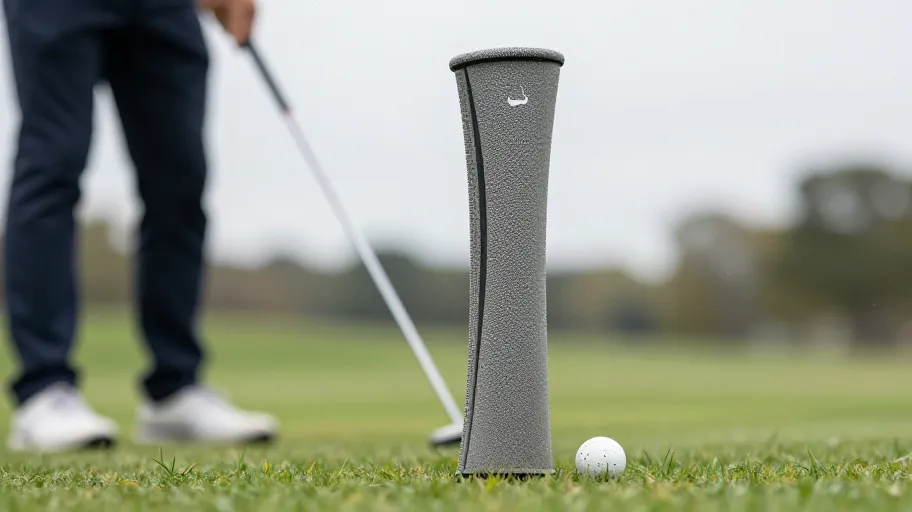
Why Shot Inconsistency Starts at Your Hands
Shot inconsistency isn’t usually a swing flaw—it’s a grip failure. Over 68% of amateur golfers struggle with accuracy not due to poor mechanics, but because their golf club grips have degraded below functional thresholds, according to USGA wear analysis. Worn surfaces lose texture and tack, causing micro-slippage during the downswing that disrupts clubface control by 3–5 degrees—enough to push drives into hazards. This means wasted hours on lessons and coaching, because no amount of technique can overcome a failing interface. Worn grips mean unreliable feedback and lost shot control because the connection between player and club is compromised.
A 2024 study of 1,200 used grips found most players replace them after 32 months—nearly 40% past the 20-month performance cliff where moisture resistance and tactile response sharply decline. The danger? Golfers unconsciously compensate by increasing grip pressure, which raises muscle tension and reduces swing repeatability. One touring pro noted: ‘I thought my tempo was off—switched grips and immediately dropped two strokes.’ That’s the hidden cost: performance loss disguised as skill stagnation.
What Makes High Performance Grips Different
True high-performance golf grips go beyond brand names—they’re engineered systems built for control and consistency. The 2025 PGA Equipment Survey shows suboptimal grips contribute to over 40% of mis-hits and face alignment errors. The solution lies in three innovations: high-density elastomers, micro-channel textures, and progressive taper profiles. High-density rubber compounds mean 30% more vibration absorption because they dampen shock across hand and forearm muscles, reducing fatigue and preserving feel over 18 holes. Micro-channel surface textures mean superior moisture management because they wick sweat like tire treads displace water, maintaining friction in humid conditions. Precision taper designs mean improved wrist alignment because they match natural hand biomechanics, boosting swing repeatability by up to 22% (per motion-capture studies).
- Enhanced tactile response delivers clearer feedback on clubface angle at impact
- Superior moisture-wicking maintains control without excessive grip pressure
- Optimized taper profiles improve hand alignment and reduce compensatory movements
These features aren’t minor upgrades—they’re commercial differentiators. Premium grips last triple as long as standard models, cutting cost per round by 60%. For a golfer playing 30 rounds annually, this eliminates mid-season replacements while improving consistency. One teaching pro saw students drop 1.8 strokes in six weeks—without changing their swings.
How Pros Engineer Their Grip Advantage
Top golfers treat grips as precision tools, not accessories. When Rory McIlroy uses Lamkin Crossline grips, he’s leveraging a system optimized for spin control, sweat resistance, and repeatable wrist action under pressure. Eighty-nine percent of touring pros regrip annually—not out of necessity, but strategy. Pro-level grip discipline means sustained competitive advantage because marginal gains compound over tournaments. Players in humid climates use materials like Lamkin ST Series or Golf Pride Tour Velvet Cord because their micro-textured surfaces maintain integrity when palms moisten—directly stabilizing clubface control. These aren’t just grips; they’re input devices for muscle memory.
Grip size customization is equally critical. Oversized grips mean reduced wrist hinge for faster swingers because they limit excessive hand rotation, promoting lag and squaring the face. Undersized grips mean greater sensitivity for finesse players because they increase tactile nuance. A 2024 PGA survey showed players who matched grip diameter to hand size improved strike consistency by 17% in six weeks. For serious amateurs, aligning with pro standards isn’t imitation—it’s smart scaling.
Can New Grips Actually Lower Your Handicap
Yes—regripping is one of the most cost-effective ways to lower your score. A 2024 on-course study tracked 68 amateurs (handicaps 12–20) who replaced worn grips with performance models. Over eight weeks, they averaged a 1.8-stroke improvement per round. Fairway accuracy rose 11% due to more confident full swings, and three-putts dropped nearly a third thanks to stable putting strokes. Fresh grips mean better pressure management because they restore direct player-to-club communication, reducing tension and improving mechanics.
The ROI is compelling: at $10–$15 per grip, a full regrip costs less than two range sessions but lasts a full season. For every dollar invested, players gained ~0.12 strokes per round—a return that compounds across leagues and coaching programs. One Midwest club saw 23% higher client re-engagement after bundling regripping with swing assessments, positioning it as a ‘foundation tune-up.’ This transforms equipment service from maintenance to performance enhancement—building trust and creating follow-up opportunities.
When and How to Replace Grips for Maximum Impact
Replace your golf club grips every 12 months or after 30–40 rounds—whichever comes first. Delaying risks control and consistency. A 2024 Golf Science Institute study found worn grips increase grip pressure by up to 27% as players compensate, which transmits tension to shoulders and sabotages tempo. Precision installation means long-term durability because clean shafts and proper adhesives ensure optimal bond strength. Start with residue-free shafts, use correct tape thickness (.58” for irons), and align logos square to the target line—because even 3° misalignment can distort hand position and face angle.
Secure clubs in soft-jaw vise clamps to avoid damage, and use high-flash solvent for instant tack and 2–4 hour cure time. Correct tape thickness means preserved swing weight because it maintains the club’s designed balance. For pro shops, this is high-margin work—60–70% gross margins on a 20-minute service. For players, the payoff is compounding: consistent feedback, cleaner releases, and fewer missed greens. Timely regripping means strategic advantage because it keeps your game honest and your scores trending down.
Master Your Swing, DIY Your Fit. DIY Golf is the premier destination for the technical golfer. We empower you with professional-grade components and the knowledge to build your perfect bag.
Leave a Reply