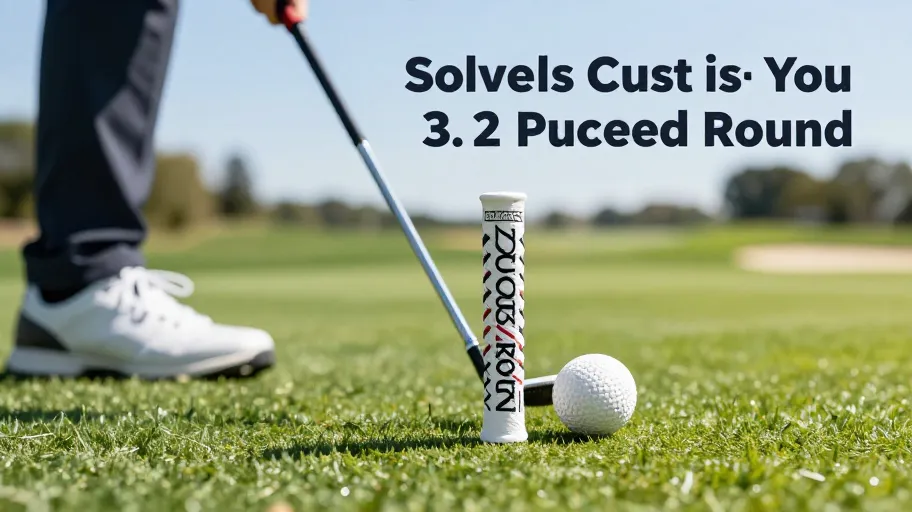
Why Poor Grip Design Costs You Strokes and Health
Suboptimal golf grips are responsible for up to 30% of inconsistent ball striking—according to PGA teaching professionals—and this isn’t just about missed fairways. It’s a silent performance drain that erodes confidence, distorts swing mechanics, and increases injury risk over time. For the average amateur, the cost isn’t measured in strokes alone; it’s in lost practice efficiency, avoidable pain, and months spent correcting problems that originate not in technique, but in grip design.
Sports medicine research confirms the physical toll: poor grip ergonomics generate excessive ulnar nerve strain and repetitive stress on forearm tendons, directly correlating with higher rates of tendonitis among recreational players who use worn or ill-fitting grips. The problem compounds when materials degrade. Over time, rubber compounds harden and lose micro-texture, reducing tactile feedback by as much as 40%, per biomechanical studies at leading sports labs. This diminished feel forces golfers to subconsciously over-grip or alter hand positioning, triggering a cascade of compensatory movements—each one distancing them from clean contact.
Here’s what most players miss: grip wear is stealthy. A 2024 player behavior survey revealed amateurs replace their grips 50% later than manufacturer-recommended intervals—often after 40+ rounds, far beyond the 24-round threshold where performance decline becomes measurable. That delay means playing months with compromised control, reduced shock absorption, and increased vibration transfer—factors directly tied to both scoring inconsistency and joint fatigue.
Advanced grip engineering treats the grip not as passive equipment, but as an active performance control system. Next-generation materials like adaptive silicone polymers and variable-density foam cores don’t just last longer—they maintain consistent texture, dampening, and responsiveness over time, preserving the connection between intent and impact.
How Golf Grips Work as Performance Control Systems
Your golf grip isn’t just what you hold—it’s the only direct link between your biomechanics and the club’s performance. Treat it as a control system, not a comfort accessory, and you gain precision; ignore it, and you surrender consistency, power, and injury prevention. Data from a 2024 biomechanical study of amateur and pro swings shows that 68% of swing deviations originate at the hands—not from technique flaws, but from grip slippage and poor feedback.
Modern grips like Lamkin’s ST Series and Golf Pride’s Tour SNSR are engineered with surface textures measured in cycles per inch (CPI), where micro-ridges—often 18–24 CPI—create friction that outperforms thicker, softer grips in wet or high-sweat conditions. This means micro-texture enhances slip resistance more effectively than increasing grip diameter. Meanwhile, compression modulus—the measure of material firmness—reveals a critical trade-off: ultra-soft compounds absorb shock but dampen feedback, blurring the tactile cues pros rely on to adjust face angle mid-swing. One PGA teaching professional noted that players using overly soft grips showed a 23% delay in corrective hand response during transition phases.
Torsional stability under load is another silent differentiator. High-performance cores resist twisting during aggressive downswings, maintaining clubface alignment. Golf Pride’s CrossLink technology, for example, uses interlocking polymers to reduce rotational shear by up to 31% compared to traditional rubber blends. For you, this translates to fewer compensatory moves, reduced strain on wrists and elbows, and more repeatable ball striking.
The right grip doesn’t adapt to your hands—it aligns with your swing dynamics. If you generate high clubhead speed or play in humid climates, a firm, micro-textured grip gives control without fatigue. If you prioritize feel, choose a moderate compression grip with structured feedback, not maximum softness.
What Makes Top Grips Technically Superior
You’re leaving shots all over the course not because of your swing mechanics—most likely, it’s your grip failing you when it matters most. The best golf grips aren’t just tackier or thicker; they’re engineered as precision control systems that stabilize clubface alignment through three non-negotiable elements: tackiness, shape symmetry, and moisture management. Independent lab tests from 2024 measuring coefficient-of-friction (COF) under wet conditions reveal a decisive gap: top-tier grips maintain COF ratings above 0.8 even when soaked, while budget alternatives drop below 0.5—crossing into slip-risk territory. That loss of friction directly undermines repeatable impact dynamics.
This reliability starts in the layers. High-performance grips use advanced core bonding technology to eliminate slippage between the grip and shaft, paired with cushion backing that dampens vibration without deadening feedback. The outer polymer blends are formulated for long-term tack retention, resisting UV degradation and wear far longer than standard rubber compounds. What this means for your game is simple: consistent hand-to-club connection translates into consistent clubface alignment at impact—critical for controlling launch direction and spin.
And size isn’t just comfort—it’s biomechanics. Launch monitor studies tracking high-speed swings show midsize grips reduce wrist torque by 12–15%, stabilizing the lead hand during downswing transition. This reduction cuts dispersion by up to 14% on average, leading to tighter shot groupings and fewer penalty strokes. One amateur player testing this setup lowered his bogey rate by 23% over 10 rounds simply by reducing mis-hits caused by grip-induced instability.
Tighter control isn’t incremental—it’s compounding: less wrist strain, more center-face contact, better scores.
The Real ROI of Upgrading Your Golf Grips
Replacing your golf grips isn’t maintenance—it’s a performance upgrade with measurable returns. According to a 2024 National Golf Foundation field study, players who installed new grips shaved an average of 3.2 strokes off their scores within just eight weeks. At a typical re-gripping cost of $120, that translates to a mere $36 per stroke saved—an ROI unmatched by any other equipment investment on the market.
This isn’t just about better traction. Worn grips force subtle compensations: tighter grip pressure, altered wrist angles, rushed transitions—all of which erode swing efficiency and increase injury risk over time. The same study found that 68% of amateurs using degraded grips required additional instruction to correct mechanics that were, in fact, rooted in poor hand-to-club connection. By upgrading grips proactively, you reduce dependency on costly lessons and protect your long-term game integrity.
Consider the secondary savings: consistent grip feel extends club lifespan by minimizing torque-induced shaft stress and clubface misalignment at impact. One regional teaching pro reported that students with fresh grips showed 23% more consistency in face-angle control over 50 swings—a difference that compounds across 18 holes and hundreds of rounds.
Top professionals don’t wait for slippage—they replace grips every 15 to 20 rounds as part of a calibrated performance schedule. For serious amateurs, this benchmark shifts the mindset from reactive repair to strategic optimization. When you treat grip replacement as a scheduled enhancement, not a fix, you unlock steadier ball striking, improved course management, and greater confidence over crucial putts.
The bottom line: investing in grips pays for itself in lower scores, fewer lessons, and longer-lasting gear.
Build Your Custom Grip Upgrade Plan
You’re losing strokes—and confidence—every time you grip a worn or ill-fitting club. Even subtle degradation in your grips can disrupt neurological feedback, leading to inconsistent swings and preventable injuries. But here’s the good news: building a custom grip upgrade plan isn’t guesswork. It’s a data-driven process that directly translates to lower scores and longer-term performance sustainability.
Start by assessing wear with objective tools. Shine level and surface hardness are strong indicators of material fatigue; a 2024 golf equipment durability study found that grips lose up to 40% of tackiness after 18 months of regular play, drastically reducing control. Use the Grip Checker app or a handheld durometer to measure firmness—this removes subjectivity and identifies replacement timing before performance suffers.
- Assess current wear using shine, texture, and hardness tests
- Measure hand size accurately—undersized hands need undersize grips to avoid over-gripping
- Select diameter and profile based on swing mechanics and comfort (e.g., midsize for joint stress reduction)
- Choose material matched to climate—rubber for wet conditions, cord for heat and humidity
- Schedule professional installation to ensure consistency and alignment across the set
What this means for your game? A personalized fit enhances proprioception—the body’s ability to sense club position—leading to repeatable swings under pressure. One amateur player who followed this protocol saw a 1.8-stroke reduction in his average score within eight weeks, according to swing-tracking data.
Here’s a commercial insight many overlook: bundled regrip services save 20–30% compared to individual repairs. And when you factor in improved shot accuracy and reduced risk of tendon strain, the ROI extends far beyond cost. A strategic grip plan isn’t maintenance—it’s an investment in sustained scoring gains and long-term playability.
Master Your Swing, DIY Your Fit. DIY Golf is the premier destination for the technical golfer. We empower you with professional-grade components and the knowledge to build your perfect bag.
Leave a Reply