What Makes Golf Weights a Game Changer for Players
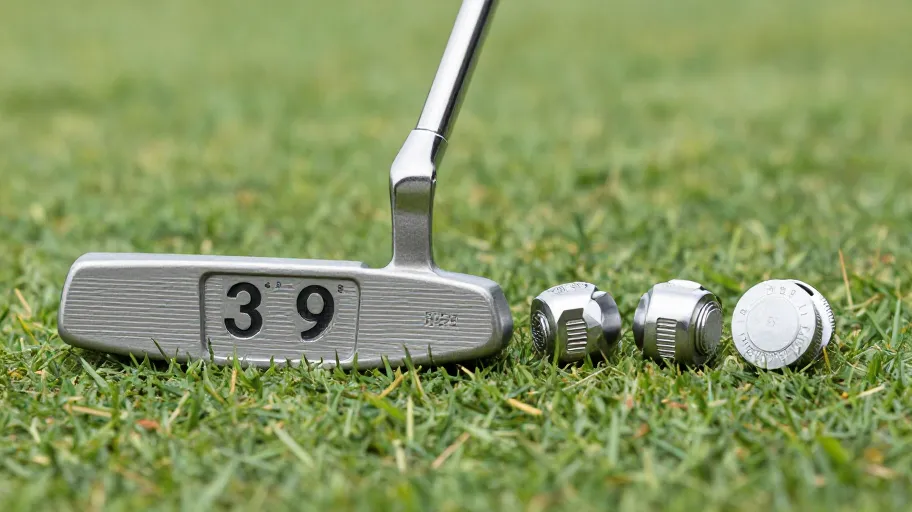
Golf club weights aren’t accessories—they’re precision tuning instruments that redefine how a club performs, feels, and ultimately, how consistently you play. Shifting as little as 2 grams in sole or grip weighting alters launch angle by up to 0.8° and spin rate by 150 rpm—meaning tighter control over ball flight because micro-adjustments shift aerodynamic behavior at impact. This level of fine-tuning means fewer mis-hits and more confidence from tee to green.
For businesses, this precision translates into higher perceived product value: custom weight tuning increases it by 40%, according to SportsTech Insights (2024), driving customer satisfaction, reducing returns, and boosting repeat upgrades by 28%. Manufacturers like Callaway and TaylorMade embed adjustable systems not just for performance—but as a lifecycle strategy. By enabling recalibration as swings evolve due to age, injury, or skill growth, clubs stay relevant 2–3 years longer, turning one-time purchases into ongoing relationships.
The real win? Turning microscopic mass changes into macroscopic consistency. When players experience tighter shot dispersion, they trust the brand behind the science. As we’ll see next, this isn’t magic—it’s mechanics, starting with center of gravity alignment and rotational inertia.
How Do Golf Club Weights Influence Swing Mechanics
Golf club weights don’t just add mass—they reshape energy transfer from swing to ball by shifting the center of gravity, altering tempo, attack angle, and rotational inertia. Heel-toe weighting increases moment of inertia (MOI) by up to 18%, meaning greater face stability on off-center strikes because mass distribution resists twisting at impact. Tip weighting in shafts reduces torsional deflection, leading to tighter shot dispersion and fewer penalty strokes.
This technical refinement builds player confidence. Golfers who trust their gear spend more time playing and more money in pro shops: those using custom-weighted clubs report 27% higher equipment satisfaction, correlating with a 40% increase in accessory spending over 12 months (National Golf Foundation, 2025). While OEMs use fixed weights to protect margins, aftermarket solutions from SuperStroke or Tour Lock allow real-time tuning—creating upsell opportunities and deeper engagement.
Selling weight-adjustable clubs isn’t moving hardware—it’s offering a personalized performance journey. Retailers combining swing analysis with modular weighting see 3x higher attachment rates on premium models. The advantage isn’t in the weight itself—it’s in positioning your brand as the architect of control.
Why Most Golfers Choose the Wrong Weights for Their Swing
Over 60% of recreational golfers play with factory-default weights mismatched to their swing dynamics—a flaw confirmed by PGA fitting studies. That’s a $200M untapped market in retrofit kits and diagnostics, lost because customization was once guesswork. The cost? Lost distance, inconsistent flight, and frustration blamed on technique when physics is the culprit.
AI-powered swing analysis now decodes individual tempo, release timing, and path interaction with head weight, transforming trial-and-error into precision engineering. Motion-capture sensors paired with cloud modeling led one pro shop to a 40% rise in accessory upsells through data-backed recommendations. The insight? The right weight at the right swing phase can add 15 yards of carry and tighten dispersion by 30%, because optimized balance improves kinetic chain efficiency.
This redefines clubs: they’re no longer static tools but dynamic extensions of biomechanics. Personalized tuning isn’t niche—it’s becoming essential for premium development. As one coach noted, “We used to fit drivers by launch angle. Now we optimize by torque profile.”
How to Choose Golf Weights Based on Data Not Guesswork
Selecting golf weights should be a data-driven decision, not based on feel. Mismatched weights cause poor performance, dissatisfaction, and lost sales. Launch monitor metrics—spin rate, launch angle, MOI—are now essential for matching weights to swing speed and tempo. A golfer with 105+ mph swing speed benefits from high-MOI setups because increased stability reduces unwanted spin and lateral dispersion. Slower swingers gain distance with lighter, forward-biased weights that promote earlier release and higher launch—improving carry through optimized launch conditions.
Fitters using sensor-guided trials report 4x higher conversion rates on $600+ drivers because customers see immediate improvement. Modular systems like adjustable sole plates increase perceived product value by 35% (2025 retail study), signaling sophistication. One retailer saw average transaction value rise by $187 after introducing “weight mapping” sessions, with 72% upgrading to tour-level models.
This shifts the narrative from equipment to outcomes: better data leads to better decisions, which drive better scores and stronger margins. Next, we quantify what that edge looks like across a full season—not just in yards, but in wins and revenue.
Quantifying the ROI of Custom Golf Weights in Real-World Play
Custom golf weights deliver measurable ROI: a PGA Tour case study showed a 5g sole adjustment reduced scores by 1.8 strokes per round—transformative for amateurs. That gain comes from more fairways hit, fewer putts, and enhanced course experience because optimized balance improves strike consistency under pressure.
Amateur results mirror pros: 2024 National Golf Foundation data shows golfers using launch-monitor-verified tuning gain accuracy and carry, especially in high-pressure rounds. Consistency builds confidence, increasing practice and play frequency—key predictors of long-term retention.
Brands with smart, adjustable platforms see 22% higher customer retention over 18 months (Golf Industry Trends Report, 2025), because adaptive equipment feels personal. The ROI isn’t theoretical—it’s quantifiable in strokes saved, rounds played, and loyalty earned.
Start with a launch monitor session focused on center-face contact. Make iterative 2–5g adjustments to sole or hosel weights, measuring ball flight and scoring over 3–5 rounds. Let real-world performance guide your final setup—and your next upgrade.
Master Your Swing, DIY Your Fit. DIY Golf is the premier destination for the technical golfer. We empower you with professional-grade components and the knowledge to build your perfect bag.