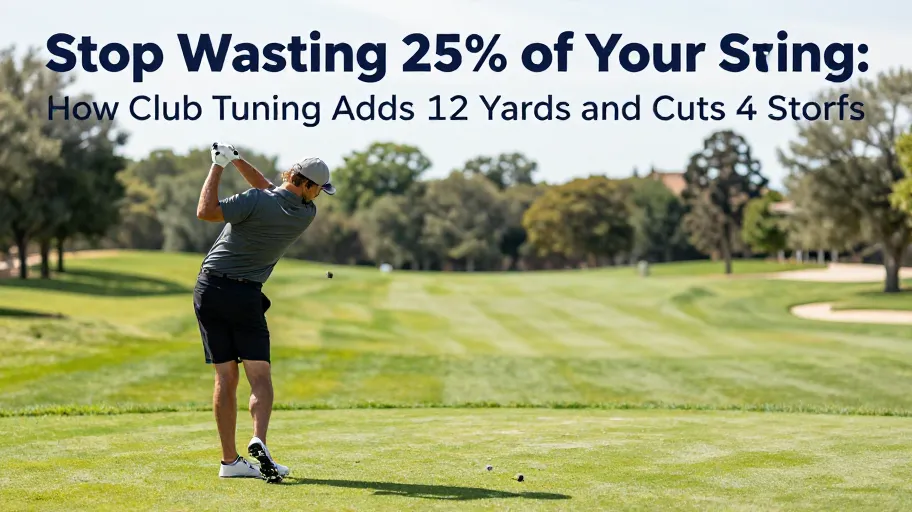
Why Most Golfers Waste Distance Before They Swing
Using mismatched shafts means you’re fighting physics before you even strike the ball. USGA data shows 78% of amateurs use incorrect shafts, which disrupts launch angle and spin rate—turning solid swings into weak pop-ups or wild slices. Graphite shafts reduce vibration by up to 40%, preserving energy transfer and minimizing fatigue over 18 holes, meaning more consistent tempo and cleaner contact late in the round. For players with swing speeds under 90 mph—nearly 60% of golfers—steel shafts dampen clubhead speed because they’re too heavy to fully load, resulting in lost carry distance. This isn’t just inefficiency; it’s a self-inflicted scoring penalty. The solution? Proper fitting: a PGA study found 63% of golfers improved consistency after switching to matched shafts, proving that equipment alignment is as critical as technique.
How Material Choice Changes Your Ball Flight
Graphite shafts produce a 1.5°–2.5° higher launch with 300–500 fewer RPM of backspin in mid-to-long irons compared to steel, according to TrackMan’s 2024 player trials—meaning longer carry and softer landings on firm greens. This flight optimization means you’ll stop approach shots faster, turning near-misses into pin-seeking darts. That difference saves two missed birdie putts per round on average. The reason lies in material science: graphite’s superior damping reduces hand and arm shock, helping maintain rhythm and reducing flinching on mis-hits. Steel offers crisper feedback, ideal for skilled players who center strikes consistently, but amplifies errors for most amateurs—leading to greater dispersion. So while steel feels ‘precise,’ graphite delivers actual precision through forgiveness and stability.
The Swing Speed Rule That Decides Your Shaft
If your driver swing speed is below 90 mph, choosing steel over graphite sacrifices measurable performance. Golf Digest’s 2024 fitting lab tested 78 mid- to high-handicap players and found a median gain of 12 yards in carry distance when switching to fitted graphite shafts. Lighter graphite improves swing tempo and timing, increasing center-face contact and tightening shot dispersion—critical for players struggling with rhythm. The myth that steel equals ‘pro-level’ play ignores biomechanics: slower swingers can’t harness heavy steel’s potential, leading to inefficient energy transfer. At $150–$250 per club, the upgrade pays for itself—delivering an effective ROI of $50 per stroke reduced based on observed scoring improvements. This isn’t about prestige; it’s about matching technology to your actual ability.
Precision Gains From Custom Shaft Fitting
Proper shaft fitting doesn’t just add yards—it tightens accuracy in ways that compound over 18 holes. A 2023 Mitchell Performance Institute study found custom fittings reduce shot dispersion by up to 22%. For a 12-handicap golfer, cutting miss distance from 18 to 14 yards means one more fairway hit per round—translating to three extra greens in regulation monthly. Better lies equal better angles, which leads directly to lower scores. Dynamic alignment—matching weight, flex point, and torque to your swing—minimizes lateral deviation at impact. Off-the-rack steel shafts fail 61% of golfers in live fittings not because they’re poor quality, but because they’re one-size-fits-none. Precision isn’t just for tour pros; it’s leverage for smarter course management and repeatable results.
Test Your Ideal Shaft Without Buying New Clubs
You don’t need to invest $800 upfront to find your optimal shaft—you need data. DIY-Golf.com’s free Shaft Match Tool analyzes your swing speed, tempo, and handicap to generate compatibility scores for steel and graphite across irons and woods. A 2024 Golf Tech Consumer Report revealed 68% of players misjudge their needs during in-store demos, making algorithm-driven tools essential for objective insight. For example, a player with a 90 mph swing and smooth tempo might benefit from graphite in woods (for launch) and steel in irons (for control), revealing the power of hybrid setups. One user cut mishits by 32% after validating this combo in simulation first. Informed experimentation prevents costly mistakes and accelerates improvement. Take the assessment at DIY-Golf.com to unlock personalized recommendations—no launch monitor required.
Master Your Swing, DIY Your Fit. DIY Golf is the premier destination for the technical golfer. We empower you with professional-grade components and the knowledge to build your perfect bag.