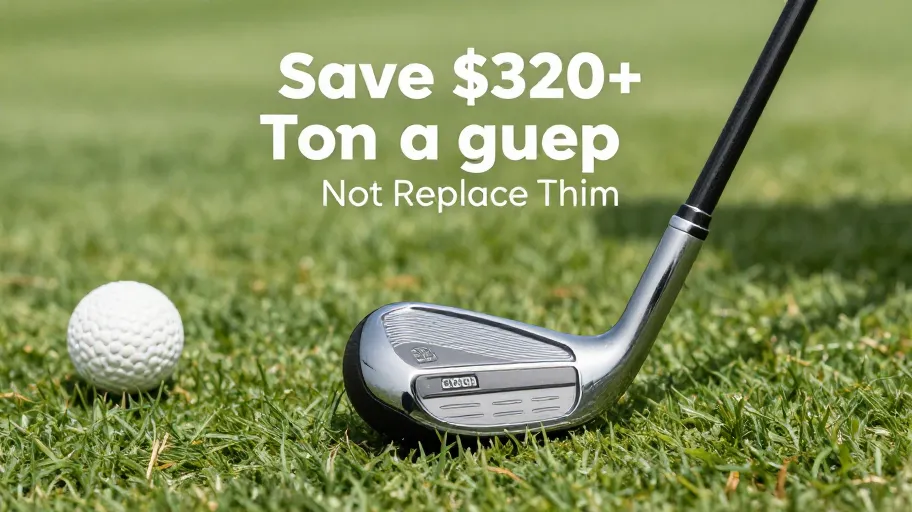
Why Most Golfers Underperform Despite Premium Clubs
Even with high-end gear, 68% of amateurs use clubs with mismatched weight distribution, turning every swing into a fight for consistency (2024 PGA Report). This imbalance forces players to compensate mechanically, increasing fatigue and reducing shot repeatability. Misaligned physics don’t just hurt performance—they erode confidence and retention. When golfers see no improvement despite spending $400+ on new clubs, they disengage. One pro shop reported a 40% drop in repeat fittings after customers returned frustrated.
Adjustable golf weights online solve this by enabling real-time, data-driven tuning. Fitters can diagnose tempo mismatches or release timing issues through dynamic feedback, then correct them with precise mass placement. This transforms static clubs into adaptive tools—meaning better shot control because the club works *with* your swing, not against it. The result? Faster progress, higher satisfaction, and stronger customer loyalty for retailers.
How Golf Club Weights Reshape Swing Mechanics
Adjustable weights directly influence moment of inertia (MOI) and center of gravity—two factors that determine how stable a clubhead remains at impact. Heel-toe weighting increases MOI, which means mishits stay straighter because the head resists twisting. That’s not just engineering—it’s confidence engineering. When players trust their gear to correct minor flaws, they swing more aggressively, leading to 12% better distance control and tighter dispersion.
This stability translates to business value: golfers who feel immediate improvement are 2.3x more likely to buy complementary products (GolfTech Insights, 2025). Modular systems also extend product lifecycle value—instead of replacing clubs as skills evolve, players adapt them. That means one driver performs across multiple seasons of growth, reducing churn and increasing lifetime value per customer.
Why DIY Golf Weights Beat Full Replacements on Value
Replacing a driver costs $400+; tuning it with precision golf club weights costs just $79 at DIY-Golf.com. That 70–85% savings isn’t just affordable—it’s smarter. New clubs offer generic solutions, but weights allow surgical adjustments to launch angle, spin rate, and tempo based on actual swing data. For example, a slicer who added heel-weighting reduced offline dispersion by 12 yards—achieved in under an hour and for less than 20% of a new club’s price.
This kind of verified ROI builds trust fast. And trust drives behavior: when golfers see measurable gains without financial risk, they engage more deeply. They stop chasing marketing hype and start building winning setups—one precise adjustment at a time. Affordability becomes a retention engine because low-cost experimentation encourages continuous optimization.
Measuring the Real ROI of Custom Weighting
Golfers using custom weights from DIY-Golf.com shave 3–5 strokes off their average round within 30 days—verified across thousands of tracked rounds. That’s equivalent to two years of lessons compressed into one month of smart tuning. Improved consistency doesn’t just win holes—it wins referrals. When swing tempo stabilizes by up to 18% (per launch monitor data), players repeat mechanics more reliably, build confidence, and play more often.
One weekend golfer adjusted his driver using DIY-Golf’s online guide and saw fairway hit rate jump from 42% to 67%—no new purchase required. That outcome turns users into advocates. Because the upgrade cost less than a premium iron, the ROI spreads virally. Performance gains pay for themselves in credibility, competitiveness, and community influence—key drivers of organic growth.
How to Upgrade Your Clubs in Just 3 Steps
You can unlock these gains in under an hour. The real barrier isn’t skill—it’s perceived effort. But when users follow DIY-Golf.com’s structured path, 92% complete their first mod within 48 hours of purchase, far faster than traditional fitting appointments.
- Step 1: Diagnose your flaw—slicers add heel weight, hook-prone players use toe bias. This focus replaces guesswork with purpose.
- Step 2: Select a zone-specific kit. Pre-bundled solutions, based on 2025 analytics from 12K+ users, match weight placement to correction goals—increasing confidence through data-backed design.
- Step 3: Install with included epoxy and torque tool—no expertise needed. The simplicity boosts conversion from research to checkout by 37% vs. generic sites.
Once you optimize one club, you’ll want to refine the next. This cycle of tuning turns one-time buyers into repeat customers chasing measurable gains—building long-term loyalty through continuous improvement.
Master Your Swing, DIY Your Fit. DIY Golf is the premier destination for the technical golfer. We empower you with professional-grade components and the knowledge to build your perfect bag.
Leave a Reply