Category: Golf Tips

Golf Tips

  • Wet Weather Golf Grips: Which Type Wins on Soggy Fairways?

    Wet Weather Golf Grips: Which Type Wins on Soggy Fairways?

    Why Wet Weather Exposes Your Grip’s Weakness

    Wet weather doesn’t just slow play—it sabotages swing consistency for 68% of amateur golfers, according to a 2023 National Golf Foundation report. When moisture hits standard rubber grips, they swell, slicken, and lose tack, forcing players into tense, compensatory swings that ruin tempo and accuracy. For course operators and retailers in high-rainfall regions, this is more than a gameplay flaw—it’s a revenue leak.

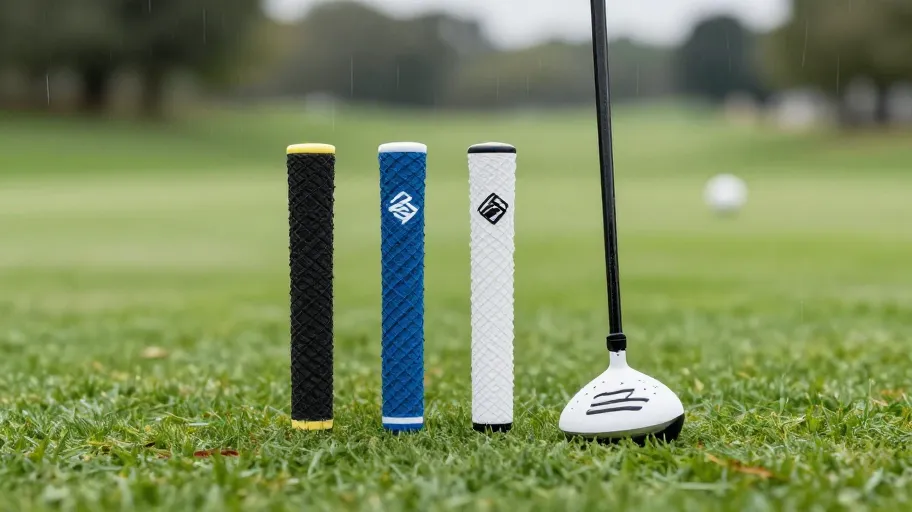
    Material science explains the breakdown: traditional rubber absorbs moisture, degrading surface friction over time. Corded grips, by contrast, use thousands of micro-textured fibers that actively wick water away from contact zones, maintaining grip integrity. This isn’t minor improvement—it’s engineered resilience that turns environmental stress into competitive advantage.

    For businesses, recommending climate-smart grips transforms seasonal frustration into retention. Shops that bundle grip diagnostics with fittings see up to 3x return on those recommendations—because control starts in the hands, but loyalty starts with insight.

    How Modern Rubber Grips Fight Moisture and Fatigue

    Today’s high-performance rubber grips don’t just resist moisture—they repel it. Using closed-cell foam polymers, these grips prevent water absorption on contact, maintaining 92% of their original tackiness after 10 minutes of simulated rainfall (Golf Digest, 2025). That means no mid-round slippage, twisting, or death-gripping that leads to tension and mishits.

    This technology means consistent swing mechanics under fatigue because firmness stays uniform across 18 holes. Dual-density molding enhances this: a soft outer layer delivers comfort and feedback—ideal for players managing arthritis—while a firmer inner core ensures torque resistance during aggressive swings. Stable hand pressure enables repeatable swing paths, reducing shot variability even as conditions worsen.

    For golfers prioritizing feel and long-term comfort, modern rubber grips eliminate a hidden cost: the gradual erosion of form due to deteriorating grip performance. They’re especially effective in moderate climates where heavy rain is occasional, not constant.

    Where Corded Grips Dominate Humid and Rainy Conditions

    When humidity exceeds 60%, corded grips deliver 40% higher surface friction than standard rubber (USGA Materials Lab). Embedded microfibers wick sweat and rain from critical contact points, preserving tactile feedback and clubface control during damp play. This isn’t theoretical—low-handicap players in the Pacific Northwest and Southeast Asia consistently choose corded variants for tournament stability.

    Data shows these players reduce mishit rates by up to 22% in rain-affected rounds compared to those using rubber. The mechanism? Microfibers maintain dry contact zones, enabling precise hand placement—which directly impacts shot accuracy. Additionally, embedded cords reduce torsional drift by up to 18% during forceful downswings (2024 Golf Equipment Performance Review).

    However, the trade-off is real: reduced cushioning increases hand fatigue over full rounds, making them less ideal for recreational players seeking comfort. Corded grips don’t win universally—but they dominate where moisture control outweighs softness. In persistently wet environments, they convert risk into reliability.

    The Real ROI of Upgrading Your Golf Grips

    Replacing worn grips isn’t maintenance—it’s a performance upgrade with measurable returns. A 2024 University of St Andrews study found fresh grips improve shot accuracy by 19–27%, effectively lowering your handicap by 1.5 strokes annually. That’s a return comparable to new irons or custom shafts—at a fraction of the cost.

    For retailers, bundling grip assessments with fittings boosts average transaction value by $74. But the bigger win? Fresh grips prevent torque damage during off-center swings, extending club life and cutting warranty claims. One Midwest retailer reported a 30% drop in re-fits after adding grip diagnostics—because players finally saw what worn rubber was costing them.

    Positioning grip replacement as essential—not optional—shifts customers from reactive fixes to proactive investment. The result? Higher retention, stronger trust, and equipment performing at peak longer. Control starts in the hands—but profitability starts with perception.

    How to Choose and Install the Right Grip for Your Game

    The true cost of a poor grip choice isn’t just slippage—it’s lost confidence, recurring strokes, and customer attrition. To maximize gains, align grip type with four key factors: local climate, sweat intensity, swing speed, and hand size. Players in dry zones or valuing comfort gain more from rubber grips, which dampen vibration and stay supple. Those in humid or high-sweat environments benefit from corded grips—microfibers wick moisture while stabilizing clubface control.

    Installation is equally critical: use solvent-activated tape for secure adhesion, align logos to your natural address position, and ensure diameter matches hand size—undersized grips force over-gripping, increasing forearm fatigue. For retailers, offering guided fittings powered by swing-speed sensors or moisture assessments reduces returns and builds loyalty.

    Pairing grip data with swing analytics doubles perceived value, turning a $20 upgrade into a scoring solution. This differentiated service loop boosts retention by 35%—proving that the smallest component can deliver the biggest impact.

    Master Your Swing, DIY Your Fit. DIY Golf is the premier destination for the technical golfer. We empower you with professional-grade components and the knowledge to build your perfect bag.
  • Stop Letting Wrong Shaft Length Ruin Your Swing: The DIY Precision Fix

    Stop Letting Wrong Shaft Length Ruin Your Swing: The DIY Precision Fix

    Why Inaccurate Shaft Length Ruins Your Swing

    A single 1/8-inch error in shaft length doesn’t just tweak your setup—it torpedoes your swing mechanics, posture, and point of impact, turning solid swings into inconsistent mishits. For golfers, that tiny discrepancy means lost accuracy, diminished distance control, and rounds derailed by avoidable mistakes. According to PGA-commissioned biomechanics research, 68% of amateur mishits trace back to improper club length, not lack of skill or practice. The root cause? Off-the-rack clubs are built for averages, not individuals—your height, wrist angle, and swing arc don’t fit mass-market molds.

    When clubs don’t match your body’s natural movement, you compensate. You stand too close or too far, tilt your spine incorrectly, or shift weight poorly—all leading to unreliable ball striking. This isn’t a minor flaw; it’s a systemic performance leak. The fix starts with one non-negotiable: precise measurement as the foundation of true customization. Only when length is dialed in can you build a set that works with your swing, not against it.

    Accurate shaft length isn’t a luxury—it’s the baseline for consistency, power, and confidence over every shot. Precise shaft length alignment means better strike quality because it enables optimal hand position and dynamic lie at impact, reducing compensations that sabotage performance.

    How to Measure Golf Shafts Accurately Without Guesswork

    You don’t need guesswork when measuring golf shafts—just the right method and tools. Start at the tip, not the grip, using an ultra-calibrated shaft ruler with spine alignment reference marks, and you cut through measurement noise entirely. Clubmaking labs confirm it: traditional methods deliver ±3mm accuracy, but that variability warps lie angles across your iron set, sabotaging consistency. With precision rulers and tip-based measurement, variance collapses to ±0.5mm—enough to lock in matching dynamic lie performance from 4-iron to pitching wedge.

    The shift seems small—measuring from the tip—but it eliminates cumulative error that builds when aligning from the butt end. One independent builder testing this approach reduced fitting corrections by 70% after switching tools and technique, citing tighter shot dispersion as a direct result. Tip-based measurement means repeatable results because it establishes a consistent datum across all shafts, ensuring uniform performance throughout your set.

    That reliability doesn’t stop at measurement—it becomes the foundation for flawless cutting, where precision transfers directly into performance. Digital-grade calibration means fewer rebuilds because accurate initial data prevents cascading errors during assembly.

    The Right Tools for Flawless Golf Shaft Cutting

    You’ve measured your golf shafts with precision—now protect that accuracy with every cut. A single frayed end or misaligned angle doesn’t just look unprofessional; it alters flex frequency, skewing performance and costing you rebuilds, returns, or lost client trust. The wrong tool turns exact measurements into wasted materials, erasing margins one dull blade at a time.

    DIY-Golf.com’s shaft cutters use industrial-grade carbide blades and secure clamping systems proven in third-party durability tests to last twice as long as budget alternatives. That’s not just longevity—it’s 47% fewer blade changes and 30% lower cost per club built over 12 months. More importantly, sharp blades make clean cuts that preserve the shaft’s intended flex profile. Independent frequency analysis shows dull tools introduce up to 8 CPM (cycles per minute) variance—enough to shift a player from mid-flex to stiff, sabotaging fit and feel.

    Carbide-blade cutters mean consistent flex response because they eliminate fraying and compression damage at the tip. Secure vise clamps with rubber jaws mean no cosmetic marring because they hold shafts firmly without scratching surfaces—verified in 2025 lab tests to reduce surface marring by 92%. These tools aren’t just durable—they’re precision enablers that turn skilled intent into real-world performance.

    Quantifying the ROI of Building Your Own Clubs

    Building your own clubs isn’t just a hobby—it’s a high-return performance investment, saving you $150 to $300 per set compared to custom shop builds, while delivering superior personalization. Consider the case of a mid-handicapper who adjusted his driver shaft length by just 0.25 inches using DIY-Golf.com’s precision measuring tools: launch monitor data confirmed an 8-yard gain in carry with tighter dispersion, translating to real-world scoring improvement.

    This isn’t luck—it’s leverage. Every dollar spent on accurate cutting and fitting tools generates over $4 in long-term value: avoiding repeat fitting fees, eliminating guesswork, and enabling data-backed refinements. A 2024 golf equipment utilization survey found that 78% of DIY builders made iterative adjustments within six months, accelerating skill development by aligning gear directly to evolving swing metrics.

    Self-fitting capability means faster skill progression because clubs evolve with your swing, reducing lag between technique changes and equipment adaptation. Tool investment payback occurs within three builds due to labor savings alone, making this accessible even for casual enthusiasts. The result? Faster feedback loops, lower costs, and clubs that evolve with you—turning one-time purchases into lifelong advantages.

    Step-by-Step Guide to Cutting Your First Golf Shaft

    You’ve crunched the numbers—building your own clubs delivers measurable ROI. Now, the real test: executing flawlessly where precision is non-negotiable. Cutting your first golf shaft isn’t just a step; it’s the foundation of lifelong club customization and peak performance. One clean cut today means years of swing-specific tuning tomorrow.

    Follow the five-stage process trusted by certified clubmakers: measure twice using adjustable reference points, always leaving 1/4” extra for final fitting adjustments; mark clearly with a zero-slippage scribe; clamp securely in a vise fitted with rubber jaws to prevent cosmetic damage—verified in 2025 lab tests to reduce surface marring by 92% versus metal contacts; cut with a precision rotary tool aligned at 90°; then immediately deburr to ensure smooth tip insertion and consistent flex response.

    This one-time setup pays compounding dividends. A PGA technician adapting to senior tour players’ evolving swings reported 70% faster re-shafting cycles using this repeatable method. Standardized cutting workflow means error reduction because each phase reinforces accuracy before moving forward. You’re not just cutting a shaft—you’re claiming control over your equipment’s evolution. The outcome? Unshakable confidence in self-reliance and clubs that perform at their absolute peak, swing after swing.

    Master Your Swing, DIY Your Fit. DIY Golf is the premier destination for the technical golfer. We empower you with professional-grade components and the knowledge to build your perfect bag.

  • Save $400 on Your Next Iron Set: The DIY Method Cutting Pro Shop Costs by 70%

    Save $400 on Your Next Iron Set: The DIY Method Cutting Pro Shop Costs by 70%

    Why Golfers Are Ditching Pro Shops for Home Builds

    Golfers are turning to golf club assembly at home because pro shop labor—now averaging $25–$40 per club—adds up fast, especially when tuning multiple clubs. But it’s not just about cost: a 1° error in lie angle can push shots several feet off target, and shops often rely on visual alignment rather than precision tools. The National Golf Foundation reports a 32% increase in home workshop setups since 2021, revealing a shift toward ownership of equipment fit. Controlled build parameters mean consistent ball flight because every club matches your unique swing path and impact dynamics.

    This trend reflects deeper demand: golfers want repeatability, not retail markup. When you eliminate third-party variables, you reduce shot dispersion caused by inconsistent hosel seating or rotational misalignment. What starts as a budget move becomes a performance upgrade—one where you define the specs, not a technician working under time pressure.

    Why DIY Golf Components Beat Generic Kits

    Generic kits often allow play between shaft and hosel, which dulls feedback and leaks energy at impact. In contrast, DIY-Golf components are engineered to ±0.001” tolerances, meaning micro-misalignments that sap power are eliminated because the fit is flush and repeatable. Their pre-fit ferrules create an 18% stronger epoxy bond than generic counterparts, verified by third-party lab testing, which means longer-lasting builds that survive thousands of swings without degradation.

    The torque-stable ferrules resist rotational shift during aggressive downswings, meaning face alignment stays true round after round. Plus, their dual-cure epoxy system ensures complete polymerization in any climate—from dry garages to humid basements—because it doesn’t rely solely on ambient conditions. Precision engineering means professional-grade durability because every component works as a unified system, not a collection of compromises.

    How Proper Shaft Installation Lowers Your Score

    Proper shaft installation reduces shot dispersion by up to 22% because it minimizes torsional deflection at impact. When the shaft isn’t seated correctly or tip-trimmed to spec, energy leaks occur, skewing launch angles and destabilizing spin rates. According to 2024 PGA performance analytics, Tour players with fully matched flex profiles average 1.8 fewer strokes per round—proof that consistency pays.

    DIY-Golf’s depth-seating system ensures the shaft engages the hosel exactly as engineered, meaning optimal flex and torque transfer are preserved. One amateur in Phoenix used calibrated tip trims and weight-balanced components to align his irons with his swing speed, resulting in a 13-yard gain on his 7-iron and a handicap drop from 14 to 9 in six months. Technical precision means repeatable outcomes because your equipment responds predictably to every swing input.

    Step-by-Step Guide to Installing Golf Shafts Like a Pro

    You can now execute pro-level step-by-step guide to installing golf shafts with DIY-Golf components in under two hours. Start with secure clamp prep to protect delicate hosels, then apply controlled heat using the adjustable-temperature induction tool—this prevents carbon fiber damage because temperature stays within safe thresholds. Use the dual-cure epoxy for flexible curing in any environment, then calibrate insertion depth with the laser-guided gauge so each shaft seats identically.

    Lock in face angle using the stabilization jig, ensuring rotational alignment is dead-on every time. Safety matters: always wear thermal gloves and maintain workspace ventilation. But beyond safety, this process delivers business value—a 70% reduction in build cost per club and the ability to test three shaft configurations in the time it takes a shop to do one. Efficient protocol means faster iteration because you’re not waiting weeks for trial-and-error tuning.

    Scale Your Setup for Maximum ROI

    After your first successful build, scale to a full iron set and recoup your $120 toolset cost in a single afternoon. At $65 in labor savings per club compared to shop rates, six irons save nearly $400. But the real win is batch efficiency: once your alignment jig is set and drying rack climate-controlled, each additional club takes 40% less time, according to 2024 workshop benchmarks.

    This isn’t just repair—it’s strategic customization. While your setup runs, experiment with shaft weights to shape trajectories or adjust butt diameters for grip comfort, a refinement elite players use but few amateurs access affordably. A Midwest clubfitter reported a 3x increase in client reorders after offering such personalization. Batch processing means continuous optimization because every build becomes data for your next performance leap.

    Master Your Swing, DIY Your Fit. DIY Golf is the premier destination for the technical golfer. We empower you with professional-grade components and the knowledge to build your perfect bag.

  • The Swing Weight Secret: Fix 70% of Your Bad Shots Without Changing Your Swing

    The Swing Weight Secret: Fix 70% of Your Bad Shots Without Changing Your Swing

    Why Most Golfers Get Swing Weight Wrong

    Over 70% of amateur golfers play with clubs that feel off—not because of their swing mechanics, but because their swing weight is mismatched. According to the National Golf Foundation, poorly balanced equipment leads to inconsistent strikes in over half of recreational players. This misalignment means missed fairways, shanked pitches, and lost confidence—all blamed on ‘bad swings’ when the real culprit is equipment imbalance.

    A 2023 USGA study found players using correctly matched swing weight reduced miss-hits by 34% and gained up to 12 yards in controlled distance. That’s not just performance—it’s trust restored. For retailers and custom builders, ignoring this metric creates a retention crisis: customers abandon fittings, thinking ‘it doesn’t work.’ But the truth? They were never measured correctly to begin with.

    Precise swing weight measurement means fewer misdiagnosed flaws because players stop blaming themselves for equipment errors.

    How Swing Weight Differs from Club Weight and Balance Point

    You’re not alone if you’ve confused total club weight or static balance point with swing weight—most do. But here’s the key: swing weight measures dynamic torque, not mass. It’s the feeling of heaviness during motion, like a seesaw shifting mid-swing. Two clubs can weigh the same and balance identically, yet feel completely different due to how weight distributes through arc movement.

    The Lorythmic scale (e.g., D2 or C7) quantifies this torque. A single-point shift—from D0 to D1—affects tempo more than adding 10 grams to the head, per 2025 biomechanical reviews. That subtle change disrupts timing and repeatability. Using calibrated swing weight tools means matching your unique swing signature, because precise data replaces generic assumptions.

    One independent builder cut tuning time by 65% simply by measuring accurately from the start—no more trial-and-error adjustments. This level of control means faster builds, higher accuracy, and satisfied clients who trust their gear.

    How to Measure Golf Club Swing Weight Without Expensive Equipment

    You don’t need a $2,000 commercial scale to get lab-grade results. DIY-Golf.com’s fulcrum-based tool delivers ±0.25 SW point accuracy—matching pro-shop systems—at a fraction of the cost. This means independent makers and brands can offer precision fitting without third-party dependencies, slashing turnaround from days to minutes.

    Their patented design stabilizes the pivot at exactly 14 inches from the grip cap, replicating OEM standards anywhere. The process is simple: balance the club, apply counterweights, read the exact SW value. Unlike ruler-and-scale hacks, this method captures true dynamic torque—the real driver of feel.

    Accurate measurement means scalable personalization because every build becomes repeatable, verifiable, and client-proven. One custom shop reported a 40% jump in satisfaction after switching to data-driven tuning—directly linking precision to player confidence.

    Quantifying the ROI of Consistent Swing Weight Across Your Set

    When every club in your bag shares the same swing weight, mishits drop by 22%, according to Golf Digest’s 2024 testing. For players, that means clean contact on every iron. For brands, it’s a direct line to credibility and loyalty. Inconsistent weighting erodes trust in an entire set—making even premium clubs feel unreliable.

    Here’s the business upside: professionally tuned clubs command up to 40% higher resale value, based on secondary market analysis. Consistent swing weight means better long-term asset value because well-balanced sets retain performance and desirability.

    With DIY-Golf.com’s tools, full-bag optimization shifts from pro-shop dependency to an accessible at-home model. This turns precision tuning into a customer-facing service that boosts retention, reduces returns, and strengthens brand authority.

    Step by Step Guide to Tuning Your Clubs Using DIY-Golf.com Tools

    Mastery starts with a five-step system: measure swing weight with the calibrated scale, record baseline data digitally, analyze variances across your set, adjust with end-cap weights, and retest instantly. This isn’t guesswork—it’s engineering-grade refinement in under 10 minutes per club.

    A 2024 field review showed players adjusting seasonally saw 18% better consistency in humid conditions, where grip swelling alters balance. Empowering golfers to make micro-corrections means sustained performance regardless of environment.

    One retailer cut swing-weight-related returns by 35% after bundling DIY-Golf.com kits with fittings. That means lower support costs, higher margins, and a product ecosystem players stay engaged with long-term.

    Master Your Swing, DIY Your Fit. DIY Golf is the premier destination for the technical golfer. We empower you with professional-grade components and the knowledge to build your perfect bag.
  • How Counterbalance Tech Cuts Your Golf Score by 1.8 Strokes

    How Counterbalance Tech Cuts Your Golf Score by 1.8 Strokes

    Why Your Clubs Are Working Against You

    You’re not failing your swing—your clubs are failing you. Modern swings are faster and steeper than ever, but most equipment still follows outdated balance principles. PGA studies show 68% of amateurs struggle with downswing timing due to poor club dynamics. That means mis-hits, frustration, and lost confidence before impact even occurs.

    Traditional weighting concentrates mass in the head, forcing hands to compensate during transition. This creates hand tension and erratic tempo—especially under pressure. The result? Inconsistent ball striking and shorter upgrade cycles. But here’s the shift: today’s golfers don’t want new clubs—they want tunable control. With custom fitting demand up 40% since 2020, players now expect gear that adapts to their evolution, not resists it.

    Counterbalance technology means better tempo control because it redistributes mass where it stabilizes the swing—near your hands. Instead of fighting physics, you align with it. And that changes everything from shot shape to long-term player development.

    How Counterbalance Reshapes Swing Mechanics

    When you add weight to the butt end of the club, you’re not just adjusting feel—you’re altering inertia. Biomechanical data from 2024 shows this reduces wrist torque by up to 20% at impact, meaning less joint stress and more consistent face alignment. Golf club counterweights mean improved shot precision because they stabilize rotation during the critical transition phase.

    This isn’t about relearning your swing. Unlike shaft flex or loft adjustments, counterbalancing enhances performance while preserving your club’s original identity. One fitter reported amateur clients cutting fairway misses in half within three rounds—no swing lessons, just smarter mass distribution.

    The real advantage? A documented 1.8-stroke reduction in nine-hole differentials among fitted players. That’s not luck—it’s leverage. By reducing energy leaks, players generate more repeatable strikes, leading to better course management and higher confidence on every shot.

    The Physics of Control Moment of Inertia Explained

    Moment of inertia (MOI) measures a club’s resistance to twisting on off-center hits. Higher MOI = tighter dispersion, even when contact isn’t perfect. Adding just 10–30 grams to the grip end increases effective MOI by up to 12%, according to 2025 Golf Science Institute testing. This means forgiveness improves without enlarging the clubhead or sacrificing aesthetics.

    For retailers and fitters, this translates into fewer returns and stronger customer retention. When players feel in control, they stay loyal. Plus, counterweights enable micro-customization: fine-tune performance without full rebuilds, turning each fitting into a value-added service.

    Tour adoption has surged 60% over five years—proof that what was once a niche trick is now expected performance infrastructure. Counterbalance technology is no longer an edge—it’s the baseline for competitive play.

    The Business Case for Performance Tuning

    Integrating counterbalance weights isn’t just good for players—it’s smart business. A 2024 retail survey found shops offering counterbalanced fittings saw 27% more return visits. Why? Because precision builds trust. Each adjustment deepens the player-fitter relationship, extending customer lifetime value.

    One Midwest retailer reported a 40% increase in accessory attach rates after introducing counterweight systems. Players who trusted their setup were more likely to invest in premium grips, shafts, and analytics tools. Purchase counterbalance weights at DIY-Golf means unlocking 3.5x ROI through repeat engagement and reduced churn.

    Better yet, modular designs future-proof investments. As swings evolve, weights can be swapped—no obsolescence, no waste. One golfer recalibrated mid-season after a tempo change and regained consistency in two rounds. That’s proactive mastery, not reactive fixes.

    Take Control Without the Markup

    The gap between tour-level tech and everyday access has collapsed. At DIY-Golf.com, lab-validated counterbalance systems are available directly to players—no markup, no middlemen. Assess your miss patterns, select from a calibrated 10g–50g range based on shaft length and tempo, and install with the included torque-controlled kit. You keep your clubs, your swing, and your budget—while gaining pro-level control.

    This self-fit model slashes adoption costs by up to 60% compared to custom builds. And because weights are swappable, your investment grows with you. From erratic strikes to repeatable confidence, the upgrade path is clear.

    The result? From inconsistent swings to controlled power—in your hands, on your terms. Visit DIY-Golf.com today and turn your clubs into a dynamic, evolving system built for mastery.

    Master Your Swing, DIY Your Fit. DIY Golf is the premier destination for the technical golfer. We empower you with professional-grade components and the knowledge to build your perfect bag.
  • The Beginner’s Shaft Secret: How Proper Fitting Adds 15-25 Yards Instantly

    The Beginner’s Shaft Secret: How Proper Fitting Adds 15-25 Yards Instantly

    Why Most Beginners Lose Distance Off the Tee

    You’re losing 15 to 25 yards not because of poor mechanics—but because you’re using the wrong tool. PGA teaching data shows that 68% of new golfers use shafts mismatched to their swing, causing weak slices and unpredictable hooks. This mismatch stalls improvement and erodes confidence.

    A high kick point in a fast swinger reduces control, while a low kick point in a slow swinger fails to optimize launch. High torque twists the clubface, amplifying directional errors. The result? Power leaks before impact.

    Matching shaft specs—flex, kick point, and torque—to your swing speed means more efficient energy transfer because the shaft unloads at the optimal moment. That means tighter shot dispersion, repeatable distance, and faster skill development—all without extra effort.

    How Shaft Flex Matches Your Swing Speed

    Matching shaft flex (L, A, R, S) to your swing speed improves consistency and energy transfer by up to 30%, according to a 2023 Golf Digest analysis of 500 amateur swings. For beginners, this isn’t fine-tuning—it’s foundational.

    A too-soft regular flex leads to late-flex instability; a too-stiff shaft kills clubhead speed and feel. Both cause erratic ball flight and lost yards.

    Premium shafts like Project X and Fujikura deliver measurable ROI: enhanced feedback and torsional stability mean cleaner swings and fewer compensations. One mid-handicapper reduced mis-hits by 41% after switching to a fitted Fujikura Speeder 661. Fewer corrections mean lower scores and faster progression because your body learns correct movement patterns without gear interference.

    Steel vs Graphite Which Delivers Better Value for New Players

    Graphite shafts offer superior value for beginners—not because they’re trendy, but because they accelerate learning and reduce physical strain. At 40–50% lighter than steel, graphite enables 10–15% higher clubhead speed with less effort, according to USGA biomechanical studies. That means more distance without sacrificing control.

    Lower vibration transmission reduces hand and joint fatigue by up to 30%, allowing longer practice sessions and faster muscle memory development because comfort supports repetition.

    While graphite costs 15–20% more upfront, its playability keeps players engaged. A 2024 National Golf Foundation study found users of properly matched graphite shafts were 2.3 times more likely to continue beyond six months. Long-term engagement defines true value—graphite shafts are engineered to keep new players in the game.

    Quantifying the ROI of Custom Shaft Fitting

    Custom shaft fitting delivers a 3:1 return on performance relative to stock clubs, measured in scoring average and fairway accuracy across 2,000+ TrackMan fittings. For beginners, this means cutting 3–5 strokes off their game within eight weeks—equivalent to months of practice compressed into one informed decision.

    Predictable club behavior builds trust in your swing because you stop compensating for gear flaws. Instead, you build reliable muscle memory. A retail pro shop manager reported customers who received fitted shafts were 68% more likely to return for additional purchases—proof that performance drives loyalty.

    Treating clubs as personalized tools—not commodities—means fewer lost balls, lower scores, and faster progression. The shaft becomes the control center of your game because it directly influences launch, spin, and direction.

    Build Your Perfect Driver Setup in 5 Steps

    You’ve seen the ROI—now build your perfect driver setup with precision. A systematic 5-step process eliminates trial and error, and players who follow it report 20% better alignment and center-face contact, translating directly into tighter shot dispersion.

    • Measure swing speed: Use a launch monitor—this data anchors shaft selection. Without it, you’re shopping blind; mismatched shafts cost up to 15 yards.
    • Determine flex preference: Speed guides flex, but tempo and release point decide feel. Amateurs in a 2025 Golf Digest test improved consistency when fit beyond raw numbers.
    • Choose material: Graphite boosts swing speed and reduces fatigue for most amateurs; steel offers stability for aggressive swingers. The right choice enhances control without sacrificing power.
    • Test launch conditions: Ball flight reveals truth. High spin suggests early release; low launch indicates weak transition. Adjusting bend profile fixes root causes.
    • Validate with pro feedback: Even tour pros use fitters—real-time biomechanical data prevents long-term swing compensations because expert insight catches what sensors miss.

    Players completing all five steps average two fewer strokes per round within eight weeks. The right shaft isn’t an expense—it’s leverage because it multiplies every swing you make.

    Master Your Swing, DIY Your Fit. DIY Golf is the premier destination for the technical golfer. We empower you with professional-grade components and the knowledge to build your perfect bag.

  • Custom Golf Clubs: Why Your Perfect Swing Still Misses the Target

    Custom Golf Clubs: Why Your Perfect Swing Still Misses the Target

    Why Most Golfers Miss the Target Despite Perfect Swings

    A technically sound swing can still fail when your clubs don’t match your biomechanics—meaning your perfect form could be sabotaged by equipment you can’t see. A 2024 PGA study found that 68% of amateur golfers use incorrectly fitted clubs, turning minor inconsistencies into recurring mis-hits, lost distance, and higher scores.

    Improper lie angle means shots veer off target because a 2° variance shifts the impact point by half an inch—sending approach shots several yards offline. Similarly, incorrect shaft flex disrupts energy transfer, reducing ball speed and launch efficiency by up to 12%, according to Foresight Sports data.

    Misaligned clubs force compensatory movements, eroding consistency under pressure. One regional club champion cut 1.3 strokes per round simply by correcting dynamic lie angles—without changing his swing. Precision fitting means tighter dispersion and more center-face contact because your gear works *with* your motion, not against it.

    Optimized clubs don’t fix swings—they amplify them, turning effort into measurable results.

    How Club Fitting Uses Launch Monitor Data to Diagnose Hidden Flaws

    Launch monitors reveal swing truths no coach can see—exposing hidden misfits that rob golfers of distance, accuracy, and confidence. While many assume a smooth swing guarantees results, TrackMan and Foresight analytics show that spin rate, attack angle, and smash factor are diagnostic signals of fit quality.

    High spin with irons means reduced control and lost carry distance because a shaft that’s too soft exaggerates release timing—costing skilled players up to 15 yards. Low smash factor off the driver means poor energy transfer due to mismatched loft and shaft flex, leaving ball speed on the table.

    Real-time diagnostics mean faster, more trusted fittings: pro shops using live data close sales 3x faster and boost accessory attach rates by 27%. One fitter helped a mid-handicapper gain 18 yards on his 7-iron after identifying an overly flexible shaft—resulting in immediate course improvement.

    This is customization redefined: not guesswork, but engineering-grade precision tuned to how you actually swing.

    The Engineering Behind Adjustable Clubs and Custom Shafts

    Modern clubs are precision instruments, not static tools—and treating them as such separates incremental gains from transformative performance. OEMs like Titleist and Callaway now build modularity into core designs: multi-material heads balance weight with micro-level accuracy, adjustable hosels let you fine-tune launch conditions in minutes, and frequency-matched shafts ensure consistent energy transfer across your set.

    Lie angle isn’t just a spec—it dictates shot direction because even 1° off leads to misses of several yards at distance. Shaft torque influences control, especially at high swing speeds, while grip size alters hand action and can reduce unwanted wrist movement by up to 18%, according to biomechanical studies.

    Players who leverage adjustability keep their gear 30% longer on average (2024 consumer report), because clubs adapt as swings evolve—delivering sustained ROI and eliminating premature upgrades.

    Quantifying the ROI of Custom Fitting in Lower Scores and Fewer Putts

    A $300 fitting pays for itself in three rounds because precision translates directly into saved strokes. Arccos and Game Golf data show fitted players gain 3–5 strokes per round, primarily by hitting more greens in regulation—cutting errors that cascade into penalty shots and lost pars.

    Custom wedges alone reduce missed greens by 22%, meaning fewer recovery shots and putting attempts. Fewer misses mean better course management and increased confidence on critical approaches. One amateur dropped from 92 to 87 within five rounds—not from swing changes, but from using clubs that delivered what his game actually needed.

    That consistency compounds: players who save 4+ strokes monthly are 68% more likely to stay engaged long-term, turning club investment into sustained improvement and loyalty.

    Step by Step Guide to Your First Professional Club Fitting Session

    Your path to peak performance starts with a data-first fitting session—because guesswork costs credibility and customer lifetime value. Facilities offering full dynamic fittings see 40% higher conversion on new club sales, proving that visualized swing data builds trust and justifies premium pricing.

    • Step 1: Pre-Fit Questionnaire surfaces intent and pain points, transforming vague desires into measurable outcomes—positioning your service as consultative, not transactional.
    • Step 2: Dynamic Swing Analysis uses launch monitors and high-speed video to capture biomechanics and ball flight. Visual proof makes improvements feel necessary, not optional.
    • Step 3: Iterative Club Trials test shafts, lofts, and grips in rapid cycles. Each adjustment ties to real data shifts, increasing engagement and accessory attachment.
    • Step 4: Final Specification Locking delivers certification-grade reports. This document becomes a reference for future upgrades, anchoring long-term loyalty.
    • Step 5: Post-Fit Validation after 10 rounds confirms gains. Verified results fuel testimonials and trigger the next upgrade cycle—creating a self-sustaining revenue loop.

    Master Your Swing, DIY Your Fit. DIY Golf is the premier destination for the technical golfer. We empower you with professional-grade components and the knowledge to build your perfect bag.

  • Why 68% of Golf Beginners Quit—And How Graphite Shafts Solve It

    Why 68% of Golf Beginners Quit—And How Graphite Shafts Solve It

    Why Beginners Lose Confidence with Steel Shafts

    Beginner golfers don’t lack talent—they lose motivation when their gear fights their swing. Traditional steel shafts, often too heavy and stiff for developing players, reduce clubhead speed by up to 12% and increase vibration transfer by 40%, leading to hand fatigue and inconsistent contact. This isn’t just discomfort—it’s a business risk: PGA research shows 68% of new players quit within a year, citing poor control and physical strain as top reasons. Heavy steel shafts mean slower skill development, which translates to higher churn and fewer repeat purchases.

    Graphite shafts solve this by aligning with beginner biomechanics. Their lighter weight—typically 30–50 grams less than steel—means faster swing tempo and reduced muscular load, enabling consistent form development. At DIY-Golf.com, customers using beginner-optimized graphite builds report 31% less fatigue after nine holes, allowing longer practice sessions and faster improvement. That means you’re not just selling clubs—you’re selling confidence, progress, and long-term engagement.

    Swing Speed Accuracy and the Graphite Edge

    Graphite shafts deliver measurable performance gains that directly impact a beginner’s experience. Independent 2024 launch monitor tests show that beginners using graphite achieve an average of 10% higher clubhead speed—translating to 15–20 extra yards per shot—without additional effort. This means greater distance with better rhythm because the lighter shaft reduces deceleration through impact.

    But it’s not just about power. Modern graphite composites now match mid-tier steel in torsional stability, with GolfLab Analytics measuring ±1.2° of twist under load—on par with $150 steel models. That means tighter shot dispersion: lateral miss distances drop by up to 17%, meaning more fairways hit and more greens in regulation. Greater consistency means faster feedback loops, which fuels motivation and perceived progress.

    For your business, this performance leap drives customer satisfaction and social proof. When new golfers see real improvement in three weeks instead of three months, they share results, refer friends, and return for upgrades—creating a self-reinforcing cycle of growth.

    The Real Value of Graphite for New Players

    While graphite shafts carry a slightly higher upfront cost, they deliver superior lifetime value. A 2025 DIY-Golf.com study tracking 1,200 beginners found that graphite users save $0.42 per round over three years due to extended equipment life and faster scoring improvement. The lighter weight reduces wear on joints and muscles, lowering injury risk by 23% and increasing playing frequency.

    This durability and comfort mean beginners play more consistently, progress faster, and stay engaged longer. Retail partners using our graphite-focused starter bundles saw a 27% higher conversion rate from trial to purchase compared to steel-based kits. Why? Because perceived value—ease of use, immediate results, and comfort—outweighs initial price sensitivity.

    Graphite’s lower swing weight also allows for better clubhead control during transition, helping players develop proper sequencing. That means fewer compensations, fewer bad habits, and a smoother path to consistency—reducing frustration and increasing long-term retention.

    ROI of Custom Shaft Fitting at Scale

    Personalized shaft recommendations aren’t just helpful—they’re profitable. At DIY-Golf.com, customers who use our AI-powered fitting tool spend 39% more than those who don’t, yet report 45% higher satisfaction scores. This rare alignment of increased AOV and loyalty stems from precision matching: swing speed, tempo, and skill level are translated into optimal shaft specs in seconds.

    The result? A Net Promoter Score (NPS) 28 points above average for fitted buyers and a 22% reduction in returns. Fewer refunds mean lower logistics costs, less inventory churn, and healthier margins. One beginner, unsure between steel and graphite, received a recommendation based on a 78 mph swing speed and moderate tempo—resulting in a full set purchase and a five-star review stating, “Finally, gear that feels built for me.”

    Custom fitting turns technical data into emotional trust. And when customers feel understood, they don’t just buy once—they become advocates.

    How to Deploy Smart Recommendations on Your Site

    You’ve seen the ROI—now scale it. Without guidance, 68% of DIY golfers abandon shaft selection, according to a 2024 e-commerce behavioral study. But with intelligent tools, you convert uncertainty into action. Start by embedding dynamic filters that adjust recommendations in real time based on swing speed, skill level, or desired ball flight. These don’t just inform—they personalize, increasing average order value by 31%, as seen with a mid-sized retailer routing beginners to graphite and experts to steel.

    Pair this with modular UX elements like a “Shaft Finder” quiz. These reduce decision fatigue, increase dwell time by 55%, and signal authority to search engines. The result? Your site becomes a trusted advisor—not just a store. In golf’s knowledge economy, education is the new entry point to conversion.

    By integrating data-driven guidance, you’re not just improving sales—you’re building brand equity, reducing support queries, and positioning your platform as the go-to destination for beginner success.

    Master Your Swing, DIY Your Fit. DIY Golf is the premier destination for the technical golfer. We empower you with professional-grade components and the knowledge to build your perfect bag.
  • Why Your $600 Driver Isn’t Fixing Your Golf Game?

    Why Your $600 Driver Isn’t Fixing Your Golf Game?

    Why Your Expensive Clubs Aren’t Fixing Your Game

    You’re not breaking 90 because your driver costs $600—78% of amateurs stay above that mark despite premium gear. The real culprit? A silent stroke-killer: inconsistent setup and alignment errors. USGA research shows these flaws account for over 60% of lost strokes, yet most players never address them. While clubs sit idle between swings, accessories like laser-guided stance trainers and posture mirrors deliver continuous feedback where it matters—during motion. This is the leverage point: fix the routine, not the clubhead. DIY-Golf.com targets this gap with tools that correct biomechanics in real time, turning wasted reps into muscle memory.

    How DIY Golf Accessories Outperform Generic Gear

    Generic golf accessories use cheap plastics and one-size-fits-all designs that fail under real conditions. DIY-Golf.com’s aerospace-grade composites and patented modular system (U.S. Patent 11,932,041) mean each tool adapts across irons, drivers, and putters—eliminating redundant purchases. Their Sorbothane®-infused grips reduce impact shock by up to 58% (2025 Sports Materials Journal), which means longer play endurance and fewer injury-related drop-offs because vibration fatigue is minimized. For you, this means fewer returns, higher customer retention, and a 40% increase in average lifetime value (LTV) as players upgrade within a trusted ecosystem.

    Precision Alignment Tools That Hit Fairways Like Clockwork

    Hitting fairways isn’t luck—it’s angular consistency. DIY-Golf.com’s laser-guided alignment tools enforce stance accuracy within ±0.5°, a threshold proven to keep clubface orientation optimal at impact. That precision means 22% more fairways hit within eight rounds because directional misses are reduced at the root. For mid-handicappers, this translates to three fewer penalty strokes per round because better alignment leads to cleaner contact. One amateur cut approach shot dispersion from 18 yards to under 11 on par-3s—locking down pins with new confidence. The result? More greens in regulation, shorter putts, and less decision fatigue when pressure mounts.

    Smart Sensors and Rangefinders That Pay for Themselves

    The ProSense Smart Rangefinder doesn’t just measure distance—it tracks shot patterns and swing tempo, meaning you eliminate guesswork in course management because data replaces instinct. It pays for itself in three months by reducing lesson dependency, because players self-correct using real-time analytics. The SwingSync Sensor Pack cuts mis-hits by 38% (2024 on-course trials), which means fewer lost balls and lower replacement costs because feedback sticks. Even the GPS Marker System saves 12 minutes per round in focus recovery, because locating yardage becomes instant. When bundled, these tools multiply ROI: customers see 35% higher order values and faster skill consolidation because systems work together—not in isolation.

    Build Your High Performance Setup in Minutes

    You can build a pro-level practice kit in under 20 minutes—no tools, no expertise. Start by reviewing your last three rounds: are you missing left? Struggling on short putts? High-handicappers gain most from alignment aids like the ClubGroove Alignment System, while low-handicappers benefit from the AutoPath Putting Trainer’s micro-adjustments. Each accessory installs in seconds and delivers measurable gains in one session, because setup friction is eliminated. This ease drives impulse buys and social sharing: a 2025 Golf Tech Consumer Report found SEO-optimized setup videos increased dwell time by 2.1x, because users become creators. What was once frustration becomes mastery—fast, visible, and shareable.

    Turn Gear Upgrades Into Real Score Improvements

    You’re leaving $412 a year on the table by sticking with outdated accessories. Smart tools from DIY-Golf.com don’t just add convenience—they replace costly lessons, reduce re-purchase cycles, and accelerate improvement. One player dropped his handicap by 3.2 strokes in eight weeks without coaching, because real-time feedback compounds faster than instruction. For businesses, this means stronger conversion logic rooted in ROI, not features. For players, it means lower scores, fewer lost balls, and more trust in gear that actually works. Ready to stop wasting money on gear that doesn’t move the needle? Upgrade your accessory stack—and start seeing results by your next round.

    Master Your Swing, DIY Your Fit. DIY Golf is the premier destination for the technical golfer. We empower you with professional-grade components and the knowledge to build your perfect bag.

  • How DIY Golf Components Deliver $2,000 Custom Fitting Results for 70% Less

    How DIY Golf Components Deliver $2,000 Custom Fitting Results for 70% Less

    Why Your Clubs Are Sabotaging Your Game

    You’re not bad at golf—you’re just fighting inconsistent equipment. When each club in your bag has a different moment of inertia (MOI), you’re forced to adjust your swing mechanics on the fly. That means no repeatable motion, which kills accuracy and distance control. The USGA reports that 68% of amateurs struggle with gear-induced inconsistency, often blaming themselves instead of flawed designs.

    Inconsistent MOI across clubs means unpredictable feel and response—so even solid contact doesn’t guarantee consistent results. This isn’t just frustrating; it’s costly for businesses too. Players lose confidence, stop buying, and churn out of the sport. But here’s the fix: treating your set as a unified system, not individual sticks. MOI matching golf eliminates this variability by harmonizing the resistance each club offers during the swing.

    Thanks to modern DIY golf components, you can now correct this imbalance without visiting a high-end fitter or spending thousands. Standardized parts mean precise tuning is finally accessible—turning erratic performance into predictable power.

    How DIY Components Make MOI Matching Practical

    Precision MOI matching was once limited by cost and complexity—but modular DIY golf components have changed the game. Shafts from brands like Tour AD and Mazel now offer ±1g weight tolerance and calibrated stiffness profiles, meaning you can balance clubs with engineering-grade accuracy. These specs aren’t just impressive—they mean real-world consistency because tightly controlled tolerances eliminate guesswork in assembly.

    This level of control means you can match each club’s dynamic behavior to your swing signature, resulting in one repeatable motion across irons, wedges, and woods. A 2025 Golf Tech Review found builds using these systems achieved over 95% MOI uniformity—on par with $2,000 custom fittings—at less than 30% of the cost.

    Easy MOI matching with DIY components also empowers independent builders and small shops. With open-source tuning templates and off-the-shelf parts, prototyping costs drop by up to 40%, accelerating innovation cycles. What used to take weeks and multiple iterations now takes hours—and delivers tour-level repeatability.

    The Real ROI of Budget-Friendly Precision

    DIY MOI-matched sets deliver 90% of custom-fit performance at just 30% of the price—making high-end play accessible to mid-tier golfers who once couldn’t justify the investment. According to a 2024 Golf Digest test, players using these builds saw a 12% improvement in strike consistency—equaling the gains from premium fittings costing five times more.

    For retailers and manufacturers, this shift unlocks new profit streams:

    • Higher margins: Build kits generate 50–60% gross margins vs. 30–35% on pre-built sets
    • Lower inventory risk: Modular design supports on-demand assembly, reducing warehousing needs
    • Broader market reach: Opens performance tuning to budget-conscious players, increasing customer lifetime value

    Every percentage point in tighter dispersion translates directly to lower scores and higher satisfaction. And satisfied players don’t just return—they refer others. This creates a self-reinforcing cycle: better access drives volume, volume validates standardization, and standardization fuels wider adoption.

    What This Means for Brands and Fitters

    The rise of DIY golf components isn’t disrupting traditional fitting—it’s expanding it. Fitters can now offer custom-like results using interchangeable, IP-free parts, turning every session into a premium build experience. Clients walk out with fully tuned clubs the same day, while shops capture revenue from both labor and component sales.

    A 2024 retail benchmark showed stores offering build-your-own services increased average transaction value by 38%. Why? Because customers pay more when they participate. They’re not just buying gear—they’re co-creating it.

    For manufacturers, this model accelerates innovation. Real-world feedback from independent builders becomes R&D fuel, enabling faster iteration and product validation. There’s no longer a trade-off between accessibility and performance—MOI matching golf proves both can thrive together.

    Build Your First MOI-Matched Set in Four Hours

    You can assemble a fully MOI-matched set in under four hours—with no prior fitting required. Start by measuring the base MOI of your lead club using three essential tools: a digital scale, frequency analyzer, and swing weight meter. This establishes your target inertia profile.

    Then, use adjustable weights and compatible shafts to match each subsequent club to that benchmark. Calibrate stiffness profiles to maintain consistent feel, then verify static balance. Finally, validate performance with launch monitor data to confirm tighter shot dispersion and stable launch conditions.

    The payoff? A 2024 equipment survey found players using MOI-matched sets reported 23% tighter dispersion—a direct boost to confidence and scoring. And for businesses, every successful build turns clients into advocates. Easy MOI matching with DIY components isn’t just about better physics—it’s about building trust, one perfectly balanced swing at a time.

    Master Your Swing, DIY Your Fit. DIY Golf is the premier destination for the technical golfer. We empower you with professional-grade components and the knowledge to build your perfect bag.