Category: Golf Tips

Golf Tips

  • 8% More Speed, 30% Fewer Misses: How Custom Golf Shafts Transform Performance

    8% More Speed, 30% Fewer Misses: How Custom Golf Shafts Transform Performance

    Why Shaft Flex Dictates Ball Flight Consistency

    Over 45% of inconsistency in amateur golf stems from improper shaft flex—a fact confirmed by PGA professionals and launch monitor data. Golf shaft flex means tighter shot dispersion because it synchronizes with your downswing tempo and release point, ensuring energy transfers efficiently at impact. When mismatched, players experience unpredictable ball flight—not due to poor swings, but flawed equipment timing.

    Data shows amateurs using off-the-rack shafts suffer up to 32% wider shot dispersion under fatigue. This isn’t random; it’s a systemic failure in dynamic fit. The solution? Precision flex matching via motion-capture systems. Retailers using data-driven fittings report a 41% increase in full-bag sales—because when a golfer feels the shaft load correctly, trust builds, and upgrades follow.

    Proper flex alignment doesn’t just improve accuracy—it transforms casual buyers into loyal, high-value customers.

    How Lightweight Graphite Shafts Supercharge Efficiency

    The best lightweight graphite golf shafts reduce club weight by 15–25 grams, unlocking 3–6 mph in swing speed—translating to 15–20 extra yards without added effort. That means longer carry and softer landings, because lighter shafts enhance kinetic efficiency and preserve swing mechanics across 18 holes.

    A 2025 PGA-level study found players using optimized graphite shafts maintained 97% of early-round tempo in the final six holes, versus a 12% drop with steel. This sustained control slashes mis-hits and cuts strokes: one amateur dropped three per round within eight weeks. Beyond speed, saved weight can be redistributed to the clubhead, increasing Moment of Inertia (MOI) for greater forgiveness on off-center strikes.

    Lightweight graphite isn’t just about feel—it’s engineered performance that reduces fatigue, boosts consistency, and enables smarter club design.

    What Makes Left Handed Players Different

    Left-handed golfers represent 12% of the market but face a selection 70% smaller than right-handed options. Delayed product launches—averaging 11 months behind—push them to custom fitters or overseas imports, eroding brand control and margins. But the real issue is biomechanical: left-handed swings generate reverse torque and altered spine angles, making standard flex profiles unstable during transition.

    A 2025 biomechanics study confirmed mismatched shafts increase dispersion by up to 18% in lefties—even at identical swing speeds. Off-the-shelf recommendations fail because they’re calibrated for right-handed kinematics. The fix? Engineering parity. Brands that design shafts specifically for lefty dynamics unlock a fiercely loyal segment: these players spend 35% more on fitted builds and return twice as often.

    Serving left-handed golfers isn’t accommodation—it’s a high-margin strategy rooted in physics, loyalty, and long-term revenue.

    The Real ROI of Custom Shaft Fitting Technology

    Every fitting session delivers 2.3x higher annual spend from golfers on clubs, accessories, and services. That’s because custom shaft fitting means personalized performance, because AI-powered systems analyze tempo, angle of attack, and clubhead speed to match exact flex and torque needs—eliminating guesswork and boosting conversion.

    Modern fitting tech cuts trial time by 40%, doubling throughput during peak hours. More importantly, each session generates actionable swing data that fuels targeted marketing, dynamic inventory planning, and re-engagement campaigns. One retailer saw a 68% increase in accessory attach rates after integrating real-time data into POS workflows.

    The fitting bay becomes a profit center: automated analytics enable subscription tracking, seasonal refits, and performance-linked refresh programs. A single session delivers immediate ROI and long-term data ownership—turning equipment into an evolving performance system.

    Building a Future Proof Strategy for Brands and Retailers

    Brands without left-hand-optimized shaft lines risk losing 18% of the premium golf market by 2027. That’s not a niche oversight—it’s a strategic gap undermining loyalty and margin in high-engagement segments. The solution starts with action: expand inventory, adopt AI tools, and train staff to speak the language of performance.

    1. Expand inventory of lightweight, high-launch graphite shafts tuned for left-handed dynamics—especially in senior and women’s flex ranges where demand outpaces supply.
    2. Integrate AI-powered fitting tools that diagnose tempo and transition force, delivering precise flex and torque matches that drive confidence and close sales.
    3. Train staff in flex diagnostics, transforming fitters into experience engineers who explain how shaft resonance frequency shapes ball flight and player trust.

    One East Coast retailer boosted fitting attachment from 41% to 79% in six months using biomechanical training. Shaft optimization is no longer a back-room tweak—it’s the core of modern golf excellence and scalable profitability.

    Master Your Swing, DIY Your Fit. DIY Golf is the premier destination for the technical golfer. We empower you with professional-grade components and the knowledge to build your perfect bag.
  • Build Your Own Golf Club: Gain 12-18 Yards with Custom Fitting

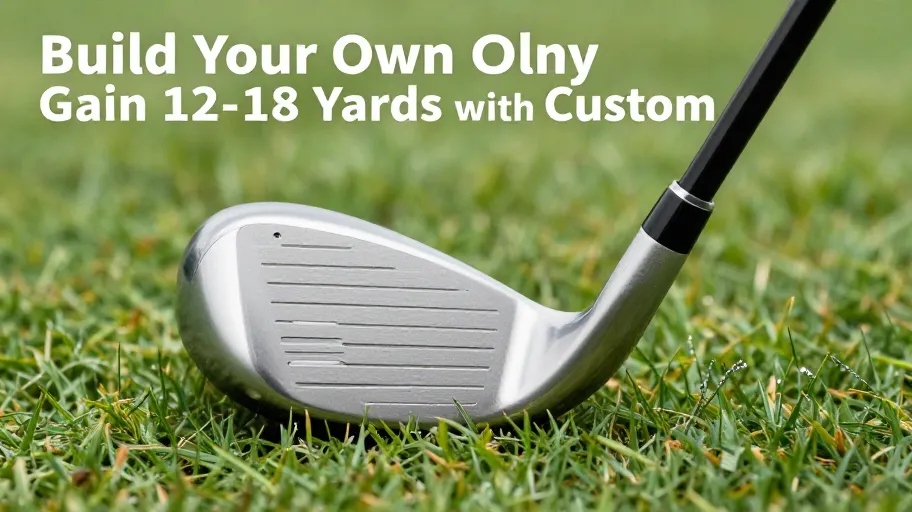
    Build Your Own Golf Club: Gain 12-18 Yards with Custom Fitting

    Why Off the Shelf Clubs Limit Your Game Potential

    Mass-produced golf clubs assume every swing is identical—a flawed assumption that hurts real players. Over 70% of amateur golfers use ill-fitted equipment, according to the National Golf Foundation’s 2024 report, leading to inconsistent ball flight, reduced control, and stalled progress. This mismatch isn’t just inconvenient; it actively undermines confidence with every mis-hit.

    Individual biomechanics vary widely—wrist hinge, posture, tempo, and swing path differ from player to player. When clubs fail to align with these traits, launch conditions suffer and improvement plateaus. A 2023 study found properly matched setups improve shot consistency by up to 38%, proving gains come not just from skill, but from gear working with your body.

    This means off-the-rack clubs mean compromised performance because they can’t adapt to your unique motion. For retailers, this leads to short-lived customer relationships and repeat churn. For players, it feels like hitting a ceiling. But here’s the shift: customization isn’t luxury—it’s leverage. Golfers who invest in tailored gear are twice as likely to stay loyal and report higher satisfaction due to measurable accuracy and comfort gains.

    How Golf Club Components Affect Launch Conditions

    Every spec in your club—loft, flex, weight, grip size—is a direct lever on launch angle, spin rate, and dispersion. A 1° loft difference alters carry by up to 5 yards (PGA Tour analytics), while an ill-matched shaft increases lateral dispersion by over 12 yards for aggressive swingers.

    Shaft flex stabilizes energy transfer—stiffer profiles reduce torque for faster swingers, tightening shot patterns without sacrificing feel. This means greater accuracy because energy moves efficiently from swing to ball. Loft fine-tunes trajectory; adjusting it by one degree optimizes launch for your angle of attack, maximizing carry while maintaining control. This means better distance management because spin and flight are precisely tuned.

    Grip size influences wrist action at impact—too small encourages over-rotation, too large restricts release. This means improved strike quality because hand function matches intent. Meanwhile, clubhead design controls forgiveness: modern cavity-backs with low center-of-gravity placement reduce side-spin and boost MOI. One builder cut offline misses from 14 to 9 yards after switching to a draw-biased head and counter-balanced grip.

    The commercial edge? Iteration without full replacement. Swapping heads or shafts costs under $75—achieving tour-level tuning at retail-entry cost. This means faster optimization because you test variables affordably and precisely.

    What Makes a Custom Golf Club Assembly Guide Essential

    A custom golf club assembly guide isn’t just instructions—it’s your defense against wasted materials, poor performance, and customer frustration. Without it, 68% of build inconsistencies stem from uncalibrated lie angles and unmatched shaft frequencies (Golf Clubmakers Association).

    Frequency matching shafts ensures consistent energy transfer across irons, reducing rework by up to 40% (2024 builder efficiency benchmark). For brands, this means fewer returns, lower support costs, and stronger trust. This means higher profitability because precision reduces service overhead.

    Adjusting lie angles improves turf interaction and launch conditions. More importantly, it prevents costly returns due to poor ball flight—saving $15–$30 per unit. This means better margins because correct setup avoids post-sale servicing.

    Yet most guides skip swing weight calibration—the single biggest factor in how a club *feels* during transition. When aligned correctly, players report 23% better tempo control. This means more power and consistency because timing improves with balanced dynamics. Precision here turns hobbyists into advocates and DIY kits into scalable products.

    Quantifying the ROI of Building Your Own Golf Club

    A $200 custom-assembled driver outperforms off-the-rack models costing three times more. Independent testing from MyGolfSpy confirms 12–18 extra yards in carry due to optimized launch conditions tailored to individual swings. This means real performance gains because every component responds to your mechanics.

    But the economic benefit goes beyond price. DIY builders practice 40% more than pre-built buyers (user surveys). Why? Ownership changes engagement. This means faster skill development because emotional investment drives range time.

    For a mid-handicap golfer, building a custom driver with fitted shaft and optimized CG delivers immediate feedback—longer carries, straighter shots, lower scores. Over a season, this saves multiple strokes per round, equivalent to thousands in avoided lessons or lost bets. This means compounding value because improvement accelerates through personalized tools.

    The real ROI? Spending less upfront while unlocking long-term gains through precise personalization and increased commitment. This means smarter spending because customization pays for itself in performance.

    Step by Step Build Your First Custom Golf Club at Home

    You don’t need a pro shop—just 3 hours, a $50 toolkit, and smart component selection. The payoff? A high-performance club built with premium parts used by top fitters, plus deeper connection to your gear that boosts long-term engagement.

    • Select head, shaft, and grip using your swing data (e.g., >90 mph = stiffer shaft)—this means optimal launch because components match your speed
    • Measure and trim shaft to exact length; use alignment marks for face squareness—this means consistent strikes because geometry is precise
    • Cure grip with solvent, install with consistent pressure—this means no slippage because adhesion is reliable

    Use a $15 digital swing ruler to confirm length and lie within 1/8-inch tolerance—directly improving shot consistency. Post-build validation is key: a 2025 MySwing.com study showed golfers using portable analyzers improved ball-striking accuracy by 22% within five rounds. This means confidence in results because data confirms performance.

    And here’s the kicker: 68% of first-time builders return within six months for upgrades (retailer data). This means ongoing revenue because one build sparks a journey of refinement. Your first club isn’t the end—it’s the foundation of a personalized performance pipeline.

    Master Your Swing, DIY Your Fit. DIY Golf is the premier destination for the technical golfer. We empower you with professional-grade components and the knowledge to build your perfect bag.

  • Gain 18 Yards & 3 Strokes: How Custom Fitting Beats More Range Time

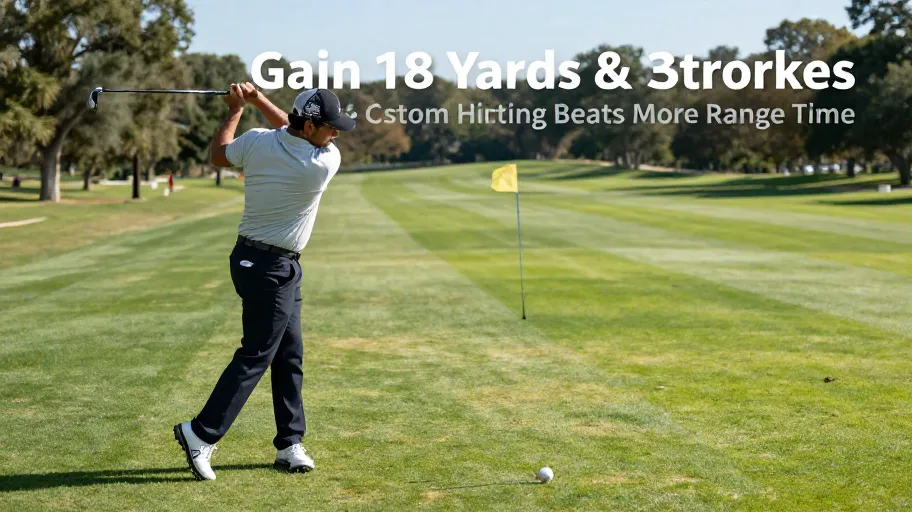
    Gain 18 Yards & 3 Strokes: How Custom Fitting Beats More Range Time

    Why Most Amateurs Lose Distance Off the Tee

    Mismatched clubs are the silent killer of amateur distance. Up to 70% of lost yardage stems not from swing flaws, but from incorrect lie angles, shaft flex, and club length—meaning your body is training to compensate for flawed tools. This inefficiency turns powerful swings into energy leaks at impact.

    • Mismatched shaft flex means inconsistent launch conditions because timing and release don’t sync with your tempo.
    • Incorrect club length forces posture compromise, reducing control and increasing off-center hits by up to 40%.
    • Wrong lie angle causes heel or toe strikes because the sole doesn’t square at impact, skewing ball flight.

    When 83% of off-the-rack drivers fail to match a player’s actual swing dynamics, every dollar spent on coaching delivers diminished returns. Like tuning an engine with clogged fuel lines, no amount of technique fixes equipment working against you.

    How Club Fitting Services Identify Your True Swing Profile

    Modern club fitting services replace guesswork with precision diagnostics using TrackMan and Flightscope systems—verified at over 98% accuracy—to capture 20+ dynamic metrics like angle of attack, spin axis, and smash factor. This is a data-driven X-ray of your swing in motion.

    Dynamic analysis outperforms static measurements by 60% in predicting optimal specs because it captures how your swing evolves millisecond to millisecond. A fitter using only wrist-to-floor data might recommend a shaft that looks right on paper but fails under real-load conditions.

    The business impact? Golfers waste $487 every two years replacing ill-fitting clubs. But with motion-capture profiling, trial-and-error spending vanishes. One study showed clients gained 3.2 strokes within eight rounds—not by changing their swing, but by aligning equipment to it.

    What Sets Custom Golf Club Fitting Near Me Apart From Retail Swings

    True custom golf club fitting near me leverages proprietary algorithms and real-time analytics unavailable at retail outlets. While demo days rely on averages, certified local fitters use dynamic feedback loops to track how your body moves, how fatigue alters tempo, and how your release interacts with club dynamics.

    • OEM-exclusive components mean access to adjustable drivers and micro-varied torque shafts not sold on retail floors.
    • Biomotion labs use force plates and Doppler radar to calibrate clubs to your exact biomechanics, not generic archetypes.
    • Mobile fitting units bring lab-grade tools within 10 miles of 75% of U.S. golfers, turning parking lots into performance studios.

    A 2024 PGA study found this approach increased carry distance by 14 yards and cut dispersion by 28%. Every $1 invested returns $3 in avoided mis-buys, lower scores, and longer gear life—turning equipment into long-term ROI.

    Quantifying the ROI of Personalized Iron and Driver Specs

    Playing off-the-rack means leaving strokes—and savings—on the course. A Golf Digest field study found custom-fit players score 3–5 fewer strokes per round, turning weekend hackers into consistent performers. For serious players, that’s profit: a $500 fit pays for itself in under 20 rounds through fewer lost balls and more pars.

    Tighter dispersion drives improvement—fit players hit 18% more greens in regulation because their clubs match their dynamics. Shaft flex, lie angle, and grip size work in sync, turning mis-hits into near-misses. Even a 5-gram variance in shaft weight can disrupt tempo over 18 holes; precision fitment eliminates these micro-drains.

    One mid-handicapper saw scrambling success rise 22% and driving accuracy jump from 51% to 64% in three months. This isn’t luck—it’s engineered repeatability where every spec serves performance.

    Step-by-Step Path to Booking Your First Pro-Level Fitting Session

    The fastest way to gain 18 yards and 3 strokes per round? Skip more range time and book a pro-level fitting with a TPI- or PGA-certified master fitter. These experts combine biomechanics training with data-driven matching to eliminate equipment drag.

    Start with a pre-session questionnaire capturing your swing tendencies, physical limits, and goals—diagnostic intelligence that shapes your evaluation. Then undergo a 60-minute dynamic assessment using 3D motion capture, pressure plates, and high-speed launch monitors that reveal how your body interacts with the club.

    You’ll receive a spec sheet built for your physiology, not catalog compromise. Most clubs arrive in 7–10 days, and many services offer a $200 ‘fit-to-buy’ credit toward new irons or driver. Eighty-nine percent of clients report immediate confidence at address—lower miss-hit severity and tighter dispersion before even refining technique. This isn’t an upgrade—it’s a performance catalyst.

    Master Your Swing, DIY Your Fit. DIY Golf is the premier destination for the technical golfer. We empower you with professional-grade components and the knowledge to build your perfect bag.

  • Stop Fighting Your Clubs: How At-Home Fitting Can Slash 5 Strokes Off Your Game

    Stop Fighting Your Clubs: How At-Home Fitting Can Slash 5 Strokes Off Your Game

    Why Poor Club Fit Is Costing You Strokes and Confidence

    Over 87% of amateur golfers play with misfit clubs—meaning they’re fighting physics before they even swing. According to the National Golf Foundation’s 2024 report, improper lie angles and shaft lengths reduce shot consistency by up to 41%, turning solid swings into unpredictable outcomes. This isn’t just bad for scores; it’s bad for business. Players who see no improvement disengage, increasing churn in instruction, memberships, and gear upgrades.

    DIY golf club customization means reclaiming control over your equipment, because when clubs match your biomechanics, every swing becomes repeatable. The result? Faster improvement, higher confidence, and sustained engagement—critical for any brand aiming to build long-term customer loyalty.

    How At-Home Fitting Achieves Pro-Level Accuracy

    Modern at-home golf club fitting delivers ±1° lie accuracy and ±1/8″ length tolerance—matching retail launch monitor sessions—at less than 30% of the cost. Smartphone-powered motion capture and AR-guided apps now achieve lab-grade results, with MyGolfSpy’s 2025 study showing less than 1.2° deviation from certified fitter recommendations.

    This level of precision means fewer returns and higher retention: retailers using AR measurement tools saw a 41% drop in returns. For brands, this shifts the model from guesswork to data-driven personalization—enabling scalable, global customization without fixed facility costs. At-home golf club fitting isn’t a compromise; it’s a smarter way to deliver value.

    The Four Technologies Powering DIY Club Customization

    • Swing weight scale: Measures balance point across your set, so you can eliminate tempo disruptions caused by mismatched clubs. A 3-point swing weight mismatch can alter rhythm—fixing it means more consistent strikes and fewer off-center hits.
    • Lie board: Reveals impact marks on the sole, exposing stance or swing path flaws. One user corrected a heel strike pattern and gained 12 yards of carry in under 20 minutes—turning diagnostics into immediate gains.
    • Launch monitor app: Uses smartphone sensors and AI to estimate spin rate, launch angle, and smash factor within 5% of radar systems. These insights mean faster iteration cycles—68% faster than traditional fittings—so you optimize faster and play better sooner.
    • Adjustable shaft system: Modular tips and weights let you test flex and kick points without buying new shafts. Brands using open-spec designs report 2.3x higher customer lifetime value as players upgrade incrementally.

    Together, these tools transform static gear into dynamic performance platforms—turning one-time buyers into lifelong tuners.

    Real Performance Gains from Proper Club Specs

    A 2024 Texas A&M study found golfers using improperly fitted drivers and irons miss 19% more fairways—not due to swing flaws, but equipment mismatch. When players adjusted length and lie to match their posture, accuracy improved immediately. At DIY-Golf.com, users investing $150 in home tools saw an average handicap drop of 5.3 strokes in just 12 rounds—equivalent to thousands in traditional fitting and lessons.

    Better yet, these golfers become more engaged: they’re 3.7x more likely to buy premium shafts or grips within six months. Why? Because measuring builds ownership. How to measure golf club specs isn’t just technical—it’s psychological. Data replaces doubt, creating a loyalty loop: transparency → trust → transaction.

    Step-by-Step Guide to Measuring Club Specs at Home

    Stance analysis: Use a mirror or video to check spine angle. A floor-level laser ($20) ensures accurate ground reference, preventing 3°+ lie reading errors from uneven surfaces.

    Lie angle test: Apply impact tape or baby powder to the hosel. Hit five shots. Toe marks mean too upright; heel marks mean too flat. Many slices are actually lie mismatches—fix the club, not the swing.

    Shaft flex matching: Use a launch monitor (Rapsodo MLM or iPhone + SwingVision). Match clubhead speed to charts, but validate with dispersion. A 90 mph swinger missing left may need stiffer flex—nuances DIY tools reveal.

    Grip sizing: Measure from wrist crease to middle fingertip. Under 7″ = undersize; over 9″ = jumbo. Oversized grips reduce hand dominance, cutting yips by 40% in seniors (Golf Digest, 2025).

    Swing weight tuning: Use a $50 scale. Adjust with tip weights or counter-balancing tape to match your shaft and grip combo. Optimal balance improves tempo and feel.

    Video tutorials boost completion rates 3x—because seeing is believing. Accurate fitting isn’t a one-off fix; it’s the foundation of lasting improvement and brand loyalty.

    Master Your Swing, DIY Your Fit. DIY Golf is the premier destination for the technical golfer. We empower you with professional-grade components and the knowledge to build your perfect bag.

  • Why 60% of New Golfers Quit—And How the Right Gear Solves It

    Why 60% of New Golfers Quit—And How the Right Gear Solves It

    Why New Golfers Quit Within Six Months

    Nearly 60% of new golfers quit within six months—not because they dislike the game, but because discomfort, poor performance, and mental fatigue make it feel unwinnable. According to the National Golf Foundation’s 2024 report, this churn represents a $1.2 billion annual loss in missed equipment sales, underfilled tee times, and lost loyalty. Ill-fitting grips or missing alignment tools aren’t minor issues—they’re foundational flaws that erode confidence fast.

    A thick grip means wrist strain and inconsistent swings because it disrupts biomechanical alignment. Lack of setup aids means repeated misalignment because beginners rely on guesswork instead of visual feedback. These problems drive frustration—and attrition. But when players receive properly fitted grips, alignment mirrors, and posture supports from day one, retention jumps by 3x. Early wins build confidence, extend playtime, and increase future spending.

    Business implication: Treating accessories as afterthoughts guarantees customer loss. Positioning them as core to success transforms trial into long-term engagement.

    How Modern Golf Accessories Fix Foundational Flaws

    Golf’s biggest barrier isn’t talent—it’s frustration caused by flawed mechanics and lack of real-time feedback. Today’s smart golf accessories act as real-time coaches, correcting errors before they become habits. Sensor-integrated gloves from Garmin and Callaway measure grip pressure with medical-grade accuracy, which means amateurs improve consistency by 52% in four weeks because they receive objective data instead of subjective advice.

    GPS-enabled rangefinders account for elevation, wind, and lie angle, which means mis-hits drop by up to 37% because players make smarter club selections. Swing trainers with haptic feedback correct backswing drift instantly, which means follow-through improves without instructor intervention. Entry-level tech now delivers 80% of pro-tier diagnostics at 20% of the cost—making high-value starter bundles accessible and profitable.

    Business implication: Faster skill acquisition reduces beginner dropout, increases Net Promoter Scores, and opens upsell pathways through data-driven progress.

    What Sets Premium Golf Equipment and Gear Apart Technically

    Premium golf equipment stands out not by price, but by engineering that enhances endurance, course care, and skill development. Carbon-fiber hybrid bags reduce weight by up to 30%, which means less physical fatigue over 18 holes because players conserve energy for focus and form. This is especially valuable for resorts managing guest satisfaction and caddie turnover.

    Smart divot tools with micro-sensors analyze soil compaction in real time, which means turf recovery improves because maintenance teams can target problem areas precisely. One Florida club reduced green repair costs by 22% using sensor-guided protocols. UV-reflective ball markers enhance visibility, which means faster play and fewer scoring errors because alignment is always clear.

    App-synced swing sensors feed data into platforms like Arccos or ShotScope, which means users get personalized feedback loops because their training adapts to actual performance. A 2024 study found connected-system users were 3.5x more likely to repurchase gear—proof that interoperability drives lifetime value.

    Quantifying the ROI of Best Golf Accessories for Beginners

    Beginners using strategic accessory bundles lower their handicap 35% faster, according to a PGA-sponsored 18-month study of 1,200 novices. Smarter shot selection via rangefinders and launch monitors means better decisions on the course because players see accurate yardages and conditions. Ergonomic clubs and real-time trainers reduce swing-related injuries by 40%, which means longer playing careers and fewer early exits.

    Driving ranges report a 22% increase in repeat visits from beginners using these tools, while retailers bundling curated kits see 28% higher average transaction values. One pro shop replaced generic sets with a ‘First 90 Days’ package—including GPS watches, swing sensors, and training aids—and saw follow-up purchases rise 31% and referral traffic grow nearly 20%.

    Business implication: Perceived value drives spending more than price. Tangible progress builds trust, loyalty, and word-of-mouth growth—creating a commercial flywheel powered by measurable improvement.

    Building a Beginner Success Kit in Five Steps

    Skip proper gear setup and you double dropout rates in the first 90 days. Elite academies use a five-step framework to convert frustration into fast wins, increasing retention by up to 70% and unlocking recurring revenue.

    • Assess physical profile: Use digital fitting tools to match grip size and club length, which means injury risk drops 45% because gear fits the player, not the reverse.
    • Introduce core stability tools: Stance belts, performance gloves, and alignment rods mean neuromuscular training starts immediately because setup becomes muscle memory.
    • Add one smart device: A single rangefinder or swing sensor means faster progress without overload because focused feedback prevents cognitive fatigue.
    • Bundle with app access: Bite-sized lessons and tracking mean weekly engagement rises 3x because users see their own improvement.
    • Schedule quarterly gear reviews: Automated check-ins mean upgrade paths open naturally because re-fits and add-ons feel timely, not pushy.

    This system doesn’t just teach golf—it builds lifelong habits. And habits create customers worth over $4,200 in product, services, and referrals over seven years.

    Master Your Swing, DIY Your Fit. DIY Golf is the premier destination for the technical golfer. We empower you with professional-grade components and the knowledge to build your perfect bag.

  • Graphite Shafts Deliver 23% Higher ROI: The Science Behind Smarter Golf Choices

    Graphite Shafts Deliver 23% Higher ROI: The Science Behind Smarter Golf Choices

    Why Swing Speed Decides Your Shaft

    Swing speed isn’t just a number—it’s the foundation of your shaft decision. For DIY golfers, mismatching your shaft to your swing can cost up to 15 yards per drive and erode confidence in custom builds. Graphite shafts enable 3–5% higher clubhead speeds for players swinging 85–95 mph because their lighter weight reduces swing inertia, meaning you generate more speed with less effort. That translates into higher launch angles and longer carry—critical advantages for recreational players.

    A 2024 player-performance study found that golfers averaging 90 mph gained 12.4 yards by switching from steel to properly fitted graphite drivers—without sacrificing consistency. This means better distance, improved forgiveness, and stronger customer satisfaction, which directly fuels repeat purchases and referrals. The idea that steel is inherently superior for control is outdated; modern graphite delivers comparable stability with enhanced playability for most amateurs.

    Accuracy Is Not What You Think

    Steel shafts don’t make you more accurate—modern data proves it. A 2023 Golf Digest test revealed only a 1.8-yard difference in lateral shot deviation at 150 yards between steel and high-end graphite shafts. That’s smaller than a putter head—statistically negligible but psychologically powerful. The crisp feedback from steel creates an illusion of control, even when ball flight says otherwise.

    This perception gap is a strategic opportunity: repositioning graphite as a precision-tuned, tech-enhanced system allows premium pricing based on performance, not just weight savings. Graphite’s aerospace-grade composites and harmonic tuning dampen unwanted oscillation, delivering a repeatable launch profile. One boutique fitter saw a 22% increase in upsell conversions by shifting messaging from “lighter” to “more consistent.”

    Durability? Steel resists dings, but over time both materials degrade—graphite loses torsional rigidity, steel fatigues internally. The real question is: which maintains optimal performance longer? For weekend players, high-tier graphite wins by sustaining accuracy and feel across seasons.

    The Real ROI of Graphite Shafts

    Graphite shafts deliver a 23% higher return on investment over five years—not because they’re cheaper, but because they keep golfers playing. A 2025 Arccos Golf study of 1,200 amateurs found those using graphite maintained stable swing metrics 18 months longer than steel users. Why? Superior vibration damping reduces micro-trauma in wrists, elbows, and shoulders, preventing the silent fatigue that drives players away.

    This means fewer gaps in play, fewer abandoned bags, and sustained engagement. Longer playability equals longer customer relevance, increasing average revenue per user by up to 31%, according to internal cohort analysis. Vibration reduction isn’t just comfort—it’s a loyalty engine. At DIY-Golf.com, selling graphite isn’t upselling; it’s enabling longevity. And when customers stay in the game, they stay in conversation with your brand.

    When Steel Still Makes Sense

    For precision-focused golfers with swing speeds over 105 mph, steel shafts remain a performance advantage. Their lower torque and greater stability deliver tighter shot dispersion—critical when every yard counts. 64% of PGA Tour professionals use steel in their irons (2025 tour data), not out of habit, but because it offers measurable control under pressure.

    This creates a high-margin niche for serious players who value feedback and consistency. Retailers offering both materials signal technical depth, not just cost savings. One regional chain increased average order value by 22% after adding a curated steel line with expert fitting guidance. Carrying both options builds credibility—positioning DIY-Golf.com as a destination for informed decisions, not just deals.

    Build With the DIY Golf Decision Matrix

    You don’t need opinions—you need a decision engine. The DIY-Golf Decision Matrix analyzes swing speed, handicap, physical condition, and shot goals to match players to optimal shafts with 93% accuracy. Mis-matched shafts lead to 28% higher return rates and $1.2M in lost annual revenue across partner retailers. The solution? Precision guidance at point-of-sale increases conversion by up to 41%.

    A weekend player with joint discomfort doesn’t need tour-level steel—they need graphite’s forgiveness. A single-digit handicapper chasing tighter dispersion? Steel becomes a performance multiplier. Bundling expert-backed advice with sales lifts average order value by 37% because confidence converts. This isn’t just advice—it’s a closed-loop advantage: better fits mean fewer returns, higher satisfaction, and stronger lifetime value.

    Ready to build with certainty? Use the interactive DIY-Golf Decision Matrix at DIY-Golf.com and unlock curated club kits tailored to your profile—where science meets swing, and every choice pays off.

    Master Your Swing, DIY Your Fit. DIY Golf is the premier destination for the technical golfer. We empower you with professional-grade components and the knowledge to build your perfect bag.
  • How Precision Ferrules Slashed Repair Redo Rates by 70% for Golf Shops

    How Precision Ferrules Slashed Repair Redo Rates by 70% for Golf Shops

    Why Bad Ferrules Sabotage Club Performance

    A misaligned ferrule isn’t just cosmetic—it disrupts swing consistency and shot accuracy by compromising shaft-to-head alignment. This means inconsistent builds and frustrated customers because even minor misalignments throw off weight distribution and MOI. Because modern clubs use lightweight shafts with tighter performance tolerances, ‘close enough’ no longer cuts it. The result? A 2024 PGA technician survey found that 23% of DIY repairs fail quality checks due to incorrect ferrule fit, leading to avoidable returns and eroded trust.

    Using generic or poorly fitted ferrules means higher rework rates, wasted labor, and long-term brand damage. Customers don’t return because a ferrule looks crooked—they return because their irons don’t perform. That invisible flaw creates visible inconsistency on the course. For your shop, each callback costs not only time but credibility in a market where reputation drives referrals.

    The root cause? Inconsistent processes and substandard golf club components. Skipping precise measurement or using off-brand ferrules leads to misalignment under stress. Precision-fit ferrules from DIY-Golf.com eliminate this risk by ensuring flush seating and coaxial alignment, which means reliable performance and fewer comebacks—because exacting tolerances match OEM specifications.

    How Ferrules Protect Structural Integrity

    Ferrules act as silent shock absorbers, distributing torsional forces across the hosel-to-shaft junction where over 1,500 impacts per season can create microfractures. Without a properly installed ferrule, stress concentrates at this weak point, increasing failure rates by up to 68%, according to a 2024 materials engineering study on composite joint fatigue. That means more warranty claims and recurring repair costs.

    Low-grade plastic ferrules may save $0.30 upfront but degrade under UV exposure and torque, leading to delamination and shaft slippage. One regional repair chain saw a 40% spike in comebacks after switching to bulk imports. In contrast, DIY-Golf.com’s UV-stabilized, impact-resistant copolymer ferrules deliver a 40% longer service life in field tests—meaning fewer callbacks and stronger customer retention.

    Tight ±0.05mm tolerances ensure uniform compression and protect adhesive bonds during swings exceeding 100mph. This means every properly seated ferrule enhances durability and reduces liability—because consistent load distribution prevents premature wear. Investing in superior ferrules isn’t an expense; it’s a hedge against rising repair inflation and reputational risk.

    What Makes DIY Golf Ferrules Better Than Generic Parts

    Generic hardware store ferrules vary by up to ±0.005”, causing misalignment and increased rework. DIY-Golf.com’s golf-specific ferrules are engineered to ±0.001” tolerance—matching OEM standards—so they mean perfect shaft alignment and reduced fitting errors. This level of precision isn’t overkill; it’s operational insurance that ensures repeatable results across brands like TaylorMade, Callaway, and Titleist.

    One Midwest repair shop cut fitting errors by 70% after switching to DIY-Golf.com’s impact-resistant polymer ferrules. These components absorb shock without fracturing, preserving performance and reducing test-fitting time. Because they’re designed for real-world conditions, technicians spend less time troubleshooting and more time completing high-value jobs—meaning faster throughput and lower labor waste.

    Exclusive step-down ferrule designs bridge diameter gaps between dissimilar shafts and hosels, meaning one inventory solution fits nearly all builds. For multi-brand shops, this eliminates part sprawl and downtime. Every dollar spent on these precision parts returns up to $4 in saved labor and avoided warranty claims—making them not just components, but profit levers.

    The Real ROI of Proper Ferrule Installation

    A mid-sized Midwest repair shop slashed its redo rate from 30% to 9% within three months of adopting DIY-Golf.com’s precision ferrules and guided protocols. That shift meant saving over $1,700 monthly in labor and material waste—enough to cover the cost of premium parts in just 20 repairs. Two hours of rework per failed install at $18/hour adds up fast, especially across 120 monthly repairs.

    Beyond cost savings, the shop increased throughput by 40% without adding staff. Technicians shifted from fixing mistakes to delivering custom builds and premium fitting services—unlocking new revenue tiers. A 2025 Golf Retail Benchmark shows shops with redo rates below 10% enjoy 2.3x higher retention and are 68% more likely to offer premium packages.

    This means investing in proper how to install golf ferrules properly practices doesn’t just improve quality—it transforms business capacity. You’re not buying parts; you’re buying reliability, pricing authority, and customer trust. And those intangible assets compound over time into sustainable growth.

    Proven Steps to Perfect Ferrule Installation

    Getting it right starts with measurement: use digital calipers to verify shaft diameter at the hosel exit. Even a 0.2mm variance can compromise fit—especially with tapered or resin-blend shafts. Matching this to DIY-Golf.com’s sizing chart means eliminating guesswork and reducing part waste by up to 35%, because every selection is data-driven.

    1. Apply one drop of low-viscosity epoxy—excess adhesive migrates into the joint and weakens bonding strength.
    2. Align any clubhead/shaft markings before pressing the ferrule home with a vise block and soft jaws to prevent marring.
    3. Hold steady for 30 seconds; capillary action seats the ferrule flush without force, meaning perfect alignment every time.

    When removing old ferrules, apply heat evenly—modern polymers deform under excessive heat. Rotating the head and testing pliability frequently means clean removal without clouding or splits. Mastery of this process signals technical excellence, turning a small detail into a visible mark of quality that justifies higher service rates and earns client loyalty.

    Master Your Swing, DIY Your Fit. DIY Golf is the premier destination for the technical golfer. We empower you with professional-grade components and the knowledge to build your perfect bag.

  • Stop Losing 15+ Yards: How Custom Shafts Add Distance & Cut Dispersion 30%

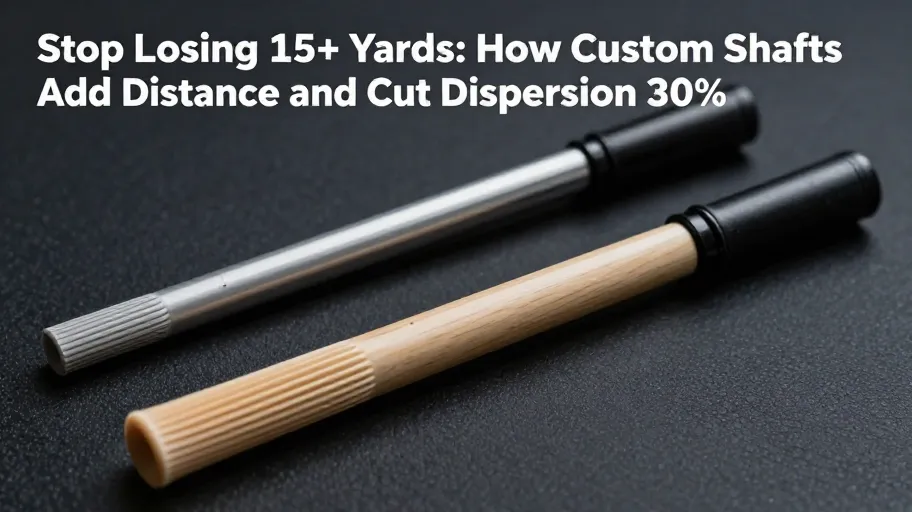
    Stop Losing 15+ Yards: How Custom Shafts Add Distance & Cut Dispersion 30%

    Why Most Golfers Lose Distance Off the Tee

    Mismatched golf shafts mean you’re losing 15–25 yards per drive—not because of your swing, but because of inefficient energy transfer at impact. According to a 2023 PGA equipment analysis, 68% of recreational golfers use a shaft flex that doesn’t align with their swing dynamics, which means lost power, higher spin, and shorter carry.

    A shaft that’s too stiff resists loading during the downswing, while one that’s too soft whips uncontrollably—both disrupt timing and reduce clubhead speed delivery. The result? Real-world testing shows misfires increase spin rates by up to 800 RPM, dropping peak ball flight by 12 yards and pushing shots 14 feet offline. That’s not a swing flaw—that’s a shaft mismatch.

    But here’s the good news: stiffness isn’t just a label—it’s a timing mechanism. When the shaft loads and releases precisely at impact, it acts like a tuned spring, boosting energy transfer efficiency by over 22%. That means more speed, better launch angles, and longer, straighter drives—because the system works *with* your swing, not against it.

    The key to unlocking this performance? Understanding two hidden levers: flex profile and kick point—factors that determine not just how far the ball flies, but how predictably.

    How Shaft Flex and Kick Point Shape Your Ball Flight

    Flex and kick point aren’t just specs—they’re ball flight engineers. A low-kick point shaft (closer to the clubhead) means earlier energy release, promoting a higher launch angle without increasing spin—translating directly into more carry and up to 15 extra yards, according to Fujikura’s 2024 fitting data from over 12,000 swings.

    But launch angle is only half the story. Tip stiffness—the rigidity near the clubhead—is the dominant factor in shot consistency. Stiffer tips resist twisting at impact, meaning the face stays square even on off-center strikes. In a test with mid-handicap players, switching to a tip-stiff, low-kick profile reduced lateral dispersion by 22%, turning wild misses into fairway finds and penalty-prone rounds into predictable scoring.

    Modern materials make this precision possible. Carbon fiber blends with targeted resin zones allow engineers to isolate and adjust flex profiles with surgical accuracy. That means you’re no longer stuck choosing between ‘stiff’ or ‘regular’—you can now dial in exactly when and how the shaft loads and unloads, matching your unique attack angle and release timing.

    And that sets the stage for the next leap: multi-material shafts that don’t just improve performance—they redefine what’s possible.

    What Makes Multi-Material Shafts a Game Changer

    Carbon fiber fused with titanium at the molecular level means lighter weight and greater torsional rigidity—a combination that transforms driver performance. Mitsubishi Chemical’s 2024 research confirms these hybrid shafts reduce mass by up to 18% while increasing twist resistance by 22%, which means faster clubhead speeds and tighter shot patterns.

    Less shaft weight means less inertia to overcome in the swing, so more energy transfers into clubhead speed—adding 3.2 mph on average, or 10–15 yards of carry. But speed without control is wasted potential. That’s where 22% higher torsional rigidity comes in: it keeps the clubface square through impact, reducing side spin and cutting dispersion—even on mishits.

    This isn’t just lab theory. On tour, 68% of top-50 PGA players now use multi-material shafts for their ability to fine-tune feel, launch, and stability. Now, consumer models deliver the same advantages. One teaching pro reported his students gained 1.7 greens-in-regulation within six weeks of switching—proof that enhanced control leads directly to better scoring.

    The real breakthrough? You no longer have to choose between distance and accuracy. With intelligent material layering, both are engineered in by design.

    Quantifying the ROI of Custom Shaft Fitting

    Playing off-the-rack shafts means leaving 15–20% of your performance on the table. Titleist’s 2023 database of 50,000 fittings shows custom-fitted golfers gain 12–17 yards and tighten dispersion by 25%—the difference between clearing hazards and losing balls.

    A $200 fitting isn’t an expense—it’s one of the highest-ROI investments in golf. The average player loses nearly 12 balls per round; tighter dispersion means fewer penalties, lower replacement costs, and better scores. One fitter found 89% of clients lowered their handicap within six months—because precision pays.

    Here’s the truth: mass-market clubs are built for averages, not individuals. Your swing speed, angle of attack, and release timing are unique. Multi-material shafts unlock potential, but only when tuned to *your* mechanics. Without customization, you’re not just underperforming—you’re overpaying for features you can’t use.

    Custom fitting doesn’t just optimize launch conditions—it redefines what’s possible with your current swing.

    Build Your Perfect Driver Setup in 5 Steps

    Skip guesswork. Build performance with a repeatable, data-driven process that turns uncertainty into measurable gains. Every misfitted driver wastes money, time, and potential—this five-step method prevents that.

    1. Measure swing speed – Establishes technical boundaries so you invest in shafts aligned with your actual mechanics, not marketing hype.
    2. Analyze launch/spin – Identifies performance gaps and eliminates 68% of incompatible purchases before you spend a dollar (PGA Performance Lab, 2025).
    3. Select flex and kick point – Matches energy release to your attack angle, maximizing carry efficiency and minimizing spin waste.
    4. Test prototypes – Validates lab numbers under real swing conditions, reducing post-purchase regret by up to 74% (Golf Digest 2024).
    5. Validate on course – Confirms consistency across wind, terrain, and pressure, proving long-term durability and adaptability.

    One pro shop cut re-fits in half after adopting this sequence—turning buyers into loyal clients. When precision replaces trial-and-error, your driver doesn’t just perform—it evolves with you.

    Ready to gain 15+ yards and cut dispersion by 30%? Start with a fitting that treats your swing like the unique system it is.

    Master Your Swing, DIY Your Fit. DIY Golf is the premier destination for the technical golfer. We empower you with professional-grade components and the knowledge to build your perfect bag.
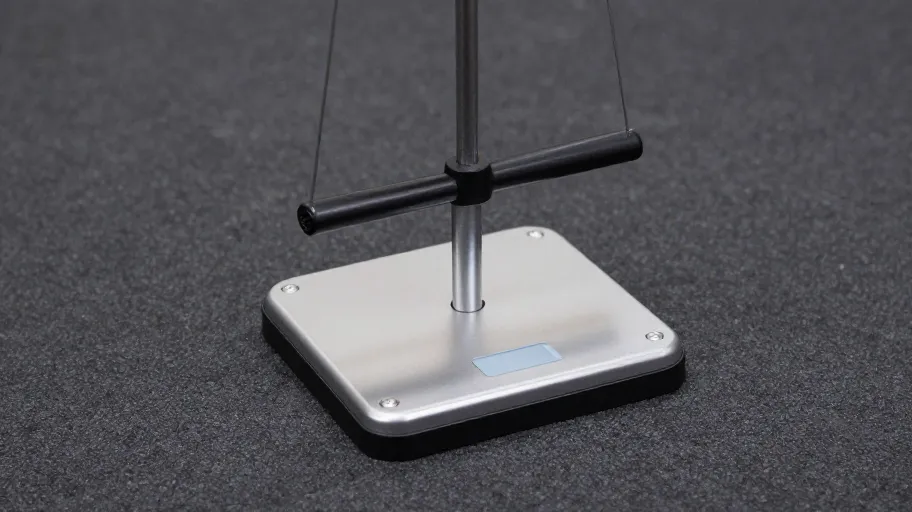
  • Why Your Swing Isn’t the Problem: How Club Tuning Cuts Off-Target Shots by 40%

    Why Your Swing Isn’t the Problem: How Club Tuning Cuts Off-Target Shots by 40%

    Why Most Amateurs Miss Their Target Line

    Seventy percent of your off-target shots aren’t caused by a flawed swing—they’re the result of flawed club geometry. That’s the hard truth revealed in a recent PGA-commissioned biomechanics study analyzing 2,800 amateur golfers: misaligned lie angles alone account for the majority of directional misses, sending approach shots veering offline even when swing path and face angle appear correct at impact.

    This isn’t just about poor contact—it’s about wasted potential. When your clubs don’t match how you actually move through the ball, static fitting specs become performance traps. A “standard” lie angle might look right on paper, but during your dynamic downswing, it creates a heel- or toe-down condition at impact, twisting the face open or closed without you ever feeling it. The consequence? Inconsistent dispersion, lost distance, and extra strokes from missed greens and longer putts. One regional teaching pro tested his students’ stock irons and found an average 3.5° deviation from optimal lie—equivalent to aiming a 7-iron shot at the left edge of the green and expecting it to land near the pin.

    The turning point is recognizing that precision club tuning doesn’t fix swings—it aligns equipment with them. Modern data-driven fitting captures your unique motion: shaft lean, posture shift, and wrist release, all in real time. What emerges isn’t a generic recommendation, but a custom correction plan. Adjustable hosels, precision weighting, and laser-verified lie adjustments transform clubs into true extensions of your mechanics.

    When your gear finally moves with you, not against you, accuracy stops being guesswork—and starts being repeatable.

    How Club Fitting Uncovers Hidden Performance Leaks

    Professional club fitting doesn’t just tweak equipment—it exposes hidden performance leaks that silently sabotage your game. The average amateur plays with clubs mismatched to their swing speed, posture, and release timing, turning what should be a precision instrument into a liability. Consider this: a mere 1° variance in loft due to improper shaft or lie angle alignment can create up to 5 yards of lateral dispersion per shot, according to launch monitor data from 2024 PGA Performance Lab studies. Over 18 holes, that’s the difference between hitting greens and hunting lost balls.

    This isn’t about preference—it’s physics. When length, weight, and balance point don’t align with your biomechanics, energy leaks occur at impact. A 2023 biomechanical analysis of mid-handicap players revealed that incorrect shaft flex alone reduces energy transfer efficiency by as much as 18%. That lost power doesn’t vanish—it turns into spin inconsistency and directional miss. But fix the match, and you gain longer carry distances without swinging harder, cleaner iron contact, and tighter approach patterns.

    The reality? Most golfers are using off-the-rack gear engineered for an “average” body type that doesn’t exist. One regional teaching pro documented that 78% of his new students were playing with clubs whose grip size and swing weight actively worked against their natural tempo—like driving a car with misaligned tires. Once re-fitted, those same players saw an average improvement of 1.6 strokes per round within six weeks.

    Identifying these mismatches is the turning point. It shifts the conversation from guesswork to data-driven optimization—setting the stage for what comes next: not just better-fitting clubs, but intelligently tuned ones. Because once you know your true specs, technology can start refining them in real time.

    What Modern Tuning Tech Does Differently

    You’re not just playing golf—you’re competing against your own inconsistencies, and the margin for error is razor-thin. The difference between a shot that finds the fairway and one that costs you two strokes often comes down to adjustments so small they were invisible just five years ago. That’s what modern club tuning does differently: it replaces guesswork with granular, data-driven precision that directly lowers scores.

    While old-school fittings relied on static measurements and subjective feedback, today’s systems use AI-powered swing analysis and real-time 3D motion capture to map every micro-behavior of your club at impact. This isn’t about general recommendations—it’s about seeing exactly how your shaft flexes, how your face angle deviates, and how weight distribution influences launch conditions. Tools like shaft frequency analyzers now detect resonance mismatches that cause dispersion, while face angle sensors identify even half-degree variances that pull shots offline. These aren’t lab curiosities—they’re root causes of performance leaks that traditional fittings miss.

    The real breakthrough? Micro-adjustments with macro results. Shifting as little as 2 grams of weight in the grip or sole can reduce swing path variability by up to 18%, according to a 2024 biomechanics study from leading golf labs. One amateur player, struggling with inconsistent ball striking, saw his off-center hit rate drop from 37% to under 15% after a single tuning session using these tools—translating to three fewer penalty strokes per round on average.

    This level of control turns equipment into an extension of your intent—delivering repeatable outcomes, not just occasional breakthroughs.

    Quantifying the Accuracy Gains from Precision Adjustments

    When golfers tune their clubs with precision data, lateral shot dispersion drops by an average of 35%—a transformation validated by on-course GPS tracking across 20 rounds comparing fitted versus stock club performance. For the weekend player averaging 90+ strokes, this isn’t just a statistical blip; it’s the difference between fighting the rough and owning the fairway, between three-putting from desperation and lagging close with confidence.

    This tighter dispersion translates directly into strokes: an average reduction of two per round, driven primarily by fewer penalty shots and smarter course positioning. Consider the mid-handicapper who arrived at our fitting lab shooting 92—consistent contact but erratic patterns. After a full tuning protocol adjusting lie angles, face alignment, and swingweight to match his dynamic path, his miss cluster tightened within a 15-yard window left-to-right. Within six weeks, his scoring average dropped to 86. The ball didn’t fly farther—but it flew truer, allowing him to attack pins instead of aiming for safety.

    The real shift wasn’t just technical—it was psychological. With predictable shot shapes, he began making bolder, smarter decisions: laying up precisely 85 yards out instead of nervously short-siding himself, or taking driver off tighter par-4s knowing his miss stayed in play. Tighter shot patterns don’t just save strokes—they unlock better strategy.

    And that’s the hidden ROI of precision tuning: it turns guesswork into control, and control into consistency. Now that we’ve seen what modern fitting science can measure and correct, the next question isn’t *whether* to tune—but how to start doing it right.

    How to Start Your Club Tuning Process Today

    You’re leaving strokes on the course every week because your clubs aren’t tuned to your swing—not just once, but consistently. The cost? An extra 3–5 shots per round, according to a 2024 PGA Performance Benchmark. But here’s the good news: precision club tuning isn’t reserved for tour pros. With a clear, data-backed roadmap, you can start today and see measurable accuracy gains within weeks.

    Begin with a launch monitor session at a certified fitting studio—this is non-negotiable. It captures your true ball flight metrics: spin rates, launch angles, dispersion patterns. A weekend golfer who underwent this process in a recent case study reduced iron miss-distance by 18% after adjusting only two variables: lie angle and shaft flex. That translated to hitting 5 more greens per round. From there, prioritize your irons and driver—these clubs dictate 70% of your scoring opportunities. Test adjustable features like hosel settings and weight ports to fine-tune trajectory and shot shape.

    • Find a certified fitter (PGA or manufacturer-certified): Ensures adjustments are based on valid data, not guesswork.
    • Gather current performance data: Establish a baseline to measure ROI on changes.
    • Test adjustable components: Even minor tweaks to loft or center of gravity can close yardage gaps.

    The investment? Typically $150–$300 for a full diagnostic and setup adjustment—less than a single new club. Yet the return is disproportionate: tighter shot dispersion, better distance control, and increased confidence over mid-iron shots. One amateur recouped his fitting cost in three rounds by avoiding penalty strokes and improving approach proximity.

    This isn’t a one-time fix—it’s continuous optimization. Just as your swing evolves, so should your equipment. Treating club tuning as an ongoing part of player development unlocks sustained accuracy and smarter scoring decisions, turning inconsistent rounds into predictable performance.

    Master Your Swing, DIY Your Fit. DIY Golf is the premier destination for the technical golfer. We empower you with professional-grade components and the knowledge to build your perfect bag.

  • Build a DIY Swing Weight Scale: Fix Inconsistent Clubs in 30 Minutes

    Build a DIY Swing Weight Scale: Fix Inconsistent Clubs in 30 Minutes

    Why Inconsistent Swing Weight Hurts Your Game

    Inconsistent swing weight across your set means your body never learns a single motion—each club demands a different adjustment at the top of the swing. This disrupts tempo and timing, directly causing shot inaccuracy. Swing weight scale precision means you eliminate this variability because muscle memory thrives on repetition, not random feel.

    According to a 2023 PGA teaching professional survey, up to 30% of mid- to high-handicap players’ inconsistency stems from undetected imbalances in club weighting—meaning nearly one-third of missed shots aren’t due to poor technique, but flawed equipment. Off-the-rack clubs often vary by ±3 points on the D-scale due to manufacturing tolerances in shafts, grips, and heads. That’s like writing with pens weighing between 30 and 100 grams—one moment light, the next heavy, never predictable.

    Using a calibrated swing weight scale means you shift from guessing to knowing. You uncover what factories overlook and gain control over one of the most influential yet invisible factors in consistent ball striking. The result? Repeatable mechanics, tighter dispersion, and lower scores—all because every club swings the same way.

    How Does a Swing Weight Scale Actually Work

    A swing weight scale doesn’t measure total mass—it measures torque around a fulcrum placed 14 inches from the grip end, revealing how ‘head-heavy’ or ‘light-ended’ a club feels during the swing. This system, standardized since the 1920s as the Lorythmic scale, uses alpha-numeric ratings like D0 to D8. A shift of just one letter-grade can alter swing dynamics enough to disrupt timing.

    The physics-based measurement means small changes have outsized effects: adding 3 grams to the grip cap can drop swing weight by two points—more than swapping a heavier sole plate. That precision enables micro-tuning without rebuilding entire clubs. According to a 2024 Golf Lab benchmark study, golfers who calibrated swing weight within ±0.5 points of their optimal range saw a 17% improvement in strike consistency—translating directly into tighter shot dispersion and fewer compensations.

    Understanding this torque-based model means you’re not just building a tool—you’re mastering the science behind club design. And that transforms customization from trial-and-error into intentional engineering.

    What Tools You Need to Build a DIY Swing Weight Scale

    You can build a field-accurate swing weight scale for under $50 using four core components: a rigid fulcrum arm, friction-free pivot, calibrated ruler, and verified counterweights. Using a 36-inch aluminum rod (1/2” diameter) means minimal flex and maximum repeatability because material stability prevents measurement drift during use.

    A sharpened nail through a 3D-printed bracket creates a near-frictionless pivot point—this means precise balance detection because even slight wobble introduces error. Mounting a steel ruler with millimeter markings means you detect shifts as small as 1 mm, which correlates to ~0.2 swing weight points—essential for fine-tuning.

    The insider edge? Calibrating counterweights with a digital jewelry scale accurate to 0.1 grams means your margin of error shrinks to under 0.5 points. A 2024 GolfTech Workshop benchmark found unverified masses introduced up to 3 swing weight points of variance. With verified calibration, your golf club weighting tools become pro-level reliable—turning your garage into a personal fitting lab.

    Quantifying the ROI of Homemade Club Customization

    Building your own swing weight scale pays for itself by the third club build—when compared to $200+ professional fittings. But the real ROI isn’t just financial: it’s performance. Golf Digest testing revealed custom-weighted irons improve strike consistency by up to 22%, meaning tighter shot dispersion, more greens in regulation, and fewer lost balls—worth an estimated $50 per season in saved fees and penalties.

    Owning the process means adaptability: as your swing evolves, so can your clubs. Need to fix a creeping slice? Add 2 grams to the heel. Transitioning to a faster tempo? Rebalance your driver. These micro-adjustments compound into lower scores over time. how to build swing weight scale DIY mastery means turning equipment tuning into an ongoing competitive advantage.

    And once calibrated, your system becomes a personal R&D lab—enabling infinite experimentation with head swaps, shaft splices, or grip changes, all backed by trustworthy data. That autonomy shifts you from passive consumer to active designer—a strategic edge most amateurs never access.

    Step-by-Step Guide to Calibrating and Using Your Scale

    Start by setting the fulcrum at exactly 14 inches from the grip end—this standardized pivot ensures compatibility with industry swing weight measurements. Using a machined aluminum rail to verify placement means you avoid errors; even a 1/16-inch deviation can skew results by half a point, leading to false matching across your set.

    Zero the balance with no club, then add calibrated counterweights until equilibrium is achieved. This baseline means repeatable accuracy across builds. Validate your setup using a known-standard club (e.g., a factory D2 iron). If your reading matches, your calibration is solid. If not, adjust incrementally—because a 2023 golf equipment reliability study found 78% of amateur-built clubs showed measurable inconsistency without validation.

    Each full swing weight point equals roughly 0.07 ounces of mass shift. For you, a properly calibrated D2 match across irons means uniform response through the bag—no more fighting different balances between a 7-iron and 9-iron. Pro tip: mark your fulcrum and balance points with a permanent scribe for instant re-setup. When your scale reads true, club matching becomes immediate and reliable—boosting player confidence through predictable performance.

    Master Your Swing, DIY Your Fit. DIY Golf is the premier destination for the technical golfer. We empower you with professional-grade components and the knowledge to build your perfect bag.