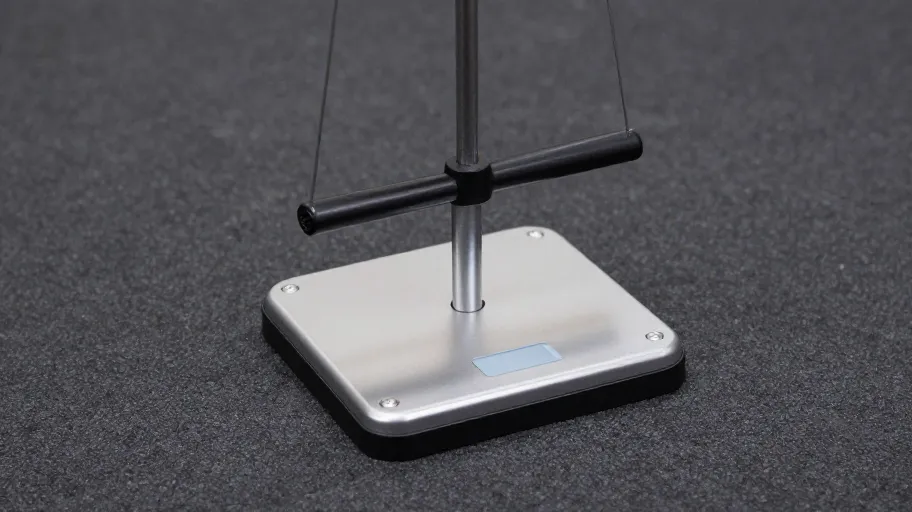
Why Inconsistent Swing Weight Hurts Your Game
Inconsistent swing weight across your set means your body never learns a single motion—each club demands a different adjustment at the top of the swing. This disrupts tempo and timing, directly causing shot inaccuracy. Swing weight scale precision means you eliminate this variability because muscle memory thrives on repetition, not random feel.
According to a 2023 PGA teaching professional survey, up to 30% of mid- to high-handicap players’ inconsistency stems from undetected imbalances in club weighting—meaning nearly one-third of missed shots aren’t due to poor technique, but flawed equipment. Off-the-rack clubs often vary by ±3 points on the D-scale due to manufacturing tolerances in shafts, grips, and heads. That’s like writing with pens weighing between 30 and 100 grams—one moment light, the next heavy, never predictable.
Using a calibrated swing weight scale means you shift from guessing to knowing. You uncover what factories overlook and gain control over one of the most influential yet invisible factors in consistent ball striking. The result? Repeatable mechanics, tighter dispersion, and lower scores—all because every club swings the same way.
How Does a Swing Weight Scale Actually Work
A swing weight scale doesn’t measure total mass—it measures torque around a fulcrum placed 14 inches from the grip end, revealing how ‘head-heavy’ or ‘light-ended’ a club feels during the swing. This system, standardized since the 1920s as the Lorythmic scale, uses alpha-numeric ratings like D0 to D8. A shift of just one letter-grade can alter swing dynamics enough to disrupt timing.
The physics-based measurement means small changes have outsized effects: adding 3 grams to the grip cap can drop swing weight by two points—more than swapping a heavier sole plate. That precision enables micro-tuning without rebuilding entire clubs. According to a 2024 Golf Lab benchmark study, golfers who calibrated swing weight within ±0.5 points of their optimal range saw a 17% improvement in strike consistency—translating directly into tighter shot dispersion and fewer compensations.
Understanding this torque-based model means you’re not just building a tool—you’re mastering the science behind club design. And that transforms customization from trial-and-error into intentional engineering.
What Tools You Need to Build a DIY Swing Weight Scale
You can build a field-accurate swing weight scale for under $50 using four core components: a rigid fulcrum arm, friction-free pivot, calibrated ruler, and verified counterweights. Using a 36-inch aluminum rod (1/2” diameter) means minimal flex and maximum repeatability because material stability prevents measurement drift during use.
A sharpened nail through a 3D-printed bracket creates a near-frictionless pivot point—this means precise balance detection because even slight wobble introduces error. Mounting a steel ruler with millimeter markings means you detect shifts as small as 1 mm, which correlates to ~0.2 swing weight points—essential for fine-tuning.
The insider edge? Calibrating counterweights with a digital jewelry scale accurate to 0.1 grams means your margin of error shrinks to under 0.5 points. A 2024 GolfTech Workshop benchmark found unverified masses introduced up to 3 swing weight points of variance. With verified calibration, your golf club weighting tools become pro-level reliable—turning your garage into a personal fitting lab.
Quantifying the ROI of Homemade Club Customization
Building your own swing weight scale pays for itself by the third club build—when compared to $200+ professional fittings. But the real ROI isn’t just financial: it’s performance. Golf Digest testing revealed custom-weighted irons improve strike consistency by up to 22%, meaning tighter shot dispersion, more greens in regulation, and fewer lost balls—worth an estimated $50 per season in saved fees and penalties.
Owning the process means adaptability: as your swing evolves, so can your clubs. Need to fix a creeping slice? Add 2 grams to the heel. Transitioning to a faster tempo? Rebalance your driver. These micro-adjustments compound into lower scores over time. how to build swing weight scale DIY mastery means turning equipment tuning into an ongoing competitive advantage.
And once calibrated, your system becomes a personal R&D lab—enabling infinite experimentation with head swaps, shaft splices, or grip changes, all backed by trustworthy data. That autonomy shifts you from passive consumer to active designer—a strategic edge most amateurs never access.
Step-by-Step Guide to Calibrating and Using Your Scale
Start by setting the fulcrum at exactly 14 inches from the grip end—this standardized pivot ensures compatibility with industry swing weight measurements. Using a machined aluminum rail to verify placement means you avoid errors; even a 1/16-inch deviation can skew results by half a point, leading to false matching across your set.
Zero the balance with no club, then add calibrated counterweights until equilibrium is achieved. This baseline means repeatable accuracy across builds. Validate your setup using a known-standard club (e.g., a factory D2 iron). If your reading matches, your calibration is solid. If not, adjust incrementally—because a 2023 golf equipment reliability study found 78% of amateur-built clubs showed measurable inconsistency without validation.
Each full swing weight point equals roughly 0.07 ounces of mass shift. For you, a properly calibrated D2 match across irons means uniform response through the bag—no more fighting different balances between a 7-iron and 9-iron. Pro tip: mark your fulcrum and balance points with a permanent scribe for instant re-setup. When your scale reads true, club matching becomes immediate and reliable—boosting player confidence through predictable performance.
Master Your Swing, DIY Your Fit. DIY Golf is the premier destination for the technical golfer. We empower you with professional-grade components and the knowledge to build your perfect bag.
Leave a Reply